This post was authored by my mysterious pro-life friend. He is responding to religious leaders who don’t think clearly about the right to life issue. Please share it on social media if you like it.
Suppose you are walking down the street one day, minding your own business, when you hear screams coming from a nearby house. You run over to investigate, and a woman runs out to tell you her child isn’t breathing. You follow her into the backyard where you find a small child who was just pulled unconscious from a nearby pool. You call 9-11 and start performing CPR on the child, praying you will be able to save her. Paramedics arrive and take her to the hospital, and you find out that thankfully, she will live and make a full recovery. The local news happens to pick up the story, and you are hailed as a hero.
Then things take a strange twist. The neighbors who watched the whole incident take place but didn’t intervene inform you that the child is being raised by a single mom, and that if the child had a father around, she wouldn’t have stumbled into the pool in the first place, so why aren’t you doing anything to fix the problem of single parent homes?
The situation gets even more bizarre. A local advocacy group asks why you aren’t engaging in education efforts about pool safety. Other advocacy groups begin asking why you only focused on saving the lives of children who fall into pools and not children who die of gun violence, abusive homes, or from poverty. Then, when you attend church on Sunday, the pastor preaches a sermon about how Christ-followers must focus on the sanctity of all human life, not merely the lives of those drowning in pools. Finally, to top it all off, a few days later the child’s estranged father, who has been skipping out on child support payments all year long, gets interviewed on the evening news, where he accuses you of all manner of character failings, saying that if you had truly been concerned about the life of his child, you would also pay for her schooling, her basic needs, and would ensure all of her needs throughout life are met.
If this whole scenario seems absurd, that’s because it is. And yet, it matches real world events currently playing out for pro-life advocates.
Right now the moral legitimacy of the pro-life movement is being attacked from all angles. Consider the following comments from Progressive pastor John Pavlovitz. Writing in an article that went viral shortly before the 2016 Presidential Election, Pavlovitz had this to say to pro-life advocates:
“I actually don’t believe you’re pro-life, I believe you practice a far more selective and convenient defense of Humanity. From where I’m standing it seems as though ‘Life’ for you, comprises a very narrow demographic—one that bears a striking resemblance to you. The unborn are easy to advocate for because you can idealize them into something palatable to you, something benign and comfortable, something in your own image. You see, it’s not that you’re really pro-life, you’re pro-straight, white, Christian fetuses.”
He then goes on a diatribe about how a real “pro-lifer” would act: They would oppose police brutality, they would be inclusive to LGBTQ communities, they would care for the poor, they would fight racism, so on and so forth. Pavlovitz isn’t alone in laying out this laundry list of “pro-life” activities that have nothing to do with abortion; in fact, this has become a favorite tactic of abortion choice advocates when faced with pro-life arguments: Turn around and attack the moral character of the pro-lifer in particular or the movement itself as inherently hypocritical. After all, who is going to listen to what a hypocrite has to say about right and wrong?(1)
As I’ve written about before, there are two types of people who raise the issue of consistency: Crusaders and Inquirers.
An Inquirer is someone who has genuine questions about what it means to be truly “pro-life”. She gets why abortion is wrong, but she is curious how her views about the value of human life in the womb should inform her when it comes to issues outside the womb. She also wonders why pro-life advocates focus more on abortion than other topics. Her questioning is honest, but often misinformed. Pro-life advocates will focus on abortion more than “outside the womb issues” because it is the only time in an innocent human being’s life we may enjoy the full protection of the law while we deliberately kill them. While an Inquirer may not still fully understand, she is on the right track.
The Crusader wants none of it. He’s just looking for a quick way to end the argument in his favor, and he will usually do it by making the pro-life advocate look stupid or wicked. He isn’t searching for an honest dialogue, he’s looking to win fights. John Pavlovitz is an example of a Crusader.
Here’s a simple way to defeat a Crusader: Call their bluff. When I’ve encountered Crusaders who charge me with being inconsistent in how I approach being “pro-life”, I usually ask a simple question:
“Tell me, if I became active on all the issues you brought up and agreed to support all your positions, will you join me in opposing abortion?”
They will almost always say no, to which I usually reply along the lines of “So why did you even bring up those other issues in the first place? If you think there is nothing wrong with abortion, then you need to defend that idea, instead of just attacking me personally.”(2)
Pro-life advocates don’t need to just sit by and take attacks on their character. They can and should when feasible point out the bad faith reasoning inherent in such attacks and address it, firmly but respectfully. Sometimes the best way to correct bad behavior and bad thinking is to call it for what it is.
Oddly, some pro-life advocates in recent years have begun adopting the very same sort of argument being advanced by John Pavlovitz, although instead of attacking the pro-life position, they are trying to change it into something else entirely. This new “pro-life” movement goes by a variety of names, such as the “Pro-Abundant Life” position, Whole Life position, and the Consistent Life position. While the names can vary, at its core the ideas at play remain the same.
Consider the following remarks from Herbie Newell in the introduction to his book Image Bearers: Shifting From Pro-Birth to Pro-life, one of the best book-length articulations of the Whole Life viewpoint:
“Being pro-life means that not only do we see abortion as murder, but we also see our apathy against injustice toward life outside of the womb as a co-conspirator in the fight for life. It means we fight for racial Equality. It means we love the woman walking into the abortion clinic passionately with the love of Christ, and it means we embrace life no matter what syndrome may be attached to a person’s identity.
There are many books written about being pro-life and combating abortion, but my hope is this small volume will bring awareness that the pro-life ethic is so much bigger than just being pro-birth.” (emphasis in original)
Newell goes on to list issues that the pro-life ethic encompasses: Racism, family breakdown, sex trafficking, fatherlessness, elder abuse, and assisted suicide, among other things. His book is very well-written and very eloquent, and as a call for the Christian church as a whole to show concern for justice, I think it succeeds.
That’s not where the issue lies. Instead of simply acknowledging that Christ-followers must promote justice in our society(something I agree with), he goes on to assert that all major justice issues of the day have to be taken on by the anti-abortion movement in order for said movement to truly be “pro-life”. There are a multitude of problems with this idea.
For starters, it’s quite arrogant to suggest that people who have spent much of if not their entire adult lives fighting against abortion at every level imaginable and often experiencing a great deal of hardship along the way are somehow not deserving of the title “pro-life” because they didn’t spend enough time focused on other “outside the womb” issues. While I doubt Herbie Newell or other Whole Life advocates intend to come off this way, the suggestion smacks of self-righteous chest thumping.
Second, it’s simply false to claim pro-life advocates are merely “pro-birth”. Pro-life advocates do focus on forms of unjust killing outside the womb, and very often are the only ones concerned about it in the first place. It is pro-life advocates who have been advocating for the past two decades for legislation protecting babies born alive following botched abortions, sounding the alarm about the rising endorsement of infanticide in academia, and opposing the legalization of assisted suicide. It is also pro-life advocates who have brought attention to the deaths of women from botched abortions performed by doctors such as George Tiller and Kermit Gosnell.
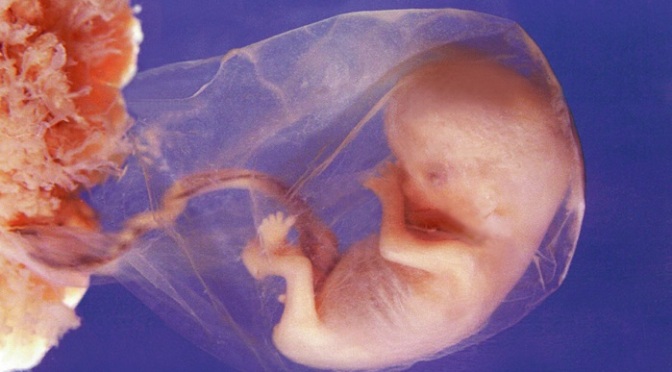
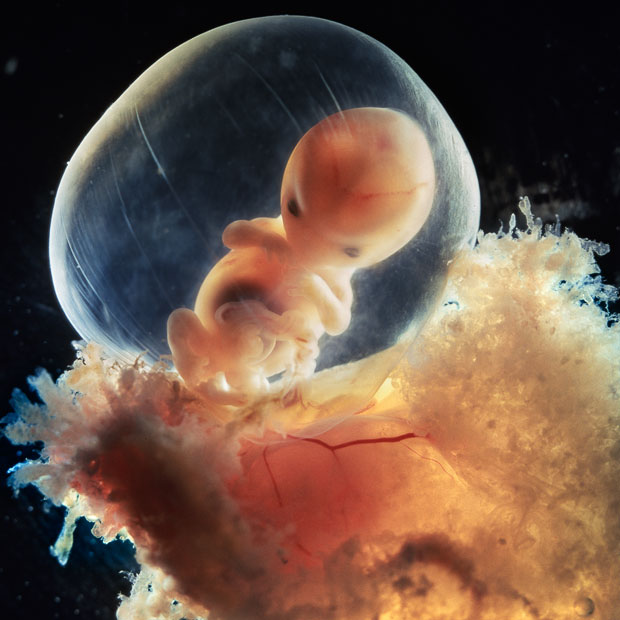
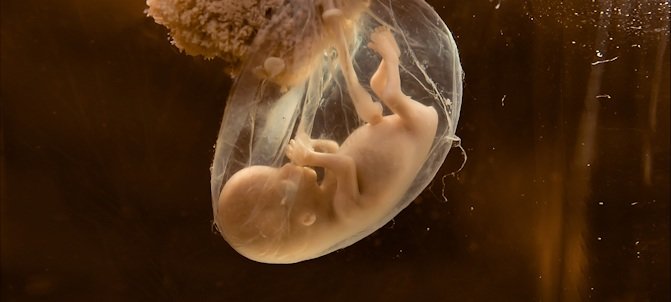
Furthermore, the accusation anti-abortion activists are somehow guilty of wrongdoing for being “pro-birth” is itself absurd, when the alternative to birth in question is being killed outright. Of course pro-lifers want babies born; we want them to leave the womb alive and in one piece instead of as a pile of body parts in a surgical tray. For a self-declared pro-life advocate to suggest his colleagues are somehow apathetic or immoral because they focus primarily on opposing the butchery of fellow human beings before birth is really quite scandalous.
Third, the Whole Life position assumes moral equivocation between issues that are inherently different in scope, form, and whom they affect.
Abortion is different from nearly every other issue that is currently being labeled “pro-life” by Whole Life advocates for the simple fact that few other issues concern the direct, intentional killing of innocent human beings, and the protection of said killing by law.
Outside a psych ward or a college philosophy department there are few people who will seriously suggest you can deliberately kill innocent human beings outside the womb. However, much ink has been spilled in defense of the idea that human beings may be killed before birth and need not be valued as human beings. Added to the abovementioned support for abortion is endorsement from nearly half the culture, an entertainment industry that regularly promotes abortion and the foolish sexual lifestyles that contribute to it, roughly half of congregants in American churches identifying as pro-choice on abortion, an entire political party that has declared it’s support(and sometimes celebration) for abortion, and lastly close to one million abortions happening per year. Given the odds pro-life advocates are up against in trying to stop the killing of human beings before birth, it’s nonsense to suggest we broaden our approach to other issues.
Pro-lifers have a narrow focus towards abortion because abortion is the intentional killing of an innocent human being. Few, if any other “outside the womb” issues routinely raised involve direct killing of innocent human beings, and are therefore different in scope and in form. To put it somewhat differently, outside the womb innocent human beings have the protection of law(even if imperfectly) from being intentionally destroyed; inside the womb they do not. It doesn’t take a genius to see why pro-lifers are going to spend more effort on behalf of the unborn who aren’t protected in law than those who already are.(3)
Why does any “outside the womb” issue raised deserve the label “pro-life” in the same way abortion does? Anyone who suggests a different social justice issue deserves addressing by anti-abortion advocates has some explaining to do, and needs to argue for their claim, not merely assert it. Those advocating a new definition of “pro-life” bear the burden of proof for their claims.(4)
This brings us to a fourth point; the Whole Life position being proposed often doesn’t meet its own standards.
It’s worth noting that people and groups focused on other “outside the womb” issues are never held to the same standards of being “pro-life” that anti-abortion activists are, even those these other issues are asserted to be just as pro-life as abortion. Groups dedicated to addressing other social justice issues are never called less than “pro-life” for failing to focus on abortion.
When was the last time a proponent of a Whole Life perspective told a ministry fighting sex trafficking that they weren’t spending enough time on abortion? Or a ministry dedicated to helping strengthen marriages that they needed to be more active in opposing abortion? The list can go on, but in practice the redefinition of “pro-life” seems to only be getting selectively applied to those focused on opposing abortion. The simple reason why other ministries and groups are usually not held to this standard is because deep down, proponents of the Whole Life view know better. They know it’s unreasonable(not to mention obscene) to tell a group dedicated to rescuing victims of sex trafficking that they are not moral enough to warrant support because they don’t spend an equal time fighting abortion, or racism, or marriage breakdown.
This raises a question: Is the Whole Life position being more influenced by genuine moral reasoning, or by current political and cultural trends? The Whole Life position being offered seems to more match the moral feelings of the current culture(and curiously, those of the Democratic Party platform) than a genuine moral concern for fellow human beings. If one looks close enough this becomes obvious. While proposing a broader perspective on what it means to be “pro-life”, proponents of the Whole Life position tend to ignore(and quite often attack) the moral concerns raised by political conservatives and libertarians in favor of the concerns of political liberals, and most often those who endorse abortion. Free-market capitalism, school choice, limited government, support for law enforcement, effective national defense, and entrepreneurship are all causes championed by conservative and libertarian thinkers as beneficial to fellow human beings; and yet rarely, if ever, are these causes considered as warranting the label “pro-life” by Whole Life advocates. The broadly defined “pro-life” perspective only seems to encompass the objectives of political liberals, making effort to exclude conservative and libertarian thought from the conversation.(5)
Ironically, as we saw from John Pavlovitz’s article above, the broadening of “pro-life” also ends up more matching the laundry list of “pro-life” causes being used by abortion supporters to attack pro-life advocates than the moral objectives of the pro-life movement itself.
That brings up a final point: Why should those who support abortion get to dictate the moral objectives of those who oppose it? No effective social reform movement in history has ever succeeded by having it’s goals redefined and reshaped by the opposition. Instead, effective social reform movements have succeeded where they stayed laser-focused on their goals and didn’t get sidetracked by silly red herring arguments.
Conclusion
Whole Life advocates are not the mortal enemies of the pro-life movement or of unborn human beings. Most Whole Life Advocates are genuinely concerned about the lives of unborn children, and about the lives of other people. Many are doing phenomenal work on behalf of children and their parents. Their intentions are noble and they do want to see good done in the world.
That being said, having the best intentions is not a guarantee one will always exercise wisdom or prudence. Many of the most well-intentioned ideas of the past have turned out disastrous when implemented, and often hurt more people than they helped.
The core flaw of the Whole Life position is that it trades the emotional draw of being seen as morally awake to other issues of concern in the culture for the wise application of moral principles. It’s important to be aware of the existence of wrongdoing in society; that also means we need to be wise in what we spend our time addressing. All people are created equal; all issues are not. We must act accordingly.
This doesn’t mean pro-life advocates can’t be concerned with other “outside the womb” issues; they can. This does mean the wisdom of saying pro-life advocates must be concerned with other issues in order to be seen as truly “pro-life” needs to be called into serious question. Broadening our focus to issues outside the womb doesn’t do much to help those being deliberately killed inside the womb. Instead it seeks to make pro-life advocates more liked by those who are already fighting tooth and nail to ensure we don’t succeed in our endeavors to protect unborn children.
Gregg Cunningham has said it best: Effective social reformers are seldom liked, and liked social reformers are seldom effective. Focusing all our efforts on being liked by our critics will not save the unborn; it will ensure the killing of the unborn goes unnoticed and unquestioned. And that is as far as one can get from truly being “pro-life”.
Endnotes
(1). Pavlovitz, who himself is an abortion advocate, never explains in his diatribe why pro-lifers are wrong about abortion. He ignores the issue and instead resorts to personal attacks and name-calling. Now, it’s possible every pro-lifer in the world today is an ignorant, hypocritical, fetus-obsessed jerk. That proves nothing. Pro-life advocates argue abortion is wrong because it unjustly kills an innocent human being. Pavlovitz must answer our argument, not resort to personal insults. Ironically, by ignoring the nature of abortion, Pavlovitz himself is guilty of the same sort of hypocrisy he accuses his opponents of: Advocating only for human beings who bear a striking resemblance to himself, those who are already born
(2). There are a few who will bite the bullet and say yes. So follow up: “What difference is there between the unborn and the born that makes it acceptable to allow abortion until we have solved every other societal issues first? Why wait to take on abortion if it is the intentional killing of an innocent human being?” Now we’re back to the central question in the abortion debate that matters: What are the unborn?
(3). As a small caveat, it is often asserted that police shootings and police brutality are just as much pro-life issues as abortion. While every police shooting is a tragedy, that does not mean police shootings are inherently unjust or the majority of police are morally out of control. There are many factors(legal, tactical, physiological, informational etc.) at play in every use of force by police that must be considered; factors which are routinely ignored by activists attacking what they see as pro-lifer’s inconsistency. However, it would take a book-length response to examine all of these factors. See In Defense of Self and Others… Issues, Facts, and Fallacies- The Realities of Law Enforcement’s Use of Deadly Force (3rd Ed.) by Urey W. Patrick and John C. Hall for a thorough examination of the topic.
(4.) A common trope is that “Abortion is not the only pro-life issue.” This is usually said in regards to voting, and very often is used to justify voting for a pro-choice candidate over a pro-life one. Even if abortion is not the only “pro-life” issue, that doesn’t mean it’s not the most important one. Given nearly one million abortions per year in the United States alone, abortion is obviously going to rank at the top of any list of “pro-life” issues
(5). More ironically, the deliberate killings of “Precious Image Bearers”(to use Herbie Newell’s term) who aren’t currently the subject of cultural focus tend to be ignored in Whole Life writings. The killings of police officers by armed criminals, victims killed or hurt in everyday violent crime, and veteran suicide tend to get
ignored in favor of issues which currently tug the cultural heartstrings, even though no one can seriously deny the abovementioned involve acts of gross injustice against valuable human beings. It’s ludicrous to demand anti-abortion activists meet a standard many Whole Life advocates often don’t adhere to.
Be effective and influential:

 WINTERY KNIGHT