Obama vows to continue prosecuting counter-terrorism experts

Consider this Wall Street Journal article by former Attorney General Michael Mukasey.

Excerpt:

Consider how the intelligence that led to bin Laden came to hand. It began with a disclosure from Khalid Sheikh Mohammed (KSM), who broke like a dam under the pressure of harsh interrogation techniques that included waterboarding. He loosed a torrent of information — including eventually the nickname of a trusted courier of bin Laden. That regimen of harsh interrogation was used on KSM after another detainee, Abu Zubaydeh, was subjected to the same techniques. When he broke, he said that he and other members of al-Qaeda were obligated to resist only until they could no longer do so, at which point it became permissible for them to yield. “Do this for all the brothers,” he advised his interrogators. . . .

The harsh techniques themselves were used selectively against only a small number of hard-core prisoners who successfully resisted other forms of interrogation, and then only with the explicit authorization of the director of the CIA. Of the thousands of unlawful combatants captured by the U.S., fewer than 100 were detained and questioned in the CIA program. Of those, fewer than one-third were subjected to any of these techniques.

[…]President Obama ran for election on the promise to do away with these techniques even before he became aware, if he ever did, of what they were. Days after taking office, he directed that the CIA interrogation program be done away with entirely and that interrogation be limited to the techniques set forth in the Army Field Manual, a document designed for use by even the least experienced troops. It’s available on the Internet and used by terrorists as a training manual for resisting interrogation.

Jennifer Rubin, writing in the left-wing Washington Post comments on the Mukasey column.

Excerpt:

In addition to eliminating the very techniques that allowed us to track down and kill bin Laden, Obama has permitted the Justice Department to reopen investigation of previously cleared CIA operatives. Mukasey explains: “ I say ‘reopening’ advisedly because those investigations had all been formally closed by the end of 2007, with detailed memoranda prepared by career Justice Department prosecutors explaining why no charges were warranted. Attorney General Eric Holder conceded that he had ordered the investigations reopened in September 2009 without reading those memoranda. The investigations have now dragged on for years with prosecutors chasing allegations down rabbit holes, with the CIA along with the rest of the intelligence community left demoralized.”

That’s right – Barack Obama has intimidated the entire intelligence community with his prosecution of CIA operatives who were judged innocent. Does his decision to prosecute CIA counter-terrorism experts make us safer from terrorist attacks?

And just look at how he treated the 9/11 widow Debra Burlingame. He literally turned his back on her just because she asked him why he is continuing to prosecute the CIA interrogators for doing their jobs. That’s the real Barack Obama. He can’t take a question, he can’t handle criticism. He has no civility for people who disagree with him.

Related posts

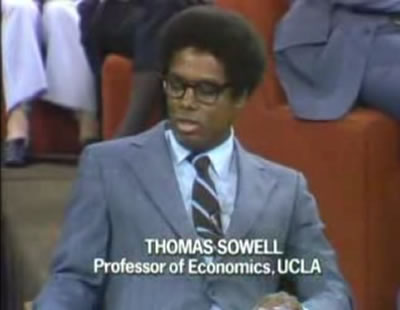
Thomas Sowell opposes government intervention in the economy

Young Thomas Sowell

From Investors Business Daily.

Excerpt:

The policies of this administration make it risky to lend money, with Washington politicians coming up with one reason after another why borrowers shouldn’t have to pay it back when it is due, or perhaps not pay it all back at all. That’s called “loan modification” or various other fancy names for welshing on debts. Is it surprising that lenders have become reluctant to lend?

Private businesses have amassed record amounts of cash, which they could use to hire more people — if this administration were not generating vast amounts of uncertainty about what the costs are going to be for ObamaCare, among other unpredictable employer costs, from a government heedless or hostile toward business.

As a result, it is often cheaper or less risky for employers to work the existing employees overtime, or to hire temporary workers who are not eligible for employee benefits. But lack of money is not the problem.

Those who are true believers in the old-time Keynesian economic religion will always say that the only reason creating more money hasn’t worked is because there has not yet been enough money created. To them, if QE2 hasn’t worked, then we need QE3. And if that doesn’t work, then we will need QE4, etc.

Like most of the mistakes being made in Washington today, this dogmatic faith in government spending is something that has been tried before — and failed before.

[…]It is not politically possible for either the Federal Reserve or the Obama administration to leave the economy alone and let it recover on its own.

Both are under pressure to “do something.” If one thing doesn’t work, then they have to try something else. And if that doesn’t work, they have to come up with yet another gimmick.

All this constant experimentation by the government makes it more risky for investors to invest or employers to employ, when neither of them knows when the government’s rules of the game are going to change again. Whatever the merits or demerits of particular government policies, the uncertainty that such ever-changing policies generate can paralyze an economy today, just as it did back in the days of FDR.

Words of wisdom.

J. Gresham Machen on the relationship between knowledge and faith

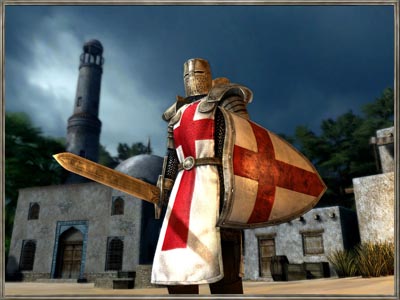
Christian scholarship is the new Crusade

Most of my readers are familiar with William Lane Craig and J.P. Moreland – they are two of the most famous Christian apologists out operating today. They both cite a person named “J. Gresham Machen”, and today I want to tell you more about this person.

William Lane Craig quotes him in this chapel address to Wheaton College students. (I am adding some context to Craig’s citation: Craig started the quote at “False ideas…” and ended it at “…harmless delusion”)

We are all agreed that at least one great function of the Church is the conversion of individual men. The missionary movement is the great religious movement of our day. Now it is perfectly true that men must be brought to Christ one by one. There are no labor-saving devices in evangelism. It is all hard-work.

And yet it would be a great mistake to suppose that all men are equally well prepared to receive the gospel. It is true that the decisive thing is the regenerative power of God. That can overcome all lack of preparation, and the absence of that makes even the best preparation useless. But as a matter of fact God usually exerts that power in connection with certain prior conditions of the human mind, and it should be ours to create, so far as we can, with the help of God, those favorable conditions for the reception of the gospel. False ideas are the greatest obstacles to the reception of the gospel. We may preach with all the fervor of a reformer and yet succeed only in winning a straggler here and there, if we permit the whole collective thought of the nation or of the world to be controlled by ideas which, by the resistless force of logic, prevent Christianity from being regarded as anything more than a harmless delusion.

I was actually in the audience when he gave this speech – I was there for the philosophy conference.

So Craig is citing J. Gresham Machen. What about Moreland?

Here’s an essay that Moreland wrote for Christian Leadership Ministries, the faculty arm of Campus Crusade for Christ.

He cites he exact same passage by J. Gresham Machen, as well, only he starts his citation at “God usually exerts…”.

So that’s Craig and Moreland. Citing the same passage, by the same writer. Interesting.

So who is this J. Gresham Machen anyway?

Here’s the bio:

J. Gresham Machen was professor of New Testament at Princeton Theological Seminary before becoming one of the founders of Westminster Theological Seminary and the Orthodox Presbyterian Church (OPC). This address on The Scientific Preparation of the Minister, was delivered September 20, 1912, at the opening of the one hundred and first session of Princeton Theological Seminary, and in substance (previously) at a meeting of the Presbyterian Ministers’ Association of Philadelphia, May 20, 1912. It was first published in The Princeton Theological Review, Vol. 11, 1913.

And Craig and Moreland are citing this essay, which you can read online for free. If you want to know what makes the Wintery Knight the Wintery Knight, this is the place to find your answers.

The essay was published in the Princeton Theological Review in 1913. The essay explains what the church should have done, but didn’t. And the only way out of the mess we are in now is to go back to the fork in the road and make the right turn this time.

You really need to read the essays I linked to by Craig, Moreland and Machen. It will open your eyes and show you how there can be so many Christians attending church on Sundays, and yet they have so little impact on the culture as a whole.

Autobiographical note

When I was a young man, I was exposed to the writings of William Lane Craig, J.P. Moreland, Walter L. Bradley, Greg Koukl, Hugh Ross, and Philip E. Johnson – and they changed my life. It really does make a big difference to young people when they are engaged at an intellectual level, with logic and evidence. I had no other connections to the church at that time. No one in my family, and none of my friends, were religiously inclined. I had no felt needs for religion. But approaching Christianity as knowledge worked for me. Before my conversion, I never attended the feminized church. And I was never told that Christianity was opposed to logic and evidence. Imagine my surprise to see what was being taught in the church compared to the public, testable claims to knowledge in the Bible, and the public, testable claims to knowledge that Christians scholars made in their books.

This passage from R.C. Sproul and John Gerstner in their otherwise useless book on Christian apologetics was formative for me, as well:

Secularism, on the other hand, is a post-Christian phenomenon carrying in its baggage, a conscious rejection of the Christian world view. It supplants the Christian consensus with its own structured view of reality. Less barbaric on the surface than paganism, secularism adopts a benevolent paternalism toward the not yet enlightened Christian who continues the practice of an anachronistic faith. Wearing a benign mask, the secularist loudly proclaims his commitment to religious tolerance on behalf of those weak-minded souls who still cannot bear to face a hostile, or worse, an indifferent universe, without the narcotic effect of ecllesiastical opium. The church is safe from vicious persecution at the hands of the secularist, as educated people have finished with stake-burning circuses and torture racks. No martyr’s blood is shed in the secularist West – so long as the church knows her place and remains quietly at peace on her modern reservation. Let the babes pray and sing and read their Bibles, continuing steadfast in their intellectual retardation; the church’s extinction will come not by sword of pillory, but by the quiet death of irrelevance. It will pass away with a whimper not a bang. But let the church step off the reservation, let her penetrate once more the culture of the day and the Janus-face of secularism will change from benign smile to savage snarl.

This is the problem we are facing today. We have changed Christianity into “faith” instead of KNOWLEDGE.