When does learning begin? As I explain in the talk I gave at TED, learning starts much earlier than many of us would have imagined: in the womb.
I was surprised as anyone when I first encountered this notion. I’m a science writer, and my job is to trawl the murky depths of the academic journals, looking for something shiny and new — a sparkling idea that catches my eye in the gloom.
[…]What it all adds up to is this: much of what a pregnant woman encounters in her daily life — the air she breathes, the food and drink she consumes, the chemicals she’s exposed to, even the emotions she feels — are shared in some fashion with her fetus. They make up a mix of influences as individual and idiosyncratic as the woman herself. The fetus treats these maternal contributions as information, as what I like to call biological postcards from the world outside.
By attending to such messages, the fetus learns the answers to questions critical to its survival: Will it be born into a world of abundance, or scarcity? Will it be safe and protected, or will it face constant dangers and threats? Will it live a long, fruitful life, or a short, harried one?
The pregnant woman’s diet and stress level, in particular, provide important clues to prevailing conditions, a finger lifted to the wind. The resulting tuning and tweaking of the fetus’s brain and other organs are part of what give humans their enormous flexibility, their ability to thrive in environments as varied as the snow-swept tundra in Siberia and the golden-grassed savanna in Africa.
The recognition that learning actually begins before birth leads us to a striking new conception of the fetus, the pregnant woman and the relationship between them.
The fetus, we now know, is not an inert blob, but an active and dynamic creature, responding and adapting as it readies itself for life in the particular world it will soon enter. The pregnant woman is neither a passive incubator nor a source of always-imminent harm to her fetus, but a powerful and often positive influence on her child even before it’s born. And pregnancy is not a nine-month wait for the big event of birth, but a crucial period unto itself — “a staging period for well-being and disease in later life,” as one scientist puts it.
This crucial period has become a promising new target for prevention, raising hopes of conquering public health scourges like obesity and heart disease by intervening before birth. By “teaching” fetuses the appropriate lessons while they’re still in utero, we could potentially end vicious cycles of poverty, infirmity and illness and initiate virtuous cycles of health, strength and stability.
For those who would like to hear an excellent, formal academic debate on abortion, I will steer you towards this debate between the ACLU’s Nadine Strossen and Life Training Institute’s Scott Klusendorf. You’ve probably never heard anything like this debate – it features real arguments on both sides that will help you to decide whether abortion is moral or not. Over 50 million unborn children have been aborted in the United States since abortion was legalized. Is it time for us to be more careful about with sex? Maybe it’s not just another form of recreation.
For those of you who would like something to read, I recommend “The Case for Life” by Scott Klusendorf for beginners. Advanced students will benefit more from”Defending Life” by Francis J. Beckwith, published by Cambridge University Press.
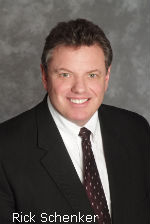
Here’s an interview with the founder of Ratio Christi, Rick Schenker.
About Rick:
Rick Schenker is president of Ratio Christi, a campus-based, Christian apologetics organization, which he joined in February, 2011. Rick has a visionary leadership style, and has experience in business, government, public and media relations, fundraising, and non-profit management. He has a bachelor’s degree in Bible from Central Bible College, and has done graduate work in public policy at Regent University, along with additional postgraduate work in leadership and public administration. Rick has extensive experience in grass-roots political organization and campaigns in the state of Pennsylvania. As the chief elected official of the County government in Erie, Pennsylvania, he oversaw 1,100 employees and a $300 million budget.
Excerpt:
TBS: Thank you for allowing us to interview you for TheBestSchools.org. Please give our readers an overview of Ratio Christi? What is it? How did it get started? What are its goals?
RS: Ratio Christi is a global movement that equips university students and faculty to give historical, philosophical, and scientific reasons for following Jesus Christ. Ratio Christi (Latin for “The Reason of Christ”) is placing Christian apologetics clubs at universities both nationally and internationally. Bringing together faith and reason in order to establish the intellectual voice of Christ in the University, Ratio Christi is engaging in the battle for the mind of Christians and skeptics alike. We unashamedly defend the veracity of God, the Bible, and Christ’s resurrection. Ratio Christ started three and a half years ago as a ministry of Southern Evangelical Seminary and became an independent non-profit organization in early 2011. Since that time, Ratio Christi has developed strong partnerships with many other seminaries and organizations, focusing on Christian apologetics and worldview issues. By working together, we now have approximately 60 clubs in various stages of development in universities across the country and around the world.
TBS: Please give us a bit of background about yourself. What were some of the things you were doing before assuming the helm of Ratio Christi? How did the opportunity to head up Ratio Christi present itself?
RS: I am a grass-roots political organizer. I was an elected official, and decided to leave politics to pursue work within Christian ministry. Unfortunately, even though I had run a few nonprofits, and a government with a $300 million budget, I couldn’t find a job. Sometime in 2010, I was considering getting a master’s degree in apologetics, and ran into the Ratio Christi web site. It was a student-run ministry at Southern Evangelical Seminary. In politics, I had become used to spotting trends that could turn into mass movements. As soon as I saw Ratio Christi, I knew it was a mass movement waiting to happen. I called them up and asked them to let me run it. Based on our 500% growth in the last six months, it is apparent that this is something that was not only needed, but ready and waiting to happen in God’s timing.
Here’s more:
TBS: One of the striking claims you make on your web site is that “you are not building an organization, you are building a movement”? Could you please expand on what you see as the difference between the two? What would a Ratio Christi movement look like?
RS: First, Ratio Christi is not the movement. We are simply a grass-roots organization for a greater movement. A movement is usually something that grows beyond the efforts or abilities of the leaders involved in starting it. Ratio Christi is involved in a movement in which apologetics is sweeping through the culture. Because of the rapid growth of neo-atheism in the university, Christian students are under attack. When confronted with intellectual challenges to Christianity, many Christian college students will abandon their faith. You can’t blame them. If the faith of their parents is irrational, then it should be abandoned. In many cases, Christian students are ridiculed and openly humiliated by fellow students and sometimes faculty, for believing in God, the Bible, and Jesus Christ. Then along comes some good apologetics training, and suddenly the students realize that their faith can stand up to intellectual scrutiny. They see that the scientific, historical, and philosophical evidence is on the side of Christianity. They get pumped up about that. The same is true for adults and high school students. Most people didn’t know there was so much evidence that supports the Christian worldview. Ratio Christi wants to help propogate the message that Christianity is not only good, it is true. We want to get the word out, organize cooperation with like-minded ministries, put people and resources in universities and communities, and generally help facilitate what we see as a broader work of God.
TBS: You also say on your web site that you are not in competition with other “full-service” campus ministries, because Ratio Christi is more narrowly focused on “the battle of ideas that permeates the university.” That seems like an admirable goal. But by placing so much emphasis on reasoned discourse, are you concerned at all that Ratio Christi may be raising the bar too high for a truly broad-based campus ministry? After all, you wouldn’t want it seem like undergraduates needed to be philosophy majors in order to participate effectively in their local Ratio Christi chapter, would you?
RS: We do exactly what we say. We go onto a campus to support other Christian ministries. A highly trained apologist is placed on a campus to meet weekly with a small group of students that want to go deeper into the study of the intellectual framework of the Christian faith. RC offers to do training for other student ministries and extends the offer to Christian faculty members. The bar is not too high; this is stuff high school students could and should be learning. Yes, it takes hard work, but loving God with all our mind is part of what it means to be a disciple of Jesus Christ. There is a full range of students involved, from those who have already studied these things deeply to those with no previous exposure. Atheists, agnostics, and those of other belief systems are encouraged to attend. This is a safe place where you can bring your questions. And we do encourage all students to get involved with other campus ministries that do more Bible studies, have worship services, and other fellowship opportunities. RC is simply there to help them deal with the tough questions. Does God exist? Doesn’t science disprove God? Did Jesus really rise from the dead? If God is good and all powerful, why is there evil and suffering? These are the hard questions, and that is what an apologist is trained to handle. Students love it. They love learning the critical-thinking skills necessary to analyze competing worldviews through logical discourse.
TBS: What has been your experience, so far, with the reception of your local Ratio Christi chapters on mainstream secular campuses? Has it been hard to get them recognized? Have there been any noteworthy cases of backlash against students on secular campuses for getting involved with their local Ratio Christi chapter?
RS: Actually it has been surprisingly easy. Since most universities are theoretically all about academic freedom, we approach it from this angle. They should welcome the opportunity to discuss these issues as long as it is done in a civil format. It helps that current case law supports the right of free association on campus. We have been blessed to have the expertise of the Alliance Defense Fund helping guide us in understanding the legal obligations that the universities are under. Since secular thought dominates most educational institutions, the backlash against Christianity is already there. We just try to even the playing field by giving a sound intellectual defense of the faith. Our arguments are appealing to those that are intellectually honest, so there is no need to back down in the face of opposition.
And more:
TBS: One of the most striking things you say on your web site is that you want to make your local Ratio Christi campus chapters welcoming to agnostics and atheists. We certainly see the point of trying to provide a structure for believers and nonbelievers to meet with each other and get to know each other as people, in a nonthreatening environment. But we wonder, given the tensions that exist on college campuses and in American culture generally today, how much success you’ve had so far in this endeavor. Have the chapters had much luck in really engaging with agnostic and atheist students in a constructive way? If not, do you have any thoughts about how you might achieve a better result with this distinctive and important dimension of your work?
RS: Actually, it is fairly normal for our chapters to engage with agnostic and atheist individuals, both in the meetings and around the campus. There has also been a lot of interaction with skeptic/atheist groups, such as co-sponsoring events or setting up discussion forums. Clubs representing other world religions have also been interested in engaging in discussion with our clubs. These interactions are very civil discussions, and our apologists teach Christian students to follow the advice of I Peter 3:15–16, to “always be prepared to give an answer to everyone who asks you to give the reason for the hope that you have. But do this with gentleness and respect, keeping a clear conscience, so that those who speak maliciously against your good behavior in Christ may be ashamed of their slander.” It is easier to do this with gentleness and respect when you are confident in your answers. We have found the reception to a reasoned approach to faith to be quite positive. On the other hand, there are many students among the neo-atheists that have picked up on the tactics of Dawkins and others by practicing a lot of ad hominem arguments against Christians. This is usually some kind of generalized attack like “All Christians are stupid because of X,” but the majority of the discourse on campus is usually quite civil.
Reading this interview was a real encouragement to me. I was very excited by what they are doing on these campuses.
I was in IVCF as an undergraduate and Campus Crusade as a graduate student, and we never did anything with apologetics. Not one thing in six years! They actually blocked every suggestion that the other students and I had to bring in speakers, show debate and lecture DVDs, and organize debates. I didn’t learn one useful thing in 6 years. Everything was always about people sharing their feelings, prayer walks and testimonies. And lots of singing. I know that other IVCF and Crusade groups are different, because I know that some of them do support apologetics, but the ones I attended were really dead set against apologetics.
If any of you are thinking about getting me a Christmas gift because you like the blog, just make a donation to Ratio Christi. Any amount would be great. They take PayPal! (At least – they took my donation through PayPal)
In case you are wondering what they do, here is a sample debate, featuring William Lane Craig and Michael Tooley:
That debate took place at the University of North Carolina.
You can watch another full debate they did (William Lane Craig vs Lawrence Krauss) with this Youtube playlist. That one occurred at North Carolina State University.
Here’s my snarky summary of that debate, in case you don’t want to watch it. The audio is not the best.
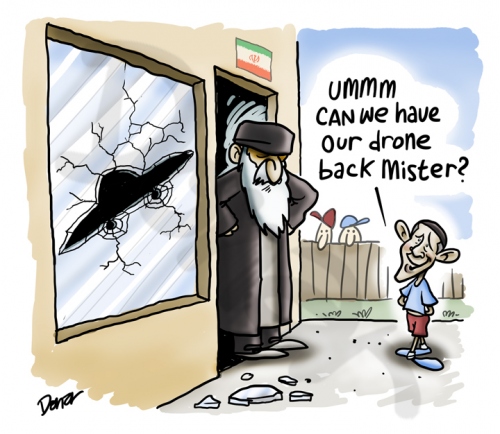
President Barack Obama said Monday that the United States has asked Iran to return a U.S. drone aircraft that Iran claims it recently brought down in Iranian territory.
“We’ve asked for it back. We’ll see how the Iranians respond,” Obama said in a news conference, alongside Iraqi Prime Minister Nouri al-Maliki.
A top Iranian military official previously vowed not to return the unmanned American stealth plane that it says it has.
[…]Former U.S. Vice President Dick Cheney on Monday criticized Obama’s decisions on the drone, but for an entirely different reason. He said that, after the aircraft went down, the president should have ordered an airstrike over Iran.
“The right response to that would have been to go in immediately after it had gone down and destroy it,” the Republican, who served with President George W. Bush, told CNN’s Erin Burnett. “You can do that from the air … and, in effect, make it impossible for them to benefit from having captured that drone.”
Instead, “he asked nicely for them to return it, and they aren’t going to,” Cheney said.
[…]One U.S. official said the United States can’t be certain it’s the real stealth drone, because U.S. personnel don’t have access to it. But he added there’s no reason to think it’s a fake. However, a second senior U.S. military official said that a big question is to how the drone could have remained virtually intact given the high altitude it is believed to have crashed from.
In an interview broadcast live Monday night on Venezuelan state television, Iranian President Mahmoud Ahmadinejad said nothing to suggest his country would grant the U.S. request.
“The Americans have perhaps decided to give us this spy plane,” Ahmadinejad said. “We now have control of this plane.”
Speaking through an interpreter, Ahmadinejad said: “There are people here who have been able to control this spy plane, who can surely analyze this plane’s system also. … In any case, now we have this spy plane.”
He added, “Very soon, they’re going to learn more about the abilities and possibilities of our country.”
On Tuesday, a semi-official Iranian news agency said authorities have shrugged off the U.S. request. Defense Minister Gen. Ahmad Vahidi said the United States should apologize for invading Iranian air space instead of asking for the return of the unmanned aircraft.
Remember when Iran was having their elections and they started shooting people down in the street? Unlike Germany, France and Canada, Obama had nothing to say about that. Ronald Reagan would have had something to say. Margaret Thatcher would have something to say. But Obama had nothing to say. Maybe the Iranians looked at what Obama did and decided that Obama is a paper tiger.