

A possible reason why God permits suffering and evil: the soul-making theodicy

I have a key that will unlock a puzzling mystery

Steve Hays has a post up at Triablogue about one my favorite defenses to the inductive problem of evil – the soul-making theodicy.

He writes:

The soul-making theodicy was popularized by John Hick. In Augustinian anthropology, Adam and Eve were finished products. They fell from a state of moral perfection. Hick contrasted that with his own position, according to which Adam and Eve were created with the potential for moral growth. They were still in the process of creation. They had the potential for moral maturation. (Mind you, Hick denied the historicity of Adam and Eve.)

There’s some truth to this analysis, although it suffers from equivocation. To say unfallen Adam and Eve were morally “perfect” simply means they were sinless. It doesn’t mean there was no room for moral improvement.

Paradoxically, fallen humans can be both better and worse than unfallen humans. Inasmuch as they are sinners, they are worse. Yet Christians can have a moral grace that surpasses the mere sinlessness of Adam and Eve. Saints have virtues that angels lack.

3. Let’s take an example: Suppose you have a family of five. Both parents are social climbers and overachievers. The husband is consumed with career advancement. The wife is a tiger mom. She makes sure the kids are enrolled in all the right student clubs and extracurricular activities that will look good on a college application. The two teenage sons and a daughter are into the usual things kids in their age-bracket are into. At dinner, each member of the family is glued to the display on their smart phone.

The members of the family aren’t Christian. Aren’t into meaning-of-life questions. They lead superficial lives.

One son starts to forget routine things. At first this is amusing. They think he’s absent-minded. Distracted by too much multitasking. But he begins to complain about headaches.

His parents take him to the doctor, and he’s diagnosed with brain cancer. Suddenly their priorities come to a screeching halt.

They now have a sick family member who will just get sicker. Their social world contracts. Their center of gravity shifts.

Instead of being frivolous and self-absorbed, they make the most of the remaining time with their dying family member. The wrenching experience changes them. Deepens them. Makes them better people. Develops their unrealized moral potential.

Perhaps, in their distress and despair, they turn to God. They regret the missed opportunities. Regret taking life for granted. Regret taking one another for granted. Regret all the things they should have said and done differently, in retrospect.

That kind of regret can refine character. Moving forward, that prompts them to treat others with greater patience and understanding.

This is hypothetical, but there are real life examples of Christians like Eric Liddell and Ernest Gordon who exhibit moral heroism in the face of extreme adversity.

The rest of the article considers some objections to this defense.

Have you ever had that happen to you? Where something terrible happened and you found yourself having to pray, and care for others, and drop all your plans, and be unselfish? It’s happened to me. In fact, I think this is one of the main things that Christians should be doing. We ought to respond to setbacks as if they were opportunities for us to show our real character. Don’t treat the needs and sufferings of others as something to avoid, treat it as your opportunity to be more like Jesus. I know that we all have dreams of things that we would like to do and achieve. But sometimes, an opportunity arises for us to imitate Jesus by being obedient with suffering, or by caring for the suffering of others by putting our own needs and desires second. It’s tempting to think that our super-duper plan to change the world is the most important thing, but it really isn’t. Don’t miss the chance to form your character when you suffer, or when someone close to you is suffering.

I have to mention Dina, who has been busy visiting the elderly in a hospital for the last two weeks. She is a busy lady, and has things she would rather be doing. She hasn’t done any cross-stitching in months, because she is so stressed with work. Nevertheless, she didn’t take that as an excuse to put herself first. She found some people close to her who were suffering and thought “here is an opportunity for me to imitate Jesus by putting myself second, and serving others first”. Evil and suffering gives you the opportunity to be who God wants you to be.
Humility is not thinking less of yourself, it’s thinking of yourself less

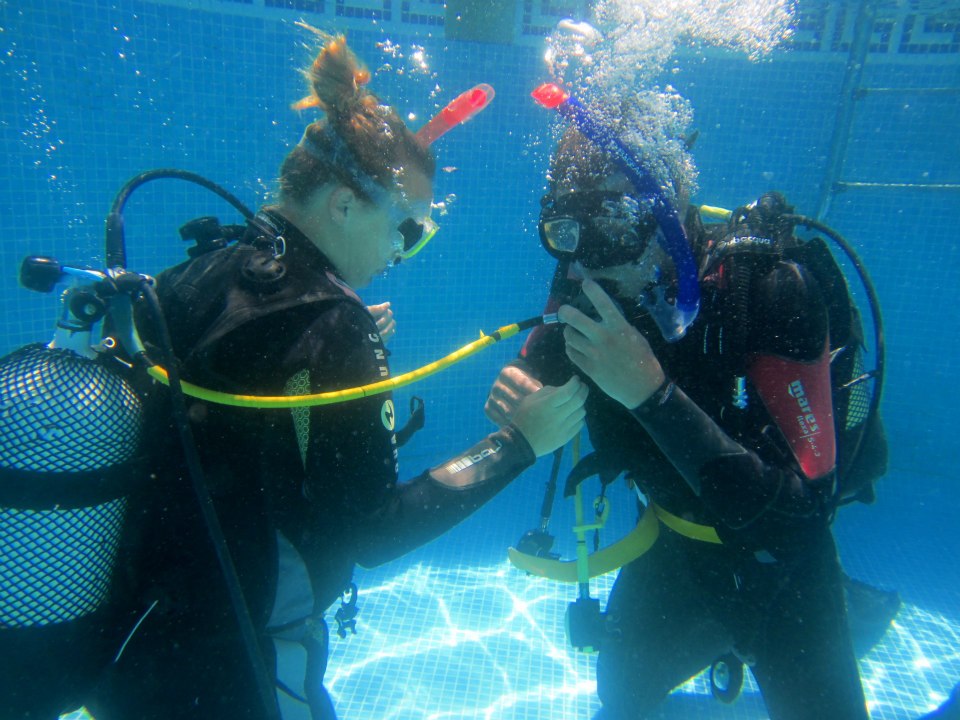
Buddy breathing
Buddy breathing

Note: I am re-posting a series of five Bible studies this week that I wrote last year. Every 2 PM post Monday to Friday this week will be a Bible study.

I have been getting into disagreements with the woman I am mentoring in apologetics, where she has been telling me that accurate assessments of my strengths are “proud” and that I need to be more humble. So I thought I would explain what I take humility to mean.

Here’s something from J. I. Packer:

“Being humble is not a matter of pretending to be worthless, but is a form of realism, not only regarding the real badness of one’s sins and stupidities and the real depth of one’s dependence on God’s grace, but also regarding the real range of one’s abilities. Humble believers know what they can and cannot do. They note both their gifts and their limitations, and so are able to avoid both the unfaithfulness of letting their God-given powers lie fallow and the foolhardiness of biting off more than they can chew.”

— J.I. Packer, “A Passion for Faithfulness: Wisdom From the Book of Nehemiah”

I think I can give an example here. Ever since I was young, I have wanted to do the PhD in computer science and become a Christian professor. I already have the BS and MS and I have been working in industry full-time for over 10 years. The money is there to do the PhD in computer science five times over, but I have not done it because I am not sure that I have what it takes to be a researcher. Sometimes people ask me what I studied and what I do for a living. I am accurate about my degrees, my resume and my savings, and what I am doing and can do with my resources. But I am also accurate in saying that doing a PhD takes a whole different level of commitment and sacrifice. And I am humble enough to know that it is beyond me, at least at this time. I lack the support to do it. God hasn’t given me a mentor or a wife. So I am humble about not “biting off more than I can chew”. That is real humility. But trying to pretend I don’t have any skills, haven’t made any good decisions, or that I am lousy with money is not humility.

Here’s her most favorite theologian, A. W. Tozer:

“The meek man is not a human mouse afflicted with a sense of his own inferiority. Rather he may be in his moral life as bold as a lion and as strong as Samson; but he has stopped being fooled about himself. He has accepted God’s estimate of his own life. He knows he is as weak and as helpless as God has declared him to be, but paradoxically, he knows at the same time that he is of more importance than angels. In himself, nothing; in God, everything. That is his motto. He knows well that the world will never see him as God sees him and he has stopped caring.”

— A. W. Tozer, “The Pursuit of God”

So let’s talk about some cases where I feel I am humble, but my apologetics mentoree doesn’t see it.

I know that there were things that I wanted, and things that I wanted to do in this life. Getting married early was one of them, and keeping chaste as my 20s passed by has been hard. I really wanted to be married by now and to have children and a home. If you are looking for some sort of evidence of humility in a person, that is a good place to look: how far has this person been willing to go along with God’s purposes and rules, even when it meant not fulfilling their own needs and goals? Humility means not thinking of your own goals and needs. It means following the rules even when you know you aren’t being fulfilled. Although I have the resources to just grab for happiness, I won’t break God’s rules to do it.

Let’s get specific with that. There are lots of things that I would like to do for fun that cost money – like learning how to fly a plane, or buying an even faster car than I have now, or taking scuba diving lessons. For some people, it might be surfing, hang-gliding or skydiving. These entertainments cost money, but that money could just as easily be donated to a Ratio Christi event or a Faith Beyond Belief event. That’s humility – putting God’s needs above your own needs in stewardship of resources. Even though you have a right to be happy with what you earn, you can humble yourself and share and go without thrills and entertainment. I almost never spend money on entertainments. The argument “but you only live once, you have to experience this now” means nothing to me. I like to stay home.

Humility also comes into play when deciding what I should do with my life. I think all of us would like to be William Lane Craig or Stephen C. Meyer or Jay Richards or Michael Licona. Standing up on stage, smashing atheism into the floor with both hands. I would love to be that. To do that, though, I would have to go back to school and spend tens of thousands of dollars on PhDs, and then write books and papers. That would eat up the savings that I need for a family. Then I could be famous and awesome, like my heroes. But I choose not to sacrifice tens of thousands of dollars on my dream, when my money and the money of other Christians who might support me could be better used for God’s Kingdom by the more skilled scholars who already exist. Maybe there is someone getting a PhD in Biochemistry who I could help out instead, just by keeping my job and doing with a little less entertainment. Humility means being content with your part in the Kingdom, and not trying to be something you’re not. Letting other people have the spotlight, while you just quietly help them from the shadows. It takes real faith in God to be that humble… to work in secret, and to depend entirely on Him for your accolades.

So how to be more humble? One good way is to sit down with someone you trust and confess things that you have done wrong, or things that you failed at. That’s what I do with her, and it helps to remind me of my limitations. I try to confess my failures in achieving the things that I wanted to achieve all the time. I recommend that to everyone. It’s not hard for me, I think a lot about my failures. The missed opportunities, the things I never got to do. Sometimes, you can have the best of intentions, and things just don’t work out. It’s good to confide in someone else when that happens. So if there is someone who you would like to be more humble, maybe the best thing to do is to ask them about their mistakes and regrets, and then just listen to them. That will work.

Donald Trump should be running as a Democrat, he has no conservative views

Donald Trump should stick to Miss Universe pageants

I’ve been trying not to pay attention to the fact that a leftist is leading the Republican primary. You see, I’m actually familiar with Trump’s previous positions on things like taxes (he’s for raising them), partial-birth abortion, i.e. – infanticide (he supports it), amnesty (he’s for that), government-run health care (he’s for it)… and so on. In fact, Donald Trump’s record is not conservative on a single issue. He has never advocated for conservative policies. Not one. He’s a leftist, through and through.

What this 90-second video, showing Trump in his own words:

Leftist clowns like him do not change their positions short of some serious study, and there is no evidence that he has studied a thing.

Here’s Jonah Goldberg writing in National Review to express how frustrating it is to people like me who prefer conservative candidates who have actual records of achievement on conservative issues.

Jonah says:

Yes, I know Trump has declared himself pro-life. Good for him — and congratulations to the pro-life movement for making that the price of admission. But I’m at a total loss to understand why serious pro-lifers take him at his word. He’s been all over the place on Planned Parenthood, and when asked who he’d like to put on the Supreme Court, he named his pro-choice-extremist sister.

Is that real? Yes, you can read about it here. Trump has no pro-life record. You cannot believe anything that a person running for office says during his campaign speeches. We already had that happen when Obama promised so many things in speeches that he never delivered on. And yet here we are in a GOP primary and a bunch of lazy Republican voters are just believing everything that a candidate says, and not looking at his actual record.

More from Jonah:

In his embarrassing interview with Hugh Hewitt last night, Trump revealed he knows less than most halfway-decent D.C. interns about foreign policy. Twitter lit up with responses about how it doesn’t matter and how it was a gotcha interview. They think that Trump’s claim that he’ll just go find a Douglas MacArthur to fix the problem is brilliant. Well, I’m all in favor of finding a Douglas MacArthur, but if you don’t know anything about foreign policy, the interview process will be a complete disaster. Yes, Reagan delegated. But he knew enough to know to whom to delegate.

Yeah, guess what? A clown like Donald Trump knows nothing about foreign policy. He could not tell the difference between Iran’s Quds force and the Kurds in northern Iraq. I am only a software engineer, and even I have blogged about the Quds force, and their leader many, many times. I understand that lay people don’t need to know about the Quds force, or the threat they pose to us, but presidential candidates do need to know. Trump’s ignorance on national security and foreign policy ought to terrify us. We can’t afford to elect someone completely unqualified.

More from Jonah:

If you want a really good sense of the damage Donald Trump is doing to conservatism, consider the fact that for the last five years no issue has united the Right more than opposition to Obamacare. Opposition to socialized medicine in general has been a core tenet of American conservatism from Day One. Yet, when Republicans were told that Donald Trump favors single-payer health care, support for single-payer health care jumped from 16 percent to 44 percent.

I blogged before about the horrors of government-run health care in Canada and the UK. And yet the TV-watching clowns who support Trump cannot be bothered to look at the research. If Trump praises single-payer health care (and he has), does that one sentence from a clown override the good, solid data from studies? Are Republican voters too busy watching TV to do any research? Or do we just accept whatever a “confident” clown tells us without looking at the evidence for ourselves? Can facts be established by a clown’s confident words?

You know, I really thought that we were electing the leader of the free world here. Someone who has a record of moving laws and policies that solve the actual problems we are facing: Iran nuclear weapons, loss of religious liberty, abortion, gay marriage, demographic crisis, $18.5 trillion dollar debt, record low labor force participation, aging ballistic missile submarine fleet, only 10 carrier strike groups, aggression from Iran, Russia and China, rising health care costs, rising tuition costs, poorly-educated young Americans who can’t find work, aging Minuteman ICBMs, declining entrepreneurship because of over-regulation, Obamacare, Social Security funding, Medicare funding, welfare reform, Keystone pipeline, and on and on and on. I didn’t realize that we were so pleased with the last incompetent comedian we elected that we want to elect another one. Is this a serious country? Or do we think that presidential elections are for our amusement?

I really recommend that you take a look at this article from the leftist Washington Post, which looks over some of Trump’s past words, past actions, and past affiliations. In it, you will find that Trump does not have any record of achievements as a Republican. He just hasn’t moved the conservative ball forward in any way, shape or form.

Look:

Abortion

Then: On “Meet The Press” in 1999, Trump said he was “very pro-choice.” “I hate the concept of abortion,” he said. “I hate it. I hate everything it stands for. … but I just believe in choice.”
Now: In an interview with Bloomberg Politics in January, Trump said, “I’m pro-life and I have been pro-life.” He said he believed there should be exceptions in cases of rape, incest or the life of the mother.

Healthcare

Then: In an interview with Larry King in 1999, Trump said he was “very liberal when it comes to health care” and that he believes in “universal healthcare.”
Now: During his announcement, he called Obamacare “a disaster called the big lie” and said the deductibles were so high they were “virtually useless.”

Hillary Clinton

Then: Either Trump or his son donated to Clinton in 2002, 2005, 2006 and 2007, he invited her to his 2005 wedding in Florida, where she sat front row, and he’s donated at least $100,000 to the Clinton Foundation. He also said in an appearance on the Howard Stern show in the mid-2000s that she was a fantastic senator.
Now: On NBC on Wednesday, he called Clinton “the worst secretary of state in the history of our nation” and said she would be “a terrible president.”

The Stream has an article talking about where candidates stand on de-funding of Planned Parenthood. All the Republican candidates who have addressed the issue are either clearly for de-funding Planned Parenthood (Cruz, Carson, Fiorina, etc.), or even better – they’ve actually done it as governor (e.g. – Jindal, Walker, Perry, Bush, etc.). Trump is the only one who has waffled on the issue, which is not surprising given his past statements on abortion. Republican voters – there is a huge difference between “I de-funded Planned Parenthood as governor” and clowning in front of cameras. When assessing candidates, we have to look at the past record of the candidates, not their words during a campaign.