Scott Walker campaign leaders sign up with Marco Rubio

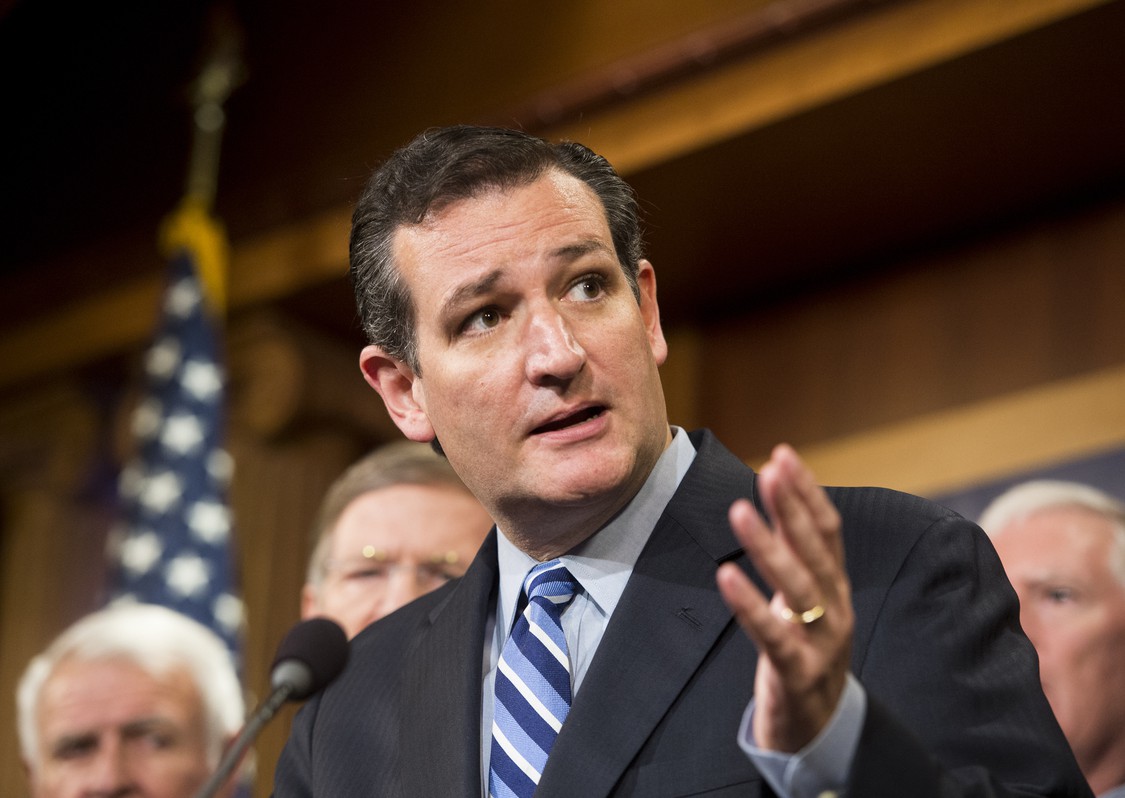
Florida Senator Marco Rubio

Story from the Weekly Standard.

Excerpt:

Four members of Scott Walker’s Iowa campaign are now aligning with Marco Rubio. With the Wisconsin governor exiting the presidential race Monday, the Walker campaign’s network of activist supporters in the early primary states are free to endorse other candidates.

In Iowa, three county chairs and a university student leader are now supporting Rubio, the Florida senator. Melody Slater of Lee County, Matt Giese of Dubuque County, and Alan Ostergren of Muscatine County, have all shifted their support for Rubio.

“While I am saddened by the news of Governor Walker’s campaign ending, I am proud to join Senator Rubio’s team. His conservative, positive vision is exactly what this country needs,” said Slater in a statement to THE WEEKLY STANDARD.

“Senator Rubio has the vision and ideas that are needed to lead us into the new American century,” said Giese. “I’m looking forward to serving on Senator Rubio’s Iowa team.”

“Marco’s optimistic vision for the 21st century is exactly what our country needs. In the coming months, I look forward to helping Marco win the Iowa caucuses,” said Ostergren.

In addition, Brittany Gaura, an Iowa State University student who co-chaired Iowa Students for Walker, is also endorsing Rubio. “As much as I support Governor Walker, I know it is a critical time in this nation’s history. I am supporting Marco for the positive vision and strong leadership he will bring to America’s future,” she said.

Rubio has also picked up support from the chairman of Walker’s New Hampshire campaign as well as an early supporter of Walker’s in South Carolina.

Well, many of you sent me messages on Facebook and Twitter about the sad news that Walker, my #2 candidate, had dropped out of the race. This is a huge loss for America, since Walker’s plan to reform public sector labor unions would have changed the direction of the country, given how labor unions donate so much money to Democrat candidates.

So where do I stand now? My favorite candidate is Bobby Jindal, then Ted Cruz, then Marco Rubio. That’s strictly on conservative principles and conservative achievements. Rubio is the most electable, but I am angry with him for flirting with amnesty. However, he has repudiated his involvement with that movement. I would be happy with any of these three candidates.

These candidates are not conservative enough for me

These candidates are Republicans, but they are too liberal on fiscal issues:

  • Jeb Bush (amnesty)
  • John Kasich (Medicare funding, big government)
  • Mike Huckabee (he is a tax and spend Democrat)
  • RIck Santorum (not conservative enough)
  • Christie (DREAM act, Medicare funding)
  • Carly Fiorina (DREAM act, illegal immigration)

These candidates are Republicans, but they are too liberal on social issues:

  • Rand Paul (crime, abortion & marriage)
  • Jeb Bush (way too liberal on gay marriage and gay activism)
  • Carly Fiorina (civil unions, religious liberty)
  • Chris Christie (marriage)
  • Lindsay Graham (liberal on abortion, marriage, SCOTUS judges)
  • John Kasich (abortion, marriage and religious liberty)
  • Carly Fiorina (soft on crime)

These candidates are Republicans, but they are too liberal on national security and foreign policy issues:

  • Rand Paul (naive isolationist, wrong on every national security and foreign policy issue there is)
  • John Kasich (he is John Kerry)
  • Ben Carson (Iraq war opposition)
  • Chris Christie (has a national security problem re: Muslims and CAIR, Iraq war opposition)

Donald Trump is not a Republican, he is too liberal on every single issue there is, regardless of his clown-talk. His unstable shrieking is just a baby squealing for attention, understanding nothing and with no awareness of facts. He is a nobody, and should not even be running for President.

New study: government run child-care increases negative outcomes for kids

Canada Political Map

I’ve complained before about Quebec, the most liberal and secular province in Canada. Well, one of the things that makes them so crappy is their policy of encouraging women to abandon their young children to strangers in government-run daycare. The government takes a whole lot of taxpayer money, often from traditional single-earner homes, and uses it to subsidize government-run child care. Well, now we have a brand new fresh study to show how wrong this policy has been.

Canada’s radically leftist CTV News reports on the study.

Excerpt:

In a paper released Monday, a group of university researchers say that children exposed to the province’s child-care system were more likely to have higher crime rates, worse health and lower levels of life satisfaction as they have aged than their counterparts in other provinces who didn’t have access to the same type of system.

[…]In their paper made public Monday through the National Bureau of Economic Research, Kevin Milligan from the University of British Columbia, Michael Baker from the University of Toronto, and Jonathan Gruber from MIT in Cambridge, Mass., update work from 2008 to see if children in the Quebec care system kicked their troubling behaviours over time.

To do that, they analyzed four different data sets from Statistics Canada that touched on child outcomes, health and crime rates and scores from standardized tests that are connected to the national Council of Ministers of Education.

What the trio found instead was “striking evidence” that exposure to the program was associated with higher crime rates, with the effects most acutely seen in boys. Boys were more likely to have higher levels of hyperactivity and aggression, the researchers wrote, while girls showed declines in prosocial behaviour, which captures many altruistic activities like donating and volunteering. All of those behaviours fall under the heading of “non-cognitive” abilities, such as impulsiveness and emotional stability.

Exposure to the program was also associated with “worsened health and life satisfaction,” the study says.

There was no such lasting effects on math, science and reading abilities, the researchers write.

By the way, in case you are wondering – yes, that is the same Jonathan Gruber of MIT who was the architect of Obamacare. Surprising that he would be co-author on a study that dings big government.

Are these results unique to Canada? Let’s take a look at a recent study from the UK.

From the UK Telegraph.

Excerpt:

Academics at Oxford University discovered that exposure to some forms of early education contributed to bad behaviour and could be linked to emotional problems.

[…]In the Oxford study, researchers recruited 991 families with children aged three months. Mothers had an average age of 30.

Researchers assessed children at the age of four through questionnaires about their behaviour and emotions completed by teachers and parents. They also observed care provided by mothers and observed non-parental care for at least 90 minutes for those children placed in formal childcare settings.

The report, published in the journal Child: Care, Health and Development, said that “children who spent more time in group care, mainly nursery care, were more likely to have behavioural problems, particularly hyperactivity”.

The study, led by Prof Alan Stein, of Oxford’s Department of Child and Adolescent Psychiatry, found that “spending more time in day care centres, over the total period was a predictor of total problem scores”.

“Children who spent more time in day care centres were more likely to be hyperactive,” it said. “Children receiving more care by childminders were more likely to have peer problems.”

The authors added: “The findings in relation to childminding suggest that it might be out of home care rather than group care that raises the risk of behavioural difficulties.”

Well, that’s only Canada and the UK. Maybe things are better in Sweden?

Here’s a second article from the National Post (one of Canada’s national newspapers) about Sweden’s government-run universal day care system.

Excerpt:

True, parental leave in Sweden is a generous 16 months. There are no babies in daycare. But when parental leave ends, practically the reverse is true: A full 92% of all children aged 18 months to five years are in daycare. Parents pay only a symbolic amount for this; tax subsidies for daycare are $20,000 per child, annually. Swedish taxes are among the highest in the world, and the tax system was designed to make both parents seek employment in the work force.

[…]Then there are the questions about the social toll Sweden’s childcare system is taking. Sweden has offered a comprehensive daycare system since 1975; since the early ‘90s, negative outcomes for children and adolescents are on the rise in areas of health and behaviour. While direct causation has been difficult to prove, many Swedish health-care professionals point to the lack of parent involvement beyond the first 16 months as a primary contributing factor. Psychosomatic disorders and mild psychological problems are escalating among Swedish youth at a faster rate than in any of 11 comparable European countries. Such disorders have tripled among girls over the last 25 years. Education outcomes in Swedish schools have fallen from the top position 30 years ago, to merely average amongst OECD nations today. Behaviour problems in Swedish classrooms are among the worst in Europe.

Now this idea of government taking children away from families is very popular on the left, because they want children to be “equal”, and that means getting them away from their parents so that the government can raise them “equally”. You can even see Hillary Clinton pushing for it when she talks about “universal pre-K”. Well, maybe it’s time that someone showed her the studies. Not that she strikes me as someone who cares a lot about children, given her support for born-alive abortions and organ harvesting.

Is belief in God compatible with belief in evolution?

Sherlock Holmes and John Watson: let's take a look at the facts
Sherlock Holmes and John Watson: let’s take a look at the facts

What should we make of theistic evolutionists telling us that you can believe in God, while still knowing that matter, law and chance fully explain the development of all of biological life?

Consider this quotation from Phillip E. Johnson.

Quote:

The National Academy’s way of dealing with the religious implications of evolution is akin to the two-platoon system in American football. When the leading figures of evolutionary science feel free to say what they really believe, writers such as Edward O. Wilson, Richard Dawkins, Daniel Dennett, Carl Sagan, Steven Pinker, Stephen Jay Gould, Richard Lewontin and others state the “God is dead” thesis aggressively, invoking the authority of science to silence any theistic protest. That is the offensive platoon, and the National Academy never raises any objection to its promoting this worldview.

At other times, however, the scientific elite has to protect the teaching of the “fact of evolution” from objections by religious conservatives who know what the offensive platoon is saying and who argue that the science educators are insinuating a worldview that goes far beyond the data. When the objectors are too numerous or influential to be ignored, the defensive platoon takes the field. That is when we read those spin-doctored reassurances saying that many scientists are religious (in some sense), that science does not claim to have proved that God does not exist (but merely that he does not affect the natural world), and that science and religion are separate realms which should never be mixed (unless it is the materialists who are doing the mixing). Once the defensive platoon has done its job it leaves the field, and the offensive platoon goes right back to telling the public that science has shown that “God” is permanently out of business.

(Phillip E. Johnson: “The Wedge of Truth”, IVP 2000, pp. 88-89).

So what naturalistic scientists believe is that God didn’t do anything to create the diversity of life – that nature does all of its own creating without God. In fact, it doesn’t matter if the best naturalistic explanation is improbable or implausible – naturalists must bitterly cling to materialistic explanations of natural phenomena. Any doubts about the efficacy of naturalistic mechanisms get met by “theistic evolutionists” – scientists who think that science shows that God didn’t do anything in the history of life.

When it comes to discussing origins, you have to be very careful with theistic evolutionists. The one question they want to avoid is whether science, done in the ordinary naturalistic way, can discover evidence of intelligent agency in the history of the development of life. And that’s why you have to ask them that question first. “Is there any scientific evidence that intelligent causes were active during the history of the development of life on this planet?” Their answer to that is the same as atheists, namely: “there is no scientific evidence that intelligent causes are responsible for the effects we see in the history of life on Earth”. Theistic evolutionists and atheists agree on that: as far as pure scientific evidence is concerned, nature can do its own creating without any intelligence writing genetic code or engineering animal body plans.

Now, take a look at this article by Jay Richards. He cites some theistic evolutionists.

Excerpt:

Biologist Ken Miller:

For his part, [Ken] Miller, a biologist, has no qualms about telling us what God would do: “And in Catholicism, he said, God wouldn’t micromanage that way. ‘Surely he can set things up without having to violate his own laws.'”

I am unaware of any tenet of Catholic theology that requires God not to micromanage. It is, however, a tenet of deism.

Got that? What really happened is that God didn’t do anything. How does he know that? From the science? No. Because he assumes naturalism. Oh, it’s true that he says that God is lurking somewhere behind the material processes that created life. But God’s agency is undetectable by the methods of science. And he is hoping that you will accept his subjective pious God-talk as proof that a fundamentally atheistic reality is somehow reconcilable with a robust conception of theism.

More from Richards:

Then we get Stephen Barr offering his private definition of “chance.”

It is possible to believe simultaneously in a world that is shaped by chance and one following a divine plan. “God is in charge and there’s a lot of accident,” said Barr, also a Catholic. “It’s all part of a plan. . . . God may have known where every molecule was going to move.”

What does Barr really believe? He believes that what science shows is that nature created life without any interference by an intelligent agent. Barr then offers believers his subjective pious God-talk to reassure them that evolution is compatible with religion. He has a personal belief – NOT BASED ON SCIENCE – that the material processes that created all of life are “all part of a plan”. He cannot demonstrate that from science – it’s his faith commitment. And more speculations: “God may have known…”. He can’t demonstrate that God did know anything from science. He is just offering a personal opinion about what God “could have” done. The purpose of these subjective opinions is to appease those who ask questions about what natural mechanisms can really create. Can natural causes really account for the development of functional proteins? Never mind that – look at my shiny spiritual-sounding testimony!

That’s theistic evolution. What really happened is that no intelligent causes are needed to explain life. What they say is “God could” and “God might” and “I pray” and “I attend this church” and “I received a Christian award” and “I sing praise hymns in church”. None of these religious opinions and speculations are relevant to the science – they are just opinions, speculations and biographical trivia. Atheists and theistic evolutionists agree on what science shows about the diversity of life – intelligent causes didn’t do anything.

Front-loading?

One of the ways that theistic evolutionists try to affirm design is by insisting that the design is “front-loaded”. The design for all the information and body plans is somehow embedded in matter.

Here is Stephen C. Meyer to assess that:

It’s very important to understand that there is no scientific evidence for design (information) being front-loaded. So although the theistic evolutionists are talking about design, it’s still in the realm of faith – not detectable to scientific investigation. And as Dr. Meyer explained, it doesn’t work to explain design anyway.

I attended a Wheaton College philosophy conference where Dr. Michael Murray read a paper advocating for this front-loaded view of design. I raised my hand to ask him a question, “hey, philosophy guy, did God front-load the information in that paper you’re reading, or did you write it yourself?” But the philosophy moderators must have known that I was an engineer, and would talk sense into him, because they never called on me. However, I did e-mail him later and asked him if he had any evidence for this front-loading theory, and couldn’t God write sequence information in time the same way he had sequenced information in his essay. He replied and said that front-loading was more emotionally satisfying for him. That’s philosophy, I guess. Thank goodness an engineer wrote his e-mail program so that he could at least come clean about his silly view.

The quickest way to disarm a theistic evolutionist is to ask them for a naturalistic explanation of the origin of life. And for a naturalistic explanation of the Cambrian explosion. And so on. Focus on the science – don’t let them turn the conversation to their personal beliefs, or to the Bible, or to religion. No one cares about the psychology of the theistic evolutionist. We only care what science can show.