Bernie Sanders says his spending proposals will tax everyone, not just the rich

Wall Street Journal calculates cost of Sanders spending plan
Wall Street Journal calculates the cost of Bernie Sanders’ spending plan

This story is from ABC News.

Excerpt:

Sanders is perhaps best known in political life for his efforts to champion the middle class, saying that in order to bridge the widening wealth and income inequality gap in America, the country needs a revamped tax policy that forces Wall Street, big corporations, millionaires and billionaires –like Trump – to pay up – and doesn’t impose further taxes on the middle and working class.

However, when pressed by Stephanopoulos about whether the proposed Senate tax legislation he backs, which would use a payroll tax to fund a mandate for 12 weeks of paid family and medical leave from all U.S. employers, Sander confirmed that the bill would require taxing all citizens -– not just the top 1 percent.

“[The payroll tax] would hit everyone –- yeah, it would. But it would mean we would join the rest of the industrialized world and make sure that when a mom has a baby she can in fact stay home with that baby for three months, rather than going back to work at the end of one week,” Sanders said.

What most Democrats (all?) don’t understand, is that when you tax the rich, the costs filter down to consumers and employees. If a company is making a 5% profit (and Wal-mart makes a 3% profit), then slapping even a 5% tax increase on them will cause layoffs, outsourcing and other repercussions. We have a serious problem in this country with economic illiteracy – a widespread lack of familiarity with how the private sector works, and how jobs are created. For one thing, the public thinks that the average profit margin of companies is over 32%, when it fact it is much lower.

Public perceptions of corporate profit margins

So the real question is, how much does Bernie Sanders want to spend, and pass on to “the rich”? Because if it’s more than a 1% or 2% increase in corporate taxes, we are all – all of us – going to feel the burn. And it’s not going to a slight increase to our payroll taxes, it’s going to be a huge number of people losing their jobs, and the prices of consumer goods and services rising to pay for the new taxes.

How much does all this Bernie Sanders spending cost? 

The Wall Street Journal – which knows something about business and economics – has done an analysis of how much the socialist agenda of Bernie Sanders will cost. The final price tag? $18 trillion dollars!

Read it:

Sen. Bernie Sanders, whose liberal call to action has propelled his long-shot presidential campaign, is proposing an array of new programs that would amount to the largest peacetime expansion of government in modern American history.

In all, he backs at least $18 trillion in new spending over a decade, according to a tally by The Wall Street Journal, a sum that alarms conservatives and gives even many Democrats pause. Mr. Sanders sees the money as going to essential government services at a time of increasing strain on the middle class.

[…]To pay for it, Mr. Sanders, a Vermont independent running for the Democratic nomination, has so far detailed tax increases that could bring in as much as $6.5 trillion over 10 years, according to his staff.

A campaign aide said additional tax proposals would be offered to offset the cost of some, and possibly all, of his health program. A Democratic proposal for such a “single-payer” health plan, now in Congress, would be funded in part through a new payroll tax on employers and workers, with the trade-off being that employers would no longer have to pay for or arrange their workers’ insurance.

Investors Business Daily has more to say about Sanders’ proposals:

His “Medicare for All” single-payer health plan alone would cost roughly $15 trillion over a decade.

He wants the government to provide “universal” child care and pre-kindergarten programs, along with free tuition at any public college, and proposes spending an additional $1 trillion on infrastructure and expanding Social Security by $1.2 trillion. Add up just these and a few other items on Sanders’ list, and price tag tops $18 trillion over a decade.

[…]And this doesn’t count the massive costs of mandates and regulations Sanders wants to impose on businesses, such as a $15 minimum wage, plus mandatory paid medical leave, vacations and sick days.

He’d also make it far easier for unions to organize.

Keep in mind that when Obama became president, the national debt was about $8 trillion. Now it’s $18.5 trillion, thanks to the Democrats. And if Bernie Sanders is elected, it will go to over $36.5 trillion. This is what Bernie Sanders expects to solve by “taxing the rich”. And Hillary Clinton expects to get the money for her spending from “taxing the wealthy”, as she said in the CNN debate. Do the rich have enough money lying around for the Democrats to confiscate?

Can we pay for it by “taxing the rich”?

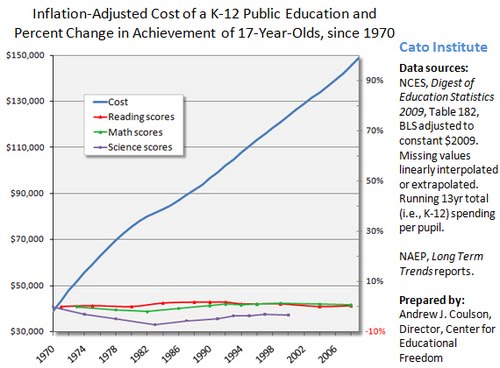
A while back, the libertarian Cato Institute had an article talking about who would pay for Obama’s $1 trillion health care plan. They asked whether Obama could pay for it by “taxing the rich”.

The answer is no:

Funding the new health-care plan on the backs of households making $200,000 or more per year would require permanently increasing their annual total tax payments by about 50 percent. So, for example, a household that currently pays $50,000 in federal income taxes would need to pay another $25,000. Remember, however, that Social Security and Medicare already face enormous shortfalls. Shoring up these programs — another Obama campaign promise — would require collecting 328 percent more tax revenue from the rich. No, we didn’t forget a decimal point: That is three hundred and twenty-eight percent.

And what follows from taxing the rich?

[…]A major tax increase causes the tax capacity of the rich to shrink gradually as two factors kick in. First, many of the households falling into Obama’s “rich” definition are married couples in which both partners are working professionals. When tax rates rise, the lower-earning spouses in these couples tend to work less. Often, they quit work entirely. Second, many of the “rich” are budding entrepreneurs and small-business owners. They finance their operations using their own after-tax income, or with after-tax resources from family and friends. Small-business innovation is the fuel for long-term economic growth. In fact, many of the largest companies in the United States today were either small or nonexistent just 25 years ago. Killing small business kills the American economy.

The rich in France abandoned France in droves when the socialist Francois Hollande passed a 75% top income tax rate. Why do Democrat voters think that this would not happen here? We have to learn economics by watching what happens after the policies are enacted, in other times and places. Higher taxes on the rich cause them to produce less, lowering tax revenues.

I myself have been planning to stop working within the next 5 years, exactly because I can see that the Democrat voters are taking us in the direction of massive taxes on employment. I don’t intend to be working when that happens. If enough people respond to higher tax rates like me, the Democrats are going to have an even bigger problem paying for their spending promises.

If unborn babies don’t have consciousness or don’t feel pain, may we kill them?

Unborn baby scheming about pro-life apologetics

Was having a conversation by e-mail yesterday with a pro-abortion atheist, and he gave two reasons why he supported abortion in the first and second trimester. First, he said that unborn babies can’t feel pain, so it’s OK to kill them. Second, he said that unborn babies don’t have consciousness, so it’s OK to kill them. I thought it might be useful to link to something that answers both of these objections.

Frank Beckwith is the author of “Defending Life: A Moral and Legal Case Against Abortion Choice“. He wrote that book for Cambridge University Press, a top academic press. But before Cambridge University Press, Beckwith wrote four easy-to-understand essays for the Christian Research Journal. Part IV is the one that has the response to the two questions raised by my atheist friend.

Part I. The Appeal to Pity

Part II. Arguments from Pity, Tolerance, and Ad Hominem

Part III. Is The Unborn Human Less Than Human?

Part IV. When Does a Human Become a Person?

Excerpt:

Some ethicists argue that the unborn becomes fully human sometime after brain development has begun, when it becomes sentient: capable of experiencing sensations such as pain. The reason for choosing sentience as the criterion is that a being that cannot experience anything (i.e., a presentient unborn entity) cannot be harmed. Of course, if this position is correct, then the unborn becomes fully human probably during the second trimester and at least by the third trimester. Therefore, one does not violate anyone’s rights when one aborts a nonsentient unborn entity. [13]

There are several problems with this argument. First, it confuses harm with hurt and the experience of harm with the reality of harm. [14] One can be harmed without experiencing the hurt that sometimes follows from that harm, and which we often mistake for the harm itself. For example, a temporarily comatose person who is suffocated to death “experiences no harm,” but he is nevertheless harmed. Hence, one does not have to experience harm, which is sometimes manifested in hurt, in order to be truly harmed.

Second, if sentience is the criterion of full humanness, then the reversibly comatose, the momentarily unconscious, and the sleeping would all have to be declared nonpersons. Like the presentient unborn, these individuals are all at the moment nonsentient though they have the natural inherent capacity to be sentient. Yet to countenance their executions would be morally reprehensible. Therefore, one cannot countenance the execution of some unborn entities simply because they are not currently sentient.

Someone may reply that while these objections make important points, there is a problem of false analogy in the second objection: the reversibly comatose, the momentarily unconscious, and the sleeping once functioned as sentient beings, though they are now in a temporary state of nonsentience. The presentient unborn, on the other hand, were never sentient. Hence, one is fully human if one was sentient “in the past” and will probably become sentient again in the future, but this cannot be said of the presentient unborn.

There are at least three problems with this response. First, to claim that a person can be sentient, become nonsentient, and then return to sentience is to assume there is some underlying personal unity to this individual that enables us to say that the person who has returned to sentience is the same person who was sentient prior to becoming nonsentient. But this would mean that sentience is not a necessary condition for personhood. (Neither is it a sufficient condition, for that matter, since nonhuman animals are sentient.) Consequently, it does not make sense to say that a person comes into existence when sentience arises, but it does make sense to say that a fully human entity is a person who has the natural inherent capacity to give rise to sentience. A presentient unborn human entity does have this capacity. Therefore, an ordinary unborn human entity is a person, and hence, fully human.

Second, Ray points out that this attempt to exclude many of the unborn from the class of the fully human is “ad hoc and counterintuitive.” He asks us to “consider the treatment of comatose patients. We would not discriminate against one merely for rarely or never having been sentient in the past while another otherwise comparable patient had been sentient….In such cases, potential counts for everything.” [15]

Third, why should sentience “in the past” be the decisive factor in deciding whether an entity is fully human when the presentient human being “is one with a natural, inherent capacity for performing personal acts?” [16] Since we have already seen that one does not have to experience harm in order to be harmed, it seems more consistent with our moral sensibilities to assert that what makes it wrong to kill the reversibly comatose, the sleeping, the momentarily unconscious, and the presentient unborn is that they all possess the natural inherent capacity to perform personal acts. And what makes it morally right to kill plants and to pull the plug on the respirator-dependent brain dead, who were sentient “in the past,” is that their deaths cannot deprive them of their natural inherent capacity to function as persons, since they do not possess such a capacity.

These four essays are a very good introduction to common responses to pro-abortion arguments. I recommend that people get familiar with this, as once you look into it, you will see that the abortion issue can be debated with as much confidence as William Lane Craig defends Christian theism. You will have the same access to scientific evidence and rational arguments on this topic, and so you will have the upper hand. And that’s fun.

The best introductory book on the abortion / right to life issue is “The Case for Life” by pro-life debater Scott Klusendorf. The best comprehensive book is a tie between “The Ethics of Abortion” by Christopher Kaczor, and Frank Beckwith’s “Defending Life: A Moral and Legal Case Against Abortion Choice“.

Implications of the Supreme Court’s “Obergefell v. Hodges” decision

Gay activist vandalizes pro-marriage sign

I am linking to an article posted at the Stream about an important new book by marriage defender Ryan T. Anderson, entitled “Truth Overruled”. I have already bought myself a paperback copy of it.

Anyway, here’s the excerpt:

Anderson lays out soberly all the radical, counter-intuitive and just-plain-crazy implications of the Supreme Court decision in June, Obergefell v. Hodges, that overturned all state laws predicated on the natural, timeless structure of marriage as one man and one woman, hopefully till death:

  • Marriage is not about protecting children and helping to form future free citizens. It exists to cater to the fleeting emotional needs of adults.
  • The state recognizes marriages in order to validate the “dignity” of citizens — that is, to boost their self-esteem.
  • Men and women are exactly the same, and therefore completely interchangeable as parents.
  • Children do not need or deserve continuity of care from their biological parents. Any adult present will do.
  • The U.S. Constitution has no permanent, substantive meaning. It is instead a means by which social and legal elites can override democratic majorities whenever they feel that the time is ripe to impose new philosophical premises on the populace.
  • The free exercise of religion is no more extensive than simple free speech, and can be restricted when a religious group’s views diverge from the Court’s majority view of what the Constitution means at the moment.
  • The connection between sexual activity and human reproduction is simply accidental, a quirk of biology that has no implications for morality, law or society.
  • Those who deny any of these points are morally equivalent to white racists, and will be treated by the government with no greater deference.

Anderson is not alone in recognizing the sheer radicalism of Obergefell v. Hodges; indeed, four justices of the Court, including its Chief Justice, John Roberts, issued a stinging dissent that raises most of the objections which Anderson coolly unpacks in the course of his book. Advocates of same-sex marriage were quick to brush such arguments aside, and cast their opponents as isolated, irrational extremists, motivated only by fideistic reliance on ancient religious texts. Anderson makes it clear that this tactic is fundamentally dishonest, expanding on the dissenters’ points and fleshing each of them out with reference to history, biology, social science — and yes, even religion.

Anderson rightly avoids the temptation to simply play whack-a-mole with every specious argument offered by those who claim to advocate “marriage equality.” While he answers such objections, he also does the reader the service of clarifying and simplifying the terms of the debate, showing how it is finally, starkly, the face-off between two irreconcilable views of marriage:

  1. A “comprehensive — permanent and exclusive — union of sexually complementary spouses who engage in a comprehensive act that is inherently ordered toward a comprehensive good: the procreation and rearing of new human life.”
    and
  2. An “intense emotional union — a romantic, care-giving union of consenting adults.”

As Anderson demonstrates, the first view is the one that has existed in every human society of which we have any record, even those that tolerated polygamy and extra-marital homosexual relationships. The second, impoverished view is the program of the Sexual Revolution, whose gradual implementation (beginning with no-fault, unilateral divorce) has seen the virtual collapse of marriage, the enormous suffering of children, the disappearance of two-parent families in large swathes of society — in other words, domestic chaos.

Anderson cites solid, peer-reviewed research to show the grave harm this social change has done to the most vulnerable people in America: the children of the poor. Our prisons are disproportionately full of boys who grew up without fathers, and our welfare rolls of young girls who were sexually exploited and made pregnant as young teenagers, in part because they had no father to protect them. They in turn are likely to raise children without their biological fathers. This cycle of dysfunction can all be traced to the loosening of the marriage bond, which is only further weakened when the law itself — and even the U.S. Constitution — is invoked by our nation’s highest authorities to affirm that sex has no permanent unitive meaning, and that children’s interests must play second fiddle to the emotional needs of adults.

You might think that same-sex “marriage” could improve the well-being of children, but Anderson cites statistics showing a clear correlation between its legal adoption in particular polities, and declines in the marriage and even the birth rate.

No man is an island, and no woman neither. But least of all are children, those fragile and needy creatures who depend on us for their present, who will populate our future. The acceptance of same-sex marriage, as Anderson doggedly demonstrates, is only the latest stage in our culture’s narcissistic rejection of responsibility toward the vulnerable.

Federal enforcement of a new, invented Constitutional “right” poses a threat to religious liberty and freedom of association. Anderson lays out the well-known (and some of the lesser-known) cases of same-sex marriage advocates using the state’s coercive power to harm innocent citizens who were acting on their conscience, who declined to assist with same-sex marriages. He correctly notes the grave danger posed to churches, citing the now-infamous exchange between Obama’s solicitor general and Justice Samuel Alito, in which the former admitted that churches who decline to perform same-sex marriages may well face the same legal and tax penalties applied in the past to segregationist sects.

This little excerpt is a very good summary of the issues, and how marriage fits into the overall fight to defend the rights of children to their moms and dads, and a stable childhood where both parents sacrifice themselves for the good of their children. We need to get that culture back. If you are pro-same-sex marriage, then you are part of the problem. It doesn’t matter what you do in your personal life. If you are voting for this, you are harming society, and harming children, all for the self-esteem of self-centered grown ups. I urge all my readers to get informed about marriage and to be persuasive when talking about marriage to their neighbors.

Related posts