Matt Dillahunty debates David Robertson on atheism, morality and evil

Two horses fight it out, may the best horse win!

OK. So I think it’s safe to say that of all the Christian apologists out there, David Robertson is my least favorite debater. Why? Many reasons, but mostly because he does not bring in evidence, especially scientific evidence. And he seems to make these clever quips like G. K. Chesterton. I like evidence. I would rather that he talk about scientific and historical evidence.

Dina asked me to listen to this debate a while back, between David Robertson and agnostic Matt Dillahunty (he’s not an atheist, he’s just an agnostic). I went in absolutely convinced that Robertson was going to have his ass handed to him by Matt Dillahunty. And I could not have been more wrong.

Here’s the debate posted on YouTube (audio only):

This snarky summary is just a paraphrase from certain parts of the debate, it is not designed for accuracy, but for fun – to make you listen to the debate. Listen to the debate to get the exact words in context.

Summary:

  • Matt Dillahunty: he’s an agnostic who calls himself an atheist
  • David Robertson: he’s from Scotland, could we not get someone better?
  • Robertson opening statement is incredibly weak, as you might expect, he only had two arguments embedded in a long list of nonsense: 1) origin and design of the universe 2) reality of evil requires objective morality

1) Creation/Design:

Robertson: The fact is that matter exists. There are 3 views that could account for this fact: 1) created, 2) eternal, 3) self-generated out of nothing. Option 3) is self-contradictory, 1) requires a Creator, and 2) is falsified by the Big Bang cosmology. So what’s your view?

Dillahunty: You’re trying to get me to say what my view is, but I can just say “I don’t know” and get out of having to take any position on how matter got here.  I can say “I don’t know” to all the scientific evidence for the Big Bang cosmology, too!

2) Evil requires objective morality, requires a moral lawgiver:

Robertson: evil exists, e.g. – the Holocaust. If atheism is true, objective morality is impossible. Richard Dawkins agrees. Therefore, theism is the best explanation for the existence of evil.

Dillahunty: In my opinion, morality means doing what helps people have well-being. And I think that the Holocaust is obviously bad, because it hurts the well-being of the victims.

Robertson: The problem is that on your view, different people decide what well-being is to them. If you were raised in the Social Darwinism of the Nazi regime, you would believe that the Holocaust was the best for the well-being of the society as a whole.

Dillahunty: Isn’t it obvious that killing people is bad for their well-being?

Robertson: Is it bad for the well-being of unborn children to kill them?

Dillahunty: Yes

Robertson: So you’re against abortion, then?

Dillahunty: No

Robertson: So you think that killing the child in the womb is against the well-being of the child, but you’re for that?

Dillahunty: I don’t know! I don’t know!

Then Dillahunty tried to claim Hitler was a Christian:

Dillahunty: here is a quote by Hitler saying that secular schools are bad, and religious schools are good – see, he’s a Christian!

Robertson: when was that said and to whom?

Dillahunty: I don’t know, I don’t know!

Robertson: It was said in 1933, during an election campaign, to Catholic authorities – he was a politician, looking for votes from Catholics so he could become Chancellor.

Good and evil on atheism:

Dillahunty: good actions results in states with more well-being, and evil actions result in states with less well-being.

Brierley: but when the Nazis slaughtered all those people, they believed they were increasing well-being

Dillahunty: But you could demonstrate to them that their action is not going to increase well-being. Survival of the fittest is descriptive of what happens, but it’s not prescriptive.

Robertson: Whose well-being will human beings think about most, if not their own? Do you really think that you can stop people like Charles Manson from being evil by sitting down and trying to prove to them that they are not helping their victim’s well-being?

(A BIT LATER)

Robertson (to Dillahunty): Is it a fact that Dachau (a concentration camp) was morally wrong?

Dillahunty: (literally, not a paraphrase) I DON’T KNOW

My thoughts:

When I listened to this debate, the overwhelming conviction that emerges is that Matt Dillahunty is not someone who forms his worldview based on evidence. His rejection of the Big Bang cosmology with “I don’t know” is just atrocious. His comments about slavery in the Bible and Hitler being a Christian show that his investigations of these issues is far below the level of a responsible adult. His dallying with the Jesus-never-existed view just shows him to be fundamentally anti-intellectual, as even atheist historian Bart Ehrman denies that view. His definition of faith has nothing to do with the Bible, or Christian authorities, or Christian scholars – he invented a definition of faith that allows him to mock Christians as morons. That’s just irresponsible – letting the desire to mock others cause you to distort the definition of a word. When asked to state his positions or respond to specific evidence, his response is very often “I don’t know”. It seems to me that atheism, to him, means not pursuing truth with the aim of grasping it. He wants to keep reality at a safe distance – that’s why he says “I don’t know” so often.

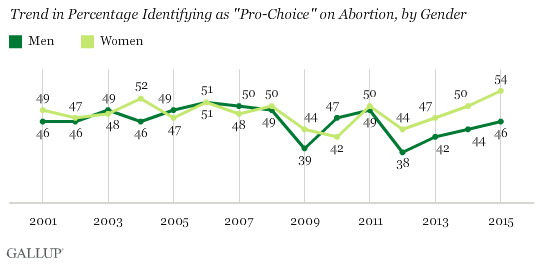
On morality, it’s even worse. It’s not surprising to me that he is pro-abortion and has no opinion about concentration camps being objectively evil. Most atheists are pro-abortion, by the way. When it comes to morality, Dillahunty only has his own personal opinions, and they refer to nothing outside his own mind. (His opinion of morality as related to well-being is utilitarianism – a very problematic view – but moreover, it is his subjective view – he isn’t offering it as any sort of objective moral system that would be prescriptive instead of descriptive. Without an after-life, there is no reason for anyone to care about the moral point of view when it goes against their self-interest, anyway. Atheists use moral language, but their statements are not referring to any objective, prescriptive moral reality. Atheism is materialistic and therefore deterministic – it does not even ground the free will that is needed to make moral choices. Their view is Darwinian survival of the fittest, that’s what emerges from their origins story – and it does not rationally ground morality. The strong kill the weak, if they can. I’ve written before about how difficult it is for atheists to rationally condemn things like slavery, and nothing in Dillahunty’s presentation led me to believe that he had solved that problem.

Anybody can be an intellectually-satisfied atheist with an empty head – it’s knowledge that causes people to conform their beliefs to reality. If one strives to keep one’s head as empty as possible, then of course one can believe anything one wants. I’m glad, speaking as a Christian theist, that I get to follow the evidence wherever it leads. It seems to me that we should do that, rather than decide how we want to live first, and then invent a worldview to justify our desires.

Positive arguments for theism

New study: vocational training graduates more likely to be employed

College students puking in toilet

The Stream reports on a new study of interest to young people who want to maximize the revenue from their future job, while minimizing the cost of their higher education.

Excerpt:

Conventional wisdom says that students need a four-year degree to make it in today’s economy. But do the numbers back that up?

According to a new study released by the Department of Education, students who pursue an occupational credential (an education that is career-centered) are more likely to be employed than those who get an academic credential.

[…]The study uses data from the Beginning Postsecondary Students Longitudinal Study (BPS), which tracked students who had enrolled in college for the first time.

Researchers surveyed students starting in 2003 and tracked their progress through 2009. By the end of that six-year period, the study found that a greater proportion of students who earned an occupational credential were employed.

Additionally, 74 percent of those employed students with an occupational credential were in jobs related to their field of study, compared to just 53 percent of employed students who earned an academic credential.

These data illustrate the need for change in the way policymakers think about higher education. With college tuition at an all-time high and with over 3.6 million students defaulting on their student loans, students need alternative options for upward mobility now more than ever.

The author Mary Clare Reim notes:

This suggests that recent efforts to encourage more individuals to pursue college (President Barack Obama said that all Americans should have at least some postsecondary education) may be misguided. The data also suggest that the administration’s antagonism toward more career-focused educational tracks — often provided by for-profit trade schools and community colleges — is misplaced.

On this career guide web site, I found the top 10 trades and technical careers ranked by median annual salary.

  1. Elevator Installers and Repairers $70,910
  2. Electrical and Electronics Repairers $65,230
  3. Boilermakers $54,640
  4. Construction and Building Inspectors $52,360
  5. Electricians $48,250
  6. Pile-Driver Operators $47,860
  7. Brickmasons and Blockmasons $46,930
  8. Plumbers $46,660
  9. Structural Iron and Steel Workers $44,540
  10. Sheet Metal Workers $41,710

Of course those are the median salaries, if you are clever and hard working, you can make much more.

Consider this story from the Wall Street Journal.

Excerpt:

Justin Friend ’s parents have doctoral degrees and have worked as university lecturers and researchers. So Mr. Friend might have been expected to head for a university after graduating from high school in Bryan, Texas, five years ago.

Instead, he attended Texas State Technical College in Waco, and received a two-year degree in welding. In 2013, his first full year as a welder, his income was about $130,000, more than triple the average annual wages for welders in the U.S. In 2014, Mr. Friend’s income rose to about $140,000.

[…]Mr. Friend, who is single, typically works 72 hours a week, usually including at least one day of the weekend, often on an overnight shift. His base pay is more than $25 an hour, up from about $22 when he started in 2012. He gets overtime after 40 hours a week. Pay is doubled on Sundays and tripled on holidays. He receives health insurance, a 401k retirement plan and paid vacation.

With little free time, expenses are low. He rents a one-bedroom apartment for $1,080 a month in a building with a pool and gym. To stay in shape for mountain-climbing trips, he sometimes runs up and down steps wearing a weighted backpack.

[…]The long hours mean “it’s hard to have a life,” Mr. Friend said. Eventually, he said he may pursue an advanced degree in metallurgy and research welding materials and techniques. For now, he’s building up his savings.

He’s debt-free, and probably didn’t even need student loans for this program. You couldn’t say that about most college students these days – and the ones in non-STEM fields will never be able to pay their loans back. What causes people to go into programs that don’t produce a return on investment? I think I know why. I think that many Americans have the idea that life should be about personal fulfillment, and not about doing things that don’t feel right to them. Hard work doesn’t “feel” right to many young Americans. They want work to make them famous, and to make them happy. Well, work isn’t supposed to be like that. Work is about making money, and very often the most difficult degrees and jobs are the least fame-making, and the least happiness-inducing.

Indoctrinate U

So why do people go to university and college to study non-STEM, non-trade, disciplines that produce lower employment and lower salaries?

I think that the Democrat Party has an interest in running up the national debt to $20 trillion in order to make college indoctrination cheaper, but as the debt grows, it gets harder and harder to provide public sector adult day care jobs to all the students who have no marketable skills. Government makes it easy for lazy students to spend 4 years drinking and having promiscuous sex at taxpayer expense. The combination of an immoral lifestyle with indoctrination and high student loans is usually enough to make a Democrat for life – or at least until the little brainwashed drones start to pay taxes (if ever).

Here is a quote from progressive president Woodrow Wilson about the purpose of higher education:

The purpose of a university should be to make a son as unlike his father as possible. By the time a man has grown old enough to have a son in college he has specialized. The university should generalize the treatment of its undergraduates, should struggle to put them in touch with every force of life.

That’s the real purpose of non-STEM degrees – to make a Democrat voter, and not to make a worker who can earn money and be independent of government programs. If all you have learned to do in college is roll your eyes like a jaded reptile and complain about “sexism” and “racism”, then you’re only qualified to sit in a safe space, not to provide a customer with anything of value. Welfare programs and government jobs (but I repeat myself) work while there is money to borrow, but when the debt hits a certain level, reality rises back to the surface.

Communist Cuba’s violent suppression of dissenters under Fidel Castro

Communism in action: Cuban government arrests dissenter after a beating

My mother was watching CNN on Saturday, and she called to tell me that Sanjay Gupta was talking about the great healthcare in Cuba. Now, I know that CNN hires a lot of Marxists like Gupta and Zakaria, but many people may not realize how far left they are, and how that bias affects what they say on air. Let’s see what Cuba is really like using some evidence for a change.

The Daily Signal has the numbers on Cuba’s treatment of dissidents from a respected source:

As for the dissidents, the Obama administration has abandoned them. Many have told me they feel betrayed by our president, and by extension, by the United States. Guillermo Fariñas, especially, has a reason to feel betrayed, as Obama promised him personally at a meeting in 2013 that he would take no step toward re-establishing relations with Cuba without prior consultations with the opposition. This did not happen.

And dissidents have suffered the consequences. Political arrests have intensified since December of 2014. Throughout 2015, there were more than 8,616 documented political arrests in Cuba.

And in 2016? There already had been over 8,505 political arrests during the first eight months, and they are expected to top 10,000. This represents the highest rate of political arrests in decades and nearly quadruples the tally of political arrests throughout all of 2010 (2,074), early in Obama’s presidency.

These figures come from the Cuban Committee for Human Rights and National Reconciliation, which is recognized by Amnesty International, Freedom House, and other major human rights groups.

Shutting down communication with the outside world to cover up the arrests, the torture, the human rights abuses, the poverty, and the horribly ineffective health care:

And because Cuba’s communist leaders cannot allow Cubans to be in free contact with the outside world, internet connectivity has dropped. The International Telecommunication Union (ITU) has something called the Measuring the Information Society Report, which is the world’s most reliable source of data and analysis on global access to information and communication.

Last year, the International Telecommunication Union dropped Cuba’s ranking to 129 from 119. This means that Cuba actually has lower internet connectivity than some of the world’s most infamous suppressors of the internet, including Zimbabwe (which is 127), Syria (which is 117), Iran (91), China (82), and Venezuela (72).

What about Cuba’s health care system and economy? Didn’t Castro’s communist reforms make that better?

Investors Business Daily explains:

Before the revolution, Cuba had the 13th-lowest infant mortality rate in the world. It was lower than France, Belgium and West Germany. Today, it ranks about 40th. That still looks respectable, until you consider how it was accomplished: Cuba has one of the highest abortion rates in the world. At the first sign of any trouble when a woman is carrying a baby, it is aborted — regardless of the parents’ wishes.

That’s why their infant mortality rate isn’t even worse.

But surely health care for all is a major accomplishment, right?

No. As has been noted in many other places, Cuba has three separate health care systems. One for paying customers from places like the U.S., who go to Cuba for discount treatments of cosmetic surgery and the like.

There’s another for Cuba’s ruling Communist elite, also a good system. This is the health care system visiting journalists are taken to see, and that they later glowingly report on.

But there’s still another system for the rest — the average Cubans. It is abysmal, and even that might understate how bad it is.

“Cubans are not even allowed to visit those (elite) facilities,” according to the Web site The Real Cuba. “Cubans who require medical attention must go to other hospitals, that lack the most minimum requirements needed to take care of their patients.”

It goes on: “In addition, most of these facilities are filthy and patients have to bring their own towels, bed sheets, pillows, or they would have to lay down on dirty bare mattresses stained with blood and other body fluids.”

As for doctors, well, they make an average of about $25 to $35 a month. Many have to work second jobs to make ends meet, using substandard equipment. Drug shortages are rife. As a result, one of Cuba’s ongoing problems is that doctors leave as soon as they can for other countries, where they can make a decent living.

The country has over 30,000 doctors working overseas officially. Why? Out of kindness? No. The Castro regime earns an estimated $2.5 billion a year in hard currency from doctors working elsewhere, which means Cuba’s poor must go without decent care or access to doctors.

As for “universal literacy,” please. Primary and secondary schools are little more than Marxist indoctrination centers, where students are taught only what the state wants them to know. That’s how they keep people quiet.

Then there’s  Cuba’s higher education, in which “universities are training centers for bureaucrats, totally disconnected from the needs of today’s world. To enter the best careers and the best universities, people must be related to the bureaucratic elites, and also demonstrate a deep ideological conviction,” notes Colombian journalist Vanesa Vallejo, of the PanAm Post, a Latin American news site.

Nor is it “free.” In fact, those who graduate from college must work for a number of years for the government at a substandard wage of $9 a month. They are in effect slave labor. As with most “free” things the socialists offer, the price is very high and nonnegotiable.

In sum, Castro took a healthy country and made it sick. Those who glorify him deserve the scorn they get for propagating such a longstanding lie.

Regarding health care in Cuba, here are a couple of videos that were smuggled out of the actual health care system used by  ordinary Cubas:

And:

So, that’s the truth about Cuba – very different from what the regime itself and its wealthy supporters in Hollywood and the far left mainstream media want you to believe.

I’d really like to read what Mary Anastasia O’Grady has to say about the death of Castro in the Wall Street Journal, and I hope she writes about this story soon. UPDATE: Here it is, finally.