What’s the best solution to higher carbon emissions?
Many people favor Big Government solutions to the problem of carbon emissions. For example, the Green New Deal proposed by the Democrats would abolish all gas, oil and coal energy. That plan would raise taxes and require massive restrictions on free markets and individual consumers. But there is a better way, and it was just published in the prestigious peer-reviewed journal Science.
Economist Robert P. Murphy wrote a very interesting article about the new study for the Mises Institute.
He writes:
A recent article in the Guardian trumpeted the findings of a new study published in Science that found massive tree planting would be — by far — the cheapest and most effective approach to mitigating climate change. Ironically, the new thinking shows the pitfalls of political approaches to combating so-called “negative externalities.” The good news about tree planting disrupts the familiar narrative about carbon taxes that even professional economists have been feeding the public for years.
He quotes the Guardian article so:
Planting billions of trees across the world is by far the biggest and cheapest way to tackle the climate crisis, according to scientists, who have made the first calculation of how many more trees could be planted without encroaching on crop land or urban areas.
As trees grow, they absorb and store the carbon dioxide emissions that are driving global heating. New research estimates that a worldwide planting programme could remove two-thirds of all the emissions that have been pumped into the atmosphere by human activities, a figure the scientists describe as “mind-blowing”.
[…]“This new quantitative evaluation shows [forest] restoration isn’t just one of our climate change solutions, it is overwhelmingly the top one,” said Prof Tom Crowther at the Swiss university ETH Zurich, who led the research. “What blows my mind is the scale. I thought restoration would be in the top 10, but it is overwhelmingly more powerful than all of the other climate change solutions proposed.”
OK, so this plan will work, but will it cost less than the $52.6 to $93 trillion dollars over 10 years needed for the Green New Deal?
Yes:
Citing a figure that planting a new tree costs roughly 30 cents, Prof. Crowther remarked that we could plant the target of 1 trillion trees by spending about $300 billion.
Just FYI, the cost per household for the Green New Deal is between $361,010 and $653,010, according to the Washington Free Beacon.
As a conservative, I recognize that sometimes I have to be willing to spend taxpayer money on a small government solution in order to avoid other big government solutions to a problem. The same thing is true for individual health savings accounts funded by a government voucher. I don’t like spending taxpayer money, but sometimes spending a little is better than creating a huge bureaucracy that will require spending a lot more.
One of my favorite movies for explaining the differences between men and women is “High Noon” (1952).
Here’s the summary from IMDB:
Former marshal Will Kane (Gary Cooper) is preparing to leave the small town of Hadleyville, New Mexico, with his new bride, Amy (Grace Kelly), when he learns that local criminal Frank Miller has been set free and is coming to seek revenge on the marshal who turned him in. When he starts recruiting deputies to fight Miller, Kane is discouraged to find that the people of Hadleyville turn cowardly when the time comes for a showdown, and he must face Miller and his cronies alone.
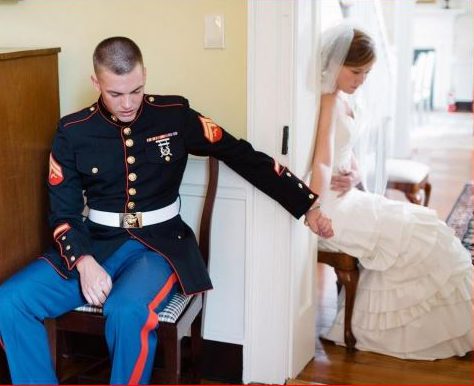
The main theme of the film concerns Amy’s decision to break her wedding vows the very day that she makes them. She tells her new husband that he must bow to her will, and give up his male role as protector. When he explains his reasons for standing his ground to her practically (Miller will hunt them down) and morally (he has a duty protect the town), she dismisses both. She tells him that if he doesn’t run away from Miller and his gang with her, that she will get on the train and leave town by herself.
The intro of film shows the member’s of Miller’s gang assembling, and the words of the song explain the central conflict between husband and wife:
Here’s the part of the lyrics we care about:
The noonday train will bring Frank Miller.
If I’m a man I must be brave
And I must face that deadly killer
Or lie a coward, a craven coward,
Or lie a coward in my grave.
O to be torn ‘twixt love and duty!
S’posin’ I lose my fair-haired beauty!
Look at that big hand move along
Nearin’ high noon.
He made a vow while in State’s Prison,
Vow’d it would be my life or his’n
I’m not afraid of death, but O,
What will I do if you leave me?
Do not forsake me O my darlin’
You made that promise when we wed.
Do not forsake me O my darlin’
Although you’re grievin’, I can’t be leavin’
Until I shoot Frank Miller dead.
What’s interesting is that his new wife Amy apparently does not understand the meaning of wedding vows or the natural roles of good men as protectors of the weak, and fighters against evil. Although she vowed to stick by him and help him, the minute anything threatening appears that makes her feel unhappy, she abandons her vows and abandons her man. Let’s break down her mistakes now, using actual conversations from the movie.
First, she doesn’t understand or respect the man she married as a man:
Kane: [while riding out of town] It’s no good. I’ve got to go back, Amy.
Amy: Why?
Kane: This is crazy. I haven’t even got any guns.
Amy: Then let’s go on. Hurry.
Kane: No, that’s what I’ve been thinkin’. They’re making me run. I’ve never run from anybody before.
Amy: I don’t understand any of this.
Kane: [after looking at his vest watch] Well, I haven’t got time to tell ya.
Amy: Then don’t go back, Will.
Kane: I’ve got to. That’s the whole thing. [He turns the buggy around and rides back into town]
Her feelings and her desires for the world to be a happy place for her are so strong that they cloud her judgment.
Second, she doesn’t understand the threat posed by evil men:
More:
Kane: I sent a man up five years ago for murder. He was supposed to hang. But up North, they commuted it to life and now he’s free. I don’t know how. Anyway, it looks like he’s coming back.
Amy: I still don’t understand.
Kane: He was always wild and kind of crazy. He’ll probably make trouble.
Amy: But that’s no concern of yours, not anymore.
Kane: I’m the one who sent him up.
Amy: Well, that was part of your job. That’s finished now. They’ve got a new marshal.
Kane: He won’t be here until tomorrow. Seems to me I’ve got to stay. Anyway, I’m the same man with or without this. [He pins his badge on his vest]
Amy: Oh, that isn’t so.
Kane: I expect he’ll come lookin’ for me. Three of his old bunch are waiting at the depot.
Amy: That’s exactly why we ought to go.
Kane: They’ll just come after us, four of ’em, and we’d be all alone on the prairie.
Amy: We’ve got an hour.
Kane: What’s an hour?…What’s a hundred miles? We’d never be able to keep that store, Amy. They’d come after us and we’d have to run again, as long as we live.
Amy: No we wouldn’t, not if they didn’t know where to find us. Oh Will! Will, I’m begging you, please let’s go.
Kane: I can’t.
Amy: Don’t try to be a hero. You don’t have to be a hero, not for me.
Kane: I’m not trying to be a hero. If you think I like this, you’re crazy.
Instead of recognizing how her feelings are deceiving her about the threat and trusting her husband, she tries to force him to accept her mistaken view of reality by threatening to abandon him.
One of Kane’s ex-girlfriends has a talk with Amy, which helps her to understand who Kane is, and what is expected of her:
Amy: That man downstairs, the clerk, he said things about you and Will. I’ve been trying to understand why he wouldn’t go with me, and now all I can think of is that it’s got to be because of you…Let him go, he still has a chance. Let him go.
Helen: He isn’t staying for me. I haven’t spoken to him for a year – until today. I am leaving on the same train you are…What kind of woman are you? How can you leave him like this? Does the sound of guns frighten you that much?
Amy: I’ve heard guns. My father and my brother were killed by guns. They were on the right side but that didn’t help them any when the shooting started. My brother was nineteen. I watched him die. That’s when I became a Quaker. I don’t care who’s right or who’s wrong. There’s got to be some better way for people to live. Will knows how I feel about it.
Helen: I hate this town. I always hated it – to be a Mexican woman in a town like this.
Amy: I understand.
Helen: You do? That’s good. I don’t understand you. No matter what you say. If Kane was my man, I’d never leave him like this. I’d get a gun. I’d fight.
Amy: Why don’t you?
Helen: He is not my man. He’s yours.
Helen understands the need for a wife to stand by her man. But Amy’s response to evil is to shut her eyes and focus on feeling good and being happy. Notice that her “better way” is unspecified – it’s just a feeling she has that pacificism and no-violence will somehow “work” to stop evil. But in reality, pacifism is not a “better way” of dealing with evil – it does not work. Her pacifist response not only does not make evil go away, it actually encourages more evil. Weakness emboldens evildoers, and laying down your arms provokes them to do more evil. Will Kane knows this, but she won’t listen to him.
You can watch the final gunfight here, as well as Amy’s final decision:
So, this is why I really recommend this movie as a discussion-starter when you like a girl and are thinking of marrying her. It clarifies the essential problem with many young women today not being ready for marriage. To be fair, most women come around to respect their husbands and his different roles after they get married. However, the risk of divorce is so dangerous that it makes sense to bring it up for discussion before the marriage happens. Marriage is supposed to be an engine to serve God, and the success of that enterprise cannot be left to chance. You can’t just rely on the fact that she says the words of the vow, you have to check to see if she has a habit of keeping her promises when it goes against her own self-interest.
Ask yourself: Who are you, as a man? And does your woman accept that you have obligations to stand up to evil and do good ? Will she support you in your battle against evil, or will the marriage just be about her feelings and desires? I would especially beware of women who think that God is speaking to them through their feelings and desires. Look at her friends: are they practical and successful? Or are they irresponsible, unaccountable and reckless? Look at her father: does he have a plan for her, and does he lead her to be practical, frugal and hard-working? If you are not going to get an ally and a supporter in a wife, then you will not be able to serve God well, as a married man. Think about it.
A couple of years ago, I was talking to a woman who grew up in a Christian home that was very focused on externals. There was a lot of bullying to get her to comply with expected Christian behavior, although the expected Christian behavior was often arbitrary, and had nothing to do with Christianity and more with just appearing “nice”. There was no discussion of the evidence, no talking through objections. No focus on truth at all. She was always very curious about me, and how come I didn’t drink, and how come I was able to stay a virgin through college, grad school, to the present day when so many people she knew who were raised in the church fell away from it in college. My answer was simple. I didn’t grow up in a Christian home so I was never bullied into acting like a Christian beyond what I was convinced of myself. I just took my time and proved everything out before I had to act any particular way. I was in the driver’s seat all the time, and that’s how Christianity ought to be. The truth-seeking comes first, and then the slow process of re-prioritizing comes after. Performing for your parents and church will not survive contact with college.
Growing up, I didn’t ever have to go to church. I didn’t go to church until I was comfortable going. If I felt bored in church, I read an apologetics book, and I did this openly. If I didn’t like the words of a song, then I didn’t sing. My first youth pastor, Grant, never tried to get me to be like the other kids. He asked me what I was interested in. I said “arguing with people”. He gave me books by E.J. Carnell and Alister McGrath. I read them, and that was how I acted like a Christian. When I met other Christians at the church who hadn’t read anything about God’s existence or the historical Jesus or the problem of evil, I didn’t feel pressured to be like them. In school, there were lots of people who never did any studying or lab work. They could talk a lot about things they knew nothing about. But because they didn’t know anything, they failed tests and they couldn’t put anything they learned into practice, either. People can sound so smart about things… until they actually have to take a test, or put something to use practically.
To me, if you didn’t like apologetics, you were a fake and you were faking behaviors of a worldview that you had never investigated. It was really obvious to me that there was more to Christianity than just Jesus-hollering and Scripture memorization. I did swimming lessons up until the point where I got my lifeguarding certification. At the later levels, we always had written exams as well as a practical portion including activities like treading water, swimming long distances, and rescue simulations. People who could pass the written test often failed the practical. If you fail the practical, then you fail the course. Period. No exceptions.
Knowing the truth about God’s existence and character comes before acting as if God is real and God has a specific character and will for us. From the existence of God, we move on to the accuracy of the Bible, and on to theology, and then and only then do we start the outward behaviors of a Christian. If you skip to the behaviors, that is unnatural – like pretending to be a doctor when you have never been to medical school. Everyone who comes to Christianity from the outside, like me, knows how strange it is to meet people in church who talk about feelings and experiences as the basis of their worldview. Those people would never do anything serious, like making investment choices, on the basis of feelings. They would never think that merely having feelings about auto repair or Java programming enabled them to solve problems in those areas. But somehow, this is the standard operating procedure in the church. Which is why so many kids raised in the church dump their faith in college. For me, it was apologetics that made me so resistant to alcohol, sex and atheism in college. After all, if you win the argument, then why should you act like the person you defeated? They lost. That means they’re wrong. I didn’t feel any social pressure to behave like people who couldn’t beat me in an argument.
Every single day, children raised in intact Christian homes on a diet of piety and “the Bible says” come to an understanding of what Christianity is that is fundamentally different from the knowledge they are acquiring in school or at work. And that is the beginning of their loss of faith. There should be no separation between practical areas of knowledge (e.g. – mechanical engineering) and Christianity. Christianity should not be seen as easy or shallow. We should not praise people who don’t know how to talk about spiritual things intelligently to non-Christians, which is the real core “skill” that Christianity requires. Christianity is not a religion of being nice or feeling good – that’s what all the other religions are trying to do. Christianity is about laying hold of the truth, and adjusting your actions to it.
Every Christian ought to be trying their best to learn how to speak intelligently to non-Christians about their faith, to the best of their ability. Especially when they are confronted with educated non-Christians – which is most of us living in the Western hemisphere. No Christian should be better at something else, like sports or school or music or anything. They should put maximum effort into Christianity, and do other things in their spare time. There is no one in my office who thinks that I know more about computer science than I do about my Christian worldview. Computer science is my day job – I have a BS and MS and 19 years experience in it. But my co-workers know what comes first, and where my real interest and passion lies. When we go out to lunch, I talk about Christian things. That’s what I’m the best at. I’m not trying to impress my co-workers by being the best at computer science. I’m trying to perform for my Audience of One, and show him that his honor and reputation are my top priorities. That quiet, hidden vertical relationship is what Christianity is all about. Not my will, Lord, but your will, be done. Tiny little steps backward from selfishness to communicate to the Lord Jesus that his goals are important to me.
My friend Stephen Bedard tweeted this, recently:
“Frankly, I find it hard to understand how people today can risk parenthood without having studied apologetics.” – William Lane Craig
Typical Christian parents expect behaviors of their children but they put in almost zero effort to answer their questions. I hear from so many Christians who fell away in college about how they dropped their faith in high school but just kept acting to please their parents. And the parents had no idea. The parents are the ones who are closest to the problem. They are the ones who should be finding out what is in the culture and the schools, and discussing it with their children. Most pastors are in the business of saying things that people like in order to pack the pews, and collect offerings. They aren’t there to talk about uncomfortable topics. They’re no good at responding to non-Christian thought in the culture. So it really falls on the parents to do the work of answering questions and leading.
Christianity ought to be more like engineering or lab work if you want to appeal to young people – testable, repeatable, practical. Think back to math class, and how teachers would insist that students SHOW YOUR WORK, instead of just writing the answer down. Instead of just saying “the Bible says”, parents really need to show young people their work – how did they arrive at their worldview? That’s what parents need to be prepared to show their children. Not singing, not feelings, not community, not family time together. Facts and evidence. Because that is the only way we know to test knowledge claims to see if they are objectively true or false. Parents who get their worldview straight will also find it much easier to act in accordance with what they say they believe. Even when the pressure is on, they will know what is true, and be able to do hard things because they want to respect what is true. Coming through a test of your Christian convictions is much easier when you do the homework first. It’s just like any other test in that respect. It certainly worked for me in high school and college when I had to defend my faith to non-Christians. It also helped that I had no desire to fit in with people my own age, because they didn’t have jobs. I had no respect for people who didn’t work for money, which is almost everyone in high school and college.
In the church, we should respect people who are able to study these issues deeply, and then have conversations about their Christian worldview with people who don’t accept that God exists, and don’t believe the Bible. That is what followers of Jesus did (e.g. Acts 17). We should be especially respectful of those who are able to defend the Christian worldview using scientific evidence and historical evidence. Especially those who get PhDs and do research in testable areas of knowledge that matter to the Christian worldview. Jesus offered his own resurrection as evidence of his claims to people who didn’t believe him. He liked evidence, and he had a passion for the truth. And so should we, if we claim to be his followers.
Dr. Walter Bradley
By the way, the lecture that changed my life the most is this lecture by Dr. Walter Bradley, a fabulously successful professor of mechanical engineering. I got hold of this lecture from 1997, about the time when I first started working full-time. It changed my life. Our young people are being raised to look up to attractive athletes, entertaining musicians, fideistic theologians, charismatic pastors, etc. People who have never set foot in the lion’s den. Dr. Bradley is an expert in the scientific evidence relevant to the Christian worldview, and has lectured on HUNDREDS of university campuses. He is invited to speak on campus because he KNOWS what he is talking about. If parents could just start by understanding what it takes to have a career as an open, visible Christian professor on a secular university campus, that would be a good start.