Little Zhuangzhuang, a newborn elephant at a wildlife refuge in China, was inconsolable after his mother rejected him and then tried to stomp him to death.
Tears streamed down his gray trunk for five hours as zookeepers struggled to comfort the baby elephant.
They initially thought it was an accident when the mom stepped on him after giving birth, according to the Central European News agency.
Employees removed him, cleaned him up and treated his injuries, then reunited the baby with his momma.
But she was having none of it, and began stomping him again.
So the game keepers stepped in once more and permanently separated the two.
“We don’t know why the mother turned on her calf but we couldn’t take a chance,” an employee told CEN.
“The calf was very upset and he was crying for five hours before he could be consoled,” he said.
“He couldn’t bear to be parted from his mother and it was his mother who was trying to kill him.”
The petite pachyderm, born in August, is now doing well. The zookeeper who rescued him from his violent mother adopted him and helped him thrive at the Shendiaoshan wild animal reserve in Rong-cheng, China.
I found another photo of the baby elephant here:
A baby elephant’s birthday is supposed to be happy
So, in this post, I wanted to take about the duty that parents have to their children.
I guess a lot of my views on ethics are rooted in the obvious needs that children have. When I look at an unborn baby, I can tell what it needs. So, I am careful not to cause a pregnancy before I can supply its needs. The needs of the little unborn creature are driving these moral boundaries on me. And the same with born children. I oppose gay marriage because when I look at little children, I want them to have a stable environment to grow up in with a mother and father who are biologically related to them (in the best case). I permit lots of arrangements, but I promote one arrangement over the others because that’s what’s best for children. Anyone can look at unborn and born children and see that, just like anyone can look at a crying baby elephant and understand – “I have to govern my behavior so that I don’t hurt you”. If that means cutting off the premarital sex and making decisions that are likely to produce a stable marriage, then that’s what we should do.
Children cry too, you know. They cry when we hurt them. They cry when we make bad decisions and when we don’t provide them with what they need. Children need mothers and fathers who care about them. Making a safe environment for a child isn’t an accident. It isn’t random and unpredictable. We have to control our desires before we have children, so that we provide children with what they need. It would be nice if men and women were more thoughtful and unselfish about children and marriage before they started in with sex.
Have you ever heard Gary Habermas, Michael Licona or William Lane Craig defend the resurrection of Jesus in a debate by saying that the resurrection is the best explanation for the “minimal facts” about Jesus? The lists of minimal facts that they use are typically agreed to by their opponents during the debates. Minimal facts are the parts of the New Testament that meet a set of strict historical criteria. These are the facts that skeptical historians agree with, totally apart from any religious beliefs.
So what are the criteria that skeptical historians use to derive a list of minimal facts about Jesus?
The other way, more influential in contemporary New Testament scholarship, is to establish specific facts about Jesus without assuming the general reliability of the Gospels. The key here are the so-called “Criteria of Authenticity” which enable us to establish specific sayings or events in Jesus’ life as historical. Scholars involved in the quest of the historical Jesus have enunciated a number of these critieria for detecting historically authentic features of Jesus, such as dissimilarity to Christian teaching, multiple attestation, linguistic semitisms, traces of Palestinian milieu, retention of embarrassing material, coherence with other authentic material, and so forth.
It is somewhat misleading to call these “criteria,” for they aim at stating sufficient, not necessary, conditions of historicity. This is easy to see: suppose a saying is multiply attested and dissimilar but not embarrassing. If embarrassment were a necessary condition of authenticity, then the saying would have to be deemed inauthentic, which is wrong-headed, since its multiple attestation and dissimilarity are sufficient for authenticity. Of course, the criteria are defeasible, meaning that they are not infallible guides to authenticity. They might be better called “Indications of Authenticity” or “Signs of Credibility.”
In point of fact, what the criteria really amount to are statements about the effect of certain types of evidence upon the probability of various sayings or events in Jesus’ life. For some saying or event S and evidence of a certain type E, the criteria would state that, all things being equal, the probability of S given E is greater than the probability of S on our background knowledge alone. So, for example, all else being equal, the probability of some event or saying is greater given its multiple attestation than it would have been without it.
What are some of the factors that might serve the role of E in increasing the probability of some saying or event S? The following are some of the most important:
(1) Historical congruence: S fits in with known historical facts concerning the context in which S is said to have occurred.
(2) Independent, early attestation: S appears in multiple sources which are near to the time at which S is alleged to have occurred and which depend neither upon each other nor a common source.
(3) Embarrassment: S is awkward or counter-productive for the persons who serve as the source of information for S.
(4) Dissimilarity: S is unlike antecedent Jewish thought-forms and/or unlike subsequent Christian thought-forms.
(5) Semitisms: traces in the narrative of Aramaic or Hebrew linguistic forms.
(6) Coherence: S is consistent with already established facts about Jesus.
For a good discussion of these factors see Robert Stein, “The ‘Criteria’ for Authenticity,” in Gospel PerspectivesI, ed. R. T. France and David Wenham (Sheffield, England: JSOT Press, 1980), pp. 225-63.
Notice that these “criteria” do not presuppose the general reliability of the Gospels. Rather they focus on a particular saying or event and give evidence for thinking that specific element of Jesus’ life to be historical, regardless of the general reliability of the document in which the particular saying or event is reported. These same “criteria” are thus applicable to reports of Jesus found in the apocryphal Gospels, or rabbinical writings, or even the Qur’an. Of course, if the Gospels can be shown to be generally reliable documents, so much the better! But the “criteria” do not depend on any such presupposition. They serve to help spot historical kernels even in the midst of historical chaff. Thus we need not concern ourselves with defending the Gospels’ every claim attributed to Jesus in the gospels; the question will be whether we can establish enough about Jesus to make faith in him reasonable.
And you can see Dr. Craig using these criteria to defend minimal facts in his debates. For example, in his debate with Ehrman, he alludes to the criteria when making his case for the empty tomb.
Here, he uses multiple attestation and the criteria of embarrassment:
Among the reasons which have led most scholars to this conclusion are the following:
1. The empty tomb is also multiply attested by independent, early sources.
Mark’s source didn’t end with the burial, but with the story of the empty tomb, which is tied to the burial story verbally and grammatically. Moreover, Matthew and John have independent sources about the empty tomb; it’s also mentioned in the sermons in the Acts of the Apostles (2.29; 13.36); and it’s implied by Paul in his first letter to the Corinthian church (I Cor. 15.4). Thus, we have again multiple, early, independent attestation of the fact of the empty tomb.
2. The tomb was discovered empty by women.
In patriarchal Jewish society the testimony of women was not highly regarded. In fact, the Jewish historian Josephus says that women weren’t even permitted to serve as witnesses in a Jewish court of law. Now in light of this fact, how remarkable it is that it is women who are the discoverers of Jesus’ empty tomb. Any later legendary account would certainly have made male disciples like Peter and John discover the empty tomb. The fact that it is women, rather than men, who are the discoverers of the empty tomb is best explained by the fact that they were the chief witnesses to the fact of the empty tomb, and the Gospel writers faithfully record what, for them, was an awkward and embarrassing fact.
There are actually a few more reasons for believing in the empty tomb that he doesn’t go into in the debate, but you can find them in his written work. For example, in his essay on Gerd Ludemann’s “vision” hypothesis. That essay covers the reasons for all four of his minimal facts.
So, if you are going to talk about the resurrection with a skeptic, you don’t want to invoke the Bible as some sort of inerrant/inspired Holy Book. You want to look at it as a historical book, and use historical criteria to get to some facts that critical historians would accept. From that, it’s possible to make a case for the resurrection, which is the guarantee that the words of Jesus are authoritative. Including the words of Jesus where he describes the Bible as a whole as God’s revelation of Himself to his creatures.
Here is the approach I use when talking to non-Christian co-workers:
Explain the criteria that historians use to get their lists of minimal facts
Explain your list of minimal facts
Defend your list of minimal facts using the criteria
Cite skeptics who admit to each of your minimal facts, to show that they are widely accepted
List some parts of the Bible that don’t pass the criteria (e.g. – guard at the tomb, Matthew earthquake)
Explain why those parts don’t pass the criteria, and explain that they are not part of your case
Challenge your opponent to either deny some or all the facts, or propose a naturalistic alternative that explains the facts better than the resurrection
Don’t let your opponent attack any of your minimal facts by attacking other parts of the Bible (e.g. – the number of angels being one or two, etc.)
And remember that there is no good case for the resurrection that does not make heavy use of the early creed in 1 Corinthians 15:3-8. That passages is universally accepted as early, eyewitness testimony from Paul, and represents the core of early Christian beliefs about the death and resurrection of Jesus. Everyone who takes evidence seriously has to account for that early creed, which passes the historical tests I outlined above.
The best essay on the minimal facts criteria that I’ve read is the one by Robert H. Stein in “Contending with Christianity’s Critics“. It’s a good short essay that goes over all the historical criteria that are used to derive the short list of facts from which we infer the conclusion “God raised Jesus from the dead”. That whole book is really very, very good.
When I was in graduate school, we studied a book called “Mirror Worlds”, authored by famous computer science professor David Gelernter at Yale University. This week, I noticed that Dr. Gelernter had written an article in the prestigious Claremont Review of Books. In his article, he applies his knowledge of computer science to the problem of the origin of life.
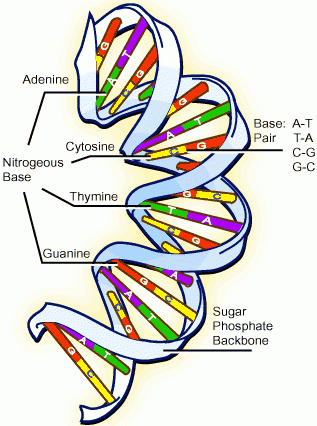
Evolution, if it is going to work at all, has to explain the problem of how the basic building blocks of life – proteins – can emerge from non-living matter. It turns out that the problem of the origin of life is essentially a problem of information – of code. If the components of proteins are ordered properly, then the sequence folds up into a protein that has biological function. If the sequence is not good, then just like computer code, it won’t run.
Here’s Dr. Gelernter to explain:
How to make proteins is our first question. Proteins are chains: linear sequences of atom-groups, each bonded to the next. A protein molecule is based on a chain of amino acids; 150 elements is a “modest-sized” chain; the average is 250. Each link is chosen, ordinarily, from one of 20 amino acids. A chain of amino acids is a polypeptide—“peptide” being the type of chemical bond that joins one amino acid to the next. But this chain is only the starting point: chemical forces among the links make parts of the chain twist themselves into helices; others straighten out, and then, sometimes, jackknife repeatedly, like a carpenter’s rule, into flat sheets. Then the whole assemblage folds itself up like a complex sheet of origami paper. And the actual 3-D shape of the resulting molecule is (as I have said) important.
Imagine a 150-element protein as a chain of 150 beads, each bead chosen from 20 varieties. But: only certain chains will work. Only certain bead combinations will form themselves into stable, useful, well-shaped proteins.
So how hard is it to build a useful, well-shaped protein? Can you throw a bunch of amino acids together and assume that you will get something good? Or must you choose each element of the chain with painstaking care? It happens to be very hard to choose the right beads.
Gelernter decides to spot the Darwinist a random sequence of 150 elements. Now the task the Darwinist is to use random mutation to arrive at a sequence of 150 links that has biological function.
[W]hat are the chances that a random 150-link sequence will create such a protein? Nonsense sequences are essentially random. Mutations are random. Make random changes to a random sequence and you get another random sequence. So, close your eyes, make 150 random choices from your 20 bead boxes and string up your beads in the order in which you chose them. What are the odds that you will come up with a useful new protein?
[…]The total count of possible 150-link chains, where each link is chosen separately from 20 amino acids, is 20150. In other words, many. 20150 roughly equals 10195, and there are only 1080 atoms in the universe.
What proportion of these many polypeptides are useful proteins? Douglas Axe did a series of experiments to estimate how many 150-long chains are capable of stable folds—of reaching the final step in the protein-creation process (the folding) and of holding their shapes long enough to be useful. (Axe is a distinguished biologist with five-star breeding: he was a graduate student at Caltech, then joined the Centre for Protein Engineering at Cambridge. The biologists whose work Meyer discusses are mainly first-rate Establishment scientists.) He estimated that, of all 150-link amino acid sequences, 1 in 1074 will be capable of folding into a stable protein. To say that your chances are 1 in 1074 is no different, in practice, from saying that they are zero. It’s not surprising that your chances of hitting a stable protein that performs some useful function, and might therefore play a part in evolution, are even smaller. Axe puts them at 1 in 1077.
In other words: immense is so big, and tiny is so small, that neo-Darwinian evolution is—so far—a dead loss. Try to mutate your way from 150 links of gibberish to a working, useful protein and you are guaranteed to fail. Try it with ten mutations, a thousand, a million—you fail. The odds bury you. It can’t be done.
Keep in mind that you need many, many proteins in order to have even a simple living cell. (And that’s not even considering the problem of organizing the proteins into a system).
So, if you’re a naturalist, then your only resources to explain the origin of life are chance and mutation. As Dr. Gelernter shows, naturalistic explanations won’t work to solve even part of the problem. Not even with a long period of time. Not even if you use the entire universe as one big primordial soup, and keep trying sequences for the history of the universe. It just isn’t possible to arrive at sequences that have biological function in the time available, using the resources available. The only viable explanation is that there is a computer scientist who wrote the code without using trial and error. Something that ordinary software engineers like myself and Dr. Gelernter do all the time. We know what kind of cause is adequate to explain functioning code.