Category Archives: Commentary

Who is on the political left in America and what are their goals?

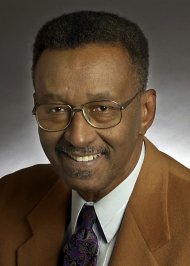
Walter Williams

From Investors Business Daily – economist Walter Williams explains the political left.

Excerpt:

One of the greatest sources of confusion and deception is the difference between leftists, progressives, socialists, communists and fascists.

I thought about this as I caught a glimpse of the Oct. 2 “One Nation” march on Washington.

[…]The gathering had the support of the AFL-CIO, Service Employees International Union, stalwarts of the Democratic Party such as Al Sharpton and organizations such as the NAACP, the National Council of La Raza, Green for All, the Sierra Club and the Children’s Defense Fund.

Let’s look at some of the history of socialism and communism.

Nazism is a form of socialism. In fact, Nazi stands for National Socialist German Workers’ Party. Nazis murdered 20 million of their own people and in nations they captured.

The unspeakable acts of Adolf Hitler’s Socialist Workers’ Party pale in comparison to the horrors committed in the Union of Soviet Socialist Republics (USSR). Between 1917 and 1987, Vladimir Lenin, Joseph Stalin and their successors murdered, or were otherwise responsible for the deaths of, 62 million of their own people.

Between 1949 and 1987, Mao Tse-tung and his successors were responsible for the deaths of 76 million Chinese. The most authoritative tally of history’s most murderous regimes is in a book by University of Hawaii’s Professor Rudolph J. Rummel, “Death by Government.” A wealth of information is provided at his website.

[…]When Hitler, Stalin and Mao were campaigning for political power, you can bet they didn’t campaign on the promise to murder millions of their own people, and probably the thought of doing so never crossed their minds. Those horrors were simply the end result of long evolution of ideas leading to consolidation of power in central government in the quest for “social justice.”

It was decent but misguided earlier generations of Germans, Russians and Chinese, like many of today’s Americans, who would have cringed at the thought of genocide, who built the Trojan horse for a Hitler, a Stalin or Mao to take over.

[…]The primary goal of communism and socialism is government ownership or control over the means of production. In the U.S., only a few people call for outright government ownership of the means of production. They might have learned that government ownership would mess things up.

Instead, they’ve increasingly called for quasi-ownership through various forms of government regulation, oversight, taxation and subsidies. After all, if someone has the power to tell you how you may use your property, it’s tantamount to his owing it.

These are important things to understand about socialists/progressives/leftists/communists.

When you allow someone else to control the means by which you earn your living – by taxing you or by regulating your employer, for example – then you are giving up your freedom to earn your own money and to spend it as you see fit. Socialist dictators always get elected by people who have been duped into exchanging their liberty for the promise of “social justice” – equal life outcomes regardless of your free decisions. But the end is always the same – violence and poverty. To avoid mass murder, it makes sense to decentralize power over many individuals and businesses. And that’s why conservatives favor the free market and limited government.

What are galactic habitable zones and circumstellar habitable zones?

The Circumstellar Habitable Zone (CHZ)

What do you need in order to have a planet that supports complex life? First, you need liquid water at the surface of the planet. But there is only a narrow range of temperatures that can support liquid water. It turns out that the size of the star that your planet orbits around has a lot to do with whether you get liquid water or not. A heavy, metal-rich star allows you to have a habitable planet far enough from the star so  the planet can support liquid water on the planet’s surface while still being able to spin on its axis. The zone where a planet can have liquid water at the surface is called the circumstellar habitable zone (CHZ). A metal-rich star like our Sun is very massive, which moves the habitable zone out further away from the star. If our star were smaller, we would have to orbit much closer to the star in order to have liquid water at the surface. Unfortunately, if you go too close to the star, then your planet becomes tidally locked, like the moon is tidally locked to Earth. Tidally locked planets are inhospitable to life.

Circumstellar Habitable Zone

Here, watch a clip from The Privileged Planet: (Clip 4 of 12, full playlist here)

But there’s more.

The Galactic Habitable Zone (GHZ)

So, where do you get the heavy elements you need for your heavy metal-rich star?

You have to get the heavy elements for your star from supernova explosions – explosions that occur when certain types of stars die. That’s where heavy elements come from. But you can’t be TOO CLOSE to the dying stars, because you will get hit by nasty radiation and explosions. So to get the heavy elements from the dying stars, your solar system needs to be in the galactic habitable zone (GHZ) – the zone where you can pickup the heavy elements you need but not get hit by radiation and explosions. The GHZ lies between the spiral arms of a spiral galaxy. Not only do you have to be in between the arms of the spiral galaxy, but you also cannot be too close to the center of the galaxy. The center of the galaxy is too dense and you will get hit with massive radiation that will break down your life chemistry. But you also can’t be too far from the center, because you won’t get enough heavy elements because there are fewer dying stars the further out you go. You need to be in between the spiral arms, a medium distance from the center of the galaxy.

Like this:

Galactic Habitable Zone
Galactic Habitable Zone and Solar Habitable Zone

Here, watch a clip from The Privileged Planet: (Clip 10 of 12, full playlist here)

The GHZ is based on a discovery made by astronomer Guillermo Gonzalez, which made the front cover of Scientific American in 2001. That’s right, the cover of Scientific American. I actually stole the image above of the GHZ and CHZ (aka solar habitable zone) from his Scientific American article (linked above).

These are just a few of the things you need in order to get a planet that supports life.

Here are a few of the more well-known ones:

  • a solar system with a single massive Sun than can serve as a long-lived, stable source of energy
  • a terrestrial planet (non-gaseous)
  • the planet must be the right distance from the sun in order to preserve liquid water at the surface – if it’s too close, the water is burnt off in a runaway greenhouse effect, if it’s too far, the water is permanently frozen in a runaway glaciation
  • the solar system must be placed at the right place in the galaxy – not too near dangerous radiation, but close enough to other stars to be able to absorb heavy elements after neighboring stars die
  • a moon of sufficient mass to stabilize the tilt of the planet’s rotation
  • plate tectonics
  • an oxygen-rich atmosphere
  • a sweeper planet to deflect comets, etc.
  • planetary neighbors must have non-eccentric orbits

By the way, you can watch a lecture with Guillermo Gonzalez explaining his ideas further. This lecture was delivered at UC Davis in 2007. That link has a link to the playlist of the lecture, a bio of the speaker, and a summary of all the topics he discussed in the lecture. An excellent place to learn the requirements for a suitable habitat for life.

What should a Roman Catholic think about naturalism and evolution?

Charles Pope on the Archdiocese of Washington web site. (H/T Joe Carter on First Things)

Excerpt:

It is common to experience a rather simplistic notion among Catholics that the Theory of Evolution can be reconciled easily with the Biblical accounts and with our faith. Many will say something like this: “I have no problem with God setting things up so that we started as one-celled organisms and slowly evolved into being human beings. God could do this and perhaps the Genesis account is just simplifying evolution and telling us the same thing as what Evolution does.”

There are elements of the truth in this sort of a statement. Surely God could have set things up to evolve and directed the process so that human beings evolved and then, at some time he gave us souls. God could have done that.

The problem with the statement above is less theological than scientific because there is a word in that sentence that is “obnoxious” to evolutionary theory: “God.” The fact is that most Catholics who speak like this over-simplify evolutionary theory and hold a version of it that most Evolutionary Theorists do not hold. They accept the Theory of Evolution uncritically.

Yeah, because what evolutionists mean by “evolution” is that GOD HAD NO DETECTABLE EFFECT ON THE PROCESS. They mean that THE PROCESS OF EVOLUTION OCCURRED ENTIRELY WITHOUT DIVINE INTERVENTION. That’s what evolution means – fully materialistic, fully random, no intelligence needed, emergence of all the diversity of life we see.

Now what this means is that God is excluded as a cause by evolutionary theory. It would be fine if evolutionists (as natural scientists) were either silent on the question of God. Or, perhaps if they simply stated that things may be acted upon by an outside force or intelligence but that is beyond the scope of their discipline. But that is not what is being said by most proponents of evolutionary theory. They are saying that biodiversity results MERELY from natural selection and random (i.e. non intended or non-purposeful) genetic mutations. They are saying that observable effects of biodiversity are wholly caused by something natural, random and without any ultimate goal or plan.

But a Catholic cannot accept all of this. Even if a Catholic wants to accept that things have evolved in some way (whether through macro or microevolution) a Catholic cannot say that this process is simply random, chance, blind, or with no purpose. We believe that God alone created all things, and that he sustains all things. Neither do we confess some sort of “deist” God who merely started things off and then lets them take their own course. Rather, God sustains and carries out every detail.

Joe Carter adds:

In my experience, most people haven’t considered the issue of how the theological and scientific claims can be compatible. For instance, to be a “theistic evolutionist” in the sense that modern scient will accept, requires one to adhere to polygensism (the theory that Adam was not one historical man but, rather, a euphemism for “mankind”). That position, however, is not compatible with the teachings of the Bible, the Church, or of Jesus.

The dividing line between theists and non-theists is as follows: did God act in history in a way that his creative agency and intelligent agency is discernable to us using the objective methods of science? Atheists (and theistic evolutionists) say that God’s creative agency and intelligent (selection/sequencing) agency is neither necessary to explain what we observe in the universe, nor are the effects of agency detectable through science. Theists (and deists) say that God’s creative agency and intelligent agency is necessary in order to explain what we observe in the universe, and these effects of agency are detectable through science.

That is the dividing line. I don’t how I could be much clearer.