
All posts by Wintery Knight

https://winteryknight.com/

Obama budget is a ten-year, $1.5 trillion tax hike over present law

Here’s the analysis of Obama’s budget. (H/T The Blog Prof)

Excerpt:

President Obama released his budget this morning.  Rather than focusing on Washington’s over-spending problem, the budget calls for higher taxes on families and small businesses to pay for even more government spending.  Under the Obama budget, tax revenues will grow from 14.4% of GDP in 2011 to 20% of GDP in 2021.  By comparison, the historical average is only 18% of GDP.

Tax hike lowlights include:

  • Raising the top marginal income tax rate (at which a majority of small business profits face taxation) from 35% to 39.6%.  This is a $709 billion/10 year tax hike
  • Raising the capital gains and dividends rate from 15% to 20%
  • Raising the death tax rate from 35% to 45% and lowering the death tax exemption amount from $5 million ($10 million for couples) to $3.5 million.  This is a $98 billion/ten year tax hike
  • Capping the value of itemized deductions at the 28% bracket rate.  This will effectively cut tax deductions for mortgage interest, charitable contributions, property taxes, state and local income or sales taxes, out-of-pocket medical expenses, and unreimbursed employee business expenses.  A new means-tested phaseout of itemized deductions limits them even more.  This is a $321 billion/ten year tax hike
  • New bank taxes totaling $33 billion over ten years
  • New international corporate tax hikes totaling $129 billion over ten years
  • New life insurance company taxes totaling $14 billion over ten years
  • Massive new taxes on energy, including LIFO repeal, Superfund, domestic energy manufacturing, and many others totaling $120 billion over ten years
  • Increasing unemployment payroll taxes by $15 billion over ten years
  • Taxing management capital gains in an investment partnership (“carried interest”) as ordinary income.  This is a tax hike of $15 billion over ten years
  • A giveaway to the trial lawyers—not letting companies deduct the cost of punitive damages from a lawsuit settlement.  This is a tax hike of $300 million over ten years
  • Increasing tax penalties, information reporting, and IRS information sharing.  This is a ten-year tax hike of $20 billion.

Add it all together, and this budget is a ten-year, $1.5 trillion tax hike over present law. That’s $1.5 trillion taken out of the economy and spent on government instead of being used to create jobs.

The “tax relief” in the budget is mostly just an extension of present law, and also some refundable credit outlay spending in the tax code.  There is virtually no new tax relief relative to present law in the President’s budget.

So then how can the Obama administration claim that they are being fiscally responsible? Let’s see how. (H/T Hyscience)

Excerpt:

The Obama administration’s statement that the government will not be adding to the debt by the middle of the decade clashes hard against the facts, Republicans say, leaving officials straining to justify the budget claim they’ve pushed repeatedly over the past few days.

As it turns out, the administration is not counting interest payments. That means the budget team plans to have enough money to pay for ordinary spending programs by the middle of the decade. But it won’t have the money to pay off those pesky — rather, gargantuan — interest payments. So it will have to borrow some more, in turn increasing the debt and increasing the size of future interest payments year after year.

So how then, visibly agitated Republicans asked, can the administration claim that its 2012 spending plan sets the country on a course to “pay for what we spend” in just a few years?

Hyscience also linked to this McClatchy news article.

Excerpt:

He overlooks the fact that the government still would have to borrow to pay interest on the debt, much of it run up on his watch. Despite achieving “primary balance” in fiscal 2017, the government would have to borrow $627 billion to pay $627 billion in interest. Interest payments would rise annually through 2021.

Debt would rise as well, according to Obama’s proposed budget. Despite the budget reaching “primary balance,” the total gross government debt would rise from $21.9 trillion in fiscal 2017 to $22.9 trillion in 2018, $24 trillion in 2019, $25.2 trillion in 2020 and $26.3 trillion in 2021.

In all, the debt would jump by nearly $4.5 trillion in the four years after the government supposedly would stop adding to the debt because it had achieved “primary balance” – and that’s according to his own budget.

And a non-partisan fact-checking organization has found that Obama is lying about the budget. You can bet that the mainstream media will be backing him up, though.
University of California Davis: only Christians commit religious discrimination

From an Alliance Defense Fund press release.

Excerpt:

An Alliance Defense Fund allied attorney sent a letter to the University of California at Davis Wednesday on behalf of more than 25 students who object to a policy that defines religious discrimination as Christians oppressing non-Christians.

“Christians deserve the same protections against religious discrimination as any other students on a public university campus,” said ADF Senior Counsel David French. “It’s ridiculously absurd to single out Christians as oppressors and non-Christians as the only oppressed people on campus when the facts show that public universities are more hostile to Christians than anyone else.”

The UC-Davis policy defines “Religious/Spiritual Discrimination” as “The loss of power and privilege to those who do not practice the dominant culture’s religion.  In the United States, this is institutionalized oppressions toward those who are not Christian.”

The letter from ADF-allied attorney Tim Swickard, one of nearly 1,900 attorneys in the ADF alliance, explains, “It is patently clear that UC Davis’s definition of religious discrimination is blatantly unconstitutional under both the Federal and California State Constitutions. The policy singles out some faiths for official school protection while denying the same protection to others solely on the basis of their particular religious views….. Moreover, the UC Davis policy is simply nonsensical given the environment on most University campuses where Christian students, if anything, are among the most likely to be subjected to discrimination because of their faith.”

The letter cites a recent study of more than 1,200 faculty at public universities that showed that professors admitted to having a significant bias against Christian students, particularly evangelicals. Fifty-three percent admitted to having negative feelings about evangelical students solely because of their religious beliefs. Mormon and Catholic students did not fare much better in the study. A 2004 Harvard Institute of Politics poll indicated that only 35 percent of college students call themselves “born again,” and only 22 percent identify as evangelical Christians. A 2000 study of teens by the Barna Research Group found that only 26 percent claim to be “committed to the Christian faith.”

But that’s not all. Apparently, laws can be applied differently to certain groups.

Consider this interesting column from the Toronto Sun.

Excerpt:

When Ontario’s McGuinty government and the leadership of the OPP sided with First Nations protesters against local residents in Caledonia in 2006, it outraged many people.

In her seminal book about the issue, Helpless, Christie Blatchford avoided the native rights issue and concentrated on the abandonment of rule of law which, curiously (or maybe not so curiously), offended many rank and file OPP officers who were ordered not to provoke Indians, but to hammer down locals who protested against the protesters.

Two of the victims of the temporary policy — Gary McHale and Mark Vandermaas, once arrested for raising the Canadian flag!

And here’s an example from Denmark:

When historian Lars Hedegaard was charged with making disparaging remarks about Muslims and Sharia law, Jesper Langballe, a Danish MP was similarly charged for supporting Hedegaard’s right to free speech.

Both were charged under Article 266b of a Danish law which, extraordinarily for a democratic country, does not allow “truth” as a defence.

Article 266b says “whoever publicly … issues a … communication by which a group of persons is threatened, insulted or denigrated … is liable to a fine or incarceration for up to two years.”

In other words, the truth of whatever might be said is irrelevant.

MP Langballe pleaded guilty, because he realized the Danish law doesn’t recognize “truth” as a defence.

And here’s an example from Austria:

Meanwhile in Austria, Elisabeth Sabaditsch-Wolff faces three years in prison if convicted on Tuesday, of denigrating religious teachings — specifically Muslim teachings with quotes from the Koran — and inciting hatred against a religious group.

Among other things, Ms. Wolff felt Sharia law was not compatible with a free and secular society, and referred to Paris, Brussels, Rotterdam where there are “no-go zones where Sharia is effectively the law … (where) immigrant youths (mostly Muslim) torch cars, throw stones at police, etc.”

She denies she sought to incite hatred and violence, but “we need to be informed, make people aware, to inform our politicians and write letters to the newspapers.”

It’s so strange because these laws are never applied equally – only some groups are protected, while other groups can only be offenders.


Why are Egyptians wealthier in America than they are in Egypt?

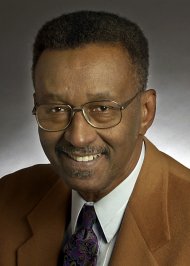
Walter Williams
Walter Williams

This is from Walter Williams, my second most favorite economist after Thomas Sowell.

Excerpt:

Why is it that Egyptians do well in the U.S. but not Egypt? We could make that same observation and pose that same question about Nigerians, Cambodians, Jamaicans and others of the underdeveloped world who migrate to the U.S. Until recently, we could make the same observation about Indians in India, and the Chinese citizens of the People’s Republic of China, but not Chinese citizens of Hong Kong and Taiwan.

[…]Much of Egypt’s economic problems are directly related to government interference and control that have resulted in weak institutions vital to prosperity. Hernando De Soto, president of Peru’s Institute for Liberty and Democracy (www.ild.org.pe), laid out much of Egypt’s problem in his Wall Street Journal article (Feb. 3, 2011), “Egypt’s Economic Apartheid.” More than 90 percent of Egyptians hold their property without legal title.

De Soto says, “Without clear legal title to their assets and real estate, in short, these entrepreneurs own what I have called ‘dead capital’ — property that cannot be leveraged as collateral for loans, to obtain investment capital, or as security for long-term contractual deals. And so the majority of these Egyptian enterprises remain small and relatively poor.”

Egypt’s legal private sector employs 6.8 million people and the public sector 5.9 million. More than 9 million people work in the extralegal sector, making Egypt’s underground economy the nation’s biggest employer.

Why are so many Egyptians in the underground economy? De Soto, who’s done extensive study of hampered entrepreneurship, gives a typical example: “To open a small bakery, our investigators found, would take more than 500 days. To get legal title to a vacant piece of land would take more than 10 years of dealing with red tape. To do business in Egypt, an aspiring poor entrepreneur would have to deal with 56 government agencies and repetitive government inspections.”

Poverty in Egypt, or anywhere else, is not very difficult to explain. There are three basic causes: People are poor because they cannot produce anything highly valued by others. They can produce things highly valued by others but are hampered or prevented from doing so. Or, they volunteer to be poor.

Some people use the excuse of colonialism to explain Third World poverty, but that’s nonsense. Some the world’s richest countries are former colonies: United States, Canada, Australia, New Zealand and Hong Kong. Some of the world’s poorest countries were never colonies, at least for not long, such as Ethiopia, Liberia, Tibet and Nepal. Pointing to the U.S., some say that it’s bountiful natural resources that explain wealth. Again nonsense. The two natural resources richest continents, Africa and South America, are home to the world’s most miserably poor. Hong Kong, Great Britain and Japan, poor in natural resources, are among the world’s richest nations.

What is necessary for wealth is a capitalist economy, that emphasizes the rule of law, private property, judicial restraint, limited government, etc. Egypt has none of those, and that’s why Egypt is poor. India and Chile used to be like Egypt, but then they revamped their societies to be more like America. Now India and Chile are more prosperous. Economics is not rocket science.

Capitalism creates wealth, and raises the standard of living of the poor and the wealthy. It doesn’t matter what rung of the social ladder someone is on – as long as they can keep what they earn, instead of having it redistributed by socialists, then they will work hard to create something of value to share with others. Poverty is caused by economic ignorance.

More Walter Williams stuff here, and more Thomas Sowell stuff here. These are the clearest-thinking economists operating today.