I’m not sure how I missed this, but this interview is definitely in the top 5 that Brian has done.
Description:
Today’s interview is with Biblical scholar Professor Craig Evans. He talks about his background and how he got into this area of scholarship (Jesus, the Gospels and Biblical manuscripts), what impresses him most about the Bible, handling manuscripts, the quest for the historical Jesus (and its overall timeline), the scholarly opinion on the “Jesus never existed” claim, the consensus of scholarship (and why scholarship is important), the contemporary distortion of Jesus, the demonstrable flaws in the thinking of particular scholars, evaluating presuppositions, a case for the reliability of the Gospels, the contrasting view of the “other” gospels, how to investigate the miracle claims within the Gospels, responding to the “failed apocalyptic prophet” objection, the faults in Bart Ehrman’s reasoning, advice for those taking their Biblical studies seriously, the do’s and don’ts of arguing for Bible reliability, and more.
The first line of evidence comes from the machines in the cell. Again, Rana’s approach is analogical, rather than negative. The machine-like nature of the flagellum, along with other motor-like cellular functions presents an argument: “Organisms display design. Therefore, organisms are the product of a creator” (86).
The case doesn’t rest merely upon molecular machines. Rather, that is but one of the many lines of evidence. Rana draws out the implications of several “chicken-and-egg” paradoxes. These include the “mutual interdependence of DNA and proteins” (99), the origin of proteins themselves (100ff), and more (105ff). These systems present a kind of “irreducible complexity in which the system depends on the system to exist” (108).
Other elements of design are present in the cell as well. Aquaporins intricate and detailed workings illustrate the design that is present in the system (111ff). Other detailed, intricate designs (such as collagen, mRNA, and the breakdown of proteins) hint at the need for a designer. But the reasoning is not only supported by the details, it is also bolstered by the structural composition of the cell (126ff). The analogy of cells to machines is strengthened further by the quality control systems within the cell (198ff). Again, the reasoning is analogical–these things are designed, therefore they need a designer.
“Information can’t be separated from the activity of an intelligent agent” (142). The numerous examples of information in the cell lead to the inference of an agent. But it is not only the information’s presence that hints at a designer. Here Rana’s case really builds on and develops the work of other ID theorists. The information alone could be enough to infer an agent, but one must also account for the fact that cellular information follows rules like syntax, semantics, and pragmatics (144ff). It is not merely information, it is the use of that information and the rules governing that use that strengthen the case for an agent behind the information.
It never hurts to know a lot about cosmology and biochemistry, those seem to be the best areas for offensive science apologetics.
I have this book and a later book by Rana called “Creating Life in the Lab” sitting on my ironing board (which is where I put all my to-read books) . Maybe it’s time for me to start reading those and posting book reviews.
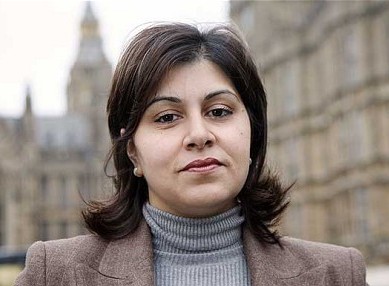
First, it is a mistake to assume that you compromise your identity the more you try to understand others. The stronger your understanding of your neighbour, the stronger your own religious identity becomes. For many years, I have been saying that the stronger we are as a Christian nation, the more understanding we will be of other faiths. That is why, a year ago, I went to a bishops’ conference and said that this Government would “do God”. It is why the Pope’s visit was so important for our country. And it is why I am proud that this year, for the first time, the Prime Minister held an Easter reception in Downing Street.
We need to create a country in which people can be unashamedly proud of their faith – where they don’t feel that they have to leave religion at the door. That means being proud of Christianity, not downgrading it. It means encouraging people to say that their faith inspires what they do. It means supporting religious charities in delivering public services in schools, hospices and rehabilitation.
[…]We also need to take the lead internationally. That means pressing other governments to safeguard religious minorities – be it the Copts in Egypt or Christians and other minorities in Pakistan. It means raising problems of persecution at the highest level, as the Archbishop of Canterbury recently did in Zimbabwe. Above all, it means all of us – as communities and individuals, believers and non-believers – taking inspiration from Shahbaz and Paul Bhatti, and giving all minorities in every country the courage and freedom to believe and worship in peace.
Priti Patel is one of the most fascinating (and controversial) politicians in contemporary Britain. The 39-year-old Conservative MP is not only blessed with stunning good looks, but she is also of Asian Indian descent – somewhat of a rarity among Tory lawmakers.
Moreover, Patel (whose Indian Gujarati parents fled Idi Amin’s Uganda for Britain in the early 1970s) has hewed to a hard-right line on many political issues, including the death penalty, illegal immigration, labor unions and the UK’s integration with Europe.
Regarding the death penalty, Patel recently told a television news affairs program: “I would actually support the re-introduction of capital punishment to serve as a deterrent. I have no issue on having a debate — I think far too many politicians do run away from debating issues like this.”
She is frequently described in the British press as a “rising star” in the Conservative Party and some believe she might one day become the first Asian Prime Minister of the U.K.
Indeed, Patel might even be considered a “British” version of Nikki Haley, the very telegenic young governor of South Carolina in the U.S., who is not only of Indian Sikh descent, but also a darling of the right-wing Tea Party and hailed as a potential future Vice President or even Presidential candidate.
I like to beat up on the UK, but they do have some MPs who take bold conservative positions on certain issues. I like Iain Duncan-Smith the best, for example.