All posts by Wintery Knight

https://winteryknight.com/

Awakening the “moral sense” of the public in the abortion debate


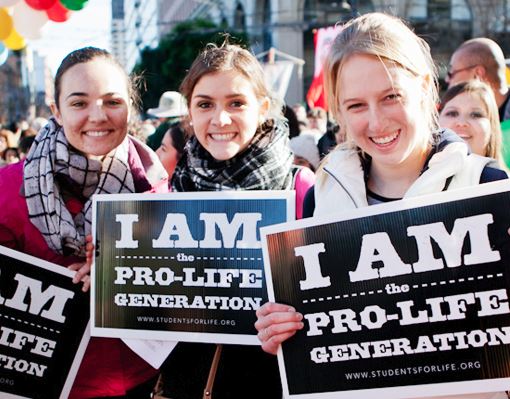
Young pro-life women protest Planned Parenthood

Scott Klusendorf linked to this article from the Public Discourse. The article talks about the need to augment logical arguments in other ways in order to awaken the moral sense of the public so that they will support the pro-life cause and vote to repeal pro-abortion laws.

Excerpt:

In a manner similar to the case of slavery as outlined by Douglass, there are two simple points that, once admitted, join to condemn clearly the practice of abortion: (1) the embryo is a human being from the moment of conception, and (2) all human beings have a natural right to life.

The second point, as in the case of the natural right to liberty, doesn’t require serious argument on the level of ordinary judgment, even though many pro-choice philosophers have tried to argue that only persons have a right to life, and the unborn, in their view, aren’t persons. To make such arguments, however, requires choosing an arbitrary cut-off point for personhood, as pro-life philosophers such as George, Tollefsen, and Lee have shown.

The first point is more often chosen as promising ground for challenges, but it too is plainly obvious to the unbiased mind.

Once conception occurs, the embryo is something other than the woman who carries it. The fact that the embryo requires the mother’s body to live is no argument against this—dependence does not exclude otherness, otherwise none of us would be distinguishable from everyone and everything else in the world upon which we depend in innumerable ways. The embryo is obviously something other than a part of the mother, but what is it?

This is where it gets easy, despite the messy, abstract philosophical arguments. The more appropriate version of the question is the following: What else could it be besides a human being? Is there a single example in natural history of sexual intercourse between two individuals of the same species resulting in something other than another individual of that species? Is it plausible to guess that sexual intercourse between two human beings might result in a fish, at least initially? Or maybe a frog? Such speculation is entirely fanciful and runs directly contrary to our experience of the world since the beginning of recorded history.

It should be obvious to anyone that the two points hold, and that the embryo is a human being possessing a natural right to life from the moment of its conception. The problem is that the younger and less developed the embryo is, the less it excites what some have called our “moral sense,” our sympathy with it as another human being like us. And as Hume correctly notes, human beings tend to be moved more by their passions and feelings, including the so-called “moral sense,” than by their intellectual understanding of the world when determining their actions. Even if our reason and common sense tell us clearly—as they undoubtedly do—that the embryo is a human being with the right to life, our moral sense or sympathy lets us off the hook.

So where does this leave pro-life advocates? How can we bridge the Humean—and human—gap between intellectual understanding and actual practice in our nation? The answer lies in the parallel between the issue of abortion and those of slavery and subsequent civil rights. The pro-life movement needs to model more closely in its organization and practices the antebellum abolition movement and the civil rights movement in order to achieve similar success in ending the evil of abortion. It needs to take up the mantle of these causes in a manner beyond rhetorical parallel or intellectual analogy and be prepared to undergo similar hardships before achieving its goals.

Both of these historical movements ultimately succeeded not by winning arguments, but by awakening the moral sense or conscience of a majority of the nation. Legislation relating to the provision of an ultrasound prior to an abortion, currently in place in some form in more than twenty states, is very well suited to this purpose. The dissemination of graphic images relating to abortion procedures, though controversial in pro-life circles, is also highly appropriate to this purpose.

The civil rights movement was driven forward significantly by television and photographic coverage of the inhuman treatment of protestors, as well as the publication of vivid written reports of racially motivated cruelties. Moral senses or sympathies are sparked most effectively by distasteful, unsettling, and shocking information; and when intellectual argument has had its day in trying to awaken consciences and has shown itself insufficient, recourse must be had to the level of moral sense and feeling.

There can be no doubt that pro-lifers are the abolitionists of this generation, urging the powerful not to take advantage of the powerless.

This reminds me about the story of Emmett Till. Have you heard of that? Here it is explained in a letter from Gregg Cunningham of CBR, a pro-life group.

Excerpt:

Many pro-lifers have heard about Emmett Till, the fourteen-year-old black boy from Chicago who, while visiting relatives in Mississippi, was tortured to death, allegedly for whistling at a white woman (or bidding her farewell with a flippant “bye baby” – accounts vary). But this tragic civil rights story offers more lessons for effective pro-life activism than is generally understood.

BlackPressUSA.com, August 27, 2001, reported in a story entitled “1955 – Emmett Till Killed in Mississippi” that Emmett’s mother “had insisted that the casket be opened when it arrived in Chicago, although it had been sealed when it left Mississippi.” There was a reason that authorities in Mississippi did not want the world to see the body of Emmett Till.

The Washington Post, August 28, 2005, published a story on the legacy of Emmett Till entitled “Dead End,” with a subhead which read “On the Trail of a Civil Rights Icon, Starting Where He Did”:

…Ahmed A. Rayner Sr., … prepared Emmett’s body for services after it was pulled from the Tallahatchie River – with a cotton-gin fan tied around his neck with barbed wire. Tortured and bruised, with most of his teeth missing, his remains were returned in a sealed box on a train to Chicago.

Ahmed Rayner is dead and the family-owned funeral home is run by his granddaughter [Pamela Rayner].

[…]‘I remember him saying that he had to do something because the way that he [Emmett] was brought up here, he looked so bad that it would probably scare most of the people,’ says Rayner. There was the eye that her grandfather had to put back into Till’s head and the fixing of his swollen tongue that hung out of his mouth – the stitching and patchwork to make the boy presentable in a glass-covered casket.

There was also a reason that Emmett’s mother demanded the unsealing of the crate in which the condition of her son’s body had been hidden:

‘After the body arrived I knew I had to look and see and make sure it was Emmett. That was when I decided that I wanted the whole world to see what I had seen. There was no way I could describe what was in that box. No way. And I just wanted the world to see.’ (BlackPressUSA.com, February 21, 2001, ‘A Disturbing Picture’)

Sounds a lot like abortion: no way it can be described; vital that we show the world how horrifying it looks.

I think the right approach is to give the arguments and the evidence first, and then to show the ultrasound images or the graphical images second (warning people to look away if they are squeamish, first). This is the way that moral people have always argued against injustices. If it worked to change minds then, then it will probably work to change minds now, too. For my own part, I’ve chose not to engage in sexual behavior at all until I am in a position where I can welcome a child into the world. I want to give my future children a safe environment with a committed mother and father. And if I have to give up short-term recreation in order to avoid putting myself in a situation where abortion might be a temptation, then that’s what I’m going to do. It’s called acting responsibly.
Leftist POLITICO lies in order to smear black conservative Ben Carson

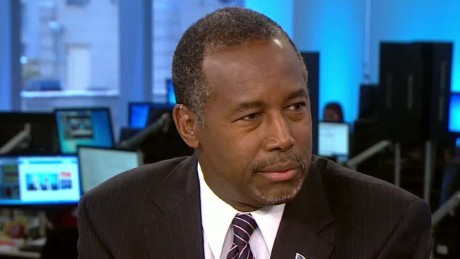
Pediatric surgeon Ben Carson

Well, we all knew that Politico was on the far-left. This time, they decided to smear black conservative Ben Carson.

Ben Shapiro explains how they did it:

The story began with Politico, which ran with the audacious headline, “Ben Carson admits fabricating West Point scholarship.” Even I was taken in by the headline – after all, that’s a pretty bold claim!

Politico began thusly:

Ben Carson’s campaign on Friday admitted, in a response to an inquiry from POLITICO, that a central point in his inspirational personal story was fabricated: his application and acceptance into the U.S. Military Academy at West Point.

The key word here is “fabricated.” Did the Carson campaign admit any such thing? Absolutely not. The facts reported by Politico don’t even support this interpretation of the Carson campaign’s response. According to Politico, Carson said in his 1992 memoir Gifted Hands that he was offered a “full scholarship” to West Point after dining with General William Westmoreland in 1969. Here’s the relevant passage from Carson’s autobiography:

At the end of my twelfth grade I marched at the head of the Memorial Day parade. I felt so proud, my chest bursting with ribbons and braids of every kind. To make it more wonderful, We had important visitors that day. Two soldiers who had won the Congressional Medal of Honor in Viet Nam were present. More exciting to me, General William Westmoreland (very prominent in the Viet Nam war) attended with an impressive entourage. Afterward, Sgt. Hunt introduced me to General Westmoreland, and I had dinner with him and the Congressional Medal winners. Later I was offered a full scholarship to West Point. I didn’t refuse the scholarship outright, but I let them know that a military career wasn’t where I saw myself going.

That’s the entire relevant portion of Carson’s account. He reiterated that account last month in an interview with Charlie Rose, when he said, “I was offered a full scholarship at West Point, got to meet General Westmoreland and go to Congressional Medal of Honor dinners. But decided really my pathway would be medicine.”

Politico followed up on this story. They reported one additional piece of information that seems to conflict with Carson’s story: Carson never applied to West Point, and was never extended admission.

But Carson never said he applied. He said he was extended a full scholarship offer. What’s more, West Point doesn’t offer scholarships: all admission is free contingent on serving in the military afterwards. It thus seems probable that Westmoreland or another military figure tried to recruit Carson, telling him that he wouldn’t have to pay for his education – and that Carson read that as a “full scholarship,” and never applied.

In fact, that’s exactly what Carson’s campaign manager said to Politico in an email:

Dr. Carson was the top ROTC student in the City of Detroit. In that role he was invited to meet General Westmoreland. He believes it was at a banquet. He can’t remember with specificity their brief conversation but it centered around Dr. Carson’s performance as ROTC City Executive Officer. He was introduced to folks from West Point by his ROTC Supervisors. They told him they could help him get an appointment based on his grades and performance in ROTC. He considered it but in the end did not seek admission.

But here’s how Politico editorialized: “When presented with this evidence, Carson’s campaign conceded the story was false.”

Just to be clear, that is the part where Politico lied. The Carson campaign never admitted that the story was false.

Shapiro continues:

That’s nonsense. They did no such thing. They provided details that corroborated Carson’s story and explained his loose use of the language. If someone told you that you could go to college for free, you might reasonably conclude that you had been offered a full scholarship to attend that university. But Politico would call you a liar if you used such language to describe the exchange.

Now, some on the right are saying that Carson should be held to a higher standard here than other candidates because he’s running as an “outsider.” But this is a basic case of misinterpreting facts, not an outright lie. Carson served in ROTC. Prominent people wanted him to go to West Point. He wouldn’t have had to pay. He didn’t apply because he didn’t want to go. Those facts are not in dispute. It’s the specific wording over which media have decided to crucify him.

This is a textbook example of a left-wing media hit. Politico would never editorialize about any Democrat who issued such a response to a factual inquiry in this manner. Politico won’t even conclude that Hillary Clinton lied about her attribution of the Benghazi attacks to a YouTube video despite email evidence that she knew Benghazi was a terrorist attack entirely unrelated to a YouTube video.

But for Ben Carson, they’ll make an exception.

Vile.

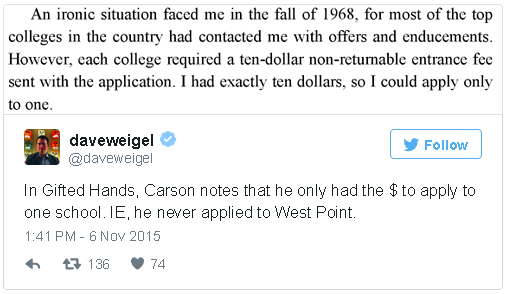
Shapiro is updating the post as developments occur. For one thing, in the same book (“Gifted Hands”) that Politico cites, Carson explicitly says that he NEVER applied nor was he accepted to West Point:

Washington Post journalist points out that Carson says he never applied to West Point

Politico is accusing Carson of saying that he applied to West Point and was given a full scholarship, but Carson’s own book says that he never applied and therefore was never given a full scholarship. The offer that he is talking about is an informal offer by General Westmoreland, saying that if he applied, then he would be given a full scholarship – because of his grades and other qualifications. Nowhere did Carson ever say that he made a formal application, and received a formal offer of a full scholarship. On the contrary, he makes clear in his book that it was an informal offer over dinner.

Ben notes that Carson’s campaign has responded to the Politico smear via the New York Times:

I don’t remember all the specific details. Because I had done so extraordinarily well you know I was told that someone like me – they could get a scholarship to West Point. But I made it clear I was going to pursue a career in medicine. It was, you know, an informal ‘with a record like yours we could easily get you a scholarship to West Point.’

Exactly.

The Carson campaign is calling the POLITICO story: “an outright lie“. POLITICO needs to retract the story, apologize for their attack on a black conservative, and fire the journalist.

Dennis Prager previously wrote about attacks by the left against Carson, and I blogged about it here.

Prager said:

The left is in full-blown smear-Carson mode. He is, after all, the left’s worst nightmare — a black Republican who is brilliant, kind and widely admired, including by many blacks.

It is a rule of left-wing life that black Republicans must have their names and reputations destroyed. The left knows that if blacks do not vote overwhelmingly Democrat, Democrats cannot win a national election.

Personally, I believe the smear was motivated by a desire to destroy Carson because he is a black conservative. Leftists cannot stand black conservatives. As a non-white conservative, I have often had to face the most vitriolic attacks from Democrats, and in my experience, the hatred is much worse for Republicans who don’t fit their mold. Conservative blacks and conservative women mess up the liberal stereotype of conservatives being exclusively white and male, and so they must be destroyed by any means necessary.

Who should you marry?

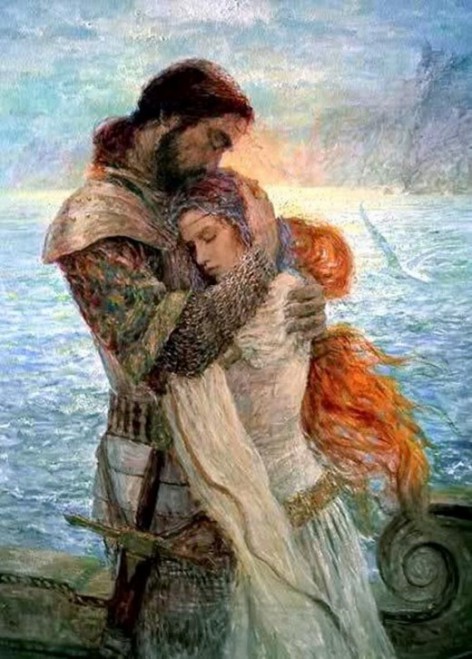
“Tristan and Isolde”, by Marc Fishman

Dina found this article in the leftist Washington Post, of all places. The author explains how her husband lovingly helped her to recover from her Caesarian section. He actually had to to carry her to and from the bathroom, very slowly. Until she was better.

She writes:

At the time, I thought: This is why I married this man. Not for his fabulous head of hair or his beautiful, light-brown eyes — though those things were certainly bonuses. But no. It was his gentleness, his thoughtfulness, his loving heart, his caring nature that sealed the deal for me.

As a dating coach who works with singles in their 20s to 50s, I see a lot of people focusing on superficial things that have little to do with a potential partner’s character. I get it — I once obsessed over those things, too.

Most of all, I see how the trap of chemistry can lead people astray. Chemistry is important, but as far as relationships go, it’s only half the equation.

So how do you look for these deeper, more important qualities in the early stages of dating? Some might argue there’s no way to tell in, say, the first several months of dating someone — after all, it is the honeymoon stage — if this is the type of person who will help you onto the toilet during times of trial. I disagree.

Looking back to the early days of dating Dave, all the signs were there. He treated my friends with care and kindness, which showed me he had the ability to be compassionate. The way he scoured the Internet for the perfect gifts for my parents and nephews showed me his thoughtful, generous side. He rubbed my back and wiped my tears after I suffered a heart-wrenching squash match loss, showing me that validating my feelings was important to him (even if I’m the most competitive person alive and it was just a squash match). He listened to me vent after a difficult fallout with a colleague, showing me he was ready and willing to be a part of my support system.

When he stayed up until the early hours of the morning, helping me with Web site issues relating to my coaching business, I knew I’d found someone who would support me in my professional goals as well as physically and emotionally. When he held my hands and said “We’ll figure it out” while I was dealing with a frustrating medical situation, that was probably my biggest clue that he’d be so supportive in that hospital room years down the line.

Singles should keep their eyes open for these signs. They’re more telling than a person’s job, salary, ambition or education; whether he or she is the “right age”; has the perfect body; or can dazzle you with their charm and wit.

Keep your eyes open for the type of person who one day might lovingly help you onto the toilet.

When you are married, the amount of time you spend having fun and feeling thrilled is minuscule. The real problems you face are money problems, sex problems, in-law problems, holiday problems, parenting problems, etc. Most often in marriage hard stuff needs to get done. Compromises need to be made. There is actually very little fun and thrills. If you want to prepare for most of what marriage is about, then it’s best to focus on responsibilities, expectations and obligations. Spouses need each other, and the ability to sense someone else’s needs and to care for them, even when it’s not fun for you, is non-negotiable.