Tag Archives: Young

Under Obama’s socialist policies, youth “Misery Index” reaches record high

Young people usually only get one side of every issue - because we don't tell them the other side
Young people usually only get one side of every issue – because we don’t tell them the other side

Obama added $10 trillion to the national debt in his 8 years, doubling it from $10 trillion to $20 trillion. That will be placed on the backs of the next generation of younger Americans. But it turns out that they have many other problems as well.

This is from the College Fix.

Excerpt:

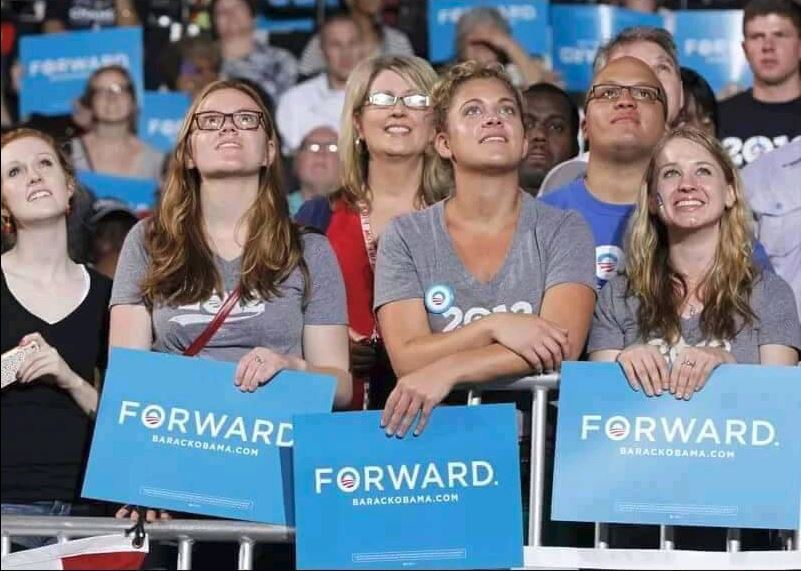
In the last two presidential elections, young voters served as a key demographic that helped catapult Barack Obama to the White House. What has he done for millennials in return? According to a new analysis, made them more miserable than ever.

Young America’s Foundation on Wednesday released its annual Youth Misery Index, calculated by adding youth unemployment, student loan debt, and national debt (per capita) numbers.

Today the youth unemployment rate exceeds 16 percent, and the average student in the class of 2015 graduated with a record $35,000 in student loan debt; national debt per capita, “a remarkable burden that will fall squarely on the shoulders of millennials,” is just under $59,000, the foundation reports.

With that, the index has spiked to a record high of 109.9 this year, up from 106.5 last January, and 83.5 in 2009 when President Obama took office, the foundation reports.

What about entitlement programs?

Business Daily reports on a Social Security problem:

The Social Security Trust Fund just suffered its first annual decline since Congress shored up the retirement program in 1983.

The unexpected $3 billion decline is an indication of the precarious state of Social Security’s finances. Since 2010, the program has been paying out more in benefits than it gets in tax revenue, but the trust fund, which earns about $95 billion a year in interest, had kept growing, though a little less each year.

[…]Under current policies, the CBO says the trust fund will be gone by 2029.

If nothing were done before that point, it would take an across-the-board 29% benefit cut — including on the oldest retirees and the disabled — to bring program costs in line with revenues.

Since we aborted the next generation of workers, we can’t afford to keep paying out benefits at the current rate. There are more people retiring than entering the work force. I hope they start to invest early, but what I am seeing is that they want to take out loans and travel the world for fun and thrills.

Obama doubled the national debt in 8 years

Anyway, on to the next problem, trillion dollar deficits. They’re back!

Investors Business Daily explains:

The federal budget deficit is back on the rise — by an expected $105 billion this year — the Congressional Budget Office said Tuesday, the first increase since fiscal 2009. Deficits topping $1 trillion will be back before you know it — three years sooner than expected.

[…]The CBO said the rise was primarily due to the year-end budget deal that extended, and in some cases expanded, corporate and individual tax cuts, as well as busting spending caps. The deficit-to-GDP ratio is expected to grow to 2.9% in fiscal 2016 from 2.5% last year. That would also be the first increase since 2009, with the trend getting worse in the years ahead.

From 2016 to 2025, the CBO expects cumulative deficits of $8.5 trillion — $1.5 trillion more than it predicted in August.

This is the budget deal that establishment Republicans like Paul Ryan supported. Rubio didn’t show up to vote against the Ryan deal. I assume that Rubio was OK with the spending bill passing, and these trillion dollar deficits returning. Cruz showed up to vote against the deal, of course.

And finally, the last problem – Obamacare is making health care more expensive than ever for the middle class.

Investors Business Daily again:

People making just $36,000 a year can easily end up spending 22% of it on health costs, even if they are enrolled in a subsidized ObamaCare insurance plan, according to a report from the Robert Wood Johnson Foundation and the Urban Institute.

[…]Individuals earning between 300% and 400% of the poverty level — which works out to roughly between $35,000 and $47,000 — will pay close to a median of 10% of their income on insurance premiums. (This group is eligible for ObamaCare insurance subsidies but at far lower levels than poorer people.)

And because ObamaCare plans typically come with high deductibles and copays, they’ll spend another 5% on out-of-pocket costs. For a worker making $36,000, the combined costs add up to $5,220.

The report found, however, that these costs could easily double. One in 10 people in this income group will end up devoting 22% of their incomes to insurance and out-of-pocket costs.

Even those in the lowest income group could get hit with big bills. One in 10 of those who make less than 200% of the poverty level will face health costs that eat up 18.5% of their income.

Obama likes to paint a rosy picture of the economy in his state of the union, but the real truth is not so rosy. Young people shouldn’t have voted for him, they are not going to live as prosperously as their elders did under Reagan and George W. Bush.

Harvard poll: majority of youth likely voters favor Republicans this election

I’m not sure if I really believe this Harvard Institute of Politics poll because young people seem to be so disinterested in moral issues, economics and national security these days. But I guess even young people know whether they have jobs, whether they like living with their parents and whether they want to have their heads chopped off. Right?

Right:

More than half – 51 percent – of America’s millennials who say they will “definitely be voting” in November prefer a Republican-run Congress, with only 47 percent favoring Democrat control, according to a Harvard Institute of Politics poll.

This marks a significant departure from the institute’s findings before the 2010 midterm elections, when America’s 18-29 year olds who were definitely voting favored Democrats 55 percent to 43 percent.

Institute director Maggie Williams described the youth vote as “politically up for grabs” and a potential “swing vote” for control of Congress in a conference call to announce the results.

“The message to political candidates is clear: Ignore millennial voters at your peril,” Williams said.

What’s more, the poll found that only 43 percent of millennials approve of President Obama’s job performance, while 53 percent disapprove. It is his second-lowest rating in the institute’s polls since he took office. The figures are only slightly worse for Obama among those who will “definitely be voting”: 42 percent approve, 56 percent disapprove.

The results showed a stark divide in presidential approval along racial and ethnic lines. Only three in 10 young whites approve of the president’s performance, while nearly eight in 10 young blacks approve. Hispanic youth approval fell to 49 percent, down from 60 percent just six months ago.

Director of Polling John Della Volpe described youth voters as “a little bit less Democratic” than during Obama’s first term, speaking on the conference call. Factoring in the voting likelihood of all millennials, more 18-29 year olds prefer a Democrat-controlled Congress than a Republican one (50 percent to 43 percent), Della Volpe said – but the age group has become less supportive of the party.

“A lot of it comes down to turnout,” Della Volpe said. “It seems that young Republicans are more likely to participate next week.”

And this, I really like:

The poll also surveyed voters about terrorism threats. More than six in 10 millennials say they are “a great deal” or “somewhat” worried about another terrorist attack, with young women (66 percent) more afraid than men (56 percent).

I guess my naive view of young, unmarried women is that they are all like the ones I see in my gym – watching the Bravo channel or game shows to see people with too much make say mean things to one another. But it turns out that they are actually concerned with the economy and national security, which is a very good thing. Welcome aboard, young ladies! It’s not a shame to have a fear of something if the fear is justified, and if you do something about it to make it go away.

And by the way, the men in the gym are just as bad about not paying attention to politics and the economy. The day of the terrorist attack in Ottawa, the men were all watching ESPN sports. Horrible! Even the muscle bound Christian guy changes the channel from Fox News to ESPN as soon as I leave. The only person who is responsible at all is the gay guy – he at least watches local news.

J. Warner Wallace: influence the culture by encouraging young Christians

From the Cold Case Christianity blog.

Excerpt:

I came to faith at the age of 35. I didn’t have a deep relationship with any Christians at the time, and I had no strong Christian influences in my life. Without a mentor or role model, I felt like I had to work through the evidence and claims of Christianity on my own. Many years later however, as I was preparing to write my own book and start a modest journey as a public Case Maker, members of the apologetics community surrounded me with support and encouragement. While I wasn’t much younger than any of them (and was, in fact, older than some), they recognized I was the “new kid” on the block and surprised me with their generosity, wisdom and assistance. I was humbled by the response, and began to look at my own sphere of influence, searching for young men and women I could encourage in a similar way.

Those of us who hope to influence the culture for Christ typically think of our own efforts to communicate and reach the world. What can I write today? What can I say? How can I effectively use the internet to promote and defend the Christian worldview? Like others, I’m guilty of viewing my influence through the narrow lens of my own efforts. As a guy who started this season in my 50’s however, I’ve come to realize the limits of my own impact and the role I can play as an encourager. My questions are starting to change: Who can I inspire as a young Christian Case Maker? What small piece of wisdom can I provide to someone who is a few steps behind me in this journey? How can I impact the younger generation of Christian Case Makers? I know I won’t be writing and speaking 30 years from now, but there are men and women out there who will be. What can I do to make them even more effective?

I wanted to add to what he wrote and tell you a little bit about what I do. Through my blog, I have been able to meet young people in high school and college who are making decisions about what to study and where to work. I’m been able to help people in some specific ways:

  • helping them to know what to read/listen to/watch in order to build up their worldview
  • helping them learn how to debate with skeptics
  • helping them to decide between college and trade school
  • helping them to choose the right major
  • encouraging them to work in the summer instead of taking time off
  • helping them get funding for apologetics events that they organize
  • rewarding them for doing well in school or work
  • listening to the conflicts with teachers and professors
  • helping them make plans for their lives
  • helping them make good decisions with the opposite sex
  • spending time playing games with them or just talking
  • asking them about their classes, assignments and tests

It’s always rewarding to seem them studying hard subjects, getting good grades, entering competitions and getting summer/full-time jobs. I like to give rewards to people who do try to grow their skills and produce results. It can be small stuff like games or books, or bigger stuff, like sponsoring an apologetics event that they’ve organized. Sometimes I can get a young person connected with a mentor. For example, one young lady wanted to start a pro-life club, and I was able to connect her with someone who started a large pro-life organization and the office manager from that large pro-life organization. I also provided her with some helpful pro-life books.  It’s important that we not understimate how much good it does to try to be supportive when young people want to grow their skills and take on challenges.

I think that mentoring young people is especially for those of us who are not married with children. We typically have more disposable income and time than married people do, especially married people with children. Not only is it good for them to get the advice from someone more experienced, but it also gives you parenting practice, and that’s something that you can talk about in a courting situation. This is the kind of thing that signals to a candidate spouse that you are going to be interested in mentoring them, and in raising effective Christian children. The most challenging thing about doing this is that you really have to think about how to please God with your mentoring, and that means that you have to put yourself second a lot of the time. It’s good for singles to learn how to do that.