Tag Archives: William Lane Craig

Mike Licona responds to Bart Ehrman’s new book on gospel authorship

In this post on Bible Gateway, Michael Licona assesses Ehrman’s argument that the letters traditionally ascribed to Paul are not traceable back to Paul. Licona argues that Paul would have had access to other people in the Christian community who would have helped him to craft and write his letters.

Here’s Ehrman’s challenge:

Most, though not all, of the arguments against traditional authorship fall into two categories: style and content. However, if an author employed the use of a secretary to write what he dictated as well as provide varying degrees of editing, this would explain quite well why some of the letters in the New Testament whose authorship is questionable have vocabulary, grammar, some content, and an overall writing style that differs, even significantly, from the undisputed letters. Ehrman recognizes this and writes, “Virtually all of the problems with what I’ve been calling forgeries can be solved if secretaries were heavily involved in the composition of the early Christian writings” (134).Did Paul use a secretary at least occasionally? We may answer with an unequivocal yes. Of Paul’s seven undisputed letters, it is certain that he used a secretary for no less than four.

Ehrman concurs, “There is no doubt that the apostle Paul used a secretary on occasion” (134). But he contends that there’s no evidence that Paul used them for any other services such as editing to correct grammar and improve style, coauthor to contribute to content, or compose the letter with the named author giving his final approval (134-36; cf. 77).

And here’s part of his response:

Writing a letter in antiquity was a costly enterprise. Randolph Richards, who is perhaps today’s leading authority on the use of secretaries in antiquity, discusses the costs involved. Papyri, labor, and courier fees added up quickly. Of course, Cicero, Seneca, and the ultra-wealthy could easily afford the costs. But Paul, the missionary, would not have been so fortunate. Richards estimates that the cost for penning Paul’s letters ranged from $101 in today’s dollars for Philemon to $2,275 for Romans. And these figures do not include the expenses involved with a courier.Now perhaps you’re thinking, “But Paul tells us in his letters he had churches that supported him (Phil. 4:10-18; 2 Cor. 11:9). And we know he had co-workers whom he mentions in his letters (Rom. 16:21; 1 Cor. 1:1; 2 Cor. 1:1; 8:23; Phil. 1:1; 2:25; Col. 1:1; 4:11; 1 Th. 1:1; 2 Th. 1:1; Philem. 1:1, 24. cf. Gal. 1:1). They would naturally have been the couriers and could even have served as his secretaries. So, he would have incurred little to no labor costs.” That much is evident.

And what’s to have prevented these co-workers from also providing editorial and compositional services according to their personal abilities? Could the Tertius mentioned in Romans 16:22 have been a professional secretary who had volunteered his services? We will never know. What is clear is the fact that not being a member of the ultra-wealthy does not preclude Paul’s use of a secretary for editing and composition.

[…]The early Christian church faced many situations and theological debates. In their minds, these matters were often more important than life itself. For example, in 1 Corinthians Paul is answering a situation where some members of the church in Corinth were denying an afterlife. Paul replies that if we are not raised from the dead to enjoy eternal life, Christ was not raised from the dead either. And if Christ was not raised, our Christian faith is worthless and our loved ones who have already died are forever gone. In fact, Paul adds, if there is no future resurrection of the dead and this life is all there is, let’s party hard now because we will all be dead in a relatively short period of time (1 Cor. 15:12-19, 32)!

The letters in the New Testament weren’t written for the mere enjoyment of the exercise and at leisure as many of the letters of Cicero and Atticus had been. Given the importance the early Christian letters had for their authors and recipients, there was a much greater need for using a secretary in order to craft the letters carefully. We know Paul could write, since he signed many of his greetings at the end of his letters. So, why have a secretary to whom he could dictate a letter without also depending upon him for editing services?

Here’s a third reason for holding that Paul would want his secretary to be more involved than simply taking dictation: He flat out states that others were involved in his letter writing. Paul was apparently not very good at public speaking. This conclusion comes from information provided in his undisputed letters. In 2 Corinthians 11:6, Paul admits that he is “untrained in public speaking” (See also 1 Cor. 2:1, 4). In 2 Corinthians 10:10-11, he writes, “it is said, ‘His [i.e., Paul’s] letters are weighty and powerful, but his physical presence is weak, and his public speaking is despicable.’ Such a person should consider this: What we are in the words of our letters when absent, we will be in actions when present.”

Notice carefully how the subject changes from Paul the poor public speaker in the singular to the “we” who write the letters. More than one person is involved in writing Paul’s letters. So, the involvement of the secretary appears to go beyond taking simple dictation.

In summary, Ehrman’s argument fails since Paul may not have incurred any costs for his extensive use of a secretary, the important occasions for writing the letters would have motivated Paul’s extensive use of a secretary, and Paul clearly states that others were involved in the actual writing of the letters.

Now I want to say a few words about a recent experience I had talking to a Jewish atheist about what the Bible says about Jesus.

Talking about the Bible with non-Christians

To be convincing and appealing when discussing the New Testament with non-Christians, you need to be very aware of the fact that non-Christians do not understand theological language and they do not assume that the Bible is the inspired and infallible Word of God and they do not think that you have done your homework to know who wrote it and whether it was translated correctly from the originals so many years back.

The right way to discuss the Bible is to talk about the New Testament as a book that contains ancient biographies from a variety of authors. You want to list a number of factors that would affect whether individual verses within individual books are reliable. You want to weigh the arguments for and against the conservative view.

Here are some things to consider:

  • when was the passage written?
  • who wrote the passage?
  • is the passage found in multiple sources?
  • does the passage embarrass the author?
  • does the passage praise the author’s enemies?
  • does the passage hinder the evangelistic message of the early church?

I was recently discussing the Harold Camping prophecy with a friend of mine who is an atheist, and I was explaining the passage where Jesus says that no one knows the date of judgment day. I used multiple sources, early sources, and the criterion of embarrassment to show why my friend should not consider Camping to be a disproof of the reliability of the Bible and an embarrassment to Christians.

Here are the passages I used to discredit Camping’s calculations:

Mark 13:32-33:

32 “But about that day or hour no one knows, not even the angels in heaven, nor the Son, but only the Father.

33 Be on guard! Be alert! You do not know when that time will come.

Matthew 24:36-44:

36 “But about that day or hour no one knows, not even the angels in heaven, nor the Son, but only the Father.

37 As it was in the days of Noah, so it will be at the coming of the Son of Man.

38 For in the days before the flood, people were eating and drinking, marrying and giving in marriage, up to the day Noah entered the ark;

39 and they knew nothing about what would happen until the flood came and took them all away. That is how it will be at the coming of the Son of Man.

40 Two men will be in the field; one will be taken and the other left.

41Two women will be grinding with a hand mill; one will be taken and the other left.

42 “Therefore keep watch, because you do not know on what day your Lord will come.

43 But understand this: If the owner of the house had known at what time of night the thief was coming, he would have kept watch and would not have let his house be broken into.

44 So you also must be ready, because the Son of Man will come at an hour when you do not expect him.

Mark is early, and Matthew provides multiple attestation. But this passage also passes the criterion of embarrassment, because it ascribes ignorance to Jesus – something that the early church would not have made up if they were hoping to gain converts by falsely portraying Jesus as the Messiah. Therefore, it is very likely that this passage is authentic, and would be viewed as authentic even by those who are non-Christians. Any passage that undermines the missionary project of the early church by calling Jesus’ identity as the Messiah into question is guaranteed to be historical. And it goes to show the quality of history you find in the New Testament.

It is sometimes useful to contrast good historically reliable passages with passages that are not viewed as historically reliable. In a related post, William lane Craig is asked by John Ankerberg about a passage that most historians do not view as historically reliable. Even if you are an inerrantist like me, you are not obligated to use and defend every verse when you quote the Bible to make arguments about theology or morality or history. Just analyze the passages that you are using the historical criteria, in order to persuade your non-Christian audience that you are not taking the Bible on faith. If one of your passages fails the tests, then don’t use it – find another passage that passes the tests.

Regarding inerrancy, C. Michael Patton of Parchment & Pen blog doesn’t think that you have to believe in inerrancy to become a Christian. I would argue that mature Christians should believe in inerrancy of the original writings, but new Christians don’t have to.

So, to sum up, don’t talk about the Bible the way that Christian pastors do on Sunday mornings with your non-Christian friends. Talk about the Bible like scholars do with your non-Christian friends. Here is a good example of how Christian and non-Christian scholars talk about the Bible in formal academic debates.
What are the arguments for the historical fact of the empty tomb?

I wanted to go over this article by William Lane Craig which includes a discussion of the empty tomb, along with the other minimal facts that support the resurrection. The entire paper was also presented orally to the students and faculty at California State University, Fresno in 2005, and a full recording is available here. The paper covers all of Craig’s preferred set of minimal facts, which he uses in debates.

The word resurrection means bodily resurrection

The concept of resurrection in use among the first converts to Christianity was a Jewish concept of resurrection. And that concept of resurrection is unequivocally in favor of a bodily resurrection. The body (soma) that went into the grave is the body (soma) that came out.

Craig explains what this means with respect to the fast start of Christian belief:

For a first century Jew the idea that a man might be raised from the dead while his body remained in the tomb was simply a contradiction in terms. In the words of E. E. Ellis, “It is very unlikely that the earliest Palestinian Christians could conceive of any distinction between resurrection and physical, ‘grave emptying’ resurrection. To them an anastasis without an empty grave would have been about as meaningful as a square circle.”

And:

Even if the disciples had believed in the resurrection of Jesus, it is doubtful they would have generated any following. So long as the body was interred in the tomb, a Christian movement founded on belief in the resurrection of the dead man would have been an impossible folly.

It’s significant that the belief in the resurrection started off in the city where the tomb was located. Anyone, such as the Romans or Jewish high priests, who wanted to nip the movement in the bud could easily have produced the body to end it all. They did not do so, because they could not do so, although they had every reason to do so.

More on this from N.T. Wright, here.

There are multiple early, eyewitness sources for the empty tomb

Paul’s early creed from 1 Corinthians 15:3-7, dated to within 5 years of the crucifixion, implies the empty tomb.

Craig writes:

In the formula cited by Paul the expression “he was raised” following the phrase “he was buried” implies the empty tomb. A first century Jew could not think otherwise. As E. L. Bode observes, the notion of the occurrence of a spiritual resurrection while the body remained in the tomb is a peculiarity of modern theology. For the Jews it was the remains of the man in the tomb which were raised; hence, they carefully preserved the bones of the dead in ossuaries until the eschatological resurrection. There can be no doubt that both Paul and the early Christian formula he cites pre-suppose the existence of the empty tomb.

The dating of the resurrection as having occurred “on the third day” implies the empty tomb. The date specified for the resurrection would have been the date that the tomb was discovered to be empty.

The phrase “on the third day” probably points to the discovery of the empty tomb. Very briefly summarized, the point is that since no one actually witnessed the resurrection of Jesus, how did Christians come to date it “on the third day?” The most probable answer is that they did so because this was the day of the discovery of the empty tomb by Jesus’ women followers. Hence, the resurrection itself came to be dated on that day. Thus, in the old Christian formula quoted by Paul we have extremely early evidence for the existence of Jesus’ empty tomb.

The early pre-Markan burial narrative mentions the empty tomb. This source pre-dates Mark, the earliest gospel. The source has been dated by some scholars to the 40s. For example, the atheist scholar James Crossley dates Mark some time in the 40s. (See the debate below)

The empty tomb story is part of the pre-Markan passion story and is therefore very old. The empty tomb story was probably the end of Mark’s passion source. As Mark is the earliest of our gospels, this source is therefore itself quite old. In fact the commentator R. Pesch contends that it is an incredibly early source. He produces two lines of evidence for this conclusion:

(a) Paul’s account of the Last Supper in 1 Cor. 11:23-5 presupposes the Markan account. Since Paul’s own traditions are themselves very old, the Markan source must be yet older.

(b) The pre-Markan passion story never refers to the high priest by name. It is as when I say “The President is hosting a dinner at the White House” and everyone knows whom I am speaking of because it is the man currently in office. Similarly the pre-Markan passion story refers to the “high priest” as if he were still in power. Since Caiaphas held office from AD 18-37, this means at the latest the pre-Markan source must come from within seven years after Jesus’ death. This source thus goes back to within the first few years of the Jerusalem fellowship and is therefore an ancient and reliable source of historical information.

Lack of legendary embellishments

The empty tomb narrative in the gospels lacks legendary embellishments, unlike later 2nd century forgeries that originated outside of Jerusalem.

The eyewitness testimony of the women

This is the evidence that has been the most convincing to skeptics, and to me as well.

The tomb was probably discovered empty by women. To understand this point one has to recall two facts about the role of women in Jewish society.

(a) Woman occupied a low rung on the Jewish social ladder. This is evident in such rabbinic expressions as “Sooner let the words of the law be burnt than delivered to women” and “Happy is he whose children are male, but woe to him whose children are female.”

(b) The testimony of women was regarded as so worthless that they were not even permitted to serve as legal witnesses in a court of law. In light of these facts, how remarkable must it seem that it is women who are the discoverers of Jesus’ empty tomb. Any later legend would certainly have made the male disciples to discover the empty tomb. The fact that women, whose testimony was worthless, rather than men, are the chief witnesses to the empty tomb is most plausibly accounted for by the fact that, like it or not, they were the discoverers of the empty tomb and the gospels accurately record this.

The earliest response from the Jewish high priests assumes the empty tomb

This report from Matthew 28 fulfills the criteria of enemy attestation, although Matthew is not the earliest source we have. Oh, well.

In Matthew 28, we find the Christian attempt to refute the earliest Jewish polemic against the resurrection. That polemic asserted that the disciples stole away the body. The Christians responded to this by reciting the story of the guard at the tomb, and the polemic in turn charged that the guard fell asleep. Now the noteworthy feature of this whole dispute is not the historicity of the guards but rather the presupposition of both parties that the body was missing. The earliest Jewish response to the proclamation of the resurrection was an attempt to explain away the empty tomb. Thus, the evidence of the adversaries of the disciples provides evidence in support of the empty tomb.

Note how careful Craig is not to imply that the guard tradition is historical, because we can’t prove the guard as a “minimal fact“, since it doesn’t pass the standard historical criteria.

See it used in a debate

You can see the arguments made and defended from criticism in this debate with the atheist scholar James Crossley.

This my favorite resurrection debate.

Further study

To hear a related lecture by Craig on the topic of “Who did Jesus think he was?”, click here. The video is here. This lecture was delivered in February, 2009 at Columbia University, probably the most secular leftist university in the United States.

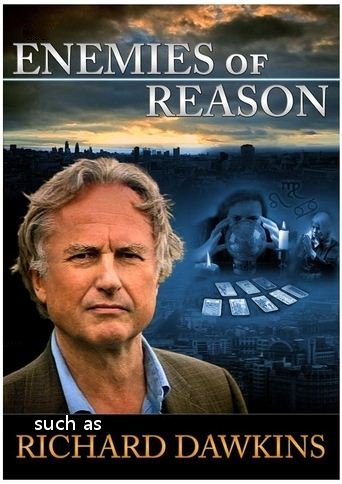
UK Telegraph on Richard Dawkins’ cowardly refusal to debate William Lane Craig

Will Richard Dawkins debate William Lane Craig?

(Image stolen from Glenn Peoples)

Cowardly Richard Dawkins refuses to debate William Lane Craig on this latest UK tour. (H/T Mary)

Excerpt:

Richard Dawkins has made his name as the scourge of organised religion who branded the Roman Catholic Church “evil” and once called the Pope “a leering old villain in a frock”.

But he now stands accused of “cowardice” after refusing four invitations to debate the existence of God with a renowned Christian philosopher.

A war of words has broken out between the best selling author of The God Delusion, and his critics, who see his refusal to take on the American academic, William Lane Craig, as a “glaring” failure and a sign that he may be losing his nerve.

Prof Dawkins maintains that Prof Craig is not a figure worthy of his attention and has reportedly said that such a contest would “look good” on his opponent’s CV but not on his own.

An emeritus fellow of New College, Oxford, Prof Dawkins last year supported a plan to charge Pope Benedict XVI with crimes against humanity for his alleged involvement in the cover-up of sex abuse by Catholic priests.

Prof Craig is a research Professor of Philosophy at Talbot School of Theology, in California, and the author of 30 books and hundreds of scholarly articles on Christianity.

He has debated with leading thinkers including Daniel Dennett, A.C.Grayling, Christopher Hitchens, Lewis Wolpert and Sam Harris.

Prof Craig is due to visit Britain in October this year. Four invitations to take part in public debates were sent to Prof Dawkins from The British Humanist Association, The Cambridge Debating Union, the Oxford Christian Union and Premier Radio.

Prof Dawkins declined them all.

[…]Some of Prof Dawkins’s contemporaries are not impressed. Dr Daniel Came, a philosophy lecturer and fellow atheist, from Worcester College, Oxford, wrote to him urging him to reconsider his refusal to debate the existence of God with Prof Craig.

In a letter to Prof Dawkins, Dr Came said: “The absence of a debate with the foremost apologist for Christian theism is a glaring omission on your CV and is of course apt to be interpreted as cowardice on your part.

“I notice that, by contrast, you are happy to discuss theological matters with television and radio presenters and other intellectual heavyweights like Pastor Ted Haggard of the National Association of Evangelicals and Pastor Keenan Roberts of the Colorado Hell House.”

Prof Craig, however, remains willing to debate with Prof Dawkins. “I am keeping the opportunity open for him to change his mind and debate with me in the Sheldonian Theatre in Oxford” in October, he said.

Read it all. And please forward this to EVERYONE you know.

Dawkins mentions that he “already debated Craig” in that lame, worthless Mexico event where all the speakers got 2 minutes for their speeches, and one minute rebuttals. That was not a formal academic debate, that was a spectacle. I want a formal debate so Craig can put this blowhard in his place like he did with Hitchens, Harris, and Dennett. I want this nonsense about atheism being a  rational, moral worldview to end NOW. And by now, I mean yesterday.

Why won’t Dawkins debate Craig?

Let’s re-cap Dawkins’ reasons in point form: (with my comments in parentheses)

  • Dawkins claims that he is willing to debate high-ranking clergymen (but Craig is a scholar, not a clergyman)
  • Dawkins claims that Craig is a creationist (but Craig supports his kalam cosmological argument with the Big Bang)
  • Dawkins claims that Craig’s only claim to fame is that he is a professional debater (but see Craig’s CV and publications below, which is far more prestigious than Dawkins)
  • Dawkins claims that he’s too busy (busy cowering in fear hugging his Darwin doll for comfort)

Let’s review William Lane Craig’s qualifications:

William Lane Craig is Research Professor of Philosophy at Talbot School of Theology in La Mirada, California.

Dr. Craig pursued his undergraduate studies at Wheaton College (B.A. 1971) and graduate studies at Trinity Evangelical Divinity School (M.A. 1974; M.A. 1975), the University of Birmingham (England) (Ph.D. 1977), and the University of Munich (Germany) (D.Theol. 1984). From 1980-86 he taught Philosophy of Religion at Trinity… In 1987 they moved to Brussels, Belgium, where Dr. Craig pursued research at the University of Louvain until assuming his position at Talbot in 1994.

He has authored or edited over thirty books, including The Kalam Cosmological Argument; Assessing the New Testament Evidence for the Historicity of the Resurrection of Jesus; Divine Foreknowledge and Human Freedom; Theism, Atheism and Big Bang Cosmology; and God, Time and Eternity, as well as over a hundred articles in professional journals of philosophy and theology, including The Journal of Philosophy, New Testament Studies, Journal for the Study of the New Testament, American Philosophical Quarterly, Philosophical Studies, Philosophy, and British Journal for Philosophy of Science.

Craig’s CV is here.

Craig’s list of publications is here.

Here are some of Craig’s most recent publications:

From 2007:

  • Ed. with Quentin Smith. Einstein, Relativity, and Absolute Simultaneity. Routledge Studies in Contemporary Philosophy. London: Routledge, 2007, 302 pp.
  • “Theistic Critiques of Atheism.” In The Cambridge Companion to Atheism, pp. 69-85. Ed. M. Martin. Cambridge Companions to Philosophy. Cambridge University Press, 2007.
  • “The Metaphysics of Special Relativity: Three Views.” In Einstein, Relativity, and Absolute Simultaneity, pp. 11-49. Ed. Wm. L. Craig and Quentin Smith. Routledge Studies in Contemporary Philosophy. London: Routledge, 2007.
  • “Creation and Divine Action.” In The Routledge Companion to Philosophy of Religion, pp. 318-28. Ed. Chad Meister and Paul Copan. London: Routledge, 2007.

From 2008:

  • God and Ethics: A Contemporary Debate. With Paul Kurtz. Ed. Nathan King and Robert Garcia. With responses by Louise Antony, Walter Sinnott-Armstrong, John Hare, Donald Hubin, Stephen Layman, Mark Murphy, and Richard Swinburne. Lanham, Md.: Rowman & Littlefield, 2008.
  • “Time, Eternity, and Eschatology.” In The Oxford Handbook on Eschatology, pp. 596-613. Ed. J. Walls. Oxford: Oxford University Press, 2008.

From 2009:

  • Ed. with J. P. Moreland. Blackwell Companion to Natural Theology. Oxford: Blackwell.
  • “The Kalam Cosmological Argument.” With James Sinclair. In Blackwell Companion to Natural Theology. Ed. Wm. L. Craig and J. P. Moreland. Oxford: Blackwell.
  • “In Defense of Theistic Arguments.” In The Future of Atheism: Alister McGrath and Daniel Dennett in Dialogue. Ed. Robert Stewart. Philadelphia: Fortress Press.

Forthcoming:

  • “The Cosmological Argument.” In Philosophy of Religion: Classic and Contemporary Issues. Ed. Paul Copan and Chad Meister. Cambridge: Blackwell.
  • “Cosmological Argument”; “Middle Knowledge.” In The Cambridge Dictionary of Christian Theology. Ed. G. Fergusson et al. Cambridge: Cambridge University Press.
  • “Divine Eternity.” In Oxford Handbook of Philosophical Theology. Ed. Thomas Flint and Michael Rea. Oxford: Oxford University Press.

Richard Dawkins is eminently qualified to debate uninformed clergymen, but he has too much at stake (in terms of book royalties) to disappoint his loyal horde of foam-flecked fundies by debating a professional scholar who has debated hundreds of times, against the top non-Christian scholars, in hundreds of universities, including Harvard, Cambridge and Oxford.

The Craig-Hitchens debate

This debate was moderated by HUGH HEWITT, host of the nationally-syndicated Hugh Hewitt Show.

This is just an example of what these debates typically look like. No one gets hurt, so what is Dawkins afraid of?

Who is linking to this post?

Related posts