Tag Archives: Unborn

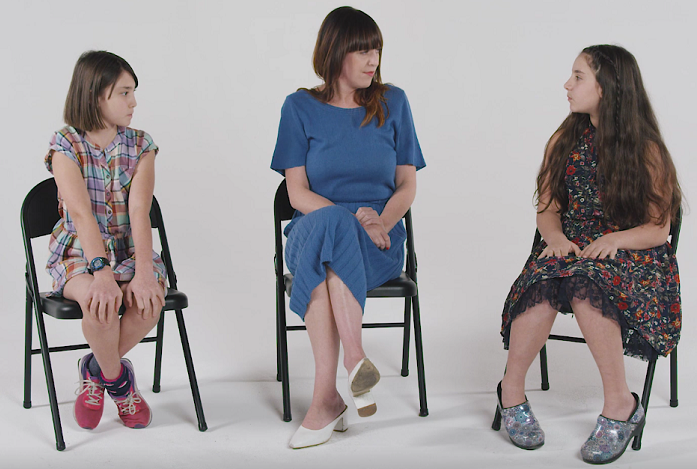
Feminist presents sophisticated arguments for abortion to elite scholars in rigorous academic debate

Abortion rights activist takes on pro-life doctors in formal academic debate

I love to watch formal academic debates, with timed speeches, where scholars with published work get to interact with one another. Even if my side loses, I learn something, because I learn what I can and cannot press in a discussion with the other side. Debates between scholars helps me to tolerate listening quietly to people I disagree with. All good things.

But not everyone agrees with me about this. Some people just prefer to present their views to those who are easily manipulated and uncritical, so that they will change their minds because of stories and feelings, instead of reason and evidence.

Here’s a story about it from Life News:

Have you seen the video going around about kids meeting someone who is post-abortive? The video does not talk about the psychological consequences of having an abortion, or talk about how to help women and families who are post-abortive heal from their abortion. No, it normalizes abortion so that 10 and 11-year-olds grow up to think taking an innocent human life is okay–and that no one ever regrets their abortion.

And the actual video:

I noticed that Nathan Apodaca wrote a reasonable response to the content of the video, over at Human Defense initiative.

He writes:

The most common theme in the entire video is the host’s avoidance of the real issue: Can we kill the preborn? What is the preborn?

[…]The problem with the video is the spokeswoman for “Shout Your Abortion,” along with several of the teenagers in the piece, constantly do what philosopher Francis Beckwith aptly calls “Begging the question”; that is, they assume what they should be trying to prove.

Consider the first few conversations. We (the audience) are told indirectly that sometimes mistakes happen, that people can’t afford a child, and other issues influence the decision to get an abortion.

Poverty is obviously a problem, along with people who think they will not be able to afford a child, but a question never gets asked: why stop with abortion to alleviate these problems? Why not allow parents to kill their newborns and toddlers as well to alleviate any problems that may arise? The answer is most assuredly a firm “No, that’s different.”

Ah, but that is the question! Why are the preborn so different we may kill them if we so please? This never seems to occur to anyone in the video, but it does raise a further question which deserves an answer: if the preborn are also human, just like babies and toddlers, should we really be killing them, or should we protect them, just like toddlers and newborns?

OK, this is important.

In the debate over atheism, I always advise you to disregard everything that anyone says until we get the atheist to come to terms with the evidence for the origin of the universe and the fine-tuning – mainstream science. The same thing is the case with the abortion debate. I don’t want to hear any sob-stories about poor people, and so on, until I get a scientific answer to the question “what is the unborn?” Let’s decide what’s true based on what mainstream science tells us.

And guess what? Just like the atheism debate, mainstream science is completely on our side. The same rigorous experimental science that establishes the beginning of the universe, and the fine-tuning of the universe for life, also establishes that a new living human being is created at the moment of conception, with a different DNA signature than either the mother or the father. It’s a new human being! And this is the scientific view – the same view you see in textbooks on human development. (Lots of citations in that PDF, you should download it and share it – it came from the lady that Trump just appointed to the National Science Board)

But it’s not just science textbooks that agree that abortion takes the life of an unborn child, even pro-abortion scholars concede that, as Nathan explains:

Something else Amelia and her interviewees miss is the many times supporters of abortion have called abortion for what it is: the intentional killing of an innocent human being.

There are three separate links to citations by abortion defenders in that citation.

Another important point is that abortion defenders always point to something that unborn children can’t do, and use that as the basis for excluding them. But the truth is that their criteria excludes a lot of other people:

[…][O]ne of the teenagers makes the off-the-cuff remark that “Like your arm is incapable of complex thought, a baby in the womb isn’t, either.”

No one bothers to defend this view though, and it is just asserted as if it settles the debate. The problem is, so what? Why does complex thought grant us a protection against being intentionally killed, instead of being protected because we are human in the first place? He never expands on this concept.

And how much complex thought is necessary in order to be protected from being killed? We never get an explanation. Some people, like the sleeping, the mentally ill, and someone in a medically induced coma may happen to not be capable at a given point in time to exercise complex thought; but it seems ludicrous to think they can be justifiably excluded from the community of human beings with a right to not be killed.

I have a whole post about the different criteria that pro-abortion people use to exclude the unborn from the right to life, and in every case, they end up excluding other people who even they would admit have the right to life.

The argument that seems to be the most convincing to the children is the “pro-lifers are stinky poopyheads” argument, also known as the ad hominem fallacy in formal logic.

Nathan responds:

This claim is a flat out lie, and is painfully obvious to anyone paying the slightest bit of attention. Pro-lifers regularly step up to help those in need. In north San Diego county alone, there are more pro-life resource centers for women (and men) in need than abortion clinics. In my own hometown, Escondido, two pro-life pregnancy resource centers provide healthcare to those who need it. There are even pro-lifers opening up housing and adoption referrals for women who choose to keep their babies, but are homeless and in need of a place to stay. “Shout Your Abortion”, the organization the host represents, does none of this, and doesn’t help women who decide not to have an abortion find support.

[…]This isn’t all. Consider the following: groups and affiliates like the Obria Group, CareNet, LifeLine, Heartbeat International, and the National Institute of Family and Life Advocates (NIFLA) connect people in need to thousands of care centers; many of whom operate with no tax dollars or government subsidies whatsoever.

Slave owners used similar “arguments” against abolitionists who didn’t like them owning slaves: calling them names, to make other people not want to oppose slavery. Well, I guess if your audience is a bunch of children, then this might be persuasive to them.
Trump names pro-life scientist to National Science Board

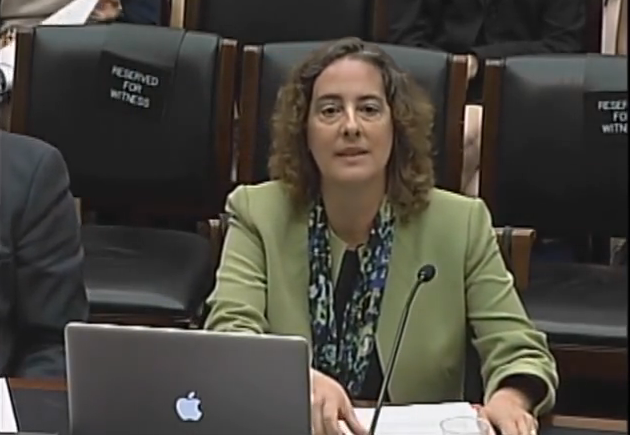
Dr. Maureen Condic
Dr. Maureen Condic

On Friday, I was reading an article in the Christian Research Journal by prominent pro-life debater Scott Klusendorf, and he was analyzing a pro-abortion scholar. But he ended his article with this quote, where he mentions some of the best pro-life scholars.

He wrote:

In a 2008 Los Angeles Times op-ed piece, abortion-choice advocates Kate Michelman and Frances Kissling lament that a new generation of pro-life advocates present “a sophisticated philosophical and political challenge” to what once was considered a settled debate.

Pollitt largely ignores that challenge. She dreams of a day when cleaning out wombs is just another form of housekeeping. Nowhere in her text do you get the sense she’s interacted with leading pro-life thinkers such as Francis Beckwith, Maureen Condic, or Christopher Kaczor. And while Pollitt may indeed fire up like-minded abortion-advocates, she’s no pro when it comes to engaging the best arguments from pro-life apologists.

Now, I recognize Beckwith and Kaczor. I’ve purchased their books. They are seen as two of the top pro-life scholars. And I remember I’ve cited Condic as an authority on the science of fetal development, in this post.

It’s great that we have pro-life scholars like Beckwith, Kaczor and Condic, but it would be even better if those pro-life scholars were in positions of influence. They would have to have the right credentials, of course. But we also need someone to put them in high positions.

Life News reports:

A nationally-recognized scientist who has testified in support of unborn babies is President Donald Trump’s new choice for the National Science Board.

Dr. Maureen Condic, an associate professor at the University of Utah who specializes in neurobiology, is widely known for her work on spinal cord repair, according to the Salt Lake Tribune. Earlier this month, Trump chose her to fill one of the 25 seats on the National Science Board.

“I’m just thrilled that it’s an opportunity to serve my country and the greater scientific community,” Condic said in response to the news.

She obtained her Ph.D. from University of California, Berkeley, and is a widely published scientist whose works have appeared in a variety of peer-reviewed journals.

Her work has been instrumental to the pro-life movement in its pursuit to protect unborn babies from painful abortions. In 2003, Condic testified before Congress that unborn babies have the capacity to feel pain as early as eight weeks.

“The neural circuitry responsible for the most primitive response to pain, the spinal reflex, is in place by 8 weeks of development,” she explained. “This is the earliest point at which the fetus experiences pain in any capacity.”

She asked lawmakers to pass the Pain-Capable Unborn Child Protection Act to protect unborn babies from the “cruel” and unnecessary pain of abortion.

“Imposing pain on any pain-capable living creature is cruelty,” Condic said. “And ignoring the pain experienced by another human individual for any reason is barbaric. We don’t need to know if a human fetus is self- reflective or even self- aware to afford it the same consideration we currently afford other pain-capable species. We simply have to decide whether we will choose to ignore the pain of the fetus or not.”

Many states have passed laws banning abortions when the unborn child can feel pain. And 13 states have laws that include the facts on fetal pain in mandatory counseling. Dr. Condic deserves the credit for her work on the research that supports this legislation.

In addition, earlier this year, the Senate voted on a bill to ban abortions where the unborn child can feel pain:

Next week, the Senate will vote on the Pain-Capable Unborn Child Protection Act (S. 2311), introduced by Sen. Lindsey Graham (R-S.C.). This legislation would protect unborn children by preventing abortions 20 weeks after fertilization, at which time scientific evidence suggests the unborn child can feel pain. The House passed a similar bill last fall by a vote of 237 to 189.

Unfortunately, the Democrats in the Senate were able to defeat the Senate bill. Still, it really helps the pro-life cause for Dr. Condic to get into a position of influence. Maybe we will get a second chance to pass this legislation, when we have more pro-life senators like newly elected Marsha Blackburn.

Abortion debate: a secular case against legalized abortion

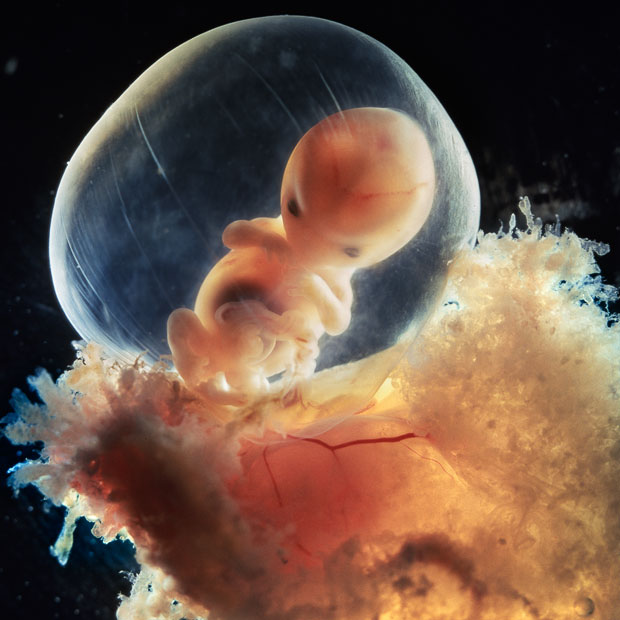
Unborn baby scheming about being only two months old

Note: this post has a twin! Its companion post on a secular case against gay marriage is here.

Now, you may think that the view that the unborn deserve protection during pregnancy is something that you either take on faith or not. But I want to explain how you can make a case for the right to life of the unborn, just by using reason and evidence.

To defend the pro-life position, I think you need to sustain 3 arguments:

  1. The unborn is a living being with human DNA, and is therefore human.
  2. There is no morally-relevant difference between an unborn baby, and one already born.
  3. None of the justifications given for terminating an unborn baby are morally adequate.

Now, the pro-abortion debater may object to point 1, perhaps by claiming that the unborn baby is either not living, or not human, or not distinct from the mother.

Defending point 1: Well, it is pretty obvious that the unborn child is not inanimate matter. It is definitely living and growing through all 9 months of pregnancy. (Click here for a video that shows what a baby looks like through all 9 months of pregnancy). Since it has human DNA, that makes it a human. And its DNA is different from either its mother or father, so it clearly not just a tissue growth of the father or the mother. More on this point at Christian Cadre, here. An unborn child cannot be the woman’s own body, because then the woman would have four arms, four legs, two heads, four eyes and two different DNA signatures. When you have two different human DNA signatures, you have two different humans.

Secondly, the pro-abortion debater may try to identify a characteristic of the unborn that is not yet present or developed while it is still in the womb, and then argue that because the unborn does not have that characteristic, it does not deserve the protection of the law.

Defending point 2: You need to show that the unborn are not different from the already-born in any meaningful way. The main differences between them are: size, level of development, environment and degree of dependence. Once these characteristics are identified, you can explain that none of these differences provide moral justification for terminating a life. For example, babies inside and outside the womb have the same value, because location does not change a human’s intrinsic value.

Additionally, the pro-abortion debater may try to identify a characteristic of the already-born that is not yet present or developed in the unborn, and then argue that because the unborn does not have that characteristic, that it does not deserve protection, (e.g. – sentience). Most of the these objections that you may encounter are refuted in this essay by Francis Beckwith. Usually these objections fall apart because they assume the thing they are trying to prove, namely, that the unborn deserves less protection than the already born.

Finally, the pro-abortion debater may conceded your points 1 and 2, and admit that the unborn is fully human. But they may then try to provide a moral justification for terminating the life of the unborn, regardless.

Defending point 3: I fully grant that it is sometimes justifiable to terminate an innocent human life, if there is a moral justification. Is there such a justification for abortion? One of the best known attempts to justify abortion is Judith Jarvis Thomson’s “violinist” argument. This argument is summarized by Paul Manata, one of the experts over at Triablogue:

Briefly, this argument goes like this: Say a world-famous violinist developed a fatal kidney ailment and the Society of Music Lovers found that only you had the right blood-type to help. So, they therefore have you kidnapped and then attach you to the violinist’s circulatory system so that your kidneys can be used to extract the poison from his. To unplug yourself from the violinist would be to kill him; therefore, pro-lifers would say a person has to stay attached against her will to the violinist for 9 months. Thompson says that it would be morally virtuous to stay plugged-in. But she asks, “Do you have to?” She appeals to our intuitions and answers, “No.”

Manata then goes on to defeat Thomson’s proposal here, with a short, memorable illustration, which I highly recommend that you check out. More info on how to respond to similar arguments is here.

Here is the best book for beginners on the pro-life view.

For those looking for advanced resources, Francis Beckwith, a professor at Baylor University, published the book Defending Life, with Cambridge University Press, 2007.