Tag Archives: Tax Cuts

Conservative coalition leader Tony Abbott leads by 6 points in latest Australia election poll

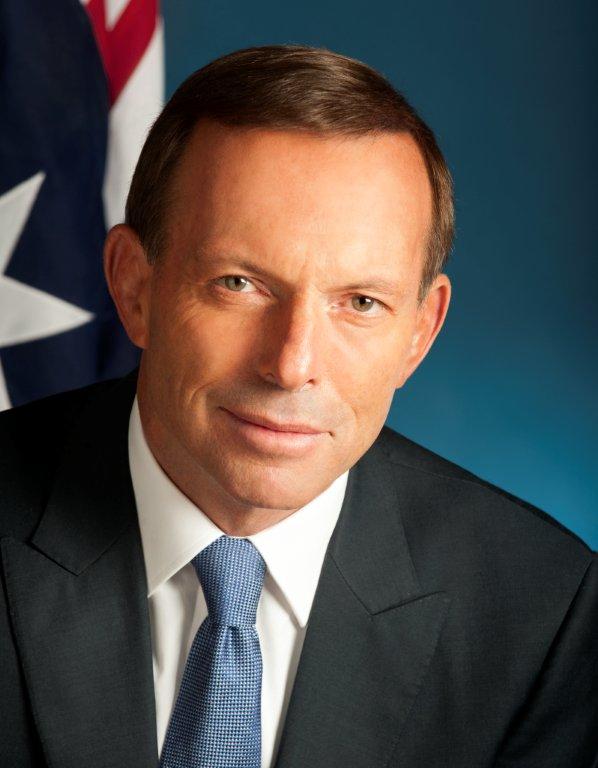
Tony Abbott, future Prime Minister of Australia

First the latest Nielsen poll results from the Australian Broadcasting Corporation (ABC).

Excerpt:

Latest opinion polls show a further drop in support for Labor two weeks out from an election, with one indicating the Prime Minister may struggle to hold his own seat.

The Nielsen poll, published on Fairfax websites, shows Labor’s primary vote has fallen two points to 35 per cent.

After preferences, that gives the Coalition a six-point lead – 53 per cent to 47 per cent.

If the results were replicated evenly across the country on election day, Labor would lose 10 seats.

The poll of 2,500 respondents has a margin of error of 2.6 per cent.

Meanwhile, a Newspoll published in The Australian newspaper, shows Prime Minister Kevin Rudd is behind the Coalition candidate, Bill Glasson, in his Brisbane seat of Griffith.

The poll of 500 voters shows Mr Rudd trails his opponent 52 per cent to 48 per cent on a two-party preferred basis. The margin of error is 4.4 per cent.

Another Newspoll of almost 1,400 voters in the Coalition’s eight most marginal seats in Queensland shows the Coalition’s primary vote has surged eight points to 54 per cent, while the ALP’s primary vote has slipped to 32 per cent.

It shows the Coalition has a commanding two-party preferred lead of 60 per cent to Labor’s 40 per cent.

Mr Rudd’s personal support has also fallen to 39 per cent, with 49 per cent of voters across the marginal seats preferring Opposition Leader Tony Abbott.

The Coalition is is composed of the Liberal party (which is actually the conservative party) and the National party (which is also conservative).

I found an interview with Tony Abbott posted on India Today, when I searched for some keywords related to his policies. I searched for a detailed policy-oriented interview in the mainstream media, but couldn’t find much. Strangely enough, the Australian media seemed to be more concerned with gaffes and fear-mongering about Abbott’s socially conservative views. It’s as if the mainstream media is aiming for some sort of Jon Stewart coverage of the election, instead of telling us about each candidate’s plans and proposals.

Here’s some of the interview:

1. What are your plans to grow the economy?
The Liberal Party understands that successful businesses generate prosperity for the entire community by creating jobs, investing in growth and earning important export income.

We will lower costs for Australian businesses by removing Labor’s carbon tax. We will take the shackles off Australian businesses by cutting $1 billion in red tape every year. And we will boost productivity by encouraging more people into the workforce with better child care and a paid parental leave scheme and we will build 21st century infrastructure.

The economy will be strengthened by a new lowered company tax rate of 28.5% from 1 July 2015. This builds on the Coalition’s track record of delivering real tax reform focussed on cutting and simplifying taxation in Australia. Our fully funded tax cut will restore confidence in the management of Australia’s economy and boost job creation and investment.

The Coalition will also build a more diverse, world-class economy – a 5 pillar economy – to unleash Australia’s real economic potential. In particular, we will build on our strengths in manufacturing innovation, agriculture exports, advanced services, world class education and research as well as boosting mining exports.

2. The cost of living has gone up in the recent years, how will the Liberals help families cope with the rising costs?
We will start reducing cost of living pressures for families by immediately scrapping Labor’s carbon tax, taking the pressure off rapidly rising electricity and gas prices.

The average family will be $500 better off next year alone and seniors will still keep their fortnightly pension and benefit increases- all without a carbon tax. We will not proceed with Labor’s FBT changes on cars. And we will restore the Private Health Insurance Rebate as soon as we responsibly can.

3. We have a lot of small businesses in our community, how will Liberals help them? 
The Liberal Party understands the small businesses are the real job creators in the economy, employing almost half of the workforce in Australia. We will reduce costs for every business by abolishing the carbon tax, directly reducing electricity, gas and transport costs. By removing $1 billion of red tape each year, small businesses will be able to put more time, effort and resources in their ‘real’ work, rather than complying with complex and unnecessary government requirements.

The Coalition’s paid parental leave scheme will mean small businesses would no longer be disadvantaged in the ‘war for talent’, attracting and keeping quality staff.

We will also ease expense pressures on small businesses by delaying the increase of compulsory superannuation contributions to 12 per cent by a further two years.

8. Do you have a view about same-sex marriage?
There are very strong feelings on both sides of this particular issue right now. I take a conservative position on it myself. I think that we should not lightly change something which has been this way since time immemorial. But I don’t believe that I can necessarily impose my view on society for all time, all I can do is candidly and honestly tell people what my view is. I support the traditional definition of marriage as between a man and a woman. Now I know that others dispute this, because I have lots of arguments inside my own family on this subject now. But my position, it’s always been clear, it’s always been consistent, and as long as I’m in the Parliament if the issue comes up that’s the way I will vote. Whether it remains for all time the Liberal Party, and the Coalition’s position, well that will be a matter for our party, for our Coalition if it were to come up in a future Parliament.

11. Everyone is talking about the Asian Century, what does this mean for the Liberals? What are your plans?
An important element of our economic plan for Australia is to strengthen our trading relationships with Asia, welcome investment from the region, boost our exports and deepen Australia’s knowledge of and engagement with countries in Asia. We recognise the rapid emergence of both China and India and the opportunities this will afford Australia in the future.

Specifically, we will take real action to increase economic activity by fast-tracking Free Trade Agreements with China and India amongst others.

We will strengthen our diplomatic relationship and trade ties with India and boost mining exports by exporting uranium to that country.

We will help Australians gain study and work experience, strengthen the ties with the region, learn to adapt behaviour to Asian contexts and work more effectively with Asian governments.

The Coalition’s new Colombo Plan would encourage and support Australian undergraduates to study for part of their degrees in a university in the Asia-Pacific region, so promoting Australia’s deeper engagement with the region to the benefit of both.

It’s nice to see what policies a conservative would propose. We haven’t had much of that around here for a long time, have we?

The Australian election will be held on September 7th. I would appreciate it if my Australian readers can keep me informed about stories related to the election campaign.

How Margaret Thatcher, the Iron Lady, saved Britain

Here’s an article from the UK Daily Mail with some more details about her.

Margaret Thatcher stood almost alone in driving through the tough policies now credited with saving the economy, secret papers reveal.

The Tory Premier had to take on her predecessor Harold Macmillan, Bank of England governor Gordon Richardson and even her own Chancellor Geoffrey Howe to push through the policies which pulled Britain back from the brink of economic chaos.

Documents released by the National Archives under the 30-year rule show the pressure Mrs Thatcher faced from the Establishment behind the scenes – and the extent to which she was isolated.

In 1980, the year after becoming Britain’s first female Prime Minister, Margaret Thatcher embarked on a controversial programme to revive the moribund economy through deep public spending cuts and strict control of the money supply, intended to stamp out inflation.

He warned that while her programme of cuts might give a ‘sense of exhilaration’ to her supporters, the country was heading for industrial collapse and ‘dangerous’ levels of unemployment.

Macmillan, then 86, sent the letter following a meeting with the Prime Minister at Chequers in August 1980.

He criticised her for abandoning ‘consensus politics’ to pursue radical reforms and ‘divisive politics’, which he said went against the ‘essence of Tory democracy’.

It was Macmillan who coined the phrase ‘you’ve never had it so good’ in 1957 during the long post-war economic boom.

His brand of consensus politics is now credited with contributing to the economic malaise that brought Britain to its knees in the late 1970s.

Years later, in her memoirs, Mrs Thatcher poured scorn on consensus politics, writing: ‘What great cause would have been fought and won under the banner “I stand for consensus”?.’

[…]In 1981, 365 economists wrote to The Times urging Mrs Thatcher to change course and limit the damage caused by the recession.

But she was unmoved, and her tough stance succeeded in reducing inflation from 27 per cent to four per cent in four years, putting Britain on the road to recovery.

Mrs Thatcher’s economic views were heavily influenced by the right-wing Cabinet minister Sir Keith Joseph, with whom she set up the free market think tank the Centre for Policy Studies in 1974.

Both drew on the work of the influential American economist Milton Friedman whose monetary theories challenged the post-war consensus on economic thinking.

I recommend reading the whole article for some more articles where Lady Thatcher had to stand against everyone and hold onto her convictions in the teeth of the majority.

Here’s an article from Forbes magazine that summarizes her effort to turn Britain around.

Excerpt:

It’s hard to appreciate today how desperate Britain’s condition was before Thatcher took office.  Its economy was a laughing stock, the perennial sick man of Europe.  Strikes were endemic and union bosses effectively governed the country.  Her Conservative Party had long ago made its peace with the welfare state and the ethos of high spending and high taxes. While the previous Tory Prime Minister, Edward Heath, wanted to revive Britain, he hadn’t a clue how to do it. In a make-or-break showdown with the coal miner’s union, Heath called a special election under the banner “Who Governs Britain?”  Heath lost and unions’ dominance in Britain seemed secure.

Great leaders have an astute sense of taking advantage of circumstances. Even though Heath had lost two elections, none of the senior party officials would challenge him.  At the time, Thatcher was not regarded as one of the party’s major figures.  But she was the only Tory who firmly believed in free markets and in Britain’s ability to become again a proud nation based on the principles of liberty. She was a devotee of Friedrich von Hayek and Milton Friedman and of the idea of paring back big government and giving free enterprise room to flourish. Astonishingly she beat Heath in a leadership fight in 1975 and led the Tories to victory in 1979.

Immediately she began slashing income tax rates and reining in galloping spending and fighting inflation.  She also exhibited that critical sense of timing. When she took office, she was faced with a potential strike of nurses whose union was demanding huge pay increases. Thatcher compromised in a way that some thought she didn’t have the backbone to turn Britain around.  Instead she was exhibiting a great politician’s sense of knowing when to pick a fight.  Thatcher eventually pushed through major labor union reforms and made it clear she would not tolerate any union riots or violence.  Shortly after Thatcher won reelection, the coal miners union, which had destroyed Heath, decided to take her on. But unlike Heath Thatcher was fully prepared.  The big showdown ensued and Thatcher beat the coal miner’s union resoundingly. It never recovered from that defeat.

Thatcher knew the deadweight on the economy of excessive taxation. She cut the top income tax rate from 98% to 40%. She cut the corporate income tax rate from 52% to 35%.

One of Thatcher’s greatest innovations was the systematic selling off of the government’s business assets, dubbed privatization.  After World War II Britain nationalized enormous swaths of the economy which actions subsequent Conservative governments left largely untouched.  Thatcher sold government companies off and her example has been followed by countless nations around the world.

In the area of privatizations, she did two remarkable things. She sold off much of Britain’s public housing.  An enormous number of Britons, far more than in the U.S., lived in these government-owned buildings. Thatcher pushed the sale of these apartments to occupants at low prices and on very advantageous terms. The purpose was to begin to shift the mentality of people and their dependence on government. Her other smart move was in the privatization of government-owned companies:  offering a significant number of shares to workers at very low prices.  Union leaders hated privatization but their opposition was undermined as their members realized that they could do very well buying cheap shares in these newly-privatized entities.  Here again she was changing peoples’ thinking:  pro-big government workers now saw themselves as share owners, taking on more of a capitalist mentality.

Before Thatcher, many social observers thought that Britain had an ingrained, unchangeable, anti-commercial culture that would forever stand in the way of the country becoming an economic success. Yet within a decade of her taking office, Britain had the most vibrant, large economy in Europe, one even more dynamic, innovative than that of Germany’s.  London became a magnet for entrepreneurs from France, Sweden and elsewhere.

One unchangeable characteristic of a great leader is courage and that means taking career-breaking risks.  Thatcher demonstrated her mettle in the Falkland Islands crisis.  When the Argentinean military dictatorship seized Britain’s Falkland Islands, most military experts felt the Sceptred Isle simply did not possess the military means to take them back. Defying almost the entire political establishment which was haunted by both Britain’s current weakness and the memory of the Suez Canal debacle in 1956, Thatcher declared that the seizure would not stand and that Britain would go to war to take the Islands back. Thankfully she received critical help from the U.S. thanks to in large part the unrelenting efforts of Defense Secretary Caspar Weinberger (who years later became Publisher and Chairman of Forbes). To the surprise of experts, Britain’s military expedition succeeded. The Argentinean military dictatorship fell and democracy was restored in that country.  For Britain the Falklands war was a huge boost to a demoralized nation. To the world it meant that once again tyranny would be resisted.

I recommend reading that whole article. It’s hard not to smile at a woman who clearly loved her country and worked to save it from poverty.

Why good men love Maggie

And now I must offend everyone. See, I have a theory about women. I think that women generally tend to be more beholden to the opinions and fashions of the crowd than men are. It’s not absolute, but it’s maybe two-thirds to one-third, in my experience. I think that it is generally hard for them to hold to their convictions in the face of peer pressure. That’s why so few young, unmarried women are conservative after graduating from college. As soon as they reach college, they are swayed towards liberal views by their need to feel good about themselves and their need to be liked by others. Their views at home were not rooted in real knowledge, they were just fitting in with their families and churches and saying whatever words they were expected to say. And then they go off to college and learn other words to say from another community that uses praise and blame to replace their former convictions with new convictions.

But Maggie Thatcher wasn’t like that. And here’s why:

John Ranelagh writes of Margaret Thatcher’s remark at a Conservative Party  policy meeting in the late 1970’s, “Another colleague had also prepared a paper arguing that the middle way was the pragmatic path for the Conservative party to take .. Before he had finished speaking to his paper, the new Party Leader [Margaret Thatcher] reached into her briefcase and took out a book.  It was Friedrich von Hayek’s The Constitution of Liberty.  Interrupting [the speaker], she held the book up for all of us to see.  ‘This’, she said sternly, ‘is what we believe’, and banged Hayek down on the table.”  (John Ranelagh, Thatcher’s People:  An Insider’s Account of the Politics, the Power, and the Personalities.  London:  Harper Collins, 1991.)

Policies like unilateral disarmament, wealth redistribution and redefining marriage sound good to many women – especially in college, and especially when only one side is presented and the other side is demonized. The only way to resist ideas that feel good and ideas that get you peer-approval is to have formed your own views through independent study. Lady Thatcher’s economic policies were formed through a study of real economists like Nobel-prize-winning economist F.A. Hayek and Nobel-prize-winning economist Milton Friedman. The reason why she was able to hold to her principles is because she knew what she was talking about, and her opponents did not. She didn’t care about feeling good. She didn’t care about what other people thought of her. She knew was right, and that was enough to sustain her in trying times. She had the knowledge, and her opponents couldn’t change her core convictions by trying to shame her. It didn’t work.

Fiscal cliff deal raises taxes by $600 billion, increases spending $330 billion

The Heritage Foundation explains.

Excerpt:

The Congressional Budget Office (CBO) just now released its score of the bill the Senate passed early this morning while everyone was celebrating the beginning of the New Year. Despite knowing for a long time that taxes would go up on all Americans today, the Senate waited until we technically went over the cliff to act. Washington’s dysfunction was even fodder for New Year’s revelers in Times Square.

Going over the cliff allows Congress to technically say that it isn’t raising taxes, but is cutting them instead. CBO’s score backs them up on this by scoring the Senate bill as a $3.6 trillion tax cut. No one should fall for this. The Senate bill is a tax hike because it allows taxes to go up from 2012 to 2013. The tax increases in the bill will reportedly raise about $600 billion over the next 10 years.

Also of note in the CBO score is that the Senate bill increases spending by around $330 billion by extending expanded unemployment benefits, a temporary “doc fix” patch to prevent cuts to Medicare, and extension of the agriculture programs.

There was some good in the Senate bill — the harmful defense sequester cuts were postponed and most tax hikes were avoided. But there was bad — tax hikes that will hurt the economy and do little to tame the deficit, especially factoring in the spending in the bill.

As I noted before, the CBO has predicted that the bill will add $4 trillion to the national debt, taking us over the $20 trillion mark.

Bloomberg:

The budget deal passed by the U.S. Senate today would raise taxes on 77.1 percent of U.S. households, mostly because of the expiration of a payroll tax cut, according to preliminary estimates from the nonpartisan Tax Policy Center in Washington.

More than 80 percent of households with incomes between $50,000 and $200,000 would pay higher taxes. Among the households facing higher taxes, the average increase would be $1,635, the policy center said. A 2 percent payroll tax cut, enacted during the economic slowdown, is being allowed to expire as of yesterday.

According to the CBO, the deal would raise taxes by $41 for every $1 cut from the budget. Have we really dodged a fiscal cliff?