
Tag Archives: Stewardship

Should a man go into full-time apologetics ministry if he intends to marry?

Congressional Budget Office: Debt to GDP ratio

Lydia McGrew has a post up at What’s Wrong With the World blog that is just excellent.

Excerpt:

Apologetics is wonderful and incredibly important. It’s a wonderful thing that a revival of specifically evidentialist apologetics is happening in the United States and even, to some extent, in the Anglophone world at large.

Unfortunately, this revival of interest in apologetics and in being Christian philosophers is coming at a very bad time, economically. Even if you are a genius, your chances in 2013 and following of getting a stable job by the route of going to graduate school in philosophy (or almost any area of the humanities) are pretty darned slim. If you’re not a genius, fuhgetaboutit. Nor were there ever all that many jobs in philosophy. It was always an iffy proposition, but it’s much worse now than it was even twenty years ago.

As for starting ministries, a poor economy makes it extremely hard to do that, too, because people don’t have as much disposable income to donate. Moreover, even in a more robust economy, if all the eager young apologists were to flock to start apologetics and/or campus ministries, they would be competing among themselves for a finite number of available dollars from donors. So that’s not the best idea either.

Let me speak very bluntly here: In my opinion, God doesn’t need a whole raft of impractical idealists out there getting themselves into debt or half starving (or really starving) with no idea of how in the world they are ever going to support even themselves, much less a family, out at the other end of their education. That just burdens the church with a large number of able-bodied but needy Christians who are in a seemingly unending stage of transition, “getting an education for the kingdom” or “hoping to do work for the kingdom” without a viable plan in mind or any fiscal light at the end of the tunnel.

Instead, I believe that we need an army of tentmakers. If you have a job or a marketable skill, for heaven’s sake (literally), don’t quit that job and join the ranks of starving students. Keep your day job, but enrich your mind and prepare yourself to answer people’s questions about Christianity by studying on your own time. If you have entrepreneurial abilities and the capital, start a business. That will support not only yourself but others you employ, and if successful, you will have more money to give to Christian ministries.

But even if you aren’t the entrepreneurial type or don’t have that opportunity, at least make sure (to the extent that one can in today’s world) that you can pay the rent and put food on your own table as well as supporting whatever number of additional people you plan to take on. (In other words, if you are a guy who would like to get married and have children, bear that in mind.) This will inevitably mean spending time at all that distasteful stuff like networking and making a resume. Bookish types don’t enjoy that stuff, because it seems bogus, but it can’t be helped. It will undoubtedly mean, for most people, not being full-time students beyond the undergraduate level, especially not in the humanities, not trying to become full-time academics as a life work, and not going into full-time ministry, even if you would ideally like to do one or more of those three things.

In the end, if we can have this army of tentmakers, there will be (Lord willing) money to allow some people to work in full-time ministry. But it’s going to be quite a small proportion of those who are interested or would ideally like to do so.

[…]Inevitably, the course of action I am suggesting will mean a bifurcation for many between their day job and what they are most passionately interested in. So be it. Indeed, so it has ever been in the world. What proportion of people at any moment in human history have been blessed enough to spend most of their time working on what they are most passionately interested in? The question answers itself. So I think that bifurcation has to be accepted by a great many people and that doing so will lead to what I might call a healthier “Christian economy” among committed Christians than what we could otherwise end up with.

So let’s see her advice in bullet-point form:

  • The job market for philosophers is very bad
  • A bad economy means less support money is available
  • It’s important to have a plan to fund your  ministry
  • Leverage your full-time job to fund your ministry

So I want to make two comments.

Making bad decisions because you think God is telling you to

I often find that when I talk to Christians, there is this sort of hyper-spiritualized way of deciding what to do, and I’ve written about this in one of my favorite posts. Hyper-spiritual Christians read the Bible, which is good, but then they don’t tend to also look at practical things like economics, science and public policy when making their decisions. The Bible doesn’t say much about what to study or what job to get, but there is an example of Paul working at tent-making in order to fund his ministry. So there is precedent for the idea of learning a trade and working to earn enough money to support our families, our ministry and even other people’s ministries.

I think we have an obligation to take the Bible seriously when it tells us what we can do to please God, but coming up with a plan to please God most effectively is our job. We have to make the plans to serve God. Our plans must be within the bounds of Biblical morality, but they should also reflect our knowledge of how the world really works, too. We’ll be more successful with a good plan and some hard work. It’s very easy to be deceived by our feelings about what we would like to do with our lives. And many people who listen to their feelings and find other impractical people to echo and affirm those feelings make many mistakes in life. I would advise people to be very careful about calling their feelings the voice of God speaking to them, then getting into trouble when their lack of wisdom blows up in their faces.

Christian men who want marriage without having to get a job

So that brings me to the concern that I have that I’ve been thinking about for the last week or so. I have been thinking about a couple of Christian apologists I know who are interested in marriage, but unwilling to prepare themselves to prepare for a wife and children. They are both very unaware of the economic and political challenges that they are likely to face, which makes the need to prepare financially even more pressing.

One of the Christian men is getting a BA and is in his early 30s. He says that marriage would have to come second to his ministry. He has never worked a full-time job his entire life, and considers getting a full-time job to be beneath him. The other one is in his late 20s and is in a PhD program. He wants marriage right away, but he has never worked in a real job his entire life, either. Both of these Christian apologists are in debt – they have zero assets and negative net worth. How can it be that they can even be considering marriage? Don’t they realize what a man’s role in marriage is? He is the provider, and that means that he has to have a record of steady work, saving money and being generous at sharing with others. Neither of these men have shown any ability in those areas. Neither of them seems willing to get started on a regular, full-time, private sector job. And neither seems to want to take Lydia’s advice and finance their ministry / marriage from a regular, full-time job. Neither of these students can even afford a wedding or even a wedding ring. Do they even understand what a woman needs from her husband?

So what’s the problem? I talked this over with a wise friend and she said that feminism has become so widespread in this society that a lot of men think that they can contemplate marriage without having a record of earning and saving. They don’t see that men have any distinct “provider” role in a marriage. They sort of expect to get the benefits of marriage with none of the “provider” responsibilities. Many women have also been taken in by feminism, and cannot evaluate men to see which ones are able to work and save and provide, and which ones aren’t. I don’t think young people are being taught how to apply the Bible to the practical challenges of marriage, or how to recognize the challenges of the times we live in.

Where to get help if you have a selfish, absent or abusive mother or father

Practice that makes perfect
Theology that hits the spot

Normally in my 6 PM post I like to write about something related to apologetics, because that’s when people are done with their work and have time to think about the big questions. Today, I want to say something this article about lambs in Scotland, written by Sheila Walsh in the The Stream.

She writes:

I am very fond of sheep. I grew up on the west coast of Scotland with sheep all around me, field after field of white wool and incessant crying when things seemed a little off.

[…]Of all the lessons I have learned from these defenseless, gentle animals, the most profound is the most painful. Every now and then, a ewe will give birth to a lamb and immediately reject it. Sometimes the lamb is rejected because they are one of twins and the mother doesn’t have enough milk or she is old and frankly quite tired of the whole business. They call those lambs, bummer lambs.

Unless the shepherd intervenes, that lamb will die. So the shepherd will take that little lost one into his home and hand feed it from a bottle and keep it warm by the fire. He will wrap it up warm and hold it close enough to hear a heartbeat. When the lamb is strong the shepherd will place it back in the field with the rest of the flock.

“Off you go now, you can do this, I’m right here.”

The most beautiful sight to see is when the shepherd approaches his flock in the morning and calls them out, “Sheep, sheep, sheep!”

The first to run to him are the bummer lambs because they know his voice. It’s not that they are more loved — it’s just that they believe it.

I am so grateful that Christ calls himself the Good Shepherd.

“He calls his own sheep by name and leads them out. After he has gathered his own flock, he walks ahead of them, and they follow him because they know his voice.” (John 10:3-4 NLT)

My older brother and I grew up with a mother who was very much focused on her career and earning and saving money for her retirement. We were both stuck in daycare very early after being born, so that she could go back to work right away. My older brother has shown the ill effects of our parents (especially our mother) not having any plan for us, especially morally and spiritually. He dropped out of college after failing his first year, never had a career. Although he has normal intelligence and mental health, he never could stick in any real job.

Although there were early warning signs when his grades started to drop in Grade 5, my parents never took responsibility to make a plan to solve it. Oh, they would yell and scream at him at report card time, but just for a day or two, and after that, nothing constructive. My brother decided that he could just ride out the flak my parents gave him on report card night, and keep going with his plan of having fun and being popular. My parents just forgot about it until the next report card day, because they did not want to be distracted from their careers, hobbies and retirement planning.

I had the exact same upbringing as my older brother. He actually did pretty well until Grade 5 just like me, but then our paths diverged. From Grade 5 on, his grades deterioriated. He got tired of having to study and he was more interested in the opinions of his peers and conforming to pop culture. In my case, from Grade 5 on, my grades were always high-90s. I remember taking the same classes as he did, in the same high school, with the same teachers. He got a 44 in data processing, I got a 96 with the same teacher and won the award for the entire grade. Every class I went to, the teachers would speak fondly of my older brother – he was a nice guy, very popular with his peers, good at sports, but not a very good student. How was it that I was winning awards when he had scored so poorly. Was I really his brother? How could we be so different?

The difference is that in Grade 5, he got a Gideon’s New Testament and he read it and he didn’t put it into practice, and in Grade 5, I got a Gideon’s New Testament and I read it twice and I did put it into practice. That was the difference. I had the awareness of the moral law (i.e.- wisdom) that allowed me to judge my parents and judge my peers and judge my teachers and stand alone. When you cannot rely on anyone to lead you, judging others is critical. That is what allows you to maintain appropriate boundaries and minimize the influence of friends and family who do not have any plan to grow you. Awareness of the moral law is what allows you to stop trying to please people who do not want what is best for you. On the other hand, God is always willing to give you wisdom, and you can find out all about him because he has left plenty of evidence concerning his existence and character for you to find. It is in knowing God as he really is that you can find your sense of value, purpose and meaning.

For me, Christianity was a simple matter of being willing to go along with what was true, and not insisting having fun or conforming to peer expectations. The essential characteristic of my faith, in contrast to my older brother’s lack of faith, was this – I did not mind being different, so long as I never lost a debate about what was true. My obedience to Christ has never been conditional on things going my way, on being liked, or anything like that. The only thing that mattered was being factually correct. It never bothered me what other people were doing, or what other people expected me to do, so long as as I was acting on what I knew to be true. And God helped me to find out what was true my motivating me to study, and leading me to him with good evidence, and good mentors.

How has this affected me? Well, this is the second thing I wanted to say about the bummer lamb analogy. Since I was a victim of this hands-off, me-first style of parenting, it’s caused me to be extra sensitive about being a good spiritual leader to others in the same predicament.The people I mentor can see it in the way that I treat them the exact opposite of the way that my older brother and I were treated. I care what people read. I care what courses they choose. I care what they eat. I care how they feel. I care about their finances. I care about their plans to serve God. I care about their romantic relationships. I care whether they get recognition for doing good. I care whether their life is going in the right direction. One person I mentored who once considered taking her own life wrote to me when she graduated from a STEM program, and she said this: “I wish you could have been here at my graduation. My parents only paid for this degree. You were the one who got me through it”. We have never met in person, but she is going to continue to make a huge difference for Christ and His Kingdom going forward.

I think when you have been a bummer lamb, you are extra careful to make decisions that will enable you to be a good shepherd to other lambs. Being a good shepherd does not mean being pious, spiritual, mystical, etc. Being a good shepherd does not mean making the lambs feel good about making bad decisions. Being a good shepherd means understanding what God has done to lead you, and then reflecting that love back to others in practical, self-sacrificial actions that solve actual real-world problems for other people who want to know and serve God. If you are about to jump off a cliff, the last thing you need is someone with no wisdom or experience telling you that God is OK with you doing whatever feels good to you. What you need is someone practical and competent to give you good advice, however much that advice may make you feel bad, or block your pursuit of fun.

One of my friends proof-read the draft of this post told me that it made her think of 2 Cor 1:3-5:

Praise be to the God and Father of our Lord Jesus Christ, the Father of compassion and the God of all comfort,

who comforts us in all our troubles, so that we can comfort those in any trouble with the comfort we ourselves receive from God.

For just as we share abundantly in the sufferings of Christ, so also our comfort abounds through Christ.

Nothing else I do in life matters to me as much as taking care of the people I mentor, especially the ones who are lost and lacking guidance and care. I have good health, good education, good career, and great finances. But by far the most important thing I do is following the example of the Shepherd by caring for other lambs.

Pre-marriage counseling is good, and pre-engagement counseling is even better


Painting: "Courtship", by Edmund Blair Leighton (1888)
Painting: “Courtship”, by Edmund Blair Leighton (1888)

OK, I was chatting with my friend McKenzie who recently got married to an amazing Christian man. She and I are both big believers in asking questions during the courtship. She sent me this article from Verily magazine that has a nice story, and lots of questions.

The article starts like this:

When you know, you know. And with Zach, I knew. Just eleven months into dating, I knew this was the man I wanted to marry. Zach felt the same about me. But instead of putting a ring on it then and there, we decided to seek out a pastor for pre-engagement counseling. You read it right, pre-engagement.

It might sound intense or premature at first, but I am here to tell you that it has been an awesome experience. Sure, the deal isn’t sealed until you say “I do,” but engagement is a huge decision, too. I don’t want to get engaged and then deal with our baggage. When Zach proposes marriage to me, I want my “Yes!” to be with eyes wide open, and pre-engagement counseling has really helped us move in that direction.

What has been so great about pre-marriage preparation? It’s a structured way for us to explore the most important ideas that will be the foundation of our marriage. We have a session once every two weeks for about an hour and a half, during which we’re working through the book Preparing for Marriage by Dennis Rainey with our pastor through homework assignments and discussing together. Of course, pre-marriage counseling can take many forms, but no matter where you might go to get pre-marriage counseling, there are certain things I think any couple should consider before truly committing. Whether you work through them pre-marriage or pre-engagement, like us, is up to you.

She has 4 sections and here they are:

  1. PERSONAL HISTORY
  2. FAMILY
  3. EXPECTATIONS
  4. MONEY MATTERS

The whole essay is very practical, but let me just quote the one that stood out to me:

Few people enjoy talking about money, and Zach certainly did not look forward to this conversation. But money, how we think about it and what we do with it, plays a big part in marital happiness. In our pre-engagement sessions we were posed with great questions when talking about finances. Here are a few of the important questions to cover in a conversation about money:

  • Who will be the primary financial provider in the family?
  • How will you decide on major purchases?
  • Who will pay the bills, balance the checkbook, and keep track of expenses?
  • What is your philosophy of giving (charitable donations to your church or other organizations), and how will you make decisions about giving?
  • What is your conviction about debt and the use of credit cards?

These were just a handful of the financial questions we were asked to think about. We also discussed how we want to handle our finances as a couple and individually (joint or separate bank accounts). It’s a lot to think about, but the goal was to get on the same page.

What I am seeing a lot of these days – I am literally seeing this everywhere – is when older women prefer to date and marry younger men who do not have jobs and who either never did some sort of post-high-school job training or are still students into their mid-20s. And I know why they do that. Younger men who are not serious about providing are very, very easy for older women to manipulate. She can throw out pretty much any crazy plan she wants – and maybe say “God told me” – and he will have no authority from his own life experiences to second guess her. Because he is not responsible or disciplined himself. Young women not only struggle enormously with respecting men, they also prefer men who they do not have to respect, so they can run the relationship based on their own feelings and intuitions.

I have also encountered a very strange attitude among young women where they think that hard work in an area that doesn’t pay is as “promising” as hard work in an area that does. Actually, this isn’t true. Some people work very hard at things that don’t pay, and some people just choose things that do pay and don’t work as hard at them. What matters is not how hard you work, it’s what is in demand. An engineer working a 40 hour week is probably going to make a lot more than a graduate student working 80 hour weeks. Or an assistant professor working 80 hour weeks. The important thing is not to just be busy and organized. It’s much safer to choose a field where you can earn a good salary without killing yourself. Work stress is a stress on the marriage, especially if both spouses have to work because the male provider isn’t making enough.

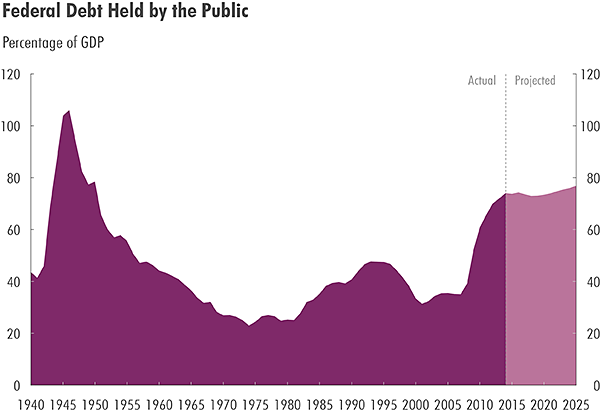
There is no substitute for earning and saving money. You can’t run a marriage without money – somebody has to pay the bills. Pre-engagement counseling is useful to find out whether one or both people has a proven record of being able to earn, save, and invest. If both people have never earned, saved, or invested, that’s a pretty bad sign. Especially the way things are going with the economy and the national debt. Marriage poses serious financial challenges, and they cannot be wished away. If your plan for prosperity is to discern God’s mysterious will through your feelings and intuitions, then you should make a new plan.