Tag Archives: Stewardship

Sean McDowell explains how to make Christian apologetics into a career

Two Air Force JTACs discuss mission parameters prior to calling in CAS

Sean McDowell has managed to integrate apologetics pretty tightly with his career, and in this recent blog post, he offers some options to others who might want to follow suit.

He writes:

We live in a golden age of apologetics. There are more books, curricula, blogs, conferences, academic programs, and people interested in apologetics than ever before. As my friend (and boss) Craig Hazen says, “Apologetics is a growth industry.”

Part of the vision of our Biola M.A. Christian Apologetics program is to train apologists to be a resource for the local church. In fact, our dream is that churches would consider the need for a “Pastor or Apologetics” as important as a men’s ministry leader or a youth pastor. Until this dream becomes a reality, here’s a few ways to make a career in apologetics (If you think I have missed any, please let me know):

He has several options listed in the post:

  • Professor of Apologetics
  • Ratio Christi
  • Author
  • Blogger
  • Speaker
  • Christian School Teacher

At least one personal friend of mine does each of these six options! They are all doable, but you really have to be the best at what you do if you want to pursue them, simply because of the lower demand. People don’t value truth these days as much as they value fun and entertainment.

Let’s look at number 6 in particular, because this one seems to me to offer the most linear, low-risk, option:

6.Christian School Teacher. Before accepting a teaching position at Biola University, I taught theology and apologetics full-time at a private Christian school in southern California. Since teaching high school involves grading and disciplining students, it is very different than writing or speaking. But it is a valuable way to help Christian students think deeply about their faith, and also to critically engage non-Christian students (I had many atheist, Buddhist, and Muslim students in my classes). If you want to teach at a Christian school, you will need both apologetics/theology knowledge (an undergraduate degree or M.A. is probably sufficient) as well as training as a classroom teacher.

Of course, there is a rival view to the view of doing apologetics full time, and that view is that you should do your regular job full time, and try to have an apologetics ministry on the side. J. Warner Wallace calls such people “tent-making apologists” because, like the apostle Paul, they fund their ministry by working a normal job (Paul made tents to drive his ministry).

Air Force TACPs confirm target locations with their map

Wallace lists 10 reasons why tent-making apologists are effective, and this is one I have personal experience with:

Tent-Making Christian Case Makers Reach a Skeptical Audience
As an atheist, I was very skeptical of Christians when I thought they were trying to sell me something. In fact, this was a major stumbling block for me. As a high school student, I used to watch local televangelists with scorn if they repeatedly asked their viewers to send them money. Don’t underestimate this disdain on the part of skeptics. As a tent-maker, I’ve had many conversations with skeptics who have given me a hearing simply because they respected my position as a volunteer Case Maker. One told me, “At least I know you’re not in this for the money.” Tent-making Case Makers are uniquely positioned to reach a skeptical world.

This blog has no ads, because I pay wordpress to have them removed. I do post Amazon links in the What I am Reading section, but that’s only to recommend to people what I am actually reading, not to make money.

And these two are near and dear to me:

Tent-Making Christian Case Makers Thrive in Any Economy
I started thinking again about the power of tent-making Case Makers after reading Lydia McGrew’s fantastic post, “An Army of Tent Makers.” Lydia is a brilliant Case Maker who continues to have a powerful impact even though she’s not a vocational apologist. In her post, Lydia discusses the current financial climate and the limited opportunities for people seeking full-time employment as apologists. While it’s often difficult to find full-time employment in the field of Christian apologetics or start a donor-funded apologetics ministry in a challenging economy, tent-making Case Makers aren’t limited by bad economic climates. In addition, as Lydia points out, “In the end, if we can have this army of tentmakers, there will be (Lord willing) money to allow some people to work in full-time ministry. But it’s going to be quite a small proportion of those who are interested or would ideally like to do so.”

Tent Making Christian Case Makers Survive in Any Political Climate
Times are changing and our politicians and judges are less and less friendly to non-profit organizations. A federal judge recently struck down a law giving clergy tax-free housing allowances, and atheist groups continue to challenge the tax exempt status of religious non-profits.  If the non-profit status of apologetics ministries is someday successfully abolished, vocational Christian Case Makers will have to rethink their strategy. Tent-making Case Makers will already be standing in the gap. Tent-makers are flexible enough to survive, even in difficult political environments.

My regular readers know that I follow current events and what I see worries me. Earning and saving is my way of weakening the fear of the future, so that I can make a small difference today without being paralyzed by worry about tomorrow. It really is important for Christians to earn and save so that they can do ministry today without crashing and burning tomorrow when things get difficult. Although some silly people think that the height of Christian ability is to disregard the future and do wild, adventurous things today, those people are wrong.  A Christian ought to be wise about balancing ministry and finances, so that they aren’t an embarrassment to the Kingdom, or a financial burden to others. Any of the young Christians who I mentor regarding college and careers and finances will tell you that I am an absolute bully when it comes to making young people study useful subjects, get early work experience, and curtail spending on fun and thrills in favor of saving and investing.

Wallace wrote another post where he listed the occupations of a bunch of tent-making apologists, including me. I think the important thing is that you have to earn money and you have to do apologetics. Finding the right balance is your decision, but whatever you decide, make sure you are effective and make sure that you don’t starve now, or in the future when you are older. We all have to retire some day, you probably don’t want to be working full time in your 70s at a job you don’t love, just to put food on the table.

Should Christians be motivated by the fear of missing out (FOMO)?

Bible study that hits the spot

My best friend Dina and I recently spent some time talking over some articles that we found on the culture. We specifically talked about what is motivating young people, so I wanted to write something about that.

FOMO: Fear Of Missing Out

Here’s a leftist New York Times article explaining where FOMO comes from:

It’s known as FOMO, or “fear of missing out,” and refers to the blend of anxiety, inadequacy and irritation that can flare up while skimming social media like Facebook, Twitter, Foursquare and Instagram. Billions of Twitter messages, status updates and photographs provide thrilling glimpses of the daily lives and activities of friends, “frenemies,” co-workers and peers.

[…]When we scroll through pictures and status updates, the worry that tugs at the corners of our minds is set off by the fear of regret, according to Dan Ariely, author of “Predictably Irrational” and a professor of psychology and behavioral economics at Duke University. He says we become afraid that we’ve made the wrong decision about how to spend our time.

[…]A friend who works in advertising told me that she felt fine about her life — until she opened Facebook. “Then I’m thinking, ‘I am 28, with three roommates, and oh, it looks like you have a precious baby and a mortgage,’ ” she said. “And then I wanna die.”

It’s like they want to run a race to do fun and exotic things with their peers, and not finish last.

Anyway, I want to begin this post with examples of FOMO behavior I have personally encountered.

FOMO Travel

Dina and I read and discussed this article by Alain de Botton in The European – notice the emphasis on travel and having fun, sophisticated experiences:

We’re continually being bombarded with suggestions about what we might do (go jet skiing, study in Colorado, visit the Maldives or see the Pyramids). We’re always hearing of the amazing things friends have done or are going to do: ‘there was this great bar we all went to …’; ‘she’s getting married in a little country church, then we’re having a picnic…’; ‘the sun was glinting on Sydney Harbour…’ There are endless hints of the allure of life in other places: an article about family-friendly restaurants in Brooklyn, a crime novel set in Trieste, the departure board at the airport with its list of places only a plane trip away: Moscow, Bangkok, Addis Ababa… The modern world makes sure we know at all times just how much we’re missing. It is a culture in which intense and painful doses of FOMO (Fear Of Missing Out) are almost inevitable.

What’s interesting is this – how does FOMO travel affect young, unmarried Christians?

Travel through missions work seems to be the FOMO activity of choice for at least a few young, unmarried Christians. One of my best friends who is married to another of my best friends told me about her missions trip to a European country. I asked her why she did it, since it meant lost savings, lost earnings, lost work experience, etc. (She gave up a year of earnings, and she had a great job in engineering). Her answer was that she did it for the adventure. I have a hard time hearing Jesus say that he was going to do something because he was bored and wanted an adventure. Especially when it’s $30,000 in costs, $60,000 of lost income, and lost work experience – per year. This was before the time of the Internet, though, when missionary work actually made sense. I just don’t think it’s worth spending that kind of money for the impact you make. The people I know who went on missionary trips just wanted to feel spiritual, look spiritual, and have a fun “life experience” vacation. One missionary told me that she was desperate to get away from her boring mid-Western roots.

If you really want to share Christ effectively with people in other countries, then you can start a blog and pay the tiny costs for it out of your earnings from your day job – that’s what I do. I get more people from Europe reading my blog than I could contact in a year of missionary work. I Skype with the people who are interested in Christianity from these countries (Scotland, Northern Ireland, England, Canada, etc.), as well. Meanwhile, I keep working my not-exciting job, so my savings increase, and my resume remains gap-less. This is good stewardship of finances, and self-denial prepares your character for the hard work of marriage and parenting. The Bible says that those who do not work should not eat. And Paul says that he built tents so that no one could accuse him of taking on missionary work for financial gain.

You can tell whether a person is sincere in their missionary intentions by looking at how responsible they’ve been in their decision-making. If a person has gone into debt paying for fun, thrilling activities like skydiving, ziplining, surfing, etc., then it’s FOMO travel. We must look past the spiritual smokescreen, and tell young people to grow up.

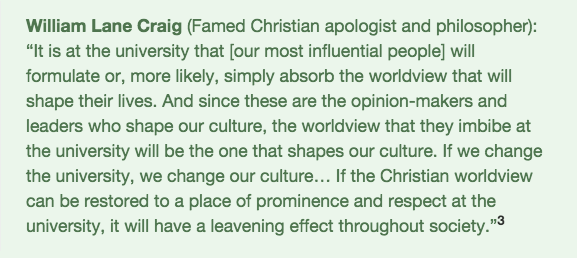
After all, if defending God’s honor was the missionary’s main goal, then the real battlefield would be the university.

Bill Craig puts it best:

If serving God is your goal, look to the university

There is already a perfectly fine university right next door – no need to fly to Europe to find one! Remember, the university that took your faith away, or maybe the faith of someone you cared about? Yeah, it’s still sitting there in your home town! And it’s still ruining the lives of thousands of young people, by peer-pressuring them into secular, liberal views – and behaviors. It seems to me that it’s better stewardship to stay here and work, then give money to groups like Reasonable Faith. And you can start a blog, teach in church and invite scholars to the local university, too. That costs almost nothing, and it produces better results.

What about Jesus?

Sometimes, it’s a good idea to look beyond the words of the Bible and reflect on the overall message of it at a higher level. When I look in the Bible, I see that Jesus went through a lot of suffering in obedience to God in order to secure the salvation of people who did not even like him. And it’s from this sacrifice on our behalf that his claim on our obedience comes. There are things that I don’t like to do that I do anyway because they work to serve God. Jesus life’s ambition was not to do things that were easy, or that made him happy. Experienced Christians do things that are not fun, because these things are right and because they solve the real problem.

How can a successful writer who “is true to himself” end up poor?

My friend Lindsay sent me this article about a very successful writer who has trouble making ends meet.

The story appeared in left-leaning The Atlantic. I don’t want to rehash the whole thing, because I want to make a point.

So, first thing to quote, this guy looks like a success to others, even though he is actually really struggling:

The Fed asked respondents how they would pay for a $400 emergency. The answer: 47 percent of respondents said that either they would cover the expense by borrowing or selling something, or they would not be able to come up with the $400 at all. Four hundred dollars! Who knew?

Well, I knew. I knew because I am in that 47 percent.

[…]You wouldn’t know any of that to look at me. I like to think I appear reasonably prosperous. Nor would you know it to look at my résumé. I have had a passably good career as a writer—five books, hundreds of articles published, a number of awards and fellowships, and a small (very small) but respectable reputation. You wouldn’t even know it to look at my tax return. I am nowhere near rich, but I have typically made a solid middle- or even, at times, upper-middle-class income, which is about all a writer can expect, even a writer who also teaches and lectures and writes television scripts, as I do.

The thing I like about this guy is that he doesn’t blame anyone else but himself – he thinks that his own decisions led him to poverty. Rod Dreher has a nice list of the mistakes at American Conservative:

1) He chose to live in New York, which is one of the most expensive places to live in the country;
2) He chose to be a writer, not the most lucrative and stable career;
3) He and his wife chose to put their kids in private school, something they felt was necessary in their Brooklyn neighborhood, but an expense they could have avoided or dramatically lessened had they lived in another part of the country (they eventually moved to the Hamptons to get out of paying that tuition);
4) He and his wife believed their two children had “earned” the right to go to very expensive universities, and they spent everything they had, and the inheritance his parents planned to leave for him, on educating the girls;
5) They got caught in the housing crash and had to sell a Manhattan apartment they owned at fire sale prices;
6) Given the way his income as a writer is structured, taxes were a bitch (as a writer, trust me, this is true).

Pay close attention to 1 and 2. I would NEVER live in a garbage blue state like New York. I would rather be dead in a ditch than live in a state that is run by Democrats. I hate the high taxes and high spending of blue states. Blue states are great places to go if you want to work and have someone else steal all of your money to buy votes from lazy losers. I’m actually planning a move to a red state right now, and believe me, low taxes and low cost of live are high on my list of requirements. Oklahoma and Tennessee, I’m looking at you two, especially.

And as far as 2 goes, I don’t think that I need to repeat my warnings to everyone about non-STEM fields.

Well, OK, I will:

Starting and Mid-Career salaries by profession (click for larger image)

Regarding the housing crash that he mentioned, Democrats caused that, by forcing banks to loan money to people who couldn’t afford to pay it back. If he voted for the Democrats, then he screwed himself again.

Now, you might think that people end up poor because they want to do work that is fun and enjoyable. And that’s true, I’ve seen that. But this guy’s problem was that he just spent beyond his means. Why? Well, the writer explains that he is compelled to spend the money, because spending money defines who he is. He can’t say no, because he thinks that he has one life, and one chance to define himself. He can’t think about the future, because he has to spend every last dime today in order to be who he really wants to be.

Dreher comments:

He felt that to choose otherwise would have made him inauthentic, untrue to himself. He felt that he deserved the life he had, and could not choose otherwise without betraying himself. I think this must be an extraordinary thing, in terms of history: people who spend recklessly to give themselves the lives they think they deserve. If you think about it, though, our culture, which valorizes Authenticity, encourages this.

I have to tell you, I just don’t understand this. I define myself by Christian virtues – self-control, self-sacrifice, concern for others who I know personally and in my community. I’m not a spender. I am a saver by nature, and the older I get, the more grateful that I am closer to retirement than I was before. Working gets harder as you get older, even for jobs that don’t require physical labor.

If you plan ahead, you can get all your working and saving done before you’re 50. That was my approach. But I see other people who haven’t started working full-time by 30 and even by 35. Every day when you are in school instead of working full-time in your field is a wasted day. With few exceptions, you will learn more on the job than in the classroom. You want get out of school and get working as soon as possible, with an eye to getting married as soon as possible – since marriage is a wealth building engine. The faster you start investing, the more time your money has to grow through interest and dividends.

The bottom line is that my obligation as a Christian is not to be true to myself, or anything weird like that. My obligation is to make sure I don’t starve, and then to turn to the people around me and make sure that they don’t starve. Sometimes, that means giving them good advice. Sometimes, it means recognizing their achievements with little gifts. But the main thing is that the world isn’t safe enough for you to put off earning so that you can do what you feel is the “real you”. Being independent and then serving others is more important than being the “real you”.