Tag Archives: Social Justice

Abortion debate: a secular case against legalized abortion

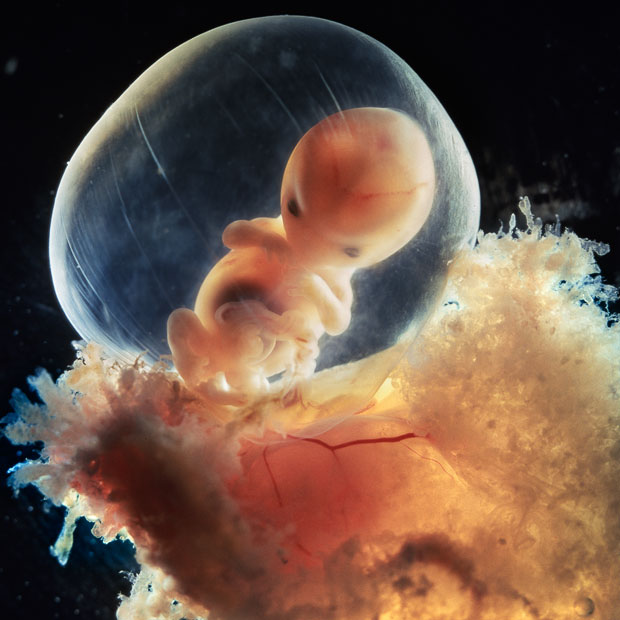
Unborn baby scheming about being only two months old

Note: this post has a twin! Its companion post on a secular case against gay marriage is here.

Now, you may think that the view that the unborn deserve protection during pregnancy is something that you either take on faith or not. But I want to explain how you can make a case for the right to life of the unborn, just by using reason and evidence.

To defend the pro-life position, I think you need to sustain 3 arguments:

  1. The unborn is a living being with human DNA, and is therefore human.
  2. There is no morally-relevant difference between an unborn baby, and one already born.
  3. None of the justifications given for terminating an unborn baby are morally adequate.

Now, the pro-abortion debater may object to point 1, perhaps by claiming that the unborn baby is either not living, or not human, or not distinct from the mother.

Defending point 1: Well, it is pretty obvious that the unborn child is not inanimate matter. It is definitely living and growing through all 9 months of pregnancy. (Click here for a video that shows what a baby looks like through all 9 months of pregnancy). Since it has human DNA, that makes it a human. And its DNA is different from either its mother or father, so it clearly not just a tissue growth of the father or the mother. More on this point at Christian Cadre, here. An unborn child cannot be the woman’s own body, because then the woman would have four arms, four legs, two heads, four eyes and two different DNA signatures. When you have two different human DNA signatures, you have two different humans.

Secondly, the pro-abortion debater may try to identify a characteristic of the unborn that is not yet present or developed while it is still in the womb, and then argue that because the unborn does not have that characteristic, it does not deserve the protection of the law.

Defending point 2: You need to show that the unborn are not different from the already-born in any meaningful way. The main differences between them are: size, level of development, environment and degree of dependence. Once these characteristics are identified, you can explain that none of these differences provide moral justification for terminating a life. For example, babies inside and outside the womb have the same value, because location does not change a human’s intrinsic value.

Additionally, the pro-abortion debater may try to identify a characteristic of the already-born that is not yet present or developed in the unborn, and then argue that because the unborn does not have that characteristic, that it does not deserve protection, (e.g. – sentience). Most of the these objections that you may encounter are refuted in this essay by Francis Beckwith. Usually these objections fall apart because they assume the thing they are trying to prove, namely, that the unborn deserves less protection than the already born.

Finally, the pro-abortion debater may conceded your points 1 and 2, and admit that the unborn is fully human. But they may then try to provide a moral justification for terminating the life of the unborn, regardless.

Defending point 3: I fully grant that it is sometimes justifiable to terminate an innocent human life, if there is a moral justification. Is there such a justification for abortion? One of the best known attempts to justify abortion is Judith Jarvis Thomson’s “violinist” argument. This argument is summarized by Paul Manata, one of the experts over at Triablogue:

Briefly, this argument goes like this: Say a world-famous violinist developed a fatal kidney ailment and the Society of Music Lovers found that only you had the right blood-type to help. So, they therefore have you kidnapped and then attach you to the violinist’s circulatory system so that your kidneys can be used to extract the poison from his. To unplug yourself from the violinist would be to kill him; therefore, pro-lifers would say a person has to stay attached against her will to the violinist for 9 months. Thompson says that it would be morally virtuous to stay plugged-in. But she asks, “Do you have to?” She appeals to our intuitions and answers, “No.”

Manata then goes on to defeat Thomson’s proposal here, with a short, memorable illustration, which I highly recommend that you check out. More info on how to respond to similar arguments is here.

Here is the best book for beginners on the pro-life view.

For those looking for advanced resources, Francis Beckwith, a professor at Baylor University, published the book Defending Life, with Cambridge University Press, 2007.

Can we trust the politically correct, radically leftist FBI to protect the public?

The politically correct FBI fails and fails and fails again

Wow, I can remember back 10 years ago when my opinion of the FBI was that they were the morally good law enforcement agency. Now it seems that the only thing they are good at is demonizing Christians and conservatives, committing adultery with each other, covering up for corrupt Democrats, and collecting fat taxpayer-funded pensions.

We know that the FBI failed miserably to follow up on public death threats made by the Florida school shooter under his own real name. Apparently, this might have been due to the fact that the shooter was non-white, and law enforcement became very politically correct under the past Democrat administration. They certainly don’t want to make Muslim terrorists a priority.

Michelle Malkin explains:

According to a probable cause affidavit filed by the Palm Beach County police, 17-year-old Corey Johnson bought a knife last Sunday and brought it with him to a sleepover at longtime friend Kyle Bancroft’s house. At 4 a.m., he decided to kill Kyle’s mother, Elaine; his brother, Dane; and Dane’s friend, Jovanni Sierra Brand.

Corey repeatedly stabbed Jovanni in his bed and slit his throat. Then he attempted to murder Elaine as she approached the boys’ bedrooms in response to Jio’s last gasps. Dane rescued his mom and sustained 32 stab wounds. Both were hospitalized and survived. Jio was buried last Friday—less than a week after celebrating his 13th birthday at a pizza party attended by Corey.

The accused killer told police he “stabbed the victims because of his Muslim faith,” watched videos of “Muslim jihadists” on his cellphone, and “was reading the Quran from his phone just prior to the attack to give him courage to carry out his intentions.”

[…]Corey’s brutal attack was no bolt out of the blue, no unexpected incidence of sudden jihad syndrome. Local school officials and police in Palm Beach County, along with federal and international law enforcement authorities, had encountered more red flags in their years of dealing with Corey than at a Communist May Day parade in Havana.

In middle school, Corey had reportedly stalked a student and sexually harassed her. She told school police. Nothing happened. He dabbled in white supremacy, anti-Semitism, and gay-bashing, and then immersed himself in radical Islam—rising at 5 a.m. daily to pray and revere the Syrian flag.

Corey’s online jihad agitation, physical abuse, and addiction to ISIS beheading videos prompted his sister in 2016 to confide in a school therapist, who contacted the local sheriff’s office.

Corey’s mom, the sister told school officials, was in denial. The sister so feared for her life she slept with a knife under her bed.

Law enforcement officers at the Jupiter Police Department and Palm Beach County Sheriff’s Office convened at Corey’s high school last January to investigate the self-radicalized teen’s contact with ISIS as he sought to join the terror group.

The FBI’s Joint Terrorism Task Force became involved after European intelligence counterparts told them Corey had used Instagram to issue security threats to a Catholic high school in England. The threats “were so severe in nature,” local officials discovered, “that up to 100 students were removed from the school fearing some kind of attack.”

One of the messages threatened: “By Allah, we will kill every single Infidel student at this school.” Corey told FBI agents he “was supportive of known terrorist Anwar al Awlaki”—the spiritual patron of lone-wolf jihadists.

The FBI’s plan of action? Inaction. The agency watched and waited and wanly admonished Corey to knock it off because authorities “believed a redirection approach would be the most beneficial regarding his conduct.”

“Redirection” is akin to the alternative social justice strategies school officials and police used in Parkland, Florida, before 17 innocent students and teachers died at the hands of a teen shooter who was a walking neon sign for a mental health catastrophe.

No referrals, no charges, no records, no problems.

Except for the fact that Corey ignored the FBI and continued his Islamic instigation online. After nearly a year of foot-dragging, the FBI gathered enough evidence to bring federal charges against Corey for his social media terror threats.

According to records released by the Jupiter Police Department, local officials were told the charges would be brought in the summer of 2017. But on the early morning of the jihad stabbings at Palm Beach Gardens last week, the FBI and U.S. Attorney’s Office had yet to take action on a known radicalized threat who had menaced his family, his schoolmates, and innocents abroad.

It’s a familiar narrative for the FBI—from the Boston Marathon bombers to the Orlando nightclub shooter to the Fort Lauderdale airport jihadist to the San Bernardino terrorists. Family members, teachers, neighbors, and co-workers saw something and said something.

It’s just workplace violence, as Barack Obama would say. The system worked, as Janet Napolitano would say. The real priority of law enforcement should be to crack down on anti-Muslim hate, as Loretta Lynch would say. These are the imbeciles who were running federal law enforcement during the last administration.

This is the politically correct, ineffective FBI that the radically leftist media is defending these days. The leftist news media doesn’t want you to own a gun or defend yourself. They want you to trust the government to protect you and your family.

What is the difference between capitalism and socialism?

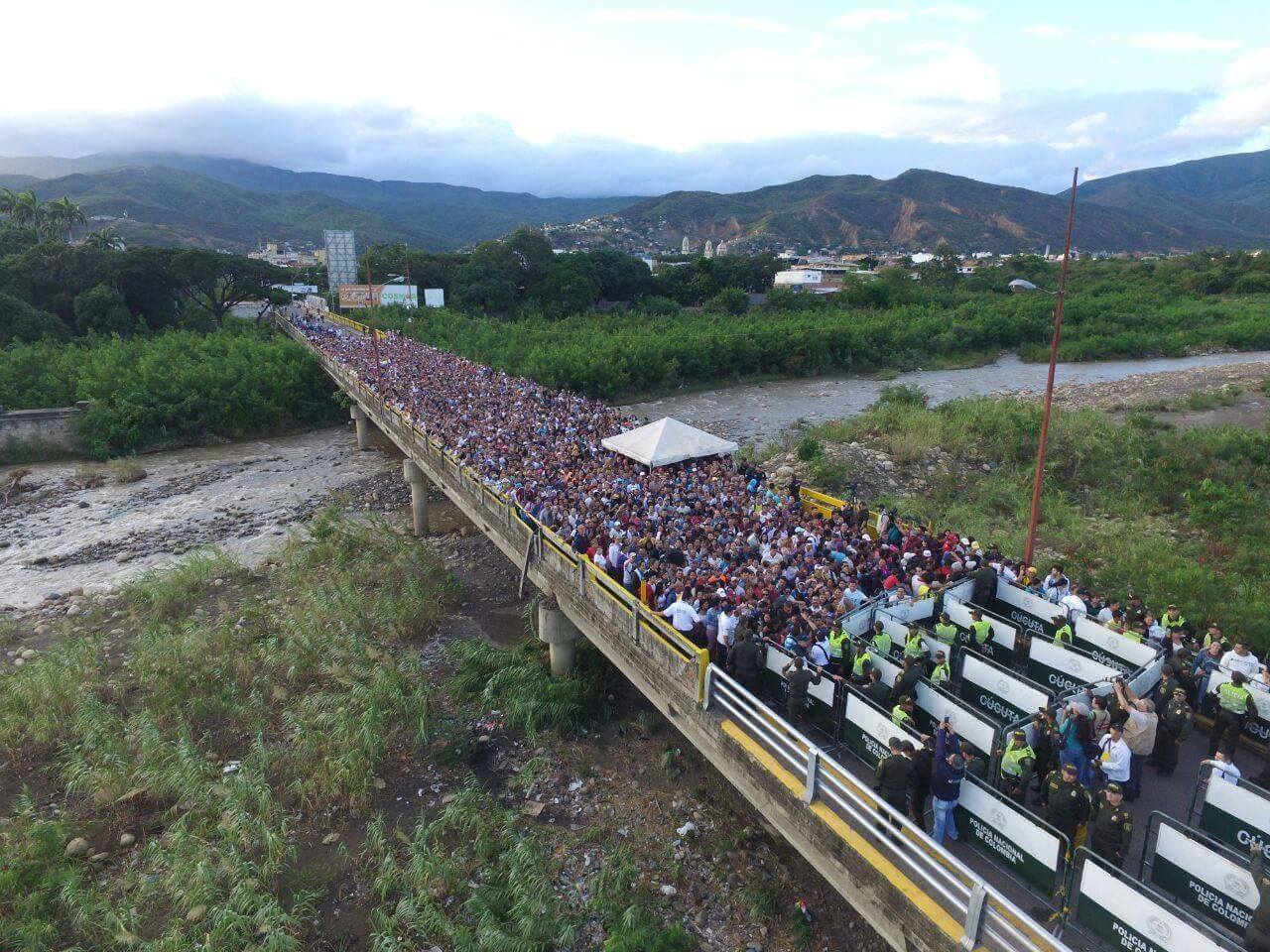
Over 100,000 Venezuelans pouring into Colombia from the Venezuela in order to buy food
Over 100,000 Venezuelans cross into Colombia in order to buy food

(This photo H/T Prager University)

One country that has done a good job of implementing socialism is Venezuela.

Here is an article from March 2013 from Slate, a web site that strongly favors socialism. The headline is “Hugo Chavez’s economic miracle: The Venezuelan leader was often marginalized as a radical. But his brand of socialism achieved real economic gains”. The author is “a senior writer for the International Business Times”.

He writes:

Chavez became the bugaboo of American politics because his full-throated advocacy of socialism and redistributionism at once represented a fundamental critique of neoliberal economics, and also delivered some indisputably positive results. Indeed, as shown by some of the most significant indicators, Chavez racked up an economic record that a legacy-obsessed American president could only dream of achieving.

What did Chavez do, precisely, that caused the Venezuelan economic to boom? Well, he nationalized private industry and redistributed wealth from job creators and entrepreneurs to the poor.

As The Week correctly put it, while “Chavez’s policies of redistribution and nationalization of oil assets endeared him to Venezuela’s working class” and produced many laudable results, the country’s “oil-centric economy has taken away resources from other areas that are badly in need of development.”

OK, so that’s pretty much what the Democrat party wants to do in the United States as well. Nationalize the energy sector, nationalize health care, etc. Let the government take over the private sector industries in order to eliminate “inequalities”. Raise taxes, and redistribute the money to the low income people via social programs, also known as welfare.

So, how does it work? Is socialism really an “economic miracle”?

Here is the latest from Venezuela, as reported by CNN Money. (H/T William)

Excerpt:

Venezuelans cried at the sight of fully-stocked supermarket shelves in Colombia.

Pregnant women, children and even elderly Venezuelans crossed into Colombia on Sunday after the border was temporarily reopened, allowing them to buy basic foods and toiletries — rare commodities in their home country.

Tearful Venezuelans had gone weeks without basic food items like milk, flour and toilet paper. It’s a sad but common part of daily life today in crisis-ridden Venezuela, a country that has the world’s largest proven reserves of oil. Colombian officials estimate that about 100,000 Venezuelans crossed the border.

Venezuela is expected to dive deeper into the abyss this year, according to new projections published Wednesday by the International Monetary Fund.

The IMF forecasts Venezuela’s economy will shrink 10% this year, worse than its previous estimate of 8%. It also estimates that inflation in Venezuela will catapult to 700% this year, up from the earlier guess of about 480%.

“Venezuela’s economic condition continues to deteriorate,” says Alejandro Werner, chief Latin America economist at the IMF. The estimates for growth and inflation are the worst worldwide.

The numbers are just the tip of the iceberg. Venezuela is deep into a humanitarian crisis — people are dying in ill-equipped hospitals and many live without basic food items. Venezuela can’t pay to import goods because its government is desperately strapped for cash after years of mismanagement of its funds, heavy spending on poorly-run government programs, and lack of investment on its oil fields.

[…]It’s all even more tragic given that despite Venezuela’s oil abundance, its state-run oil company, PDVSA, is broke. Venezuela’s oil production fell to a 13-year low in June, according to OPEC, of which it’s a member.

That’s what you get when you let the government take over the free enterprise system, or even when you just stifle the free market with burdensome regulations and high taxes. That’s what socialists in Venezuela did. That’s what the Democrat party would do. They’re  two sides of the same coin.

Dennis Prager

Dennis Prager put out a good video recently explaining the problems with socialism:

Why would anyone prefer a system that encourages some people to feel entitled to what other people create and earn? We want a system that is focused on serving your neighbor – not stealing from them.

Arthur Brooks

If you would like a very brief introduction to capitalism, also known as the free enterprise system or the free market system, then you can watch the videos below, featuring Arthur Brooks, president of the American Enterprise Institute.

Here is the first one, which explains the myths that most Americans are taught about capitalism in school and in the culture:

An important advantage of capitalism is that it lifts people out of poverty. The poorest people in America live much better than the wealthy in Venezuela.

And the second video explains what capitalism offers to individuals for their fulfillment, which socialism does not:

Earned success makes people happier, which is at least as important as the wealth benefit.

We can compare the results of each system by looking at where it’s been tried. Capitalism lifts people out of poverty – all the people in the society who are willing to work are lifted out of poverty. Even the people who can’t work in a capitalist society enjoy the benefits of charity from their neighbors – when people do well, they give more money away. Socialism drives those who work and those who don’t work into poverty, and eliminates charity. No one has anything to share when everyone is poor.

Related posts