Tag Archives: Science

Denyse O’Leary explains why theists are lacking courage

From Uncommon Descent. Denyse O’Leary answers the question I posed in my previous post: why do otherwise intelligent, ambitious, qualified Christians shy away from answering questions about their faith?

Excerpt:

Christians confront a deep double standard, to which Darwinism has greatly contributed, by which the atheist position is considered the normal “secular”one and the Christian or other theist position a sort of disloyalty to the public good.

[…] Secular materialists use fashionable words like “skeptical” to describe themselves, when they are not skeptical at all. That confuses discourse and enables remarkably fatuous people to shape public opinion. While working on The Spiritual Brain, I confronted an astonishing fact: The secular materialist would accept any materialist premise, no matter how implausible, to support his view. In fact, I sometimes ask, is there any proposition fronted in the name of, say, Darwinism (as I did here, that you regard as absurd? I often get blank looks or protests that Darwinism is science and there are no such propositions, and an immediate change of subject. Well, when we hear that, at least we know who we are dealing with.

The Christian/theist labours under no such disability. He can accept a materialist explanation when it fits the facts, but not otherwise. But by acting this way, he becomes – in the eyes of the secular atheist – untrustworthy. He can’t be relied on to just shout the party line.

The upshot is that, the Christian risks more, speaking out, and is far more responsible for the need to have intelligent ideas. It’s much safer for Christians to bury themselves in fluffy Christian books and sweat off the flab in Christian weight loss programs, and little by little accommodate themselves to the reigning orthodoxy. After a couple of decades, they don’t even know.

So basically, I understand her to say that the the “skeptics” are actually so committed to the presupposition of naturalism that they are aggressive and close-minded. Their materialism is functioning as a sort of fundamentalism, much like you would find with Islamic radicals. A Christian can look at some new phenomenon in nature and ask the question: is it explained by materialism or is an intelligence required? But the materialist has to presume the answer before looking at the evidence – so they are close-minded to evidence, because of their non-scientific philosophy of materialism.

There are two ways to have a discussion about nature. You can ask a question and then compare evidence for various hypotheses. That’s the non-fundamentalist approach. That’s the approach used by Christians. The naturalist approach is to not allow questions to be asked and to attack the character of the person asking the question. That’s the fundamentalist approach.

And that’s where the fear and intimidation comes in. Who wants to debate with someone who is not open to having their religious pre-supposition validated against the evidence? You’re just going to get fired, censored, arrested or worse. That’s the way it is with fundamentalists like naturalist extremists and Islamic extremists. All kinds of nastiness to others is possible when you are a true believer. Denyse’s point is that the intimidation drives theists to avoid these discussions, and that leads to their decision to just focus on other things like careers and weight loss and fluff.

Related posts
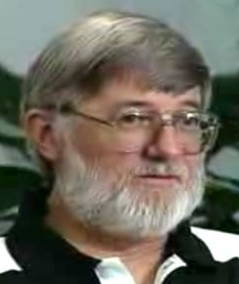
Video interview of Charles Thaxton on the origin of life

Charles Thaxton
Charles Thaxton

When I was a younger man, just starting full-time work with a hot Internet start-up in the big city, my biggest interest was in the origin of life. I liked to listen to debates about it (e.g. – Walter Bradley versus Robert Shapiro, etc.) and lectures and interviews. Two of my favorite interviews are from the University of California series on Origins, featuring Charles Thaxton and Dean Kenyon.

I found the one with Charles Thaxton in miniature form on Youtube.

About Charles Thaxton:

Charles Thaxton received his Ph.D. in physical chemistry from Iowa State University. He completed two post-doctoral programs, one in history of science at Harvard University and the second in the molecular biology laboratories of Brandeis University.

He has specialized in the origin of life and in science’s relationship with Christianity through history.

He is co-author of The Mystery of Life’s Origin and also The Soul of Science. He is Academic Editor of the high school biology book Of Pandas and People. He has contributed significant chapters to the books God and Culture and The Creation Hypothesis.

He has published technical articles in Journal of Inorganic Chemistry, Journal of Scientific Instruments, and Journal of Cell Biology.

He has lectured widely in American universities including Princeton University, Yale University, University of Michigan, University of Delaware, Rice University, Texas Universtiy, Johns Hopkins University, Vanderbilt University, and Harvard Law School.

He has lectured outside the country at the Korean Advanced Institute of Science, the Russian Academy of Science, and in various universities in Mongolia, Romania, Poland, Hungary, and the former Czechoslovakia.

He has held appointments at Slovak Technical University in Bratislava, Czechoslovakia, the Biomathematical Institute in Craiova, Romania, and at Charles University in Prague, where he was a Templeton scholar in the department of natural sciences.

He is a member of American Chemical Society, American Association for the Advancement of Science, and Fellow of American Institute of Chemistry, American Scientific Affiliation, and Discovery Institute.

He and his wife Carole homeschooled two sons, both of whom are college graduates. He is a survivor of two bouts of cancer, which left him with one leg and one lung. He and his wife reside near Atlanta, Georgia, where they teach homeschooled teens at Konos Academy. He also is writing two books, punctuated by speaking stints.

Here’s the lecture I liked so much featuring Charles Thaxton:

And here are the questions:

1. How did you first get interested in the origin of life?
2. How did you come to write The Mystery of Life’s Origin with Walter Bradley and Roger Olsen?
3. Was there an advantage to having the three of you collaborate on the project?
4. What is the primary argument of your book, The Mystery of Life’s Origin?
5. Have scientists come close to developing a plausible naturalistic explanation to the origin of life or do you still consider the origin of life to be a mystery?
6. Do you see a particular irony in the timing of Stanley Miller’s experiments and the discovery of DNA by Watson and Crick?
7. How does the emergence of modern genetics tie in with the Darwinian scenario of life going from simple to complex?
8. What are the major problems with origin of life simulation experiments?
9. Isn’t it rather impressive that amino acids were produced in the Miller experiments?
10. How close is the development of amino acids to the threshold of life?
11. What are the steps involved in producing proteins from amino acids?
12. Why are amino acids isolated during this process?
13. How can the investigator affect the outcome of a simulation experiment?
14. How did you evaluate the different chemical evolution experiments?
15. Are the initial conditions in the simulation experiments plausible?
16. What did the earth’s early atmosphere contain?
17. Will the simulation experiments work with this atmosphere?
18. There seems to be an underlying assumption that the origin of life resulted without any intelligent input whatsoever yet the simulation experiments appear to rely upon intelligent guidance. Could you comment on this irony?
19. Are there any natural processes that would have filtered out destructive ultraviolet light?
20. What additional steps beyond creating amino acids would be required to develop life?
21. What is so difficult about making proteins or nucleic acids?
22. In addition to the energy problem in protein synthesis isn’t there a sequencing problem?
23. Are DNA sequences analogous to a written language?
24. Has Hubert Yockey made similar claims?
25. In The Mystery of Life’s Origin you refer to order, randomness, and specified complexity. Could you give us an overview of these concepts?
26. What do you think the presence of specified complexity in a living system indicates about its origin?
27. In inferring the necessity of intelligence to produce life haven’t you ventured from the realm of science to religion?
28. Could you summarize the reasons why you believe intelligence was involved in the origin of life?
29. What are the major objections to your current point of view?
30. How was The Mystery of Life’s Origin received by the scientific community?
31. What was Dean Kenyon’s response to your critiques of his book, Biochemical Predestination?
32. What was Dean Kenyon’s response to The Mystery of Life’s Origin?
33. Were you a bit apprehensive about meeting Kenyon after writing a book which was quite critical of his views in Biochemical Predestination?
34. Are self-organizational theories plausible?
35. Would you comment on the work done by Prigogine and Eigen?
36. What is your assessment of RNA scenarios?
37. What other problems do you see with an RNA world?

This is an argument you never hear in William Lane Craig debates, but it’s worth knowing well.

Related posts

Has Christianity held back the progress of science? What about Galileo?

First, here’s an article from the peer-reviewed journal Nature, probably the best peer-reviewed journal on science in the world. (H/T Letitia)

The article is written by James Hannam. He has a PhD in the History and Philosophy of Science from the University of Cambridge and is the author of The Genesis of Science: How the Christian Middle Ages Launched the Scientific Revolution (published in the UK as God’s Philosophers: How the Medieval World Laid the Foundations of Modern Science).

Excerpt:

Few topics are as open to misunderstanding as the relationship between faith and reason. The ongoing clash of creationism with evolution obscures the fact that Christianity has actually had a far more positive role to play in the history of science than commonly believed. Indeed, many of the alleged examples of religion holding back scientific progress turn out to be bogus. For instance, the Church has never taught that the Earth is flat and, in the Middle Ages, no one thought so anyway. Popes haven’t tried to ban zero, human dissection or lightening rods, let alone excommunicate Halley’s Comet. No one, I am pleased to say, was ever burnt at the stake for scientific ideas. Yet, all these stories are still regularly trotted out as examples of clerical intransigence in the face of scientific progress.

Admittedly, Galileo was put on trial for claiming it is a fact that the Earth goes around the sun, rather than just a hypothesis as the Catholic Church demanded. Still, historians have found that even his trial was as much a case of papal egotism as scientific conservatism. It hardly deserves to overshadow all the support that the Church has given to scientific investigation over the centuries.

That support took several forms. One was simply financial. Until the French Revolution, the Catholic Church was the leading sponsor of scientific research. Starting in the Middle Ages, it paid for priests, monks and friars to study at the universities. The church even insisted that science and mathematics should be a compulsory part of the syllabus. And after some debate, it accepted that Greek and Arabic natural philosophy were essential tools for defending the faith. By the seventeenth century, the Jesuit order had become the leading scientific organisation in Europe, publishing thousands of papers and spreading new discoveries around the world. The cathedrals themselves were designed to double up as astronomical observatories to allow ever more accurate determination of the calendar. And of course, modern genetics was founded by a future abbot growing peas in the monastic garden.

But religious support for science took deeper forms as well. It was only during the nineteenth century that science began to have any practical applications. Technology had ploughed its own furrow up until the 1830s when the German chemical industry started to employ their first PhDs. Before then, the only reason to study science was curiosity or religious piety. Christians believed that God created the universe and ordained the laws of nature. To study the natural world was to admire the work of God. This could be a religious duty and inspire science when there were few other reasons to bother with it. It was faith that led Copernicus to reject the ugly Ptolemaic universe; that drove Johannes Kepler to discover the constitution of the solar system; and that convinced James Clerk Maxwell he could reduce electromagnetism to a set of equations so elegant they take the breathe away.

Given that the Church has not been an enemy to science, it is less surprising to find that the era which was most dominated by Christian faith, the Middle Ages, was a time of innovation and progress. Inventions like the mechanical clock, glasses, printing and accountancy all burst onto the scene in the late medieval period. In the field of physics, scholars have now found medieval theories about accelerated motion, the rotation of the earth and inertia embedded in the works of Copernicus and Galileo. Even the so-called “dark ages” from 500AD to 1000AD were actually a time of advance after the trough that followed the fall of Rome. Agricultural productivity soared with the use of heavy ploughs, horse collars, crop rotation and watermills, leading to a rapid increase in population.

I hope this will set the record straight – monotheism created experimental science. If you want atheistic science, you’re looking at things like the steady-state model, directed panspermia and man-made global warming. You could call that speculative science, I guess.

Related posts