
Tag Archives: Research

Study finds that attitude of gratitude has many health benefits

From the Harvard Mental Health Newsletter.

Excerpt:

Two psychologists, Dr. Robert A. Emmons of the University of California, Davis, and Dr. Michael E. McCullough of the University of Miami, have done much of the research on gratitude. In one study, they asked all participants to write a few sentences each week, focusing on particular topics.

One group wrote about things they were grateful for that had occurred during the week. A second group wrote about daily irritations or things that had displeased them, and the third wrote about events that had affected them (with no emphasis on them being positive or negative). After 10 weeks, those who wrote about gratitude were more optimistic and felt better about their lives. Surprisingly, they also exercised more and had fewer visits to physicians than those who focused on sources of aggravation.

Another leading researcher in this field, Dr. Martin E. P. Seligman, a psychologist at the University of Pennsylvania, tested the impact of various positive psychology interventions on 411 people, each compared with a control assignment of writing about early memories. When their week’s assignment was to write and personally deliver a letter of gratitude to someone who had never been properly thanked for his or her kindness, participants immediately exhibited a huge increase in happiness scores. This impact was greater than that from any other intervention, with benefits lasting for a month.

Of course, studies such as this one cannot prove cause and effect. But most of the studies published on this topic support an association between gratitude and an individual’s well-being.

Other studies have looked at how gratitude can improve relationships. For example, a study of couples found that individuals who took time to express gratitude for their partner not only felt more positive toward the other person but also felt more comfortable expressing concerns about their relationship.

Managers who remember to say “thank you” to people who work for them may find that those employees feel motivated to work harder. Researchers at the Wharton School at the University of Pennsylvania randomly divided university fund-raisers into two groups. One group made phone calls to solicit alumni donations in the same way they always had. The second group — assigned to work on a different day — received a pep talk from the director of annual giving, who told the fund-raisers she was grateful for their efforts. During the following week, the university employees who heard her message of gratitude made 50% more fund-raising calls than those who did not.

My editor Mary writes: There is a health bonus to thankfulness but health isn’t why we should be thankful. We should be thankful because we are the recipients of many good things and it is appropriate under such circumstances to express gratitude. It is also the overflow of a heart made happy by the generosity of another.

To help us be thankful, here is a famous Thanksgiving day proclamation.

Here it is:

PRESIDENTIAL THANKSGIVING PROCLAMATIONS

1789-1815 : George Washington, John Adams, James Madison

THANKSGIVING DAY 1789

BY THE PRESIDENT OF THE UNITED STATES OF AMERICA – A PROCLAMATION

Whereas it is the duty of all Nations to acknowledge the providence of almighty God, to obey his will, to be grateful for his benefits, and humbly to implore his protection and favor – and Whereas both Houses of Congress have by their joint Committee requested me “to recommend to the People of the United States a day of public thanksgiving and prayer to be observed by acknowledging with grateful hearts the many signal favors of Almighty God, especially by affording them an opportunity peaceably to establish a form of government for their safety and happiness.”

Now therefore I do recommend and assign Thursday the 26th day of November next to be devoted by the People of these States to the service of that great and glorious Being, who is the beneficent Author of all the good that was, that is, or that will be – That we may then all unite in rendering unto him our sincere and humble thanks – for his kind care and protection of the People of this country previous to their becoming a Nation – for the signal and manifold mercies, and the favorable interpositions of his providence, which we experienced in the course and conclusion of the late war –for the great degree of tranquillity, union, and plenty, which we have since enjoyed – for the peaceable and rational manner in which we have been enabled to establish constitutions of government for our safety and happiness, and particularly the national One now lately instituted, for the civil and religious liberty with which we are blessed, and the means we have of acquiring and diffusing useful knowledge; and in general for all the great and various favors which he hath been pleased to confer upon us.

And also that we may then unite in most humbly offering our prayers and supplications to the great Lord and Ruler of Nations and beseech him to pardon our national and other transgressions – to enable us all, whether in public or private stations, to perform our several and relative duties properly and punctually – to render our national government a blessing to all the People, by constantly being a government of wise, just, and constitutional laws, discreetly and faithfully executed and obeyed – to protect and guide all Sovereigns and Nations (especially such as have shewn kindness unto us) and to bless them with good government, peace, and concord – To promote the knowledge and practice of true religion and virtue, and the increase of science among them and Us – and generally to grant unto all mankind such a degree of temporal prosperity as he alone knows to be best.

Given under my hand at the City of New York the third day of October in the year of our Lord 1789.

(signed) G. Washington

That’s from George Washington.

Happy Thanksgiving Day!
EEG device detects consciousness in persons in persistent vegetative state

Here’s an interesting article from the New Scientist.

Excerpt:

Signs of consciousness have been detected in three people previously thought to be in a vegetative state, with the help of a cheap, portable device that can be used at the bedside.

“There’s a man here who technically meets all the internationally agreed criteria for being in a vegetative state, yet he can generate 200 responses [to direct commands] with his brain,” says Adrian Owen of the University of Western Ontario. “Clearly this guy is not in a true vegetative state. He’s probably as conscious as you or I are.”

[Owen’s team] devised a test that uses the relatively inexpensive and widely available electroencephalogram (EEG).

An EEG uses electrodes attached to the scalp to record electrical activity in the brain.

Owen and his team used an EEG on 16 people thought to be in a PVS and compared the results with 12 healthy controls while they were asked to imagine performing a series of tasks.

Each person was asked to imagine at least four separate actions – either clenching their right fist or wiggling their toes.

In three of the people with PVS, brain regions known to be associated with those tasks lit up with activity, despite physical unresponsiveness. This suggested to the researchers that the subjects were carrying out a complex set of cognitive functions including hearing the command, understanding language, sustaining attention and tapping into working memory.

“It isn’t the case that just because somebody doesn’t respond they’re not conscious,” Owen says. “There’s a growing body of data now demonstrating that many of these patients aren’t what they appear.”

The rest of the article talks about how the scientists are planning to use their new technique to communicate with patients by asking them to think of specific things which will mean “yes” or “no”. The long-term goal is to get the patients to be able to communicate, perhaps even allow them to move a mouse pointer by triggering reactions in their brains by using their thoughts.

I think this research dovetails nicely with the OCD research I mentioned before. Maybe now would be a good time to talk more about that research.

William Dembski discusses the OCD research of Jeffrey Schwartz.

Excerpt:

Schwartz provides a nonmaterialist interpretation of neuroscience and argues that this interpretation is more compelling than the standard materialist interpretation. He arrived at this position as a psychiatrist specializing in the treatment of obsessive-compulsive disorder (OCD). OCD sufferers recognize obsessive-compulsive thoughts and urges as separate from their intrinsic selves. For instance, after a few washings, the compulsive hand-washer realizes that his hands are clean and yet feels driven to keep washing them. It was reflection on this difference between the obvious truth (the hands are clean) and the irrational doubts (they might still be dirty) that prompted Schwartz to reassess the philosophical underpinnings of neuroscience.

From brain scans, Schwartz found that certain regions in the brain of OCD patients (the caudate nucleus in particular) exhibited abnormal patterns of activity. By itself this finding is consistent with a materialist view of mind (if, as materialism requires, the brain enables the mind, then abnormal patterns of brain activity are likely to be correlated with dysfunctional mental states). Nonetheless, having found abnormal patterns of brain activity, Schwartz then had OCD patients engage in intensive mental effort through what he called relabeling, reattributing, refocusing, and revaluing (the 4 Rs). In the case of compulsive hand-washing, this involved a patient acknowledging that his hands were in fact clean (relabeling); attributing anxieties and doubts about his hands being dirty to a misfunctioning brain (reattributing); directing his thoughts and actions away from handwashing and toward productive ends (refocusing); and, lastly, understanding at a deep level the senselessness of OCD messages (revaluing).

Schwartz documents not only that patients who undertook this therapy experienced considerable relief from OCD symptoms, but also that their brain scans indicated a lasting realignment of brain-activity patterns. Thus, without any intervention directly affecting their brains, OCD patients were able to reorganize their brains by intentionally modifying their thoughts and behaviors. The important point for Schwartz here is not simply that modified thoughts and behaviors permanently altered patterns of brain activity, but that such modifications resulted from, as he calls it, “mindful attention”-conscious and purposive thoughts or actions in which the agent adopts the stance of a detached observer.

It turns out that people can freely choose to exert “mental effort” in order to change what their brains are doing.

By the way, if you like this topic, and want a resource to show your friends, be sure and get a hold of the debate on mind vs. brain between Jeffrey M. Schwartz and Michael Shermer.

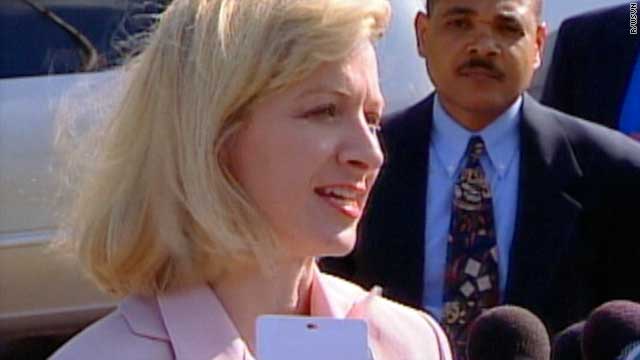
Cain accuser Karen Kraushaar filed a sexual harassment claim at her next job, too

Photo of Karen Kraushaar

From the left-leaning Associated Press.

Excerpt:

A woman who settled a sexual harassment complaint against GOP presidential candidate Herman Cain in 1999 complained three years later at her next job about unfair treatment, saying she should be allowed to work from home after a serious car accident and accusing a manager of circulating a sexually charged email, The Associated Press has learned.

Karen Kraushaar, 55, filed the complaint while working as a spokeswoman at the Immigration and Naturalization Service in the Justice Department in late 2002 or early 2003, with the assistance of her lawyer, Joel Bennett, who also handled her earlier sexual harassment complaint against Cain in 1999. Three former supervisors familiar with Kraushaar’s complaint, which did not include a claim of sexual harassment, described it for the AP under condition of anonymity because the matter was handled internally by the agency and was not public.

To settle the complaint at the immigration service, Kraushaar initially demanded thousands of dollars in payment, a reinstatement of leave she used after the accident earlier in 2002, promotion on the federal pay scale and a one-year fellowship to Harvard’s Kennedy School of Government, according to a former supervisor familiar with the complaint. The promotion itself would have increased her annual salary between $12,000 and $16,000, according to salary tables in 2002 from the U.S. Office of Personnel Management.

[…]Kraushaar’s complaint was based on supervisors denying her request to work full time from home after a serious car accident in 2002, three former supervisors said. Two of them said Kraushaar also was denied previous requests to work from home before the car accident.

The complaint also cited as objectionable an email that a manager had circulated comparing computers to women and men, a former supervisor said. The complaint claimed that the email, based on humor widely circulated on the Internet, was sexually explicit, according to the supervisor, who did not have a copy of the email. The joke circulated online lists reasons men and women were like computers, including that men were like computers because “in order to get their attention, you have to turn them on.” Women were like computers because “even your smallest mistakes are stored in long-term memory for later retrieval.”

[…]Cain said he remembered gesturing to Kraushaar and noting that she was the same height as Cain’s wife, about chin-high to Cain. The Georgia businessman said Kraushaar did not react noticeably, but he said the restaurant association lawyer later told him that was the most serious claim that Kraushaar had made against him, “the one she was most upset about.”

[…]The New York Times reported previously that Kraushaar received $45,000 in the settlement with the restaurant association.

This is the woman who the liberal news networks are using to impugn the character of Herman Cain.

Cain’s only other named accuser, Sharon Bialek

There are reports that she was fired from the NRA for making a false allegation of sexual harassment. If that is true, then her allegations against Cain are really in doubt. (H/T Pat Dollard)

Excerpt:

“She was fired from her job, and her boyfriend suggested she contact Cain in hopes he could help her find employment.”.

In this particular incident she was fired for falsely accusing her boss of sexual harassment, a charge denied by co-workers, as well as being pretty much a pain in the ass to work with.

I remember her as a time-waster, and rabble-rouser. If she didn’t get her way she cried about sexual harassment”. A former co-worker, a female no less, emailed me. “She was trouble with a capital “T”. The fact that she waited 13 years and never said a word not even during Cain’s earlier forays into politics. She only now magically appears because Cain is leading in some polls and proving a threat to Barack Obama?

Here’s a press release from the Cain campaign talking about the Sharon Bialek’s background.

Excerpt:

In the courts, Ms. Bialek has had a lengthy record in the Cook County Court system over various civil lawsuits. The following cases on file in Cook County are:

  • 2000-M1-707461 Defendant against Broadcare Management
  • 2000-M1-714398 Defendant in lawsuit against Broadcare Management
  • 2000-M1-701522 Defendant in lawsuit against Broadcare Management
  • 2005-M1-111072 Defendant in lawsuit against Mr. Mark Beatovic.
  • 2007-M1-189176 Defendant in lawsuit against Midland Funding.
  • 2009-M1-158826 Defendant in lawsuit against Illinois Lending.

Ms. Bialek was also sued in 1999 over a paternity matter according to ABC 7 Chicago (WLS-TV).  Source: WLS-TV, November 7, 2011.

In personal finances, PACER (Federal Court) records show that Ms. Bialek has filed for bankruptcy in the Northern District of Illinois bankruptcy court in 1991 and 2001. The respective case numbers according to the PACER system are 1:01-bk-22664 and 1:91-bk-23273.

Ms. Bialek has worked for nine employers over the last seventeen years. Source: WLS-TV, November 7, 2011

More from the Chicago Tribune.

Excerpt:

Records show she twice has filed for personal bankruptcy, first in 1991 and then again in 2001. In the latter case, she claimed $5,700 in assets and more than $36,000 in liabilities. Among the creditors seeking payment was a management firm demanding back rent of $4,500, four credit card companies and a lawyer asking for his legal fees.

After the case was discharged, she accused a former boyfriend of harassing her for repayment of a loan, court records in the bankruptcy case show. Bialek borrowed $4,500 from William Concha, though Concha now believes she had no intention of paying him back, according to his brother, Mario.

Reached Monday night in Spain, William Concha declined comment.

At least two liens have been filed against Bialek, according to records from the Cook County recorder of deeds.

The IRS filed a tax lien against her in 2009 for nearly $5,200. In August, the Illinois Department of Revenue claimed Bialek owed the state more than $4,300, including penalties and interest, relating to income taxes from 2004, according to county records.

Court records also show creditors took legal action against her during the past decade, including at least one lawsuit filed in Cook County.

In my previous post, I explained how false accusations are regularly made by a significant minority of women in certain cases, such as in divorce trials when custody (and the child support payments that go with custody) are in play. Not all women do this, but ones who have a certain profile are more prone to do it than others.