Tag Archives: Republican Party

A secular case against abortion rights

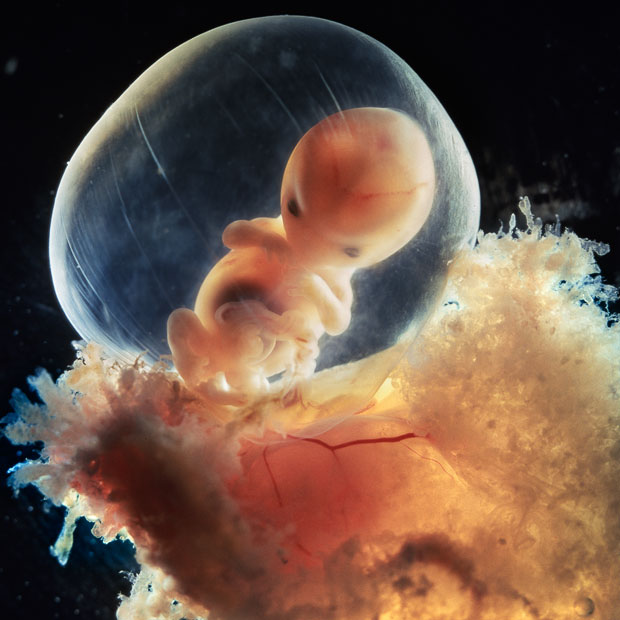
Unborn baby scheming about being only two months old

Note: this post has a twin! Its companion post on a secular case against gay marriage is here.

Now, you may think that the view that the unborn deserve protection during pregnancy is something that you either take on faith or not. But I want to explain how you can make a case for the right to life of the unborn, just by using reason and evidence.

To defend the pro-life position, I think you need to sustain 3 arguments:

  1. The unborn is a living being with human DNA, and is therefore human.
  2. There is no morally-relevant difference between an unborn baby, and one already born.
  3. None of the justifications given for terminating an unborn baby are morally adequate.

Now, the pro-abortion debater may object to point 1, perhaps by claiming that the unborn baby is either not living, or not human, or not distinct from the mother.

Defending point 1: Well, it is pretty obvious that the unborn child is not inanimate matter. It is definitely living and growing through all 9 months of pregnancy. (Click here for a video that shows what a baby looks like through all 9 months of pregnancy). Since it has human DNA, that makes it a human. And its DNA is different from either its mother or father, so it clearly not just a tissue growth of the father or the mother. More on this point at Christian Cadre, here. An unborn child cannot be the woman’s own body, because then the woman would have four arms, four legs, two heads, four eyes and two different DNA signatures. When you have two different human DNA signatures, you have two different humans.

Secondly, the pro-abortion debater may try to identify a characteristic of the unborn that is not yet present or developed while it is still in the womb, and then argue that because the unborn does not have that characteristic, it does not deserve the protection of the law.

Defending point 2: You need to show that the unborn are not different from the already-born in any meaningful way. The main differences between them are: size, level of development, environment and degree of dependence. Once these characteristics are identified, you can explain that none of these differences provide moral justification for terminating a life. For example, babies inside and outside the womb have the same value, because location does not change a human’s intrinsic value. More at Stand to Reason, here.

Additionally, the pro-abortion debater may try to identify a characteristic of the already-born that is not yet present or developed in the unborn, and then argue that because the unborn does not have that characteristic, that it does not deserve protection, (e.g. – sentience). Most of the these objections that you may encounter are refuted in this essay by Francis Beckwith. Usually these objections fall apart because they assume the thing they are trying to prove, namely, that the unborn deserves less protection than the already born.

Finally, the pro-abortion debater may conceded your points 1 and 2, and admit that the unborn is fully human. But they may then try to provide a moral justification for terminating the life of the unborn, regardless.

Defending point 3: I fully grant that it is sometimes justifiable to terminate an innocent human life, if there is a moral justification. One of the best known justifications is Judith Jarvis Thomson’s “violinist” argument. This argument is summarized by Paul Manata, one of the experts over at Triablogue:

Briefly, this argument goes like this: Say a world-famous violinist developed a fatal kidney ailment and the Society of Music Lovers found that only you had the right blood-type to help. So, they therefore have you kidnapped and then attach you to the violinist’s circulatory system so that your kidneys can be used to extract the poison from his. To unplug yourself from the violinist would be to kill him; therefore, pro-lifers would say a person has to stay attached against her will to the violinist for 9 months. Thompson says that it would be morally virtuous to stay plugged-in. But she asks, “Do you have to?” She appeals to our intuitions and answers, “No.”

Manata then goes on to defeat Thomson’s proposal here, with a short, memorable illustration, which I highly recommend that you check out. More info on how to respond to similar arguments is here.

The best book for beginners on the pro-life view is this book:

For those looking for advanced resources, Francis Beckwith, a professor at Baylor University, published the book Defending Life, with Cambridge University Press, 2007.

Learn about the pro-life case

And some posts motivating Christians and conservatives to take abortion seriously:

If you favor abortions, then you favor sex-selection abortions

Unborn baby scheming about banning sex-selection abortions

This article from the Wall Street Journal discusses the unintended consequencs of sex-selection abortions. (H/T Joy McCann)

Excerpt:

Mara Hvistendahl is worried about girls. Not in any political, moral or cultural sense but as an existential matter. She is right to be. In China, India and numerous other countries (both developing and developed), there are many more men than women, the result of systematic campaigns against baby girls. In “Unnatural Selection,” Ms. Hvistendahl reports on this gender imbalance: what it is, how it came to be and what it means for the future.

In nature, 105 boys are born for every 100 girls. This ratio is biologically ironclad. Between 104 and 106 is the normal range, and that’s as far as the natural window goes. Any other number is the result of unnatural events.

Yet today in India there are 112 boys born for every 100 girls. In China, the number is 121—though plenty of Chinese towns are over the 150 mark. China’s and India’s populations are mammoth enough that their outlying sex ratios have skewed the global average to a biologically impossible 107. But the imbalance is not only in Asia. Azerbaijan stands at 115, Georgia at 118 and Armenia at 120.

What is causing the skewed ratio: abortion. If the male number in the sex ratio is above 106, it means that couples are having abortions when they find out the mother is carrying a girl. By Ms. Hvistendahl’s counting, there have been so many sex-selective abortions in the past three decades that 163 million girls, who by biological averages should have been born, are missing from the world. Moral horror aside, this is likely to be of very large consequence.

In the mid-1970s, amniocentesis, which reveals the sex of a baby in utero, became available in developing countries. Originally meant to test for fetal abnormalities, by the 1980s it was known as the “sex test” in India and other places where parents put a premium on sons. When amnio was replaced by the cheaper and less invasive ultrasound, it meant that most couples who wanted a baby boy could know ahead of time if they were going to have one and, if they were not, do something about it. “Better 500 rupees now than 5,000 later,” reads one ad put out by an Indian clinic, a reference to the price of a sex test versus the cost of a dowry.

[…]Ms. Hvistendahl argues that such imbalances are portents of Very Bad Things to come. “Historically, societies in which men substantially outnumber women are not nice places to live,” she writes. “Often they are unstable. Sometimes they are violent.”

[…]There is indeed compelling evidence of a link between sex ratios and violence. High sex ratios mean that a society is going to have “surplus men”—that is, men with no hope of marrying because there are not enough women. Such men accumulate in the lower classes, where risks of violence are already elevated. And unmarried men with limited incomes tend to make trouble. In Chinese provinces where the sex ratio has spiked, a crime wave has followed. Today in India, the best predictor of violence and crime for any given area is not income but sex ratio.

I think that it is a good idea, when talking to someone who is female and pro-abortion, to them about sex-selection abortions. It seems to me that it is impossible for someone who is pro-abortion to make a principled argument against aborting unborn children just because they are women. If abortion is morally permissible, then sex-selection abortions are morally permissible. After all, it’s the born woman’s body – it’s her choice. Right? Well, maybe not right. Maybe we need to think about this some more.

Note that the Republicans have been trying to ban sex-selection abortions in some states – but the Democrats are opposing them. Democrats favor sex-selection abortions – and in very liberal countries, they are openly permitted.

Learn about the pro-life case

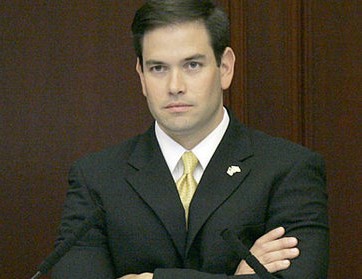
Marco Rubio’s amazing maiden speech in the US Senate

Florida Senator Marco Rubio

Human events reported on Florida Senator Marco Rubio’s first speech on the floor of the US Senate today, and it was AWESOME. (H/T Kathleen McKinley)

Full story:

Freshman Florida Republican Senator Marco Rubio delivered his maiden speech on the floor of the Senate yesterday and it was a speech all GOP presidential contenders should watch.

It was the best speech of the 2012 presidential cycle, except the person who delivered it has all but ruled himself off of the 2012 ticket on numerous occasions.

The GOP presidential field has been criticized for not having passion or conviction, and Rubio’s speech lit up the normally staid Senate chamber to the extent that this is possible. It had a clear argument, an emotional arc, personal tie-ins, and was delivered with conviction. Too often, even in the GOP, politicians talk about American exceptionalism as if it is an academic exercise.

Not Rubio.

Rubio owned it, his words personified it, and his speech was delivered in a way that led one who was watching to to think Rubio was humbled and still awed at America’s exceptional past and promise.

As Republicans learned in 2008, words and stories matter. It draws a public who does not get caught up in the drudgery of modern American politics in to care about the democratic process.
Add in the fact that Rubio is young and a minority, which are the two groups Republicans do most poorly with, and the speech and the messenger become even more dynamic, compelling, symbolic and important.

Rubio said he came “from a hard working and humble family” that “was neither wealthy nor connected,” but that he “grew up blessed in two important ways:” He had a strong and stable family and was born in America.

He realized that “America is not perfect” and “ti took a bloody civil war to free over 4 million African Americans who lived enslaved … and it would take another hundred years after that before they found true equality under the law.”

Rubio then movingly talked about how people who came to give their children a better life contributed to an “American miracle.”

He spoke of how a “16-year-old boy from Sweden, who spoke no English and had only five dollars in his pocket, was able to save and open a shoe store,” and “today, that store, Nordstrom is a multi-billion dollar global retail giant.”

He spoke of a “a young couple with no money and no business experience decided to start a toy business out of the garage of their home, and, “today, that company, Mattel, is one of the world’s largest toy manufacturers”

He spoke of the “French-born son of Iranian parents created a website called AuctionWeb in the living room of his home,” and, “today, that website now called eBay stands as a testament to the familiar phrase, ‘Only in America.'”

Rubio then talked movingly of the American dream and personified it by putting faces on the dream.

He said it was “story of the people who cleaned our office last night” who work hard so they can send their kids to college.”

He said it was “the story of the people who served your lunch today” who “work hard so that one day their children will have the chance to own a business.”

He said, in a reference to his father, the American Dream was also the “story of a bartender and a maid in Florida, whose son now serves here in this Senate, and who proudly gives his testimony as a firsthand witness of the greatness of this land.”

He then pivoted and said while “most great powers have used their strength to conquer other nations” America “is different” for America, “power also came with a sense that to those that much is given, much is expected.”

Rubio said that America’s greatness can be found anywhere in the world, “when someone uses a mobile phone, email, the Internet, or GPS” or “when a bone marrow, lung or heart transplant saves a life.”

Rubio then talked about how he “grew up in the 1980s, a time when it was morning in America” and that the 1980s, like the American century, faced challenges and triumphs but it was a “century where American political, economic and cultural exceptionalism made the world a more prosperous and peaceful place.”

He spoke of how the country is headed toward the wrong direct and that “we do stand now at a turning point in our history, one where there are only two ways forward for us. We will either bring on another American century, or we are doomed to witness America’s decline.”

Rubio said that since “every single one of us is the descendant of a go-getter,” “of dreamers and believers,” and “of men and women who took risk and made sacrifices because they wanted to leave their children better off than themselves” that “we are all the descendants of the men and women who built the nation that changed the world” whether “hey came here on the Mayflower, a slave ship, or on an airplane from Havana.”

Rubio then quoted John F. Kennedy about how America is the “watchmen on the walls of world freedom” and asked if America declined, “who will serve as living proof that liberty, security, and prosperity are all possible together,” or “lead the fight to confront and defeat radical Islam that “abuses and oppresses women, has no tolerance for other faiths and seeks to impose its views on the whole world,” or stand up for children who “are used as soldiers and trafficked as slaves?”

Rubio asked, if America declines, “who will create the innovations of the 21st century?”

He answered that nobody will because “there is still no nation or institution in the world willing or able to do what we have done.”

“Now, some say that we can no longer afford the price we must pay to keep America’s light shining,” Rubio said. “Others say that there are new shining cities that will soon replace us.”

“I say they are both wrong,” Rubio emphatically said because the world “still needs America,” “still needs our light,” and “still needs another American century” and “with God’s help, that will be our legacy to our children and to the world.”

You can watch the video here. The full transcript is here. READ THE WHOLE THING if you can’t watch the video.

You’ll recall that this blog has been a strong supporter of Marco Rubio since the day he announced his candidacy. He, along with Michele Bachmann, Paul Ryan, Allen West and Jim Demint, are my favorite Republicans. I’m probably forgetting some, but those are the ones that come to mind. I think if I had to choose someone who best matched my views across the board, that would be Michele Bachmann. But Marco Rubio best matches my personal story, and my opinion of the United States of America.

Here’s my post on the day he won the seat: Marco Rubio wins Florida Senate race – first tea party senator!

And here’s my post on the day he announced he was running: Conservative Marco Rubio announces for Florida Senate seat.

He will be a great Senator. And some day, maybe he’ll be even more. IFYKWIMAITYD.