Tag Archives: Reason

Is the definition of atheism “a lack of belief in God”?

I have a key that will unlock a puzzling mystery

First, let’s see check with the Stanford University Encyclopedia of Philosophy:

‘Atheism’ means the negation of theism, the denial of the existence of God.

Stanford University is one of the top 5 universities in the United States, so that’s a solid definition. To be an atheist is to be a person who makes the claim that, as a matter of FACT, there is no intelligent agent who created the universe. Atheists think that there is no God, and theists think that there is a God. Both claims are objective claims about the way the world is out there, and so both sides must furnish forth arguments and evidence as to how they are able to know what they are each claiming.

Philosopher William Lane Craig has some thoughts on atheism, atheists and lacking belief in God in this reply to a questioner.

Question:

In my discussions with atheists, they  are using the term that they “lack belief in God”. They claim that this is different from not believing in God or from saying that God does not exist. I’m not sure how to respond to this. It seems to me that its a silly word-play and is logically the same as saying that you do not believe in God.
What would be a good response to this?
Thank you for your time,

Steven

And here is Dr. Craig’s full response:

Your atheist friends are right that there is an important logical difference between believing that there is no God and not believing that there is a God.  Compare my saying, “I believe that there is no gold on Mars” with my saying “I do not believe that there is gold on Mars.”   If I have no opinion on the matter, then I do not believe that there is gold on Mars, and I do not believe that there is no gold on Mars.  There’s a difference between saying, “I do not believe (p)” and “I believe (not-p).”   Logically where you place the negation makes a world of difference.

But where your atheist friends err is in claiming that atheism involves only not believing that there is a God rather than believing that there is no God.

There’s a history behind this.  Certain atheists in the mid-twentieth century were promoting the so-called “presumption of atheism.” At face value, this would appear to be the claim that in the absence of evidence for the existence of God, we should presume that God does not exist.  Atheism is a sort of default position, and the theist bears a special burden of proof with regard to his belief that God exists.

So understood, such an alleged presumption is clearly mistaken.  For the assertion that “There is no God” is just as much a claim to knowledge as is the assertion that “There is a God.”  Therefore, the former assertion requires justification just as the latter does.  It is the agnostic who makes no knowledge claim at all with respect to God’s existence.  He confesses that he doesn’t know whether there is a God or whether there is no God.

But when you look more closely at how protagonists of the presumption of atheism used the term “atheist,” you discover that they were defining the word in a non-standard way, synonymous with “non-theist.”  So understood the term would encompass agnostics and traditional atheists, along with those who think the question meaningless (verificationists).  As Antony Flew confesses,

the word ‘atheist’ has in the present context to be construed in an unusual way.  Nowadays it is normally taken to mean someone who explicitly denies the existence . . . of God . . . But here it has to be understood not positively but negatively, with the originally Greek prefix ‘a-’ being read in this same way in ‘atheist’ as it customarily is in . . . words as ‘amoral’ . . . . In this interpretation an atheist becomes not someone who positively asserts the non-existence of God, but someone who is simply not a theist. (A Companion to Philosophy of Religion, ed. Philip Quinn and Charles Taliaferro [Oxford:  Blackwell, 1997], s.v. “The Presumption of Atheism,” by Antony Flew)

Such a re-definition of the word “atheist” trivializes the claim of the presumption of atheism, for on this definition, atheism ceases to be a view.  It is merely a psychological state which is shared by people who hold various views or no view at all.  On this re-definition, even babies, who hold no opinion at all on the matter, count as atheists!  In fact, our cat Muff counts as an atheist on this definition, since she has (to my knowledge) no belief in God.

One would still require justification in order to know either that God exists or that He does not exist, which is the question we’re really interested in.

So why, you might wonder, would atheists be anxious to so trivialize their position?  Here I agree with you that a deceptive game is being played by many atheists.  If atheism is taken to be a view, namely the view that there is no God, then atheists must shoulder their share of the burden of proof to support this view.  But many atheists admit freely that they cannot sustain such a burden of proof.  So they try to shirk their epistemic responsibility by re-defining atheism so that it is no longer a view but just a psychological condition which as such makes no assertions.  They are really closet agnostics who want to claim the mantle of atheism without shouldering its responsibilities.

This is disingenuous and still leaves us asking, “So is there a God or not?”

So there you have it. We are interested in what both sides know and what reasons and evidence they have to justify their claim to know. We are interested in talking to people who make claims about objective reality, not about themselves, and who then go on to give reasons and evidence to support their claims about objective reality. There are atheists out there that do make an objective claim that God does not exist, and then support that claim with arguments and evidence. Those are good atheists, and we should engage in rational conversations with them. But clearly there are some atheists who are not like that. How should we deal with these “subjective atheists”?

Dealing with subjective atheists

How should theists respond to people who just want to talk about their psychological state? Well, my advice is to avoid them. They are approaching religion irrationally and non-cognitively – like the person who enters a physics class and says “I lack a belief in the gravitational force!”.  When you engage in serious discussions with people about God’s existence, you only care about what people know and what they can show to be true. We don’t care about a person’s psychology.

Dealing with persistent subjective atheists

What happens when you explain all of that to a subjective atheist who continues to insist that you listen to them repeat over and over “I lack a belief in God, I lack a belief in God”? What if you tell them to make the claim that God does not exist, and then support it with arguments and evidence, but instead they keep leaving comments on your blog telling you again and again about their subjective state of mind: “I lack a belief in cupcakes! I lack a belief in icebergs!” What if they keep e-mailing you and threatening to expose you on Twitter for refusing to listen to them, or denounce you via skywriting: “Wintery Knight won’t listen to me! I lack a belief in crickets!”. I think at this point you have to give up and stop talking to such a person.

And that’s why I moderate and filter comments on this blog. There are uneducated people out there with access to the Internet who want attention, but I am not obligated to give it to them. And neither are you. We are not obligated to listen to abusive people who don’t know what they are talking about. I do post comments from objective atheists who make factual claims about the objective world, and who support those claims with arguments and evidence. I am not obligated to post comments from people who refuse to make objective claims or who refuse to support objective claims with arguments and evidence. And I’m not obligated to engage in discussions with them, either.

Related posts

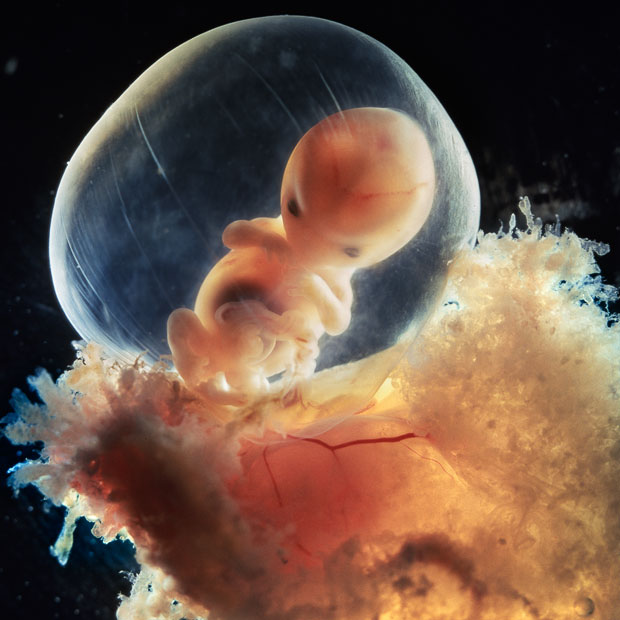
If unborn babies don’t have consciousness or don’t feel pain, may we kill them?

Unborn baby scheming about pro-life apologetics

Was having a conversation by e-mail yesterday with a pro-abortion atheist, and he gave two reasons why he supported abortion in the first and second trimester. First, he said that unborn babies can’t feel pain, so it’s OK to kill them. Second, he said that unborn babies don’t have consciousness, so it’s OK to kill them. I thought it might be useful to link to something that answers both of these objections.

Frank Beckwith is the author of “Defending Life: A Moral and Legal Case Against Abortion Choice“, which was published by Cambridge University Press, a top academic press. But before Cambridge University Press, Beckwith wrote four easy-to-understand essays for the Christian Research Journal. Part IV is the one that has the response to the two questions raised by my atheist friend.

Part I. The Appeal to Pity

Part II. Arguments from Pity, Tolerance, and Ad Hominem

Part III. Is The Unborn Human Less Than Human?

Part IV. When Does a Human Become a Person?

Excerpt:

Some ethicists argue that the unborn becomes fully human sometime after brain development has begun, when it becomes sentient: capable of experiencing sensations such as pain. The reason for choosing sentience as the criterion is that a being that cannot experience anything (i.e., a presentient unborn entity) cannot be harmed. Of course, if this position is correct, then the unborn becomes fully human probably during the second trimester and at least by the third trimester. Therefore, one does not violate anyone’s rights when one aborts a nonsentient unborn entity. [13]

There are several problems with this argument. First, it confuses harm with hurt and the experience of harm with the reality of harm. [14] One can be harmed without experiencing the hurt that sometimes follows from that harm, and which we often mistake for the harm itself. For example, a temporarily comatose person who is suffocated to death “experiences no harm,” but he is nevertheless harmed. Hence, one does not have to experience harm, which is sometimes manifested in hurt, in order to be truly harmed.

Second, if sentience is the criterion of full humanness, then the reversibly comatose, the momentarily unconscious, and the sleeping would all have to be declared nonpersons. Like the presentient unborn, these individuals are all at the moment nonsentient though they have the natural inherent capacity to be sentient. Yet to countenance their executions would be morally reprehensible. Therefore, one cannot countenance the execution of some unborn entities simply because they are not currently sentient.

Someone may reply that while these objections make important points, there is a problem of false analogy in the second objection: the reversibly comatose, the momentarily unconscious, and the sleeping once functioned as sentient beings, though they are now in a temporary state of nonsentience. The presentient unborn, on the other hand, were never sentient. Hence, one is fully human if one was sentient “in the past” and will probably become sentient again in the future, but this cannot be said of the presentient unborn.

There are at least three problems with this response. First, to claim that a person can be sentient, become nonsentient, and then return to sentience is to assume there is some underlying personal unity to this individual that enables us to say that the person who has returned to sentience is the same person who was sentient prior to becoming nonsentient. But this would mean that sentience is not a necessary condition for personhood. (Neither is it a sufficient condition, for that matter, since nonhuman animals are sentient.) Consequently, it does not make sense to say that a person comes into existence when sentience arises, but it does make sense to say that a fully human entity is a person who has the natural inherent capacity to give rise to sentience. A presentient unborn human entity does have this capacity. Therefore, an ordinary unborn human entity is a person, and hence, fully human.

Second, Ray points out that this attempt to exclude many of the unborn from the class of the fully human is “ad hoc and counterintuitive.” He asks us to “consider the treatment of comatose patients. We would not discriminate against one merely for rarely or never having been sentient in the past while another otherwise comparable patient had been sentient….In such cases, potential counts for everything.” [15]

Third, why should sentience “in the past” be the decisive factor in deciding whether an entity is fully human when the presentient human being “is one with a natural, inherent capacity for performing personal acts?” [16] Since we have already seen that one does not have to experience harm in order to be harmed, it seems more consistent with our moral sensibilities to assert that what makes it wrong to kill the reversibly comatose, the sleeping, the momentarily unconscious, and the presentient unborn is that they all possess the natural inherent capacity to perform personal acts. And what makes it morally right to kill plants and to pull the plug on the respirator-dependent brain dead, who were sentient “in the past,” is that their deaths cannot deprive them of their natural inherent capacity to function as persons, since they do not possess such a capacity.

These four essays are a very good introduction to common responses to pro-abortion arguments. I recommend that people get familiar with this, as once you look into it, you will see that the abortion issue can be debated with as much confidence as William Lane Craig defends Christian theism. You will have the same access to scientific evidence and rational arguments on this topic, and so you will have the upper hand. And that’s fun.

The best introductory book on the abortion / right to life issue is “The Case for Life” by pro-life debater Scott Klusendorf. The best comprehensive book is a tie between “The Ethics of Abortion” by Christopher Kaczor, and Frank Beckwith’s “Defending Life: A Moral and Legal Case Against Abortion Choice“.

How the WMAP satellite confirmed nucleosynthesis predictions and falsified atheism

Christianity and the progress of science

Prior to certain scientific discoveries, most people thought that the universe had always been here, and no need to ask who or what may have caused it. But today, that’s all changed. Today, the standard model of the origin of the universe is that all the matter and energy in the universe came into being in an event scientists call “The Big Bang”. At the creation event, space and time themselves began to exist, and there is no material reality that preceded them.

So a couple of quotes to show that.

An initial cosmological singularity… forms a past temporal extremity to the universe. We cannot continue physical reasoning, or even the concept of spacetime, through such an extremity… On this view the big bang represents the creation event; the creation not only of all the matter and energy in the universe, but also of spacetime itself.

Source: P. C. W. Davies, “Spacetime Singularities in Cosmology,” in The Study of Time III, ed. J. T. Fraser (Berlin: Springer Verlag ).

And another quote:

[A]lmost everyone now believes that the universe, and time itself, had a beginning at the big bang.

Source: Stephen Hawking and Roger Penrose, The Nature of Space and Time, The Isaac Newton Institute Series of Lectures (Princeton, N. J.: Princeton University Press, 1996), p. 20.

So, there are several scientific discoveries that led scientists to accept the creation event, and one of the most interesting and famous is the discovery of how elements heavier than hydrogen were formed.

Nucleosynthesis: forming heavier elements by fusion

Here’s the history of how that discovery happened, from the National Aeronautics and Space Administration (NASA) web site:

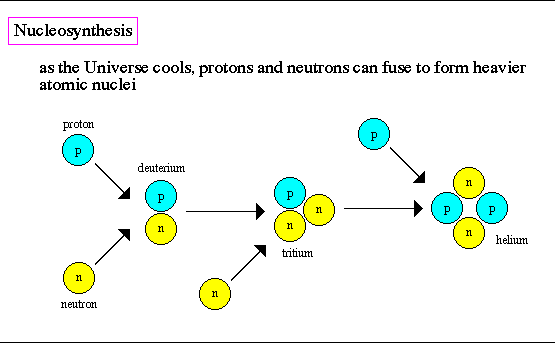
The term nucleosynthesis refers to the formation of heavier elements, atomic nuclei with many protons and neutrons, from the fusion of lighter elements. The Big Bang theory predicts that the early universe was a very hot place. One second after the Big Bang, the temperature of the universe was roughly 10 billion degrees and was filled with a sea of neutrons, protons, electrons, anti-electrons (positrons), photons and neutrinos. As the universe cooled, the neutrons either decayed into protons and electrons or combined with protons to make deuterium (an isotope of hydrogen). During the first three minutes of the universe, most of the deuterium combined to make helium. Trace amounts of lithium were also produced at this time. This process of light element formation in the early universe is called “Big Bang nucleosynthesis” (BBN).

The creation hypothesis predicts that there will be specific amounts of these light elements formed as the universe cools down. Do the predictions match with observations?

Yes they do:

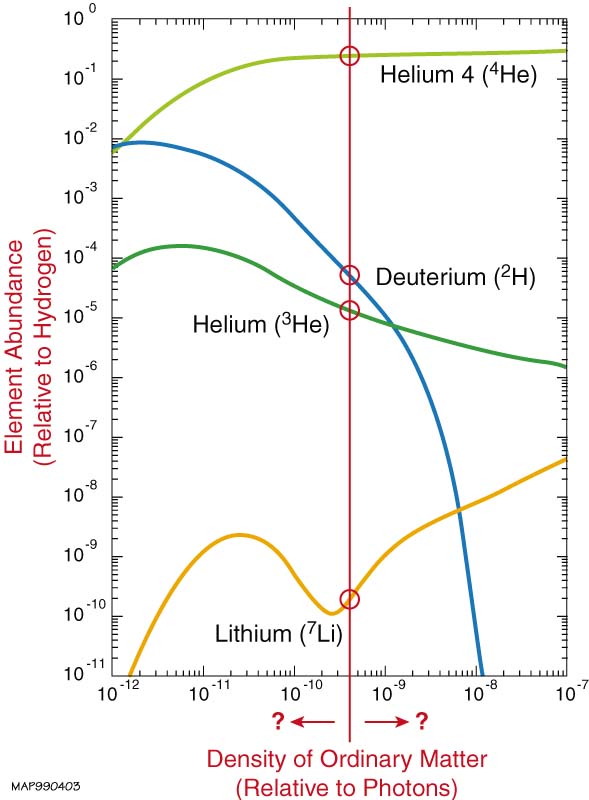
The predicted abundance of deuterium, helium and lithium depends on the density of ordinary matter in the early universe, as shown in the figure at left. These results indicate that the yield of helium is relatively insensitive to the abundance of ordinary matter, above a certain threshold. We generically expect about 24% of the ordinary matter in the universe to be helium produced in the Big Bang. This is in very good agreement with observations and is another major triumph for the Big Bang theory.

Moreover, WMAP satellite measurements of mass density agree with our observations of these light element abundances.

Here are the observations from the WMAP satellite:

Scientific observations match predictions

And here is how those WMAP measurements confirm the Big Bang creation event:

However, the Big Bang model can be tested further. Given a precise measurement of the abundance of ordinary matter, the predicted abundances of the other light elements becomes highly constrained. The WMAP satellite is able to directly measure the ordinary matter density and finds a value of 4.6% (±0.2%), indicated by the vertical red line in the graph. This leads to predicted abundances shown by the circles in the graph, which are in good agreement with observed abundances. This is an important and detailed test of nucleosynthesis and is further evidence in support of the Big Bang theory. 

“An important and detailed test”.

For completeness, we should learn how elements heavier than these light elements are formed:

Elements heavier than lithium are all synthesized in stars. During the late stages of stellar evolution, massive stars burn helium to carbon, oxygen, silicon, sulfur, and iron. Elements heavier than iron are produced in two ways: in the outer envelopes of super-giant stars and in the explosion of a supernovae. All carbon-based life on Earth is literally composed of stardust.

That’s a wonderful thing to tell a young lady when you are on a date: “your body is made of stardust”. In fact, as I have argued before, this star formation, which creates the elements necessary for intelligent life, can only be built if the fundamental constants and quantities in the universe are finely-tuned.

Now, you would think that atheists would be happy to find observations that confirm the origin of the universe out of nothing, but they are not. Actually, they are in denial.

Here’s a statement from the Secular Humanist Manifesto, which explains what atheists believe about the universe:

Religious humanists regard the universe as self-existing and not created.

For a couple of examples of how atheistic scientists respond to the evidence for a cosmic beginning, you can check out this post, where we get responses from cosmologist Lawrence Krauss, and physical chemist Peter Atkins.

You cannot have the creation of the universe be true AND a self-existing, eternal universe ALSO be true. Someone has to be wrong. Either the science is wrong, or the atheist manifesto is wrong. I know where I stand.

Positive arguments for Christian theism