
Tag Archives: Rationality

Atheist Jerry Coyne explains why morality is impossible for atheists

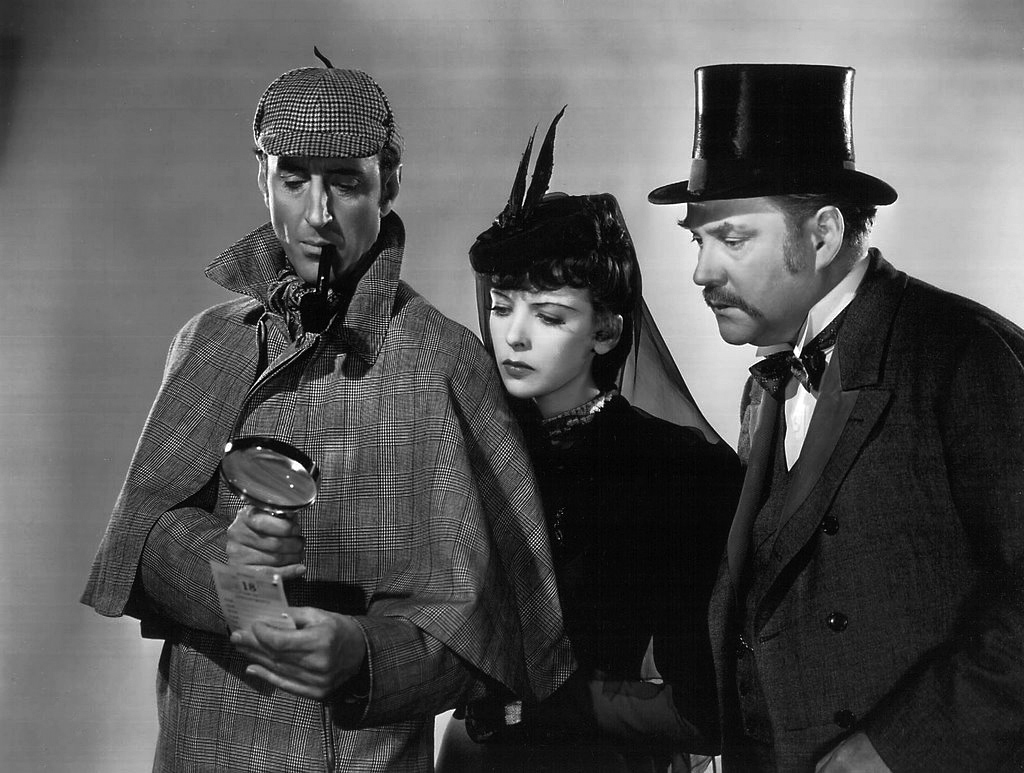
Sherlock Holmes and John Watson about to do philosophy

Let’s review what you need in your worldview in order to have a rationally grounded system of morality.

You need 5 things:

1) Objective moral values

There needs to be a way to distinguish what is good from what is bad. For example, the moral standard might specify that being kind to children is good, but torturing them for fun is bad. If the standard is purely subjective, then people could believe anything and each person would be justified in doing right in their own eyes. Even a “social contract” is just based on people’s opinions. So we need a standard that applies regardless of what people’s individual and collective opinions are.

2) Objective moral duties

Moral duties (moral obligations) refer to the actions that are obligatory based on the moral values defined in 1). Suppose we spot you 1) as an atheist. Why are you obligated to do the good thing, rather than the bad thing? To whom is this obligation owed? Why is rational for you to limit your actions based upon this obligation when it is against your self-interest? Why let other people’s expectations decide what is good for you, especially if you can avoid the consequences of their disapproval?

3) Moral accountability

Suppose we spot you 1) and 2) as an atheist. What difference does it make to you if you just go ahead and disregard your moral obligations to whomever? Is there any reward or punishment for your choice to do right or do wrong? What’s in it for you?

4) Free will

In order for agents to make free moral choices, they must be able to act or abstain from acting by exercising their free will. If there is no free will, then moral choices are impossible. If there are no moral choices, then no one can be held responsible for anything they do. If there is no moral responsibility, then there can be no praise and blame. But then it becomes impossible to praise any action as good or evil.

5) Ultimate significance

Finally, beyond the concept of reward and punishment in 3), we can also ask the question “what does it matter?”. Suppose you do live a good life and you get a reward: 1000 chocolate sundaes. And when you’ve finished eating them, you die for real and that’s the end. In other words, the reward is satisfying, but not really meaningful, ultimately. It’s hard to see how moral actions can be meaningful, ultimately, unless their consequences last on into the future.

Theism rationally grounds all 5 of these. Atheism cannot ground any of them.

Let’s take a look at #4: free will and see how atheism deals with that.

Atheism and free will?

Here’s prominent atheist Jerry Coyne’s editorial in USA Today to explain why atheists can’t ground free will.

Excerpt:

And that’s what neurobiology is telling us: Our brains are simply meat computers that, like real computers, are programmed by our genes and experiences to convert an array of inputs into a predetermined output. Recent experiments involving brain scans show that when a subject “decides” to push a button on the left or right side of a computer, the choice can be predicted by brain activity at least seven seconds before the subject is consciously aware of having made it. (These studies use crude imaging techniques based on blood flow, and I suspect that future understanding of the brain will allow us to predict many of our decisions far earlier than seven seconds in advance.) “Decisions” made like that aren’t conscious ones. And if our choices are unconscious, with some determined well before the moment we think we’ve made them, then we don’t have free will in any meaningful sense.

If you don’t have free will, then you can’t make moral choices, and you can’t be held morally responsible. No free will means no morality.

Here are some more atheists to explain how atheists view morality.

William Provine says atheists have no free will, no moral accountability and no moral significance:

Let me summarize my views on what modern evolutionary biology tells us loud and clear — and these are basically Darwin’s views. There are no gods, no purposes, and no goal-directed forces of any kind. There is no life after death. When I die, I am absolutely certain that I am going to be dead. That’s the end of me. There is no ultimate foundation for ethics, no ultimate meaning in life, and no free will for humans, either.

Richard Dawkins says atheists have no objective moral standards:

In a universe of blind physical forces and genetic replication, some people are going to get hurt, other people are going to get lucky, and you won’t find any rhyme or reason in it, or any justice. The universe that we observe has precisely the properties we should expect if there is, at bottom, no design, no purpose, no evil and no good, nothing but blind, pitiless indifference… DNA neither knows nor cares. DNA just is. And we dance to its music. (Richard Dawkins, River Out of Eden: A Darwinian View of Life (1995))

When village atheists talk about how they can be moral without God, it’s important to ask them to justify the minimum requirements for rational morality. Atheists may act inconsistently with their worldview, believing in free will, expecting praise and blame for complying with the arbitrary standards of their peer group, etc. But there is nothing more to morality on atheism that imitating the herd – at least when the herd is around to watch them. And when the herd loses its Judeo-Christian foundation – watch out. That’s when the real atheism comes out – the atheism that we’ve seen before in countries that turned their backs on God, and the moral law. When God disappears from a society, anything is permissible.


William Lane Craig talks about the book “Contending With Christianity’s Critics”

William Lane Craig lecturing to university students
William Lane Craig lecturing to students and faculty at Purdue University

Note: This book is currently on sale for only 99 cents (Kindle edition). Get it! Sorry if the price has changed by the time you read this post.

A series of three interviews from the “Reasonable Faith” podcast about the essay collection “Contending with Christianity’s Critics: Answering New Atheists and Other Objectors“.

Here is the first MP3 file.

Topics:

  • About the editor Paul Copan, (the nicest Christian apologist)
  • 1: Responding to Dawkins’ argument “Who designed the designer?”
  • 2: Responding to the multiverse counter to the fine-tuning argument
  • 3: The argument that rationality and consciouness require theism
  • 4: The evidence for humans being hard-wired for belief in God
  • 5: Responding to naturalism’s claim to rationally ground morality
  • 6: Responding to Dawkins’ idea that the universe looks undesigned

Here is the second MP3 file.

Topics:

  • 7: The criteria that historians use to establish historical reliability
  • 8: Did Jesus think that he was the Son of Man in Daniel
  • 9: A time line for the resurrection of Jesus from the early sources
  • 10: Responding to scholarly distortions of the historical Jesus
  • 11: Responding to Bart Ehrman’s claim that the NT text is corrupted
  • 12: The evidence for Jesus divine self-understanding

Here is the third MP3 file.

Topics:

  • 13: The logical coherence of the concept of God
  • 14: The logical coherence of the doctrine of the Trinity
  • 15: The logical coherence of the doctrine of the Incarnation
  • 16: The logical coherence of the doctrine of the Atonement
  • 17: The logical coherence of the doctrine of the Hell
  • 18: Responding to objections to God’s knowledge of the future

My favorite chapters in this book are the ones by Mark Linville on evolution and morality, and the chapter by Robert H. Stein on historical criteria and methodology. This is not an introductory book, this book is an intermediate-level book. You want to read the two Jim Wallace books and the Lee Strobel “Case For” books before you tackle this one.

Much of the book is philosophy and philosophy of religion and philosophical theology. Well, I guess everyone knows that I hate non-STEM disciplines, and I only read philosophy because it’s useful for Christian apologetics. If you are like me, and think that only STEM disciplines have value, then this book is for you. You will be able to make use of it in your case-making adventures. It. Works. This is the stuff that gets William Lane Craig invited to all the best universities to debate against all the best atheists. And he beats them all up with it, too.

The drowning stranger illustration challenges atheistic morality

Learning about right and wrong, good and evil

This is by Matt from Well Spent Journey blog.

Excerpt:

Here’s a thought experiment.

_____

Imagine that you’re a healthy, athletic, 20-year-old male. It’s the morning after a thunderstorm, and you’re standing on the banks of a flooded, violently churning river.

You notice an object floating downstream.

As it moves closer, you suddenly realize that this object is a person. The head breaks the surface, and you see a panic-stricken elderly woman gasping for air. You’ve never met her before, but vaguely recognize her as an impoverished widow from a neighboring village.

You look around for help, but there’s no one in sight. You have only seconds to decide whether or not to jump in after her – recognizing that doing so will put your own life in significant peril.

_____

Is it rational for you to risk your life to save this stranger? Is it morally good to do so?

For the Christian, both of these questions can be answered with an emphatic “yes”.

The Christian is called to emulate the example set forth by Jesus, who not only risked, but sacrificed his life for the sake of others. The Christian believes that the soul is eternal, and that one’s existence doesn’t come to an abrupt end with death.  Additionally, he can point to the examples of countless Christian martyrs who have willingly sacrificed their own lives.

For the secular humanist, the answers to these questions are much more subjective. When I previously asked 23 self-identifying atheists, “Is it rational for you to risk your life to save a stranger?” only 4 of them responded with an unqualified “yes”.

Biologically speaking, the young man in our scenario has nothing to gain by jumping after the drowning woman. Since she’s poor and elderly, there are no conceivable financial or reproductive advantages involved. Evolutionary biologists often speak of “benefit to the tribe” as a motivation for self-sacrifice…yet the young man’s community would certainly place greater practical value on his life than that of a widow from a neighboring village.

Secular humanists argue that people are capable of making ethical decisions without any deity to serve as Moral Lawgiver. On a day-to-day basis, this is undeniably true. We all have non-religious friends and neighbors who live extremely moral and admirable lives.

In the scenario above, however, secular ethics break down. The secular humanist might recognize, intuitively, that diving into the river is a morally good action. But he has no rational basis for saying so. The young man’s decision is between empathy for a stranger (on the one hand) and utilitarian self-interest & community-interest (on the other).

In the end, there can be no binding moral imperatives in the absence of a Moral Lawgiver. If the young man decides to sit back and watch the woman drown, the secular humanist cannot criticize him. He’s only acting rationally.

When I read this, I was of one of the questions from one of my earliest posts, where I list a dozen interview questions to ask atheists. His question is very much like one of my questions. You may like the others in my list, as well.

It seems to me that on atheism, the only answer you can give for why you would do the right thing is “because it makes me happy”. And as we see with abortion – 56 million unborn children dead – it very often doesn’t make atheists happy to save someone else’s life. Not if it means any infringement on their own happiness. Every time an atheist votes Democrat, they are voting to declare that people who get in their way should not be saved. And atheists (the “nones”, anyway) are one of the largest Democrat voting blocs. According to the 2012 Secular Census, 97% of secularists deny that unborn children have a right to life. And the 2013 Gallup poll found that “nones”, people with no religion, are most likely to be pro-abortion. (Note that “nones” are not necessarily atheists, they may have some beliefs, but they are not observant). It’s not rational to inconvenience yourself to save others on atheism. You have one life to live, be happy, survival of the fittest.