Tag Archives: Pregnancy

Study: women seeking to have a child should start before age 32

Brain vs Heart, from: theawkwardyeti.com

Dina sent me this sobering piece of research from the New Scientist which is perfect for all the young feminists who have been taught in college that marriage should be put off, and women can easily get pregnant after age 40.

Excerpt:

It’s a question many people will ask themselves at some point in their lives: when should I start a family? If you know how many children you’d like, and whether or not you would consider, or could afford, IVF, a computer model can suggest when to start trying for your first child.

Happy with just one? The model recommends you get started by age 32 to have a 90 per cent chance of realising your dream without IVF. A brood of three would mean starting by age 23 to have the same chance of success. Wait until 35 and the odds are 50:50 (see “When to get started”).

The suggestions are based on averages pulled from a swathe of data so don’t give a personal prediction. And of course, things aren’t this simple in real life – if only family size and feelings about IVF were the only factors to consider when planning a family. But the idea behind the model is to help people make a decision by condensing all the information out there into an accessible form.

“We have tried to fill a missing link in the decision-making process,” says Dik Habbema at Erasmus University in Rotterdam, the Netherlands, one of the creators of the model. “My son is 35 and many of his friends have a problem deciding when to have children because there are so many things they want to do.”

It’s a scenario that will be familiar to many; the age at which people have their first child has been creeping up over the last 40 or so years. For example, the average age at which a woman has her first child is 28 in the UK and has reached 30 in Italy, Spain and Switzerland. In the US, the birth rate for women in their 20s has hit a record low, while the figures for those over 35 have increased over the last few decades.

The decision is more pressing for women thanks to their limited supply of eggs, which steadily drop in quantity and quality with age. Female fertility is thought to start declining at 30, with a more significant fall after the age of 35.

[…]The new model incorporates data from studies that assess how fertility naturally declines with age. The team took information on natural fertility from population data collected over 300 years up to the 1970s, which includes data on 58,000 women.

I have often tried to talk to young women about the need to get their lives in gear. I advise them to work summers during high school, obtain a STEM degree in university, minimize borrowing money by going to community college for the generic prerequisites, don’t have premarital sex, get a job related to their STEM field straight out of college, pay off their debts, move out of their parents’ house, start investing from the first paycheck, marry between age 25-30, and then start having children after the first two “stabilizing” years of marriage. This is sound advice, rooted in my careful reconnaissance of the things that human beings care about and need in their old age. This advice is not bullying, it comes from reading many, many relevant papers. It comes from putting the knowledge gained from reading the papers into practice, and seeing results where appropriate.

I am giving you the numbers. Straight out of a peer-reviewed study. Don’t follow your heart. Don’t listen to your friends. Follow the science. Make your decisions within the boundaries of reality. God will not save you from foolish decisions.

Related posts

If unborn babies don’t have consciousness or don’t feel pain, may we kill them?

Unborn baby scheming about pro-life apologetics

Was having a conversation by e-mail yesterday with a pro-abortion atheist, and he gave two reasons why he supported abortion in the first and second trimester. First, he said that unborn babies can’t feel pain, so it’s OK to kill them. Second, he said that unborn babies don’t have consciousness, so it’s OK to kill them. I thought it might be useful to link to something that answers both of these objections.

Frank Beckwith is the author of “Defending Life: A Moral and Legal Case Against Abortion Choice“, which was published by Cambridge University Press, a top academic press. But before Cambridge University Press, Beckwith wrote four easy-to-understand essays for the Christian Research Journal. Part IV is the one that has the response to the two questions raised by my atheist friend.

Part I. The Appeal to Pity

Part II. Arguments from Pity, Tolerance, and Ad Hominem

Part III. Is The Unborn Human Less Than Human?

Part IV. When Does a Human Become a Person?

Excerpt:

Some ethicists argue that the unborn becomes fully human sometime after brain development has begun, when it becomes sentient: capable of experiencing sensations such as pain. The reason for choosing sentience as the criterion is that a being that cannot experience anything (i.e., a presentient unborn entity) cannot be harmed. Of course, if this position is correct, then the unborn becomes fully human probably during the second trimester and at least by the third trimester. Therefore, one does not violate anyone’s rights when one aborts a nonsentient unborn entity. [13]

There are several problems with this argument. First, it confuses harm with hurt and the experience of harm with the reality of harm. [14] One can be harmed without experiencing the hurt that sometimes follows from that harm, and which we often mistake for the harm itself. For example, a temporarily comatose person who is suffocated to death “experiences no harm,” but he is nevertheless harmed. Hence, one does not have to experience harm, which is sometimes manifested in hurt, in order to be truly harmed.

Second, if sentience is the criterion of full humanness, then the reversibly comatose, the momentarily unconscious, and the sleeping would all have to be declared nonpersons. Like the presentient unborn, these individuals are all at the moment nonsentient though they have the natural inherent capacity to be sentient. Yet to countenance their executions would be morally reprehensible. Therefore, one cannot countenance the execution of some unborn entities simply because they are not currently sentient.

Someone may reply that while these objections make important points, there is a problem of false analogy in the second objection: the reversibly comatose, the momentarily unconscious, and the sleeping once functioned as sentient beings, though they are now in a temporary state of nonsentience. The presentient unborn, on the other hand, were never sentient. Hence, one is fully human if one was sentient “in the past” and will probably become sentient again in the future, but this cannot be said of the presentient unborn.

There are at least three problems with this response. First, to claim that a person can be sentient, become nonsentient, and then return to sentience is to assume there is some underlying personal unity to this individual that enables us to say that the person who has returned to sentience is the same person who was sentient prior to becoming nonsentient. But this would mean that sentience is not a necessary condition for personhood. (Neither is it a sufficient condition, for that matter, since nonhuman animals are sentient.) Consequently, it does not make sense to say that a person comes into existence when sentience arises, but it does make sense to say that a fully human entity is a person who has the natural inherent capacity to give rise to sentience. A presentient unborn human entity does have this capacity. Therefore, an ordinary unborn human entity is a person, and hence, fully human.

Second, Ray points out that this attempt to exclude many of the unborn from the class of the fully human is “ad hoc and counterintuitive.” He asks us to “consider the treatment of comatose patients. We would not discriminate against one merely for rarely or never having been sentient in the past while another otherwise comparable patient had been sentient….In such cases, potential counts for everything.” [15]

Third, why should sentience “in the past” be the decisive factor in deciding whether an entity is fully human when the presentient human being “is one with a natural, inherent capacity for performing personal acts?” [16] Since we have already seen that one does not have to experience harm in order to be harmed, it seems more consistent with our moral sensibilities to assert that what makes it wrong to kill the reversibly comatose, the sleeping, the momentarily unconscious, and the presentient unborn is that they all possess the natural inherent capacity to perform personal acts. And what makes it morally right to kill plants and to pull the plug on the respirator-dependent brain dead, who were sentient “in the past,” is that their deaths cannot deprive them of their natural inherent capacity to function as persons, since they do not possess such a capacity.

These four essays are a very good introduction to common responses to pro-abortion arguments. I recommend that people get familiar with this, as once you look into it, you will see that the abortion issue can be debated with as much confidence as William Lane Craig defends Christian theism. You will have the same access to scientific evidence and rational arguments on this topic, and so you will have the upper hand. And that’s fun.

The best introductory book on the abortion / right to life issue is “The Case for Life” by pro-life debater Scott Klusendorf. The best comprehensive book is a tie between “The Ethics of Abortion” by Christopher Kaczor, and Frank Beckwith’s “Defending Life: A Moral and Legal Case Against Abortion Choice“.

Feminist presents sophisticated arguments for abortion to elite scholars in rigorous academic debate

Abortion rights activist takes on pro-life doctors in formal academic debate

I love to watch formal academic debates, with timed speeches, where scholars with published work get to interact with one another. Even if my side loses, I learn something, because I learn what I can and cannot press in a discussion with the other side. Debates between scholars helps me to tolerate listening quietly to people I disagree with. All good things.

But not everyone agrees with me about this. Some people just prefer to present their views to those who are easily manipulated and uncritical, so that they will change their minds because of stories and feelings, instead of reason and evidence.

Here’s a story about it from Life News:

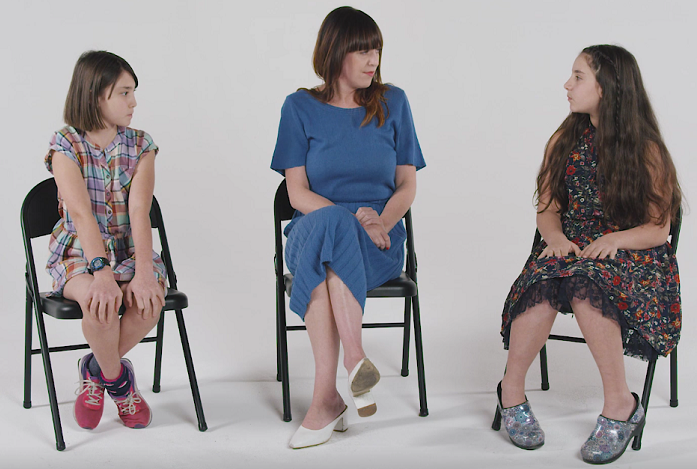
Have you seen the video going around about kids meeting someone who is post-abortive? The video does not talk about the psychological consequences of having an abortion, or talk about how to help women and families who are post-abortive heal from their abortion. No, it normalizes abortion so that 10 and 11-year-olds grow up to think taking an innocent human life is okay–and that no one ever regrets their abortion.

And the actual video:

I noticed that Nathan Apodaca wrote a reasonable response to the content of the video, over at Human Defense initiative.

He writes:

The most common theme in the entire video is the host’s avoidance of the real issue: Can we kill the preborn? What is the preborn?

[…]The problem with the video is the spokeswoman for “Shout Your Abortion,” along with several of the teenagers in the piece, constantly do what philosopher Francis Beckwith aptly calls “Begging the question”; that is, they assume what they should be trying to prove.

Consider the first few conversations. We (the audience) are told indirectly that sometimes mistakes happen, that people can’t afford a child, and other issues influence the decision to get an abortion.

Poverty is obviously a problem, along with people who think they will not be able to afford a child, but a question never gets asked: why stop with abortion to alleviate these problems? Why not allow parents to kill their newborns and toddlers as well to alleviate any problems that may arise? The answer is most assuredly a firm “No, that’s different.”

Ah, but that is the question! Why are the preborn so different we may kill them if we so please? This never seems to occur to anyone in the video, but it does raise a further question which deserves an answer: if the preborn are also human, just like babies and toddlers, should we really be killing them, or should we protect them, just like toddlers and newborns?

OK, this is important.

In the debate over atheism, I always advise you to disregard everything that anyone says until we get the atheist to come to terms with the evidence for the origin of the universe and the fine-tuning – mainstream science. The same thing is the case with the abortion debate. I don’t want to hear any sob-stories about poor people, and so on, until I get a scientific answer to the question “what is the unborn?” Let’s decide what’s true based on what mainstream science tells us.

And guess what? Just like the atheism debate, mainstream science is completely on our side. The same rigorous experimental science that establishes the beginning of the universe, and the fine-tuning of the universe for life, also establishes that a new living human being is created at the moment of conception, with a different DNA signature than either the mother or the father. It’s a new human being! And this is the scientific view – the same view you see in textbooks on human development. (Lots of citations in that PDF, you should download it and share it – it came from the lady that Trump just appointed to the National Science Board)

But it’s not just science textbooks that agree that abortion takes the life of an unborn child, even pro-abortion scholars concede that, as Nathan explains:

Something else Amelia and her interviewees miss is the many times supporters of abortion have called abortion for what it is: the intentional killing of an innocent human being.

There are three separate links to citations by abortion defenders in that citation.

Another important point is that abortion defenders always point to something that unborn children can’t do, and use that as the basis for excluding them. But the truth is that their criteria excludes a lot of other people:

[…][O]ne of the teenagers makes the off-the-cuff remark that “Like your arm is incapable of complex thought, a baby in the womb isn’t, either.”

No one bothers to defend this view though, and it is just asserted as if it settles the debate. The problem is, so what? Why does complex thought grant us a protection against being intentionally killed, instead of being protected because we are human in the first place? He never expands on this concept.

And how much complex thought is necessary in order to be protected from being killed? We never get an explanation. Some people, like the sleeping, the mentally ill, and someone in a medically induced coma may happen to not be capable at a given point in time to exercise complex thought; but it seems ludicrous to think they can be justifiably excluded from the community of human beings with a right to not be killed.

I have a whole post about the different criteria that pro-abortion people use to exclude the unborn from the right to life, and in every case, they end up excluding other people who even they would admit have the right to life.

The argument that seems to be the most convincing to the children is the “pro-lifers are stinky poopyheads” argument, also known as the ad hominem fallacy in formal logic.

Nathan responds:

This claim is a flat out lie, and is painfully obvious to anyone paying the slightest bit of attention. Pro-lifers regularly step up to help those in need. In north San Diego county alone, there are more pro-life resource centers for women (and men) in need than abortion clinics. In my own hometown, Escondido, two pro-life pregnancy resource centers provide healthcare to those who need it. There are even pro-lifers opening up housing and adoption referrals for women who choose to keep their babies, but are homeless and in need of a place to stay. “Shout Your Abortion”, the organization the host represents, does none of this, and doesn’t help women who decide not to have an abortion find support.

[…]This isn’t all. Consider the following: groups and affiliates like the Obria Group, CareNet, LifeLine, Heartbeat International, and the National Institute of Family and Life Advocates (NIFLA) connect people in need to thousands of care centers; many of whom operate with no tax dollars or government subsidies whatsoever.

Slave owners used similar “arguments” against abolitionists who didn’t like them owning slaves: calling them names, to make other people not want to oppose slavery. Well, I guess if your audience is a bunch of children, then this might be persuasive to them.