
Tag Archives: Politics

Iraq plunges into chaos as U.S. troops withdraw

From the Heritage Foundation.

Excerpt:

The Obama Administration’s risky decision to seek the quickest possible exit from Iraq has contributed to a mushrooming political crisis there that is rapidly unraveling the hard-won gains of U.S. troops and threatens to plunge the country into a civil war that will greatly benefit Iran.

Shortly after the December 15 end-of-mission ceremony for U.S. troops, Iraqi Prime Minister Nouri al-Malikipurged many senior Sunni Arab political leaders from his fractious governing coalition. Maliki’s government, dominated by Shiite political parties of various stripes, also announced that it will prosecute Vice President Tareq al-Hashemi, a leader of the predominantly Sunni Arab Iraqiyah party, on terrorism charges. Hashemi, who denounced the allegations as propaganda cover for a political coup, has fled to the semi-autonomous Kurdish region in northern Iraq.

Iraq’s fragile unity is now dissolving in growing political tensions between the leaders of the Shiite majority and Sunni minority and between the Shiite-dominated central government and the non-Arab Kurdish minority. But the Obama Administration, blindsided by simmering tensions that it had downplayed in its rush for the exit, appears to be on auto-pilot.

The Administration gave a higher priority to domestic political considerations than to Iraq’s long-term security needs when it neglected to negotiate an extension of the U.S. troop presence past the end-of-year deadline set by the 2008 Status of Forces Agreement. Although the Bush Administration had envisioned a follow-on agreement to extend the military presence, and the Obama Administration had initially planned for a smaller residual force of military trainers and advisers, in the end politics trumped security in the White House’s deliberations.

Pulling troops out of the Middle East will make it harder for us to gather intelligence and support our allies against Islamic aggression. This decision to pull troops out ahead of the 2012 election is very similar to the decision to delay the Keystone XL pipeline until after the election.

Excerpt:

In November, the White House announced it would delay deciding on the project until after next year’s election. Administration officials claim they need more time to evaluate the potential environmental impacts of the $7 billion, 2,100-mile project to transport crude oil from Alberta, Canada, to major American refineries in the Gulf Coast.

Not content to wait until 2013, Republicans inserted a Keystone approval provision into the payroll tax extension. The result of that move is still in flux, as House Republicans have rejected the Senate’s measure.

Regardless of the outcome, President Obama’s desire to delay the pipeline is just the latest example of his pernicious proclivity for putting politics over sound policy when it comes to energy regulations.

The president simply doesn’t want to bear the political costs of deciding either way on Keystone until after his re-election bid. He’s wants to remain non-committal.

[…]Shambling on Keystone might be smart politics — but there’s no good policy reason to delay approval. And there is a huge cost of delay, which can be captured in just four letters: J-O-B-S.

Keystone XL requires miles of pipe to be welded and installed, and at least 30 new pumping facilities to be constructed. American workers would staff many of those operations.

Indeed, if Keystone XL were allowed to proceed as planned, oil sands development and related operations would directly create thousands of new jobs. Tens of thousands additional positions would be created indirectly at businesses along the pipeline’s pathway.

That same political strategizing driving the Keystone delay also undergirds the White House’s stance on hydraulic fracturing.

Colloquially know as “fracking,” this technique has proven invaluable in extracting natural gas buried under the earth’s surface. It involves pumping a high-pressure mixture of water and sand into the rock surrounding deposits to free up gas for collection.

In the Marcellus shale — a massive reserve running from Ohio and Pennsylvania into New York — fracking is the only way for developers to get access to gas located deep underground. Unfortunately, policymakers high and low have succumbed to environmentalist alarmism on fracking.

New York — with the tacit support of the White House — has instituted a fracking moratorium and effectively prohibited exploration of the parts of the Marcellus that run under the state.

Again, the cost of currying favor with environmentalists? Jobs. According to the Department of Environmental Conservation, Marcellus development in New York could generate up to 80,000 new local positions.

The more we decline to develop our own energy resources here at home, the worse it is for our economy. But it’s also bad for our national security to continue to buy oil from people who don’t like us very much. If we could develop our own energy resources at home – and buy from Canada – then we could use the money we save to keep our commitments in the Middle East. It’s not good for our economy or our national security to make short-sighted decisions that are going to hurt us in the long-run.
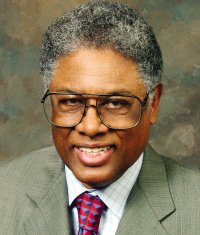
Thomas Sowell explains the historical effects of tax cuts

Thomas Sowell
Thomas Sowell

Here’s part 1 of 3.

Excerpt:

The actual results of the cuts in tax rates in the 1920s were very similar to the results of later tax-rate cuts during the Kennedy, Reagan and George. W. Bush administrations — namely, rising output, rising employment to produce that output, rising incomes as a result and rising tax revenues for the government because of the rising incomes, though the tax rates had been lowered.

Another consequence was that people in higher-income brackets paid not only a larger total amount of taxes, but a higher percentage of all taxes, after what were called “tax cuts for the rich.” It was not simply that their incomes rose, but that this was not taxable income, since the lower tax rates made it profitable to get higher returns outside of tax shelters.

The facts are unmistakably plain, for those who bother to check the facts. In 1921, when the tax rate on people making over $100,000 a year was 73%, the federal government collected a little over $700 million in income taxes, of which 30% was paid by those making over $100,000.

[…]By 1929, after a series of tax-rate reductions had cut the tax rate to 24% on those making over $100,000, the federal government collected more than a billion dollars in income taxes, of which 65% was collected from those making over $100,000.

There is nothing mysterious about this. Under the sharply rising tax rates during the Wilson administration, fewer and fewer people reported high taxable incomes, whether by putting their money into tax-exempt securities or by any of the other ways of rearranging their financial affairs to minimize their tax liability.

Under Wilson’s escalating income-tax rates to pay for the high costs of the First World War, the number of people reporting taxable incomes of more than $300,000 — a huge sum in the money of that era — declined from well over a thousand in 1916 to fewer than three hundred in 1921. The total amount of taxable income earned by people making over $300,000 declined by more than four-fifths in those years.

Secretary Mellon estimated in 1923 that the money invested in tax-exempt securities had tripled in a decade, and was now almost three times the size of the federal government’s annual budget and nearly half as large as the national debt. “The man of large income has tended more and more to invest his capital in such a way that the tax collector cannot touch it,” he pointed out.

Getting that money moved out of tax shelters was the whole point of Mellon’s tax-cutting proposals. He also said: “It is incredible that a system of taxation which permits a man with an income of $1,000,000 a year to pay not one cent to the support of his government should remain unaltered.”

Here’s part 2 of 3.

Excerpt:

Empirical evidence on what happened to the economy in the wake of those tax cuts in four different administrations over a span of more than 80 years has also been largely ignored by those opposed to what they call “tax cuts for the rich.”

Confusion between reducing tax rates on individuals and reducing tax revenues received by the government has run through much of these discussions over these years.

Famed historian Arthur M. Schlesinger Jr., for example, said that although Andrew Mellon, secretary of the treasury from 1921 to 1932, advocated balancing the budget and paying off the national debt, he “inconsistently” sought “reduction in tax rates.”

Nor was Schlesinger the only highly regarded historian to perpetuate economic confusion between tax rates and tax revenues. Today, widely used textbooks by various well-known historians have continued to misstate what was advocated in the 1920s and what the actual consequences were.

According to the textbook “These United States” by Irwin Unger, Mellon, “a rich Pittsburgh industrialist,” persuaded Congress to “reduce income tax rates at the upper-income levels while leaving those at the bottom untouched.”

Thus “Mellon won further victories for his drive to shift more of the tax burden from the high-income earners to the middle and wage-earning classes.”

But hard data show that, in fact, both the amount and the proportion of taxes paid by those whose net income was no higher than $25,000 went down between 1921 and 1929, while both the amount and the proportion of taxes paid by those whose net incomes were between $50,000 and $100,000 went up — and the amount and proportion of taxes paid by those whose net incomes were over $100,000 went up even more sharply.

And here’s part 3 of 3.

Excerpt:

President Kennedy, like Andrew Mellon decades earlier, pointed out that “efforts to avoid tax liabilities” make “certain types of less-productive activity more profitable than other more valuable undertakings” and “this inhibits our growth and efficiency.” Therefore the “purpose of cutting taxes” is “to achieve a more prosperous, expanding economy.”

“Total output and economic growth” were italicized words in the text of Kennedy’s address to Congress in January 1963, urging cuts in tax rates. Much the same theme was repeated yet again in President Reagan’s February 1981 address to a joint session of Congress, pointing out that “this is not merely a shift of wealth between different sets of taxpayers.”

Instead, basing himself on a “solid body of economic experts,” he expected that “real production in goods and services will grow.”

Even when empirical evidence substantiates the arguments made for cuts in tax rates, such facts are not treated as evidence relevant to testing a disputed hypothesis, but as isolated curiosities. Thus, when tax revenues rose in the wake of the tax-rate cuts made during the George W. Bush administration, the New York Times reported:

“An unexpectedly steep rise in tax revenues from corporations and the wealthy is driving down the projected budget deficit this year.”

Expectations, of course, are in the eye of the beholder. However surprising these facts may have been to the New York Times, they are exactly what proponents of reducing high tax rates have been expecting, not only from these particular tax rate cuts, but from similar reductions in high tax rates at various times going back more than three-quarters of a century.

It’s Thomas Sowell – the official economist of the Tea Party.

Newt Gingrich on the issues: what are his political views?

Newt Gingrich on health care

From the Wall Street Journal. (H/T Reason to Stand)

Excerpt:

White House hopeful Newt Gingrich called the House Republican plan for Medicare “right-wing social engineering,” injecting a discordant GOP voice into the party’s efforts to reshape both entitlements and the broader budget debate.

In the same interview on Sunday, Mr. Gingrich backed a requirement that all Americans buy health insurance, complicating a Republican line of attack on President Barack Obama’s health law.

The former House speaker’s decision to stick with his previous support for an individual mandate comes days after former Massachusetts Gov. Mitt Romney defended the health revamp he championed as governor, which includes a mandate.

The moves suggest the Republican primary contest, which will include both men, could feature a robust debate on health care, with GOP candidates challenging the Democratic law while defending their own variations.

Newt Gingrich opposes Paul Ryan’s reforms

Consider this article from National Review.

Excerpt:

Newt Gingrich’s appearance on “Meet the Press” today could leave some wondering which party’s nomination he is running for. The former speaker had some harsh words for Paul Ryan’s (and by extension, nearly every House Republican’s) plan to reform Medicare, calling it “radical.”

“I don’t think right-wing social engineering is any more desirable than left-wing social engineering,” he said when asked about Ryan’s plan to transition to a “premium support” model for Medicare. “I don’t think imposing radical change from the right or the left is a very good way for a free society to operate.”

As far as an alternative, Gingrich trotted out the same appeal employed by Obama/Reid/Pelosi — for a “national conversation” on how to “improve” Medicare, and promised to eliminate ‘waste, fraud and abuse,’ etc.

Newt Gingrich on Hillary Clinton

More from the leftist New York Times.

Excerpt:

For Ms. Clinton, standing side by side with her husband’s onetime nemesis gives her the chance to burnish her credentials among the moderates she has been courting during her time in the Senate.

But in comments this week, she portrayed the rapprochement as one born of shared policy interests, not calculated politics.

“I know it’s a bit of an odd-fellow, or odd-woman, mix,” she said. “But the speaker and I have been talking about health care and national security now for several years, and I find that he and I have a lot in common in the way we see the problem.”

For his part, Mr. Gingrich, who helped lead the impeachment fight against President Bill Clinton, called Mrs. Clinton “very practical” and “very smart and very hard working,” adding, “I have been very struck working with her.”

Newt Gingrich on global warming

Newt Gingrich on foreign policy

Newt Gingrich endorsed a pro-abortion, pro-same-marriage candidate

Remember when Newt Gingrich endorsed the RINO Dede Scozzafava in New York?

Excerpt:

In a major coup for her campaign, Republican Dede Scozzafava today will pick up the endorsement of Newt Gingrich, one of the nation’s leading conservative figures and the architect of the “Republican Revolution” in the mid-1990s.

“The special election for the 23rd Congressional District is an important test leading up to the mid-term 2010 elections,” Gingrich said in a statement to supporters. “Our best chance to put responsible and principled leaders in Washington starts here, with Dede Scozzafava.”

The endorsement is important for Scozzafava, a social moderate, as she attempts to hold onto a conservative base eroded by Doug Hoffman, the Conservative Party candidate in the thee-way 23rd District race.

[…]Hoffman has mounted a late surge in the special election with endorsements by prominent conservatives that include former Republican Sen. Fred Thompson; Campaign for Working Families founder Gary Bauer; and the conservative Club for Growth in Washington, D.C.

Scozzafava’s candidacy is also reported to have triggered a deep divide among House Republicans, with some of the most conservative members refusing to support her campaign.

But Gingrich, who served as Speaker of the House from 1995 to 1999, wants to unite the party. He sees Scozzafava and the Upstate special election – the only House race in the nation this fall — as the best hope for Republicans to start a comeback and regain control of Congress.

Gingrich is apparently willing to overlook Scozzafava’s support for same-sex marriage and abortion rights.

The conservative Club for Growth lists some of his fiscal blunders.

Excerpt:

The second large error in Gingrich’s entitlement record was equally troubling: the former Speaker played a high profile advocacy role on behalf of President George W. Bush’s Medicare prescription drug benefit bill in 2003.  Gingrich penned several op-eds supporting the general thrust and specific provisions of the bill, urging House Republicans to pass what was billed at the time to be a $400 billion expansion of the federal government.

[…]In the 2009 special election for Congress in New York’s 23rd district, Gingrich was outspoken in his support of liberal Republican nominee Dede Scozzafava, up to the moment she finally quit the race after center-right voters rallied behind Conservative Party nominee Doug Hoffman.  Long after most prominent conservatives had endorsed Hoffman, Gingrich held firm in his advocacy for a liberal candidate who supported Obama’s stimulus plan and the pro-union “card check” proposal, among other bad positions.

In 2010, Gingrich openly campaigned for embattled U.S. Senator Robert Bennett in Utah, whom Gingrich’s wrongly called “a true-blue conservative.”  In 2008,  Gingrich aggressively supported and campaigned for liberal Congressman Wayne Gilchrist (R-MD) when he faced a conservative challenge from now-Congressman Andy Harris.  In 2006, same thing, when Gingrich backed liberal Congressman Joe Schwarz (R-MI) when he was challenged by conservative now-Congressman Tim Walberg.

Unfortunately, the problems in Speaker Gingrich’s record are frequent enough and serious enough to give pause.  On two of the most important recent issues that confronted limited government conservatives (creating the new budget busting Medicare drug entitlement, and the Wall Street bailout), Gingrich was on the wrong side.  His advocacy of an individual health care mandate is problematic.  His penchant for tinkering with rewards for favored industries and outcomes shows a troubling willingness to use federal power to coerce taxpayers into his preferred direction.  And his occasional hostility toward conservatives who do not share his desire to support liberal Republicans or to compromise on matters of principle is worrisome.

Maybe he is actually running to win the Democrat nomination this time.