What does science tell us about God?
– the discoveries of Copernicus made humans less significant in the universe
– the discoveries of Darwin should that humans are an accident
– but this all pre-modern science
– what do the latest findings of science say about God?
Evidence #1: the origin of the universe
– the steady state model supports atheism, but was disproved by the latest discoveries
– the oscillating model supports atheism, but was disproved by the latest discoveries
– the big bang model supports theism, and it is supported by multiple recent discoveries
– the quantum gravity model supports atheism, but it pure theory and has never been tested or confirmed by experiment and observation
Evidence #2: the fine-tuning of physical constants for life
– there are over 100 examples of constants that must be selected within a narrow range in order for the universe to support the minimal requirements for life
– example: mass density
– example: strong nuclear force (what he studies)
– example: carbon formation
Evidence #3: the fine-tuning of our planet for habitability
– the type of galaxy and our location in it
– our solar system and our star
– our planet
– our moon
It’s a good lecture explaining a couple of basic arguments for a cosmic Creator and Designer. If you add the origin of life and the Cambrian explosion (Stephen C. Meyer’s arguments), then you will be solid on the basic scientific arguments for a Creator and Designer of the universe.
Dr. Graham Oppy, the moderator, is a well-known atheist philosopher. He let Dr. Krauss speak for 21 minutes and 40 seconds, which is why my summary of Krauss is so long.
The video:
Summary
After careful consideration, I decided not to be snarky at all in this summary. What you read below is what happened. There may be some small mistakes, but I will fix those if people tell me about them. I also included some quotes and timestamps for the more striking things that Dr. Krauss said.
The debate itself starts at 4:50 with Dr. Craig’s opening speech. He does use slides to show the structure of his arguments.
Dr. Craig’s opening speech. (4:50)
The kalam cosmological argument:
God is the best explanation of the origin of the universe
The Borde Guth Vilenkin theorem supports the absolute beginning of the universe
Even if our universe is part of a multiverse, the multiverse itself would have to have an absolute beginning
Speculative cosmologies try to challenge the Big Bang theory, but none of them – even if true – can establish that the past is eternal
Only two types of things could explain the origin of spece, time, matter and energy – either abstract objects or minds
Abstract objects do not cause effects, but minds do cause effects (we do it ourselves)
A mind is the best explanation for the origin of the universe
The unreasonable effectiveness of mathematics:
The underlying structure of nature is mathematical – mathematics is applicable to nature
Mathematical objects can either be abstract objects or useful fiction
Either way, there is no reason to expect that nature should be linked to abstract objects or fictions
But a divine mind that wants humans to understand nature is a better explanation for what we see
The cosmic fine-tuning for the existence of intelligent life
There are two kinds of finely-tuned initial conditions: 1) cosmological constants and 2) quantities
These constants and quantities have to be set within a narrow range in order to permit intelligent life
There are three explanations for this observation: law, chance or design
Law is rejected because they are put in at the beginning or matter – they don’t emerge from matter
Chance must be rejected, because they odds are just too long unless you appeal to a world-ensemble
We do not observe what the world ensemble hypothesis predicts that we should observe
Design is the best explanation for finely-tuned constants and quantities
The existence of objective moral values and duties
Our experience of morality (values and duties) is that it is objectively real and incumbent on us
When someone goes into a classroom and shoots at innocent children, that is objectively wrong
On naturalism, moral values and moral duties do not exist – they are conventional and variable by time and place
The best explanation for the existence of objective moral values and duties is that God exists
The historicity of the resurrection of Jesus
There are three widely-accepted facts that are best explained by the resurrection hypothesis
1) the empty tomb, 2) the post-mortem appearances, 3) the early church’s belief in the resurrection
Naturalistic attempts to explain these 3 boilerplate facts fail
The best explanation of the 3 minimal facts is that God raised Jesus from the dead
The immediate experience of God
Belief in God is a “properly basic” belief – rational even without arguments because of experience of God
Seems to be saying that logical arguments can prove false things “it’s nonsense”
Dr. Craig distorted a podcast that some group made on pain receptors
Dr. Craig’s faith is so strong that it causes him to distort what this group said
Discussion: (44:35)
I will not be summarizing everything that was said, just a few main points. The segment from 52:18 to 57:12 about the Vilenkin e-mail on the BVG theorem is a must-see. Krauss is standing up and gesticulating while Craig is calmly trying to quote a paper by Vilenkin that shows that Krauss is misrepresenting Vilenkin. Krauss constantly interrupts him. After a while, when Craig exposes him as having misrepresented Vilenkin and gets him to admit that all current eternal models of the universe are probably wrong, he quietens down and can’t even look at Craig in the face.
Cosmological argument:
Craig: The e-mail says any universe that is expanding, on average, requires a beginning
Craig: There are two models – Aguirre & Gratton and Carroll & Chen – where there is a period of contraction before the expansion
Craig: The two models are the ones cited in the e-mail that Dr. Krauss showed
Craig: In the very paper by Vilenkin that I cited, he says that both of those models don’t work
Krauss: (agitated and interrupting) Vilenkin said that they have to make an assumption about entropy that they have no rationale for
(as Craig starts to talk Krauss makes an exaggerated, disrespectful gesture and sits down in a huff)
Craig: Yes, an unwarranted assumption means that they don’t have EVIDENCE for their theories being correct
Krauss: (agitated and interrupting) “All the evidence suggests that the universe had a beginning but WE DON’T KNOW!!!!!!!” (raising his voice)
Craig: I’m not saying that we know that the universe had a beginning with certainty
Craig: I am saying that the beginning of the universe is more probably true than false based on the evidence we have
Craig: And you agree with me about that – you think the universe had a beginning
Krauss: (agitated and interrupting) (Unintelligible)
Moderator: One at a time
Craig: In your Vilenkin e-mail slide, at the end of the paragraph where the two models are mentioned that Vilenkin specifically shows…
(I am guessing that Craig is going to ask why so much of what Vilenkin wrote has been cut out of the e-mail that Krauss showed)
Krauss: (agitated and interrupting) Because it was technical…
Moderator: Lawrence! Hang on a sec!
Craig: He specifically shows that these models are not past eternal, and that they require a beginning just like the others…
Krauss: (agitated and interrupting) We can do the math if you want
Craig: Now wait. I couldn’t help notice that there on your slide there was a series of ellipsis points indicating missing text…
Krauss: (agitated and interrupting) “Yeah, because it was technical!”
Craig: “I wonder what you deleted from the original letter”
Krauss: (agitated and interrupting) “I just told you!”
Craig: “Now wait. Could it have been something like this: (reads a quote from Vilenkin) ‘You can evade the theorem by postulating that the universe was contracting prior to some time. This sounds as if there is nothing wrong with having contraction prior to expansion. But the problem is that a contracting universe is highly unstable. Small perturbations would cause it to develop all sorts of messy singularities, so it would never make it to the expanding phase.’
Craig: “That’s Vilenkin.”
Krauss: “In this paper, that’s absolutely right”
Krauss: But it’s ok for theories to assume things that we know are wrong – they are still good theories – it’s unknown
(Craig turns away and looks through his papers)
Craig: “Isn’t it true that the only viable quantum gravity models on order today involve a beginning – have a finite past?”
Krauss: “No”
Craig: “Well, can you give us one then”
Krauss: (talks about a variety of possible eternal models) “In my experience in science, all of them are probably wrong”
Krauss: “You know most theories are wrong, which is why, you know, it’s hard”
Craig: “Right”
I noticed that a huge number of atheist web sites are taking the Vilenkin quote that Krauss used out of context, like this one and this one. There are probably a lot more of them like that, which I think is interesting. That’s why we have these debates, I guess. To set the record straight about who accuses people of being dishonest, and who is actually dishonest.
Fine-tuning:
Krauss tried to argue that he had explained the fine-tuning with the Higgs particle, but Dr. Craig said that only applied to the cosmological constant, not all the other examples of fine-tuning. Krauss said that it wasn’t impressive that this universe permitted life and that “It would have been much more surprising if we evolved in a universe in which we couldn’t live”. Krauss argued the fine-tuning was only for “Life like us”. But Dr. Craig explained that the fine-tuning is what allows us to have the basics of any kind of life, like slow-burning stars, chemical diversity, etc. – things that are required for basic minimal life functions in any living system. Craig said that he was working with the current physical laws of this universe (F = ma, etc.) and that he was looking at what changed if we changed those even slightly. Krauss tried to say that if he changed things like the mass of particles then the strength of forces would change. (But the forces aren’t laws!) Krauss argued that the cosmological constant would be even better for life if it was zero, and Craig said that the life permitting range did include zero, but that the range of life-permitting values was narrow.
Jesus’ existence:
Craig reponded to the mystery religions charge, the charge that the evidence for the minimal facts is too late/too weak, the charge that grief visions explained the evidence better, and Hume’s argument against miracles. Craig brought up the early creed from 1 Cor 15:3-7 and explained to Krauss that it was 5 years after the events, and that Jewish standards of oral transmission were strong enough to ensure that the creed was reliable, and most of the eyewitnesses would still have been alive.
Audience Q and A: (1:21:09)
The first topic is the grounding of morality. Krauss agrees that there is no objective morality and no objective moral oughts. He also said that that standards of behavior are arbitrary, and that they change over time and they are adopted for promoting social order. Dr. Craig pressed the point that science itself would collapse without ethical values. It assumes them, but cannot ground them.
The next topic was free will. Krauss is a determinist. Craig asked him how he could reconcile moral responsibility with determinism.
The next topic was the effectiveness of mathematics. Krauss didn’t have an explanation for it and didn’t think it needed one. Then they got into whether the Genesis has been verified by science and whether it is meant to be taken literally.
The next topic was whether philosophy makes any progress. Craig gave the example of verificationism being rejected as too narrow, and self-refuting. Krauss: “I’m going to come to the defense of philosophy for the first time”. Craig: “That’s amazing!” Krauss said that science provides new knowledge. Craig said there were some things that could be known apart from science.
This lecture is special to me, because I bought a VHS tape of it just after I started working full-time, and watched it a million times. A lot of people come to their convictions about God’s existence because of parents or church or intuitions, but for me it’s all about the scientific evidence. This lecture changed my life. I wish more people taught their children about this evidence! This lecture was delivered at the University of California, Santa Barbara.
Dr. Bradley received his B.S. in Engineering Science and his Ph.D. in Materials Science from the University of Texas in Austin.
Dr. Bradley taught for eight years at the Colorado School of Mines before assuming a position as Professor of Mechanical Engineering at Texas A&M University (TAMU) in 1976.
During his 24 years at Texas A&M, Dr. Bradley served as Head of the Department of Mechanical Engineering at Texas A&M University and as Director of the Polymer Technology Center, and received five College of Engineering Research Awards. He has received over $4,500,000 in research grants and has published over 140 technical articles and book chapters. He has also co-authored “The Mystery Of Life’s Origin: Reassessing Current Theories. He is a Fellow of the American Society for Materials and of the American Scientific Affiliation and serves as a consultant for many Fortune 500 companies.
He currently serves as Distinguished Professor of Engineering at Baylor University.
The lecture: (63 minutes lecture, 25 minutes audience Q&A)
Summary slide:
This slide summarizes the content of the lecture
Introduction:
At the beginning of the 20th century, people believed that the progress of science was pointing away from an intelligent Creator and Designer, and towards naturalism
A stream of new discoveries has shifted the support of science towards theism, and away from naturalism
Richard Dawkins, an atheist, says that nature only has the appearance of design, but that if you look closer, naturalistic mechanisms can account for the appearance of design
When deciding between design and apparent design (“designoid”), it matters whether you think there is an intelligence there to do the designing
Evidence #1: The Big Bang:
an eternal “steady state” universe is more compatible with naturalism, but a created universe is more compatible with a Creator
In 1929, Hubble used telescopes to observe that the light from distant galaxies was redshifted. The further away galaxies were, the faster they were moving away. Therefore, space is expanding in all directions, suggesting an explosive origin of the universe
In 1965, the discovery of the cosmic microwave background radiation matched a prediction of the Big Bang cosmology, and of the creation event
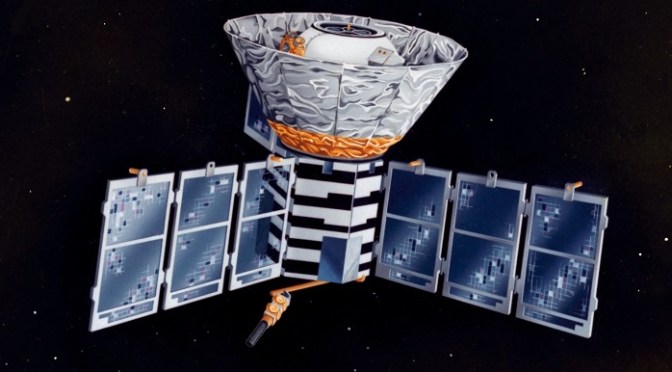
In 1992, the COBE space telescope allowed us to test four specific predictions of the Big Bang model, especially the predictions for light element abundances (hydrogen and helium), which matched the predictions of the creation model
Evidence #2: Simple mathematical structure of the physical laws
the simple mathematical structure of natural laws allows us to understand these laws, make discoveries, and engineer solutions to problems
early scientists saw the mathematical structure of the universe to mean that nature was designed by an intelligent to be understood
the fundamental equations of the laws of the universe can be easily written on one side of one sheet of paper
Eugene Wigner’s famous paper, “The Unreasonable Effectiveness of Mathematics in the Physical Sciences” makes the point that this simple structure is an unexpected gift that allows is to do science
Evidence #3: fine-tuning of the physical constants and quantities
in order for any kind of complex life to survive, we need stars that provide energy within specific ranges for long periods of time
in order for any kind of complex life to survive, we need planets with stable orbits that will not suffer from extreme temperature swings as it varies in distance from its star
in order for any kind of complex life to survive, we need stable atomic structure
in order for any kind of complex life to survive, we need to have chemical diversity and correct relative abundances of each element
organic life has minimum requirements: process energy, store information, replicate, and you can’t fulfill those functions if there is only one element, e.g. – hydrogen
the energy level from the photons from the sun have to match the energy levels of the different elements in order to drive the chemical bonding needed for life
These requirements for life of any imaginable type depend on the values of the constants and quantities. The constants and quantities cannot vary much from what they are, or the universe will lose the characteristics (above) that allow it to support complex life of any imaginable time
For example, ratio of strong force to electromagnetic force:
– if 2% larger, then no stable hydrogen, no long-lived stars, no compounds containing hydrogen, e.g. – water
– if 5% smaller, no stable stars, heavy hydrogen would be unstable, few elements other than hydrogen
Evidence #4: initial conditions for habitability
Universe: expansion rate of the universe must be fast enough to avoid a re-collapse, but slow enough to allow matter to clump together and form stars and planets for complex life to live on
Planet: right distance from the star to get the right climate
Planet: right mass to retain the right atmosphere
Evidence #5: origin of life and information theory
It’s possible to explain every process in an automobile engine using plain old naturalistic mechanisms – no supernatural explanation is necessary to understand the processes
But the existence of engine itself: engineering all the parts has to be explained by the work of an intelligence
Similarly, we can understand how living systems work, but the existence of the living systems requires an intelligence
Even the simplest living system has to perform minimal function: capture energy, store information and replicate
Living systems are composed of objects like proteins that are composed of sequences of components complex such that the order of the components gives the overall structure function
Developing the components for a simple living cell is very improbable – even given the large number of galaxies, stars and planets in the universe, it is unlikely that complex, embodied life would exist anywhere in the universe
Evidence #6: more initial conditions for habitability
Location within the galaxy: you need to be away from the center of the galaxy, because the explosions from dying stars, and excessive radiation will kill life
Location within the galaxy: you need to be close enough to the center in order catch the heavy elements you need for life from the explosions of other stars
Location within the galaxy: the best location is between two arms of a spiral galaxy, where you can get the heavy elements you need from dying stars, but without being hit with explosions and harmful radiation
Star mass: determines rate at which the sun burns, determines the energy level of photons that are used to drive chemical bonding reactions, determines the length of time the star will be stable
Star mass: star mass must be the correct value in order to allow liquid water on the planet’s surface, while still preserving stable orbit
I wish there was more curiosity about science in churches, and young Christians understood how critical science is for grounding the rationality of the Christian worldview. We need to be training up more scientists who think about the big questions, like Dr. Walter Bradley.



 WINTERY KNIGHT