
Tag Archives: Person

How early are the doctrines of the Incarnation and the Trinity?

Here’s a great post from Tough Questions Answered. They find evidence for the Incarnation and the Trinity in the writings of Ignatius, who was the third Bishop of Antioch from 70 AD to 107 AD.

Here’s the raw quote from Ignatius’ “Epistle to the Ephesians”:

But our Physician is the only true God, the Father and Begetter of the only-begotten Son.  We have also as a Physician the Lord our God, Jesus the Christ, the only-begotten Son and Word, before time began, but who afterwards became also man, of Mary the virgin. For “the Word was made flesh.”  Being incorporeal, He was in a body; being impassible, He was in a passible body; being immortal, He was in a mortal body; being life, He became subject to corruption, that He might free our souls from death and corruption, and heal them, and might restore them to health, when they were diseased with ungodliness and wicked lusts.

And TQA discusses the passage:

There are several aspects of this passage which demonstrate that Saint Ignatius held beliefs consistent with the Doctrines of the Trinity and the Dual Nature of Christ.  First, he refers to two separate Persons, God the Father and Jesus Christ, yet he calls both of them God.

[…]Second, Ignatius refers to Jesus Christ as begotten “before time began”.  This is almost word for word identical to the Nicene Creed, which says, “I believe in. . . one Lord, Jesus Christ, the Son of God, the only-begotten, begotten of the Father before all ages. . .”  Some today claim that the Early Church believed Christ’s being ”begotten” of the Father was in relation to His birth from Mary (specifically, this is an LDS claim).  However, Ignatius’ comment here demonstrates that the Early Church’s understanding of Christ’s nature as “only-begotten” was a relationship with the Father that was “before time began” and has nothing to do with His earthly incarnation.  It is interesting to note that the Greek word translated as “only-begotten” both here and in the New Testament is ”monogenes”.  Monogenes literally means “one of a kind,” and to the Church Fathers it connoted Christ being of the same nature as the Father. . . something that was entirely unique to Him.

In addition to calling Christ God and claiming Him to be the “only-begotten” of the Father “before time began”, Ignatius tells us that “afterwards” Christ “became man”.  Ignatius then goes on to point out some aspects that Christ’s becoming man added to His nature.  He says that although Christ was incorporeal, He was in a body; although He was impassible, He was in a passible body; although He was immortal, He was in a mortal body;  although He was life, He became subject to corruption.  These differing aspects of Christ’s nature, aspects that are polar opposites to one another, speak to Christ having two natures, one as God and one as man, and demonstrate that Saint Ignatius understood Christ in this manner.  As God, Christ was incorporeal, impassible, immortal, and life itself.   However, as man He was corporeal, passible, mortal, and subject to corruption.

Now I think you can pull the Incarnation and the Trinity right out the Bible, but it’s still nice to see such a prominent church father writing about it decades after the events.
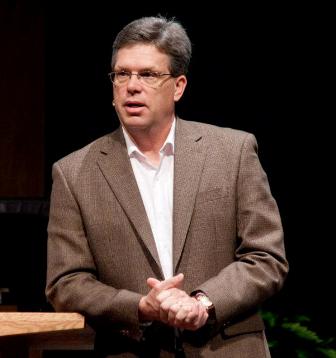

Scott Klusendorf responds to atheist P.Z. Myers on the Issues, Etc. show

Scott Klusendorf, Life Training Institute

About Scott:

Scott Klusendorf travels throughout the United States and Canada training pro-life advocates to persuasively defend their views in the public square. He contends that the pro-life message can compete in the marketplace of ideas if properly understood and properly articulated.

[…]Scott has participated in numerous debates at the collegiate level. His debate opponents have included Nadine Strossen, President of the ACLU (1991-2008) – Kathyrn Kolbert, an attorney that has argued for abortion rights in a United States Supreme Court case – and Kathy Kneer, President of Planned Parenthood of California.

Scott has debated or lectured to student groups at over 70 colleges and universities, including Stanford, USC, UCLA, Johns Hopkins, Loyola Marymount Law School, West Virginia Medical School, MIT, U.S. Air Force Academy, Cal-Tech, and University of North Carolina.

Each year thousands of students at Protestant and Catholic high schools are trained by Scott to make a persuasive case for life as part of their worldview training prior to college. He’s provided that same training to students at Summit Ministries and Focus on the Family Institute.

Scott is the author of The Case for Life: Equipping Christians to Engage the Culture, released in March 2009 by Crossway Books. Scott has also published articles on pro-life apologetics in The Christian Research Journal, Clear Thinking, Focus on the FamilyCitizen, and The Conservative Theological Journal.

Chuck Colson, founder and Chairman of the Board of Prison Fellowship, says: “Scott first grabbed my attention when Focus on the Family featured one of his presentations on its national broadcast. I was struck by his ability to communicate truth so clearly and insightfully. I’ve heard many speakers who deliver excellent content, but few who can actually equip people to communicate their pro-life convictions to a secular culture. In fact, I was so impressed with Scott’s talk that I phoned him directly to learn more about his work. After that, I scheduled him as a keynote speaker for our own Breakpoint conference.”

Scott is a graduate of UCLA with honors and holds a Masters Degree in Christian Apologetics from Biola University.

The MP3 file is here.

Topics:

  • Myers: I could imagine a culture where a child doesn’t have the right to life until they are 5-years old
  • Moderator: Myers is an atheist. He believes that standards of conduct are variable depending on what is dominant in a culture. Since cultures  vary by time and place, and none is objectively right or wrong, then a 5-year limit for personhood is as valid as any other standard that might evolve. There is no way to judge between cultures against some objective standard
  • Moderator (to Klusendorf): Myers says that the unborn is a “piece of meat”. It’s not a person until well after birth. Do only atheists believe this?
  • Klusendorf: No others hold them. But what is more interesting is that he just asserts his views, he never argues for them. He says that pro-lifers lie when debating this issue
  • Moderator: (to Myers) What is the unborn?
  • Myers: It’s a piece of tissue that will develop into a human being over time
  • Moderator: (to Myers) What is it 5 minutes before it’s born?
  • Myers: It’s fetus, it’s not a baby
  • Klusendorf: The development stages of a human are all stages of development of the same entity, as even Peter Singer and David Boonin admit
  • Moderator: He made a distinction between before birth and after birth
  • Klusendorf: Yes, and that contradicts what he says later when he says there are no sharp boundaries
  • Klusendorf: Myers is confusing parts with wholes. The skin cells on my hand are part of a larger human being. The embryo is not part of a larger human being, they are a whole human being, directing its own development
  • Klusendorf: Myers also makes the claim that embryos are constructed piece by piece from the outside. But the science of embryology is clear – the embryo develops itself.
  • Moderator (to Myers): Is the unborn a person?
  • Myers: Personhood develops gradually. A newborn baby is not a person. A baby’s brain is still forming so it’s not a person. There is no specific moment when a baby becomes a person. It is culturally determined. Our society says it’s birth. Some people say viability. Either of those are acceptable to me
  • Moderator: (to Myers): So drawing the line between unborn and born is arbitrary?
  • Myers: Yes it is
  • Klusendorf: He is separating human beings into classes: persons and non-persons. This has resulted in injustices, historically speaking. E.g. – with American Indians

(Break until 15:00)

  • Klusendorf: He says that a human being becomes a person when their brain is fully developed, but even teens don’t have fully developed brains
  • Klusendorf: Look at this scientific evidence from PBS about NIH research which shows that brains still developing in teens and it causes them to make poor decisions
  • Klusendorf: If development gives us value, then those with more of it have more of a right to life than those with less
  • Klusendorf: This point was made by Lincoln in his debates about slavery, when he warned his opponent that someone with lighter skin could enslave him
  • Moderator (to Myers): How do you decide these life issues?
  • Myers: We use the notion of “greater good”
  • Moderator (to Myers): that’s a culturally determined notion?
  • Myers: Yes. The greater good here is that we maximize the security and happiness of most people in the society. Women are persons, so we favor their rights.
  • Klusendorf: His response begs the question. He is assuming that the unborn are not human persons. He talks about the need for women’s rights. Are unborn women included in those who have rights?
  • Klusendorf: If cultures decide who is and who is not a person, then he cannot oppose cultures that say that Jews are not persons, or that women are not persons
  • Klusendorf: He admits that he cannot oppose cultures that think that children of age 5 are not persons, and can be killed
  • Moderator (to Myers): You call that kind of society “brutal”, why do you say that?
  • Myers: It’s my personal preference because I like my own kids
  • Moderator (to Klusendorf): Respond to that
  • Klusendorf: He has no argument, just his own opinion. He cannot oppose any society that things that it is OK to traffic, kill, etc. 5-year-olds
  • Klusendorf: He says that he has a personal preference. That is an interesting fact about his psychology, but he has no argument
  • Klusendorf: In an atheistic worldview, human beings at any stage are cosmic accidents
  • Klusendorf: How do we get any kind of intrinsic value and human rights out of an atheist worldview? I don’t see how you can
  • Klusendorf: Even a woman’s absolute right to an abortion is not grounded by atheism
  • Moderator (to Myers): What do you think of the pro-life movement?
  • Myers: I’m a developmental biologist. The pro-life movement is lying to people. An embryo is not a person. “Personhood implies much more than being a piece of meat with the right number of chromosomes in it”. The primary issue in abortion is women’s autonomy. It is entirely the woman’s decision
  • Klusendorf: You have to present arguments to prove that pro-lifers are lying. There are pro-abortion scholars who have arguments, he isn’t one. He only has assertions, opinions and preferences.
  • Klusendorf: What if a woman gets pregnant solely in order to take a drug during pregnancy in order to have a deformed child. Myers has no argument against that

Myers also has no argument against sex-selection abortions. So much for “women’s rights”.

I just want to mention that the Life Training Institute is one of the ministries I recommend to people. They are the only pro-life group I support, because they are apologists all the way. If they’re not debating, they’re training others to debate. If you like Christians who have battlefield experience on the pro-life issue, this is your organization.

You can get Scott’s book on pro-life apologetics here on Amazon.com. It’s the best introductory book on pro-life apologetics out there. And he has another book about making a pro-life case on campus.

UPDATE: P.Z. Myers responds to this post here. Reader discretion is advised.

Brian Auten interviews pro-life debater Scott Klusendorf on pro-life apologetics

Unborn baby scheming about pro-life apologetics

Scott Klusendorf is the director of the excellent Life Training Institute, and he’s been interviewed by Brian Auten on Apologetics 315.

Details of the interview:

Today’s interview is with Scott Klusendorf, president of Life Training Institute. LTI is the first place to look for excellent resources to get better equipped to defend the pro-life position. Scott talks about defining abortion and its terms, the issue of the debate, the legal history of abortion, defending the pro-life view using science and philosophy, the four pillars of the pro-life argument, answering a litany of objections to the pro-life position, the right and wrong use of emotional appeals, taking on the right tone in the debate, how to get better equipped, and more.

Grab the MP3 file here at Apologetics 315.

The article Scott mentions “How to Defend Your Pro-Life Views in 5 Minutes or Less” is worth the read, and it’s a good summary of some of the points he makes in the lecture.

If you like this interview, please be sure and buy the best basic book on pro-life apologetics – Scott Klusendorf’s “The Case for Life“.

And there is actually a full transcript, and here’s an excerpt:

BA: Great stuff. Now I want you to go into these pillars if you will of defending the pro-life position with science and philosophy, and in your web site prolifetraining.com one of the things that you provide is sort of a four point acronym, some would say sled S-L-E-D. Can you lay out what those main pillars are and their relevance to the issue?

SK: Well as I mentioned a moment ago, pro-life advocates argue that elective abortion unjustly takes the life of a developing human being, and we defend that claim using science and philosophy. We use science to determine what kind of thing the unborn is, and we use philosophy to show that there’s no relevant deference between the embryos we once were and the adults we are today that would justify killing us at that earlier stage of development. Scientifically, as I mentioned just moments ago embryology text books worldwide indicate that from the very beginning you and I were distinct living whole human beings. You can’t see that I’m doing this right now, Brian, but at the moment I’m picking cells off the back of my hand. These cells, which we call somatic cells, contain my entire DNA and coding. But you don’t thing I just committed mass murder by sending a couple hundred of those puppies hurling to their deaths on the floor in front of me. And the reason is, you know that these cells though they contain my DNA and coding are merely part of a larger human being, me. They are not distinct whole living organisms the way that you were when you were an embryo. The way I was when I was an embryo. In other words, there is a difference in kind between each of our bodily cells and the embryonic human beings we once were. That’s what science teaches us; that’s what the science of embryology lays down for us.Philosophically, we argue using that SLED acronym that you mentioned a moment ago that there’s no difference between that embryo we once were and the adult we are today. The adults we are today that justify killing us at that earlier stage of development and as Steven Schwarz points out, the differences between that embryo and the adult that you are today are one of size, level of development, environment and degree of dependency. Think of the acronym SLED and you will remember those four differences. Size, yeah you were smaller as an embryo, but since when does body size determine the rights that you have. Shaquille O’Neal, the seven foot two basketball star with the Boston Celtics, is a foot taller than I am, but he doesn’t have a greater right to life simply because he’s bigger.

Level development? Sure, we were less developed as embryos but since when is a matter of principal does that mean we can kill you? Two-year-old girls are less developed than twenty-year-old young women. We don’t think though the two year old girl has less to a right to life simply because she can’t function at the level that the twenty year old can. Level of size, I should say level of development. What about environment; where you are located there is the letter “E” in that SLED acronym. You were once in the womb now you’re out but sense when does were you are determine what you are? When you walk from your living room into the studio to do this interview. You changed location but you didn’t stop being you. When I jump on an airplane and fly from Atlanta to London’s Heathrow airport. I get off the plane I’m in a new location, but I’m the same being as I was when I left Atlanta. If that’s true how does a journey of eight inches down the birth canal suddenly change me from non-human, non-valuable thing that we can kill? To a valuable human being that we can’t kill. And the answer is, if I wasn’t already human and valuable I’m not going to get there by changing my address. And then finally, degree of dependency—yes we depended on our mother for survival but sense when does dependency on another human being mean we can kill you? Conjoined twins depend on each other for survival and unless one of the twins is killing its partner we don’t go ahead and slit the throat of both twins simply because they can’t live independent of each other. Size, level of development, environment, degree of dependency, think “SLED” those are the only four differences between that embryo you once were and the adult you are today. And the pro-lifer would argue that not one of those four differences justifies killing you at that earlier stage.

You can see Scott in a debate about abortion right here.

And if you like that interview, I have some more things for you to read from Dr. Francis Beckwith.

Learn more by reading

Frank Beckwith is the author of “Defending Life: A Moral and Legal Case Against Abortion Choice“. He wrote that book for Cambridge University Press, a top academic press. But before Cambridge University Press, Beckwith wrote easy-to-understand essays for the Christian Research Journal.

Here are four essays that answer common arguments in favor of legalized abortion.

I have a copy of Dr. Beckwith’s previous book “Politically Correct Death”, which I read bit-by-bit on my lunch hours 10 years ago. Excellent stuff.