
Tag Archives: Paul Ryan

Michele Bachmann: hot photos from her vacation on the beach

Rep. Michele Bachmann

Before we see the hot pictures of Michele Bachmann from her vacation on the beach, let’s take a look at this Wall Street Journal article and find out what sorts of economics books Michele Bachmann reads on the hot beach possibly in her bathing suit.

Ms. Bachmann is best known for her conservative activism on issues like abortion, but what I want to talk about today is economics. When I ask who she reads on the subject, she responds that she admires the late Milton Friedman as well as Thomas Sowell and Walter Williams. “I’m also an Art Laffer fiend—we’re very close,” she adds. “And [Ludwig] von Mises. I love von Mises,” getting excited and rattling off some of his classics like “Human Action” and “Bureaucracy.” “When I go on vacation and I lay on the beach, I bring von Mises.”

Consider Thomas Sowell’s “The Housing Boom and Bust”. Here’s a photo of that book which Michele Bachmann reads on the hot beach possibly in a swimsuit:

Picture of book Michele Bachmann reads on the hot beach
Picture of a book Michele Bachmann reads on the hot beach

The Wall Street Journal explains more:

As we rush from her first-floor digs in the Cannon House Office Building to the House floor so she can vote, I ask for her explanation of the 2008 financial meltdown. “There were a lot of bad actors involved, but it started with the Community Reinvestment Act under Jimmy Carter and then the enhanced amendments that Bill Clinton made to force, in effect, banks to make loans to people who lacked creditworthiness. If you want to come down to a bottom line of ‘How did we get in the mess?’ I think it was a reduction in standards.”

She continues: “Nobody wanted to say, ‘No.’ The implicit and then the explicit guarantees of Fannie Mae and Freddie Mac were sopping up the losses. Being on the Financial Services Committee, I can assure you, all roads lead to Freddie and Fannie.”

Consider Walter Williams’ “Liberty vs the Tyranny of Socialism”. Here’s a picture of that book which Michelle Bachman reads on the hot beach possibly in a bathing suit:
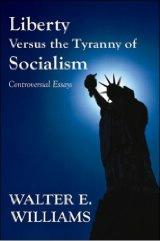
Photo of a book Michelle Bachman reads on the hot beach

The Wall Street Journal explains more:

Ms. Bachmann voted against the Troubled Asset Relief Program (TARP) “both times,” she boasts, and she has no regrets since Congress “just gave the Treasury a $700 billion blank check.” She complains that no one bothered to ask about the constitutionality of these extraordinary interventions into the financial markets. “During a recent hearing I asked Secretary [Timothy] Geithner three times where the constitution authorized the Treasury’s actions, and his response was, ‘Well, Congress passed the law.'”

Insufficient focus on constitutional limits to federal power is a Bachmann pet peeve. “It’s like when you come up to a stop sign and you’re driving. Some people have it in their mind that the stop sign is optional. The Constitution is government’s stop sign. It says, you—the three branches of government—can go so far and no farther. With TARP, the government blew through the Constitutional stop sign and decided ‘Whatever it takes, that’s what we’re going to do.'”

Does this mean she would have favored allowing the banks to fail? “I would have. People think when you have a, quote, ‘bank failure,’ that that is the end of the bank. And it isn’t necessarily. A normal way that the American free market system has worked is that we have a process of unwinding. It’s called bankruptcy. It doesn’t mean, necessarily, that the industry is eclipsed or that it’s gone. Often times, the phoenix rises out of the ashes.”

Consider Milton Friedman’s “Capitalism and Freedom”. Here’s a pic of that book which Michelle Bauchman reads on the hot beach possibly in a bikini:

Pics of a book Michelle Bockman reads on the hot beach
Pics of a book Michelle Bauchman reads on the hot beach

The Wall Street Journal explains more:

“For one, I believe my policies prior to ’08 would have been much different from [President Bush’s]. I wouldn’t have spent so much money,” she says, pointing in particular at the Department of Education and the Medicare prescription drug bill. “I would have advocated for greater reductions in the corporate tax rate and reductions in the capital gains rate—even more so than what the president did.” Mr. Bush cut the capital gains rate to 15% from 20% in 2003.

She’s also no fan of the Federal Reserve’s decade-long policy of flooding the U.S. economy with cheap money. “I love a lowered interest rate like anyone else. But clearly the Fed has had competing goals and objectives. One is the soundness of money and then the other is jobs. The two different objectives are hard to reconcile. What has gotten us into deep trouble and has people so perturbed is the debasing of the currency.”

That’s why, if she were president, she wouldn’t renominate Ben Bernanke as Fed chairman: “I think that it’s very important to demonstrate to the American people that the Federal Reserve will have a new sheriff” to keep the dollar strong and stable.

[…]Ms. Bachmann attributes many of her views, especially on economics, to her middle-class upbringing in 1960s Iowa and Minnesota. She talks with almost religious fervor about the virtues of living frugally, working hard and long hours, and avoiding debt. When she was growing up, she recalls admiringly, Iowa dairy farmers worked from 5 a.m. to 10 p.m.

Her political opponents on the left portray her as a “she-devil,” in her words, a caricature at odds with her life accomplishments. She’s a mother of five, and she and her husband helped raise 23 teenage foster children in their home, as many as four at a time. They succeeded in getting all 23 through high school and later founded a charter school.

Michele Bachman is actually willing to pass a lower corporate tax rate than even Tim Pawlenty’s 15% rate:

If she were to take her shot, she’d run on an economic package reminiscent of Jack Kemp, the late congressman who championed supply-side economics and was the GOP vice presidential nominee in 1996. “In my perfect world,” she explains, “we’d take the 35% corporate tax rate down to nine so that we’re the most competitive in the industrialized world. Zero out capital gains. Zero out the alternative minimum tax. Zero out the death tax.”

The 3.8 million-word U.S. tax code may be irreparable, she says, a view she’s held since working as a tax attorney at the IRS 20 years ago. “I love the FAIR tax. If we were starting over from scratch, I would favor a national sales tax.” But she’s not a sponsor of the FAIR tax bill because she fears that enacting it won’t end the income tax, and “we would end up with a dual tax, a national sales tax and an income tax.”

Her main goal is to get tax rates down with a broad-based income tax that everyone pays and that “gets rid of all the deductions.” A system in which 47% of Americans don’t pay any tax is ruinous for a democracy, she says, “because there is no tie to the government benefits that people demand. I think everyone should have to pay something.”

On the stump she emphasizes an “America-centered energy policy” based on “drilling and mining for our rich resources here.” And she believes that repealing ObamaCare is a precondition to restoring a prosperous economy.

[…]Ms. Bachmann also voted for the Republican Study Committee budget that cuts deeper and faster than even Mr. Ryan would. “We do have an obligation with Social Security and Medicare, and we have to recognize that” for those who are already retired, she says. But after that, it’s Katy bar the door: “Everything else is expendable to bring spending down,” and she’d ax “whole departments” including the Department of Education.

Below are some links to learn more about Michele.

Campaign speeches, interviews and debates

Speeches:

Reactions from her recent debate performance:

Profiles of Michele Bachmann:

And here are some of her media interviews and speeches in the House of Representatives.

You can contribute to her campaign right here. You can be her friend on Facebook here and also here.

This post was linked by:

And tweeted by Kathleen McKinley and Robert Stacy McCain.

Related posts

Where does Paul Ryan stand on foreign policy and social issues?

Rep. Paul Ryan
Rep. Paul Ryan

We all know that Paul Ryan is conservative on fiscal issues. He’s the man with a plan to stop overspending and solve the debt problem. But where does he stand on other issues?

Here’s an article from the liberal Washington Post about Ryan’s foreign policy views.

Excerpt:

Rep. Paul Ryan (R-Wis.) gave a speech Thursday to the Alexander Hamilton Society in Washington. If one is looking for clues as to Ryan’s interests beyond chairing the House Budget Committee, a speech, as he put it, to “a room full of national security experts about American foreign policy” would merit attention.

…Ryan delivered an above-the-fray talk on the subject of American uniqueness (a less loaded term) and the myth that American decline in inevitable. He posited, “Our fiscal policy and our foreign policy are on a collision course; and if we fail to put our budget on a sustainable path, then we are choosing decline as a world power.”

Ryan contends that the debt crisis is not a bookkeeping problem or even simply a domestic problem; it is about maintaining our status as a superpower and about American values.

[…]He plainly is not with the cut-and-run set on Afghanistan. “Although the war has been long and the human costs high, failure would be a blow to American prestige and would reinvigorate al-Qaeda, which is reeling from the death of its leader. Now is the time to lock in the success that is within reach.” Nor can he be accused of wanting to “go it alone.” “The Obama administration has taken our allies for granted and accepted too willingly the decline of their capacity for international action. Our alliances were vital to our victory in the Cold War, and they need to be revitalized to see us through the 21st century.”

As for China, he bats down the idea that we should go along to get along… He’s clear that China has “very different values and interests from our own.”

And finally on defense spending, he rejects the sort of penny-pinching isolationism of Jon Huntsman or Rep. Ron Paul (R-Tex.).

According to On The Issues,he’s solid on military spending:

  • Rated 22% by SANE, indicating a pro-military voting record
  • YES on $266 billion Defense Appropriations bill
  • YES on deploying SDI
  • YES on emergency $78B for war in Iraq & Afghanistan
  • YES on continuing military recruitment on college campuses
  • YES on restricting no-bid defense contracts

He’s solid on counter-terrorism:

  • NO on Veto override: Congressional oversight of CIA interrogations
  • NO on requiring FISA warrants for wiretaps in US, but not abroad
  • YES on making the PATRIOT Act permanent
  • YES on continuing intelligence gathering without civil oversight
  • YES on allowing electronic surveillance without a warrant
  • YES on removing need for FISA warrant for wiretapping abroad
  • YES on retroactive immunity for telecoms’ warrantless surveillance

And supports military intervention against Islamic terrorists:

  • Strengthen sanctions on Syria & assist democratic transition
  • Sanctions on Iran to end nuclear program
  • YES on authorizing military force in Iraq
  • YES on declaring Iraq part of War on Terror with no exit date
  • NO on redeploying US troops out of Iraq starting in 90 days
  • NO on investigating Bush impeachment for lying about Iraq

I agree with him on all of that. But how is he on social issues?

Excerpt:

Ryan, the top Republican on the Budget Committee who has a strongly pro-life record, talked about the place social issues have in the election in an interview with CNBC last week.

“We will agree to disagree on those issues,” Ryan said last Monday on CNBC. “But let’s rally around the tallest pole in our tent

Ryan also released a statement today that LifeNews.com received saying pro-life issues are not on a list of menu items that have to be given up during the election season.

“Healthy debate should take place within the Republican Party on specific policies, but it is a false choice to ask which natural right we should discard

“All planks – economic liberty and limited government; keeping our nation secure; championing America’s founding truths and the dignity of every human person – are rooted in same timeless principles, enshrined in our Founding and the cause of our exceptionalism,” Ryan added. “The American family must remain at the core of our free society, and I will remain ever-vigilant in its defense.”

Conor Sweeney, a top Ryan spokesman, told LifeNews.com today that Ryan doesn’t agree with the “truce” on social issues Barbour and Daniels have advocated.

“Paul Ryan rejects the false choice that our natural rights to ‘life, liberty, and the pursuit of happiness’ are a menu of options,” he said, adding that Ryan has been “calling upon his colleagues to defend the sanctity of life.”

He also pointed to comments Ryan made in a Weekly Standard interview rejecting the “truce” language and putting him outside the Daniels-Barbour circle.

“I don’t see it quite the same way [as Daniels],” Ryan said in June, “we don’t need to ask anybody to unilaterally disarm.”

“I’m as pro-life as a person gets,” Ryan continued. “You’re not going to have a truce. Judges are going to come up. Issues come up, they’re unavoidable, and I’m never going to not vote pro-life.”

Here’s his voting record on pro-life issues:

  • Rated 0% by NARAL, indicating a pro-life voting record
  • Rated 100% by the NRLC, indicating a pro-life stance
  • Prohibit transporting minors across state lines for abortion
  • Bar funding for abortion under federal Obamacare plans
  • Congress shall protect life beginning with fertilization
  • Prohibit federal funding to groups like Planned Parenthood
  • Grant the pre-born equal protection under 14th Amendment
  • YES on barring transporting minors to get an abortion
  • YES on banning partial-birth abortions
  • YES on banning Family Planning funding in US aid abroad
  • YES on federal crime to harm fetus while committing other crimes
  • YES on funding for health providers who don’t provide abortion info
  • YES on banning partial-birth abortion except to save mother’s life
  • YES on making it a crime to harm a fetus during another crime
  • YES on restricting interstate transport of minors to get abortions
  • NO on allowing human embryonic stem cell research
  • NO on expanding research to more embryonic stem cell lines

And he is also a strong defender of traditional marriage:

  • Rated 0% by the HRC, indicating an anti-gay-rights stance
  • YES on banning gay adoptions in DC.
  • YES on Constitutional Amendment banning same-sex marriage
  • YES on Constitutionally defining marriage as one-man-one-woman
  • YES on prohibiting job discrimination based on sexual orientation
  • NO on enforcing against anti-gay hate crimes

Tough on crime:

  • Rated 30% by CURE, indicating anti-rehabilitation crime votes
  • YES on more prosecution and sentencing for juvenile crime
  • NO on funding for alternative sentencing instead of more prisons.
  • NO on expanding services for offendors’ re-entry into society

Favors school choice:

  • Rated 8% by the NEA, indicating anti-public education votes
  • NO on environmental education grants for outdoor experiences
  • NO on $40B for green public schools

And an increased role for families and churches:

  • YES on responsible fatherhood via faith-based organizations
  • YES on treating religious organizations equally for tax breaks
  • NO on instituting National Service as a new social invention

So definitely not just a fiscal conservative. He’s conservative across the board. And STRONGLY so.

Female readers of the Wintery Knight blog may now swoon.

Republican Allen West debates economic policy on Fox News Sunday

From Fox News Sunday with Chris Wallace.

Here’s the transcript.

Excerpt:

WALLACE: Congressman West, as we saw in the special election up in New York state this week, where the Democrat beat the Republican and Medicare was a big issue, as we see in the national polls a lot of people, especially seniors, don’t want to see Medicare changed this way.

WEST: Well, I think when you look at Paul Ryan’s plan, first of all, there is no change for anyone who is a senior 55 years and above. But as I sit here right now, I’m 50 years of age. And we already know that the board of trustee has said, you got 13 years and something very bad is going to happen with Medicare. So, what is going to be there for myself when I get 63 to 65?

So, I think the thing that we see is at least there’s a plan out there to try to have some type of reform.

And there was a great article by Mr. Stanley Druckenmiller in The Wall Street Journal back in the 15th of May that talked about the fact that the financial markets, a lot of these, you know, bond markets are looking to see: are we going to have some type of long- term viable solution and plan as we go forward?

WALLACE: But let me pick up on that, Congressman Edwards, because the knock against the Democrats is you don’t have a plan, that congressional Democrats didn’t pass a budget last year. Senate Democrats aren’t offering a budget this year — President Obama talks having an independent panel of medical experts who are going to find $20 billion of cuts somewhere. At least they’ve got a plan.

EDWARDS: Well, I think it’s not true that we don’t have a plan. And, in fact, when we passed the Affordable Care Act last year, we put in some real markers for Medicare that in fact reduced Medicare costs. We invested in preventive care for seniors because we know that the real drivers of Medicare are these long-term costs for chronic care that happens at the — you know, at the end of life.

You know, Republicans are very interesting because in their budget what they would do is repeal preventive care. Prescription drug coverage — we also closed the donut hole there, which is costing seniors a boatload of money and is not very efficient on the system.

So, to say that Democrats don’t have a plan I think is incorrect. I mean, in fact, the plan is to preserve and protect Medicare for future generations. And Republicans want to dismantle that.

WEST: Yes, but I think as you sit here and look at the two of us, one of us has voted to cut Medicare. When you look at the fact you voted for the Patient Protection and Affordable Care Act, which had $500 million of cuts of Medicare. And we also have this independent payment advisory board, these 15 bureaucrats, that are supposed to control the cost of Medicare. I mean, that’s something that really does scare seniors.

What we are talking is something that does not affect any senior, anyone 55 years and above. We’re talking about something that does put in some type of viable plan to sustain Medicare for the future, because as we know, it was put out three weeks ago, it won’t be there.

EDWARDS: Well, the congressman thinks the seniors are only interested in what’s good for them. And what we know about seniors, whether they’re in south Florida or in Maryland, is that they actually care about what happens with that next generation. They care about whether we’re going to cover preventive care and prescription drug.

WEST: But if you don’t have a plan, there is nothing for the next generation.

EDWARDS: And that they are — and that they are not sent in the private market to negotiate with insurance companies. We know that that would be a failure. And that’s exactly what the Republican plan calls for. I can’t negotiate on —

WALLACE: Let me move on to another thing, because the biggest difference, it seems to me, looking at your two positions on how to deal with the deficit is over taxes.

Congresswoman Edwards, you have a big plan to increase revenues. And let’s put it up on the screen. You would raise tax rates for the wealthy. You would raise the estate tax. You would tax capital gains and dividend as ordinary income and you would end tax subsidies for oil and gas companies.

So, raise taxes in the middle of a weak recovery?

EDWARDS: Well, let’s be clear — raise tax on the wealthiest 2 percent who have run away with the store for the last 10 years and haven’t put money back into the economy. I mean, that’s a fact, because if that trickle-down theory had worked, our economy would be in good shape right now.

And so, we do — I do subscribe to a plan that says, you know what? Middle income earners, you’ve already shared a fair burden of your taxes. But the wealthiest 2 percent have not.

And there’s no excuse whatsoever for continuing taxes for people who make over $500,000 a year.

WALLACE: Congressman West, you got something there?

WEST: Yes. I got a very interesting article which was written on the 26th of May by Steven Moore for The Wall Street Journal that talks about — we are talking about a 62 percent top tax rate and the absolutely abysmal effects that it will have on this economy.

And one of the great things he says here is, in the end, “The Tax Foundation recently noted that in 2009, U.S. collected a higher share of income and payroll taxes, 45 percent, from the richest 10 percent of tax files than any other nation, including some such socialist welfare states.”

So, I think that we are already getting a lot of the juice from those top brackets. But go back and look at history, Donna, when we looked at Coolidge and Harding. It took those marginal tax rates down to 29 percent. And the percentage of revenues for GDP grew. But after them came Hoover and Roosevelt who took it from 24 percent up to 83 percent, and the percentage of revenues decreased. Even John F. Kennedy, when he came in and saw a 91 percent marginal tax rate said that was too high. He took it down to 71 percent.

He seems to have all the facts and figures at his fingertips! Just like William Lane Craig, except he’s a former Army Lt. Colonel.