Tag Archives: Observations

Stephen C. Meyer explains the evidence for the Big Bang on John Ankerberg show

This is a short post, because I can’t embed the video – so I’m just going to post the link to the Lightsource web site which has the video.

Here’s a web page from Caltech that goes over 3 of the 6 evidences for the Big Bang.

Excerpt:

Three main observational results over the past century led astronomers to become certain that the universe began with the big bang. First, they found out that the universe is expanding—meaning that the separations between galaxies are becoming larger and larger. This led them to deduce that everything used to be extremely close together before some kind of explosion. Second, the big bang perfectly explains the abundance of helium and other nuclei like deuterium (an isotope of hydrogen) in the universe. A hot, dense, and expanding environment at the beginning could produce these nuclei in the abundance we observe today. Third, astronomers could actually observe the cosmic background radiation—the afterglow of the explosion—from every direction in the universe. This last evidence so conclusively confirmed the theory of the universe’s beginning that Stephen Hawking said, “It is the discovery of the century, if not of all time.”

The article explains all three evidences in detail. It is important to show atheists how the progress of science has dashed their hopes for an eternal, uncaused universe. One discovery – that could be reversed. Two discoveries – that’s conclusive. Three – discoveries – that’s an open and shut case. (And there are three more discoveries not mentioned in the article – the second law of thermodynamics, radioactive element abundances and the stellar lifecycle itself).

And, of course, William Lane Craig uses this scientific evidence in his kalam cosmological argument, which is described in a peer-reviewed paper from this Astrophysics journal.

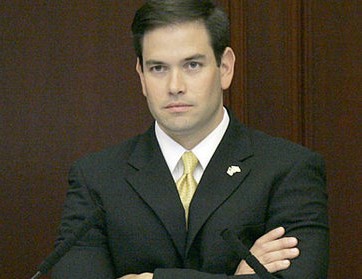
Marco Rubio’s amazing maiden speech in the US Senate

Florida Senator Marco Rubio

Human events reported on Florida Senator Marco Rubio’s first speech on the floor of the US Senate today, and it was AWESOME. (H/T Kathleen McKinley)

Full story:

Freshman Florida Republican Senator Marco Rubio delivered his maiden speech on the floor of the Senate yesterday and it was a speech all GOP presidential contenders should watch.

It was the best speech of the 2012 presidential cycle, except the person who delivered it has all but ruled himself off of the 2012 ticket on numerous occasions.

The GOP presidential field has been criticized for not having passion or conviction, and Rubio’s speech lit up the normally staid Senate chamber to the extent that this is possible. It had a clear argument, an emotional arc, personal tie-ins, and was delivered with conviction. Too often, even in the GOP, politicians talk about American exceptionalism as if it is an academic exercise.

Not Rubio.

Rubio owned it, his words personified it, and his speech was delivered in a way that led one who was watching to to think Rubio was humbled and still awed at America’s exceptional past and promise.

As Republicans learned in 2008, words and stories matter. It draws a public who does not get caught up in the drudgery of modern American politics in to care about the democratic process.
Add in the fact that Rubio is young and a minority, which are the two groups Republicans do most poorly with, and the speech and the messenger become even more dynamic, compelling, symbolic and important.

Rubio said he came “from a hard working and humble family” that “was neither wealthy nor connected,” but that he “grew up blessed in two important ways:” He had a strong and stable family and was born in America.

He realized that “America is not perfect” and “ti took a bloody civil war to free over 4 million African Americans who lived enslaved … and it would take another hundred years after that before they found true equality under the law.”

Rubio then movingly talked about how people who came to give their children a better life contributed to an “American miracle.”

He spoke of how a “16-year-old boy from Sweden, who spoke no English and had only five dollars in his pocket, was able to save and open a shoe store,” and “today, that store, Nordstrom is a multi-billion dollar global retail giant.”

He spoke of a “a young couple with no money and no business experience decided to start a toy business out of the garage of their home, and, “today, that company, Mattel, is one of the world’s largest toy manufacturers”

He spoke of the “French-born son of Iranian parents created a website called AuctionWeb in the living room of his home,” and, “today, that website now called eBay stands as a testament to the familiar phrase, ‘Only in America.'”

Rubio then talked movingly of the American dream and personified it by putting faces on the dream.

He said it was “story of the people who cleaned our office last night” who work hard so they can send their kids to college.”

He said it was “the story of the people who served your lunch today” who “work hard so that one day their children will have the chance to own a business.”

He said, in a reference to his father, the American Dream was also the “story of a bartender and a maid in Florida, whose son now serves here in this Senate, and who proudly gives his testimony as a firsthand witness of the greatness of this land.”

He then pivoted and said while “most great powers have used their strength to conquer other nations” America “is different” for America, “power also came with a sense that to those that much is given, much is expected.”

Rubio said that America’s greatness can be found anywhere in the world, “when someone uses a mobile phone, email, the Internet, or GPS” or “when a bone marrow, lung or heart transplant saves a life.”

Rubio then talked about how he “grew up in the 1980s, a time when it was morning in America” and that the 1980s, like the American century, faced challenges and triumphs but it was a “century where American political, economic and cultural exceptionalism made the world a more prosperous and peaceful place.”

He spoke of how the country is headed toward the wrong direct and that “we do stand now at a turning point in our history, one where there are only two ways forward for us. We will either bring on another American century, or we are doomed to witness America’s decline.”

Rubio said that since “every single one of us is the descendant of a go-getter,” “of dreamers and believers,” and “of men and women who took risk and made sacrifices because they wanted to leave their children better off than themselves” that “we are all the descendants of the men and women who built the nation that changed the world” whether “hey came here on the Mayflower, a slave ship, or on an airplane from Havana.”

Rubio then quoted John F. Kennedy about how America is the “watchmen on the walls of world freedom” and asked if America declined, “who will serve as living proof that liberty, security, and prosperity are all possible together,” or “lead the fight to confront and defeat radical Islam that “abuses and oppresses women, has no tolerance for other faiths and seeks to impose its views on the whole world,” or stand up for children who “are used as soldiers and trafficked as slaves?”

Rubio asked, if America declines, “who will create the innovations of the 21st century?”

He answered that nobody will because “there is still no nation or institution in the world willing or able to do what we have done.”

“Now, some say that we can no longer afford the price we must pay to keep America’s light shining,” Rubio said. “Others say that there are new shining cities that will soon replace us.”

“I say they are both wrong,” Rubio emphatically said because the world “still needs America,” “still needs our light,” and “still needs another American century” and “with God’s help, that will be our legacy to our children and to the world.”

You can watch the video here. The full transcript is here. READ THE WHOLE THING if you can’t watch the video.

You’ll recall that this blog has been a strong supporter of Marco Rubio since the day he announced his candidacy. He, along with Michele Bachmann, Paul Ryan, Allen West and Jim Demint, are my favorite Republicans. I’m probably forgetting some, but those are the ones that come to mind. I think if I had to choose someone who best matched my views across the board, that would be Michele Bachmann. But Marco Rubio best matches my personal story, and my opinion of the United States of America.

Here’s my post on the day he won the seat: Marco Rubio wins Florida Senate race – first tea party senator!

And here’s my post on the day he announced he was running: Conservative Marco Rubio announces for Florida Senate seat.

He will be a great Senator. And some day, maybe he’ll be even more. IFYKWIMAITYD.


Henry F. Schaefer assesses Stephen Hawking’s no-boundary proposal

A little bit about Dr. Schaefer:

Henry F. Schaefer III was born in Grand Rapids, Michigan. He attended public schools in Syracuse (New York), Menlo Park (California), and Grand Rapids (Michigan), graduating from East Grand Rapids High School in 1962. He received his B.S. degree in chemical physics from the Massachusetts Institute of Technology (1966) and Ph.D. degree in chemical physics from Stanford University (1969). For 18 years (1969-1987) he served as a professor of chemistry at the University of California, Berkeley. During the 1979-1980 academic year he was also Wilfred T. Doherty Professor of Chemistry and inaugural Director of the Institute for Theoretical Chemistry at the University of Texas, Austin. Since 1987 Dr. Schaefer has been Graham Perdue Professor of Chemistry and Director of the Center for Computational Quantum Chemistry at the University of Georgia. In 2004 he became Professor of Chemistry, Emeritus, at the University of California at Berkeley. His other academic appointments include Professeur d’Echange at the University of Paris (1977), Gastprofessur at the Eidgenössische Technische Hochshule (ETH), Zürich (1994, 1995, 1997, 2000, 2002, 2004, 2006, 2008, 2010), and David P. Craig Visiting Professor at the Australian National University (1999). He is the author of more than 1250 scientific publications, the majority appearing in the Journal of Chemical Physics or the Journal of the American Chemical Society. A total of 300 scientists from 35 countries gathered in Gyeongju, Korea for a six-day conference in February, 2004 with the title Theory and Applications of Computational Chemistry: A Celebration of 1000 Papers of Professor Henry F. Schaefer III. In May 2010, the University of California at Berkeley will host a large international conference in Professor Schaefer’s honor, the title of the conference being Molecular Quantum Mechanics: From Methylene to DNA and Beyond.

Witness how the experimental scientist disagrees with the theoretical… speculator.

Let us return to Hawking’s no boundary proposal – the idea that the universe has neither beginning nor end. By treating the universe as a wave function, Hawking hopes to rationalize the universe’s popping into existence 12-15 billion years ago. Critical to Hawking’s research in this regard is the notion of imaginary time. The concept of imaginary time is a powerful mathematical device used on occasion by theoretical chemists and physicists. I remember clearly the day in the autumn of 1965, during my Complex Variables class as a senior at M.I.T., when I learned that the result of contour integration was two pi i times the sum of the residues. For me, it was about as close to a revelation as I had received up to that time in my life. My closest colleague at Berkeley, Professor William H. Miller, in 1969 used imaginary time to understand the dynamics of chemical reactions, and it made him a household word in the world of science. The use of imaginary time is indeed a powerful tool.

Indulge me while I attempt to convey the essence of how imaginary time is exploited in theoretical physics and chemistry. One approaches a well defined problem, with all variables necessarily being real. This means, for example, real positions for all particles, real velocities, and so on. Real problems begin with all quantities real. Then one undertakes a carefully chosen excursion into the complex plane, making one or more variables complex. Subsequently we do some really cool things mathematically. Finally, all the variables revert to real values, and we find that something important has been mathematically derived that would have otherwise been impossible to prove.

Hawking and Hartle’s no boundary proposal begins by adopting a grossly oversimplified model of the universe. Then the authors make time imaginary, and prove in their terribly restricted model that the universe has neither beginning nor end. The flaw in the exercise is that the authors never go back to real time. Thus the notion that the universe has neither beginning nor end is something that exists in mathematical terms only. In real time, to which we as human beings are necessarily attached, rather than in Hawking’s use of imaginary time, there will always be a singularity, that is, a beginning of time.

In an obviously contradictory statement in A Brief History of Time, Hawking actually concedes this point. What we are seeing in this situation is Hawking versus Hawking. I view the following statement as Hawking speaking in his right mind: “When one goes back to the real time in which we live, however, there will still appear to be singularities . . . In real time, the universe has a beginning and an end at singularities that form a boundary to space-time and at which the laws of science break down” (first edition, page 144). Only if we lived in imaginary time (not coming soon to a neighborhood near you!) would we encounter no singularities. In real time the universe was created ex nihilo 12-15 billion years ago.

With some trepidation, I will venture further. A case can be made that the Hartle-Hawking “no boundary proposal” is only of marginal scientific interest. The reasons for this conclusion might include: (a) the theory is a mathematical construct that has no unique empirical support; (b) the theory makes no verifiable scientific predictions that were not achieved earlier with simpler models; (c) the theory generates no significant research agenda. The primary purpose of the theory seems to be an attempt to evade the cosmological argument for the existence of God, via the claim that nature is self-contained and effectively eternal.

I’ll stick with the experimental guy.