
Tag Archives: New Testament

Is the story of the woman being stoned for adultery in John 7-8 authentic?

Here’s the leading conservative New Testament scholar Daniel Wallace to explain.

Excerpt:

One hundred and forty years ago, conservative biblical scholar and Dean of Canterbury, Henry Alford, advocated a new translation to replace the King James Bible. One of his reasons was the inferior textual basis of the KJV. Alford argued that “a translator of Holy Scripture must be…ready to sacrifice the choicest text, and the plainest proof of doctrine, if the words are not those of what he is constrained in his conscience to receive as God’s testimony.” He was speaking about the Trinitarian formula found in the KJV rendering of 1 John 5:7–8. Twenty years later, two Cambridge scholars came to the firm conclusion that John 7:53–8:11 also was not part of the original text of scripture. But Westcott and Hort’s view has not had nearly the impact that Alford’s did.

For a long time, biblical scholars have recognized the poor textual credentials of the story of the woman caught in adultery (John 7:53–8:11). The evidence against its authenticity is overwhelming: The earliest manuscripts with substantial portions of John’s Gospel (P66 and P75) lack these verses. They skip from John 7:52to 8:12. The oldest large codices of the Bible also lack these verses: codex Sinaiticus and Vaticanus, both from the fourth century, are normally considered to be the most important biblical manuscripts of the NT extant today. Neither of them has these verses. Codex Alexandrinus, from the fifth century, lacks several leaves in the middle of John. But because of the consistency of the letter size, width of lines, and lines per page, the evidence is conclusive that this manuscript also lacked the pericope adulterae. Codex Ephraemi Rescriptusalso from the fifth century, apparently lacked these verses as well (it is similar to Alexandrinus in that some leaves are missing). The earliest extant manuscript to have these verses is codex Bezae, an eccentric text once in the possession of Theodore Beza. He gave this manuscript to the University of Cambridge in 1581 as a gift, telling the school that he was confident that the scholars there would be able to figure out its significance. He washed his hands of the document. Bezae is indeed the most eccentric NT manuscript extant today, yet it is the chief representative of the Western text-type (the text-form that became dominant in Rome and the Latin West).

When P66, P75, Sinaiticus, and Vaticanus agree, their combined testimony is overwhelmingly strong that a particular reading is not authentic. But it is not only the early Greek manuscripts that lack this text. The great majority of Greek manuscripts through the first eight centuries lack this pericope. And except for Bezae (or codex D), virtually all of the most important Greek witnesses through the first eight centuries do not have the verses. Of the three most important early versions of the New Testament (Coptic, Latin, Syriac), two of them lack the story in their earliest and best witnesses. The Latin alone has the story in its best early witnesses.

Even patristic writers seemed to overlook this text. Bruce Metzger, arguably the greatest textual critic of the twentieth century, argued that “No Greek Church Father prior to Euthymius Zigabenus (twelfth century) comments on the passage, and Euthymius declares that the accurate copies of the Gospel do not contain it” (Textual Commentary, 2nd ed., loc. cit.).

It is an important point to note that although the story of the woman caught in adultery is found in most of our printed Bibles today, the evidence suggests that the majority of Bibles during the first eight centuries of the Christian faith did not contain the story. Externally, most scholars would say that the evidence for it not being an authentic part of John’s Gospel is rock solid.

But textual criticism is not based on external evidence alone; there is also the internal evidence to consider. This is comprised of two parts: intrinsic evidence has to do with what an author is likely to have written;transcriptional evidence has to do with how and why a scribe would have changed the text.

Intrinsically, the vocabulary, syntax, and style look far more like Luke than they do John. There is almost nothing in these twelve verses that has a Johannine flavor. And transcriptionally, scribes were almost always prone to add material rather than omit it—especially a big block of text such as this, rich in its description of Jesus’ mercy. One of the remarkable things about this passage, in fact, is that it is found in multiple locations. Most manuscripts that have it place it in its now traditional location: between John 7:52 and 8:12. But an entire family of manuscripts has the passage at the end of Luke 21, while another family places it at the end of John’s Gospel. Other manuscripts place it at the end of Luke or in various places in John 7.

The pericope adulterae has all the earmarks of a pericope that was looking for a home. It took up permanent residence, in the ninth century, in the middle of the fourth gospel.

Wallace teaches at the ultra-conservative fundamentalist Dallas Theological Seminary, and is the foremost evangelical manuscript expert in the world.

Why is this important? I think it is important because this story is very prominent for a great many Christians, especially Christian women, who use this to justify a variety of positions that are inconsistent with the rest of the Bible. These Christians do not like the idea of anyone being judged and so they are naturally inclined to blow this disputed passage into an entire theology that repudiates making moral judgments on such things as capital punishment. In fact, in another post, I was accused of being the equivalent of one of the people who wanted to stone the woman taken for adultery because I oppose fornication and single motherhood. That’s how far this has gone, where some Christians, especially Christian feminists, have leveraged this passage to redefine the Bible so that women are no longer responsible to the Bible’s moral rules and can never be blamed for acting irresponsibly.
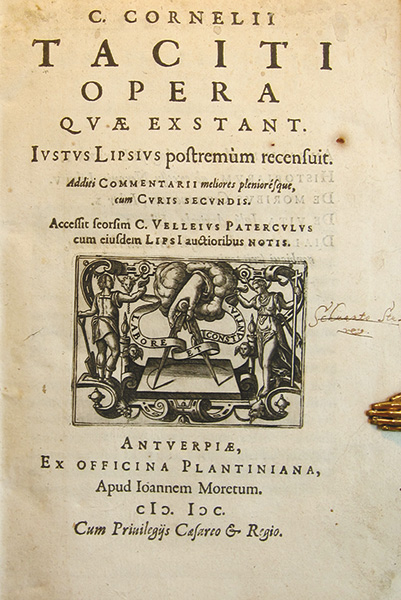
What do ancient non-Christian sources tell us about the historical Jesus?

The Annals, by Roman historian Tacitus

This article from Biblical Archaeology covers all the non-Christian historical sources that discuss Jesus.

About the author:

Lawrence Mykytiuk is associate professor of library science and the history librarian at Purdue University. He holds a Ph.D. in Hebrew and Semitic Studies and is the author of the book Identifying Biblical Persons in Northwest Semitic Inscriptions of 1200–539 B.C.E. (Atlanta: Society of Biblical Literature, 2004).

Here are the major sections:

  • Roman historian Tacitus
  • Jewish historian Josephus
  • Greek satirist Lucian of Samosata
  • Platonist philosopher Celsus
  • Roman governor Pliny the Younger
  • Roman historian Suetonius
  • Roman prisoner Mara bar Serapion

And this useful excerpt captures the broad facts about Jesus that we get from just the first two sources:

We can learn quite a bit about Jesus from Tacitus and Josephus, two famous historians who were not Christian. Almost all the following statements about Jesus, which are asserted in the New Testament, are corroborated or confirmed by the relevant passages in Tacitus and Josephus. These independent historical sources—one a non-Christian Roman and the other Jewish—confirm what we are told in the Gospels:31

1. He existed as a man. The historian Josephus grew up in a priestly family in first-century Palestine and wrote only decades after Jesus’ death. Jesus’ known associates, such as Jesus’ brother James, were his contemporaries. The historical and cultural context was second nature to Josephus. “If any Jewish writer were ever in a position to know about the non-existence of Jesus, it would have been Josephus. His implicit affirmation of the existence of Jesus has been, and still is, the most significant obstacle for those who argue that the extra-Biblical evidence is not probative on this point,” Robert Van Voorst observes.32 And Tacitus was careful enough not to report real executions of nonexistent people.

2. His personal name was Jesus, as Josephus informs us.

3. He was called Christos in Greek, which is a translation of the Hebrew word Messiah, both of which mean “anointed” or “(the) anointed one,” as Josephus states and Tacitus implies, unaware, by reporting, as Romans thought, that his name was Christus.

4. He had a brother named James (Jacob), as Josephus reports.

5. He won over both Jews and “Greeks” (i.e., Gentiles of Hellenistic culture), according to Josephus, although it is anachronistic to say that they were “many” at the end of his life. Large growth
in the number of Jesus’ actual followers came only after his death.

6. Jewish leaders of the day expressed unfavorable opinions about him, at least according to some versions of the Testimonium Flavianum.

7. Pilate rendered the decision that he should be executed, as both Tacitus and Josephus state.

8. His execution was specifically by crucifixion, according to Josephus.

9. He was executed during Pontius Pilate’s governorship over Judea (26–36 C.E.), as Josephus implies and Tacitus states, adding that it was during Tiberius’s reign.

Some of Jesus’ followers did not abandon their personal loyalty to him even after his crucifixion but submitted to his teaching. They believed that Jesus later appeared to them alive in accordance with prophecies, most likely those found in the Hebrew Bible. A well-attested link between Jesus and Christians is that Christ, as a term used to identify Jesus, became the basis of the term used to identify his followers: Christians. The Christian movement began in Judea, according to Tacitus. Josephus observes that it continued during the first century. Tacitus deplores the fact that during the second century it had spread as far as Rome.

I remember reading the 1996 book by Gary Habermas entitled “The Historical Jesus: Ancient Evidence for the Life of Christ“. This book is a little before the time of most of you young Christian apologists, but back before the time of Lee Strobel and J. Warner Wallace, this is the stuff we all read. Anyway, in the book he makes a list of all that can be known about Jesus from external sources. And fortunately for you, you don’t have to buy the book because you can read chapter 9 of it right on his web site.

From Tacitus he gets this:

From this report we can learn several facts, both explicit and implicit, concerning Christ and the Christians who lived in Rome in the 60s A.D. Chronologically, we may ascertain the following information.

(1) Christians were named for their founder, Christus (from the Latin), (2) who was put to death by the Roman procurator Pontius Pilatus (also Latin), (3) during the reign of emperor Tiberius (14 37 A.D.). (4) His death ended the “superstition” for a short time, (5) but it broke out again, (6) especially in Judaea, where the teaching had its origin.

(7) His followers carried his doctrine to Rome. (8) When the great fire destroyed a large part of the city during the reign of Nero (54 68 A.D.), the emperor placed the blame on the Christians who lived in Rome. (9) Tacitus reports that this group was hated for their abominations. (10) These Christians were arrested after pleading guilty, (11) and many were convicted for “hatred for mankind.” (12) They were mocked and (13) then tortured, including being “nailed to crosses” or burnt to death. (14) Because of these actions, the people had compassion on the Christians. (15) Tacitus therefore concluded that such punishments were not for the public good but were simply “to glut one man’s cruelty.”

And from Josephus he gets this:

(1) Jesus was known as a wise and virtuous man, one recognized for his good conduct. (2) He had many disciples, both Jews and Gentiles. (3) Pilate condemned him to die, (4) with crucifixion explicitly being mentioned as the mode. (5) The disciples reported that Jesus had risen from the dead and (6) that he had appeared to them on the third day after his crucifixion. (7) Consequently, the disciples continued to proclaim his teachings. (8) Perhaps Jesus was the Messiah concerning whom the Old Testament prophets spoke and predicted wonders. We would add here two facts from Josephus’ earlier quotation as well. (9) Jesus was the brother of James and (10) was called the messiah by some.

So when you are reading the New Testament, these facts are the framework that you read within. It’s a good starting point when dealing with people who have never looked into who Jesus was and what he taught and what his followers believed about him, right from the start.

Mike Licona explains the As, Bs, Cs, Ds and Es of New Testament reliability

Mike Licona is one of my favorite Christian apologists, and here is an excellent lecture to show you why.

In the lecture, he explains why the four biographies in the New Testament should be accepted as historically accurate: (55 minutes)

Summary:

  • What a Baltimore Ravens helmet teaches us about the importance of truth
  • What happens to Christians when they go off to university?
  • The 2007 study on attitudes of American professors to evangelical Christians
  • Authors: Who wrote the gospels?
  • Bias: Did the bias of the authors cause them to distort history?
  • Contradictions: What about the different descriptions of events in the gospels?
  • Dating: When were the gospels written?
  • Eyewitnesses: Do the gospel accounts go back to eyewitness testimony?

This is basic training for Christians. It would be nice if every Christian was equipped in church to be able to make a case like this.