

Tag Archives: Marriage

How the presence and quality of fathers affects belief in God

Does government provide incentives for people to get married?
A father in the home helps children to reconcile love and moral boundaries

Here’s an article by Paul Copan which points out how father presence/absence and father quality affects belief and disbelief in God.

Excerpt:

Seventh, the attempt to psychologize believers applies more readily to the hardened atheist.It is interesting that while atheists and skeptics often psychoanalyze the religious believer, they regularly fail to psychoanalyze their ownrejection of God. Why are believers subject to such scrutiny and not atheists? Remember another feature of Freud’s psychoanalysis — namely, an underlying resentment that desires to kill the father figure.

Why presume atheism is the rational, psychologically sound, and default position while theism is somehow psychologically deficient? New York University psychology professor Paul Vitz turns the tables on such thinking. He essentially says, “Let’s look into the lives of leading atheists and skeptics in the past. What do they have in common?” The result is interesting: virtually all of these leading figures lacked a positive fatherly role model — or had no father at all.11

Let’s look at some of them.

  • Voltaire(1694–1778): This biting critic of religion, though not an atheist, strongly rejected his father and rejected his birth name of François-Marie Arouet.
  • David Hume(1711–76): The father of this Scottish skeptic died when Hume was only 2 years old. Hume’s biographers mention no relatives or family friends who could have served as father figures.
  • Baron d’Holbach(1723–89): This French atheist became an orphan at age 13 and lived with his uncle.
  • Ludwig Feuerbach (1804–72): At age 13, his father left his family and took up living with another woman in a different town.
  • Karl Marx(1818–83): Marx’s father, a Jew, converted to being a Lutheran under pressure — not out of any religious conviction. Marx, therefore, did not respect his father.
  • Friedrich Nietzsche(1844–1900): He was 4 when he lost his father.
  • Sigmund Freud(1856–1939): His father, Jacob, was a great disappointment to him; his father was passive and weak. Freud also mentioned that his father was a sexual pervert and that his children suffered for it.
  • Bertrand Russell(1872–1970): His father died when he was 4.
  • Albert Camus(1913–60): His father died when he was 1 year old, and in his autobiographical novel The First Man, his father is the central figure preoccupation of his work.
  • Jean-Paul Sartre(1905–80): The famous existentialist’s father died before he was born.12
  • Madeleine Murray-O’Hair (1919–95): She hated her father and even tried to kill him with a butcher knife.
  • We could throw in a few more prominent contemporary atheists not mentioned by Vitz with similar childhood challenges:
  • Daniel Dennett (1942–): His father died when he was 5 years of age and had little influence on Dennett.13
  • Christopher Hitchens (1949–): His father (“the Commander”) was a good man, according to Hitchens, but he and Hitchens “didn’t hold much converse.” Once having “a respectful distance,” their relationship took on a “definite coolness” with an “occasional thaw.” Hitchens adds: “I am rather barren of paternal recollections.”14
  • Richard Dawkins (1941–): Though encouraged by his parents to study science, he mentions being molested as a child — no insignificant event, though Dawkins dismisses it as merely embarrassing.15

Moreover, Vitz’s study notes how many prominent theists in the past — such as Blaise Pascal, G.K. Chesterton, Karl Barth, and Dietrich Bonhoeffer — have had in common a loving, caring father in their lives.16

Not only is there that anecdotal evidence, but there is also statistical evidence.

Excerpt:

In 1994 the Swiss carried out an extra survey that the researchers for our masters in Europe (I write from England) were happy to record. The question was asked to determine whether a person’s religion carried through to the next generation, and if so, why, or if not, why not. The result is dynamite. There is one critical factor. It is overwhelming, and it is this: It is the religious practice of the father of the family that, above all, determines the future attendance at or absence from church of the children.

If both father and mother attend regularly, 33 percent of their children will end up as regular churchgoers, and 41 percent will end up attending irregularly. Only a quarter of their children will end up not practicing at all. If the father is irregular and mother regular, only 3 percent of the children will subsequently become regulars themselves, while a further 59 percent will become irregulars. Thirty-eight percent will be lost.

If the father is non-practicing and mother regular, only 2 percent of children will become regular worshippers, and 37 percent will attend irregularly. Over 60 percent of their children will be lost completely to the church.

Let us look at the figures the other way round. What happens if the father is regular but the mother irregular or non-practicing? Extraordinarily, the percentage of children becoming regular goesupfrom 33 percent to 38 percent with the irregular mother and to 44 percent with the non-practicing, as if loyalty to father’s commitment grows in proportion to mother’s laxity, indifference, or hostility.

[…]In short, if a father does not go to church, no matter how faithful his wife’s devotions, only one child in 50 will become a regular worshipper. If a father does go regularly, regardless of the practice of the mother, between two-thirds and three-quarters of their children will become churchgoers (regular and irregular). If a father goes but irregularly to church, regardless of his wife’s devotion, between a half and two-thirds of their offspring will find themselves coming to church regularly or occasionally.

A non-practicing mother with a regular father will see a minimum of two-thirds of her children ending up at church. In contrast, a non-practicing father with a regular mother will see two-thirds of his children never darken the church door. If his wife is similarly negligent that figure rises to 80 percent!

The results are shocking, but they should not be surprising. They are about as politically incorrect as it is possible to be; but they simply confirm what psychologists, criminologists, educationalists, and traditional Christians know. You cannot buck the biology of the created order. Father’s influence, from the determination of a child’s sex by the implantation of his seed to the funerary rites surrounding his passing, is out of all proportion to his allotted, and severely diminished role, in Western liberal society.

Basically, anyone who doesn’t have a benevolent, involved father is going to have an enormously difficult time believing that moral boundaries set by an authority are for the benefit of the person who is being bounded. The best way to make moral boundaries stick is to see that they apply to the person making the boundaries as well – and that these moral boundaries are rational, evidentially-grounded and not arbitrary. It is therefore very important to children to be shepherded by a man who studied moral issues (including evidence from outside the Bible) in order to know how to be persuasive to others. If you want your child to be religious and moral, you have to pick a man who is religious and moral. And it can’t just be a faith commitment that he makes, he can just lie about that. Women ought to check whether men are bound to what they believe by checking what they’ve read. A man usually acts consistently with what he believes, and beliefs only get formed when a man informs himself through things like reading.

A child’s relationship with God begins before he/she is even born. It begins with his/her mother’s ability to control herself and choose the right man for the job of being a father. Note that superficial qualities like “deep voice”, “broad shoulders”, “expensive shoes”, “likes dogs” and “makes me laugh” have no bearing on a man’s ability to commit and lead on moral/spiritual issues. Christians don’t really do a good job of showing the practical consequences of bad choices to women in the church. The ones I talk to impress on me how “unpredictable” men are, so that they are justified in choosing one that they like based on tingles, and hoping it will work out. We should be telling women that poor choices with men are wrong, and it leads to fatherlessness and abortion.
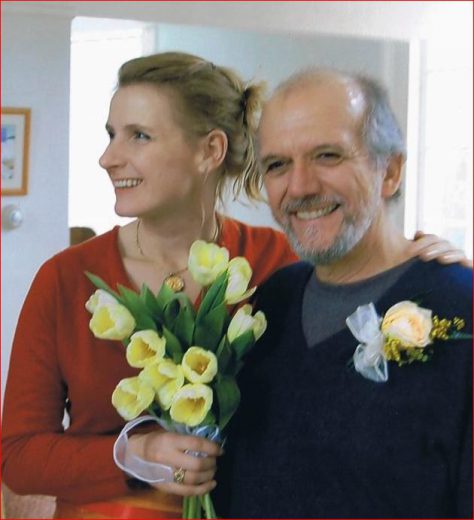

Eat, Pray, Love author divorces man she married after leaving her first husband

Eat, Pray, Love: Elizabeth Gilbert and her Brazilian stud Felipe
Eat, Pray, Love: Elizabeth Gilbert and her Brazilian stud

Does abandoning your marriage in order to travel the world indicate that a woman has the character necessary for a life-long married love? Let’s look at a case in which a famous feminist abandoned her husband to travel to have adventures.

The New York Times writes:

Elizabeth Gilbert, whose best-selling 2006 memoir, “Eat Pray Love,” traced a journey of self-discovery around the world that continues to resonate with fans, announced a new chapter on Friday.

[…]Ms. Gilbert, speaking directly to her readers in a Facebook post, said that after 12 years she was separating from José Nunes, the Brazilian importer whom she met during her travels and later married, and who was a central character in the book.

“I am separating from the man whom many of you know as ‘Felipe,’ ” she wrote of her husband, referring to his pseudonym in the book. “Our split is very amicable. Our reasons are very personal.” She also asked for privacy, saying she would be “a bit absent from social media during this sensitive moment.”

“Eat Pray Love,” a sumptuous tale of escape, self-discovery and romance, quickly became a cultural phenomenon, though not one without criticism, with some noting that not every woman who wished to escape would have the privilege to live as sumptuously as Ms. Gilbert did on her sojourn through India, Italy and Bali.

The book, however, drew praise from Oprah Winfrey and was made into a 2010 film starring Julia Roberts and Javier Bardem. The tale also resonated with fans, mostly women, who either identified with being in an unhappy relationship or had managed to artfully escape one.

The phenomenon has endured over the past decade: The travelogue touched so many readers that it eventually spawned a book, “Eat, Pray, Love Made Me Do It,” comprising 47 essays from inspired fans who had written their own tales of escape and discovery. That book was released in April.

[…]In April, Ms. Gilbert said that she missed travel: “I’ve never been to Japan, Iceland, South Africa and other places that it would be a pity to come to this earth and miss.”

Adventures, escape and discovery – that’s what young women want today. Not marriage, and not motherhood. They believe that they can find lasting happiness through travel and adventures. Even if they change their minds later, and want to marry, repeated acts of self-centered behavior do not prepare a woman for life-long self-sacrificial married love. Promiscuity and hedonism do not prepare a woman’s character to be content with the roles of wife and mother.

Here is Gilbert writing in the New York Times about her priorities:

It started with a boy I met at summer camp and ended with the man for whom I left my first husband. In between, I careened from one intimate entanglement to the next — dozens of them — without so much as a day off between romances. You might have called me a serial monogamist, except that I was never exactly monogamous. Relationships overlapped, and those overlaps were always marked by exhausting theatricality: sobbing arguments, shaming confrontations, broken hearts. Still, I kept doing it. I couldn’t not do it.

[…]If the man was already involved in a committed relationship, I knew that I didn’t need to be prettier or better than his existing girlfriend; I just needed to be different.

[…]Soon enough, and sure enough, I might begin to see that man’s gaze toward me change from indifference, to friendship, to open desire. That’s what I was after: the telekinesis-like sensation of steadily dragging somebody’s fullest attention toward me and only me. My guilt about the other woman was no match for the intoxicating knowledge that — somewhere on the other side of town — somebody couldn’t sleep that night because he was thinking about me. If he needed to sneak out of his house after midnight in order to call, better still. That was power, but it was also affirmation. I was someone’s irresistible treasure. I loved that sensation, and I needed it, not sometimes, not even often, but always.

[…]In my mid-20s, I married, but not even matrimony slowed me down. Predictably, I grew restless and lonely. Soon enough I seduced someone new; the marriage collapsed. But it was worse than just that. Before my divorce agreement was even signed, I was already breaking up with the guy I had broken up my marriage for.

[…][I]f you asked me what I was up to, I might have claimed that I was a helpless romantic — and how can you judge that? If really cornered, I might have argued that I was a revolutionary feminist, taking brazen agency over my own sexuality…

She didn’t want to commit and love others self-sacrificially. That’s boring! She wanted to get attention and drama. Men liked her because she was easy to use and easy to throw away. She wasn’t anyone’s “irresistible treasure”, because she didn’t have enough value for any of these men to commit to her for life and take care of her as she aged. The men she chose wanted sex, but they were not going to actually provide for her or protect her when she reached her 70s, 80s and 90s.  The question that we need to ask is whether a woman like this can stay married. Is she capable of doing the work that ordinary wives and mothers do in a married home – the work that wins a man’s loyalty for life? Is she capable of behaving in a way that leads a man to commit to caring for her when she is no longer young and pretty?

Let’s review what happened after Elizabeth Gilbert divorced her first husband for travel and adventures.

Christian men’s rights blogger Dalrock explains:

Having written a book on divorce, Elizabeth decided to write a book on marriage titled Committed.

From the Publishers Weekly review on Amazon:

How did a woman who didn’t want children land the only Latino hottie with a vasectomy in all of Indonesia?

[…][I]t turns out he needed a visa to get into the US, so he asked Elizabeth to marry him.  After a year of bickering and unhappiness together, she finally said yes after he explained it to her.

From the Publishers Weekly book review on Amazon.com:

When are you going to understand? As soon as we secure this bloody visa and get ourselves safely married back in America, we can do whatever the hell we want.

You couldn’t make stuff this romantic up!

That was 6 years ago, Elizabeth is about 47 now and divorced again. I wonder how well her plan of “seducing” men and getting no commitment in return will work over the next 40 years? Tramp stamps and belly-button rings seem fun when you are 17, but are not so fun when you are 71. Hooking up, cohabitating, traveling and having adventures seems to make sense when you are 17, but they don’t result in a man standing by you when you are 71. A woman needs to invest in a marriage-minded man early, and sustain this investment if she expects him to stick around when she loses her youth and beauty. Not every man will respond to this investment, but it is her job to choose one who will – with the help of wise advisers.

UPDATE:

In early September 2016, it emerged that she is now in a relationship with her best female friend.

ADF offers advice on SCOTUS marriage redefinition ruling

States with non-discrimination laws

(Source: ACLU)

Erik Stanley of the Alliance Defending Freedom offers advice to churches on how to respond to the Supreme Court’s decision to redefine marriage to remove the gender requirement.

He says:

[…][T]he greatest threat for churches lies in the application of the Court’s decision to believers who live in jurisdictions covered by so-called “non-discrimination” laws and ordinances. Everywhere that marriage has been redefined in the last several years has seen an awakening of non-discrimination laws that prohibit discrimination in employment, housing, or places of public accommodation on the basis of sexual orientation or gender identity. These laws are peppered throughout the states and local governments and are a linchpin of the sexual revolution’s broader legal and political strategy: to establish non-discrimination laws at all levels throughout the country and to to “ensure that religion is not used as an excuse to discriminate.”

In coming days, the threat from these non-discrimination laws will materialize in numerous ways as same-sex couples marry. But there are proactive steps your church can take to protect itself.

I put the map from the ACLU above. I think that’s what he is talking about when he says non-discrimination states. Keep in mind that the ACLU supported redefining marriage, and opposes religious liberty.

Erik’s article covers 3 areas:

  1. Church’s statement of faith
  2. Pastors officiating same-sex marriage ceremonies
  3. Church’s facility usage policy

Part 3) was the most interesting to me:

3. Churches should ensure their facilities usage policies are revised to allow only uses consistent with the church’s religious beliefs.

In the wake of the Supreme Court ruling, some churches may be approached by same-sex couples seeking to be married in the church facility. Churches should not feel as if they have to close their doors to the community just to prevent wedding ceremonies with which they disagree. Churches must continue to be a welcoming presence in the community and can do so through updating or revising their facility usage policy. The key point is to tie usage of the church’s facility to the statement of faith and religious beliefs of the church. And then to make clear that uses inconsistent with those religious beliefs will not be allowed. Alliance Defending Freedom has a sample facilities usage policy available in our Protecting Your Ministry manual.

So you update your statement of faith, and then tie usage of the the facility to that statement of faith. Simple.

I took a quick look at the booklet, and it also talked about tying employment within the church and church membership to the statement of faith.

Denny Burk summarizes those:

2. Religious Employment Criteria

Your church can best avail itself of the First Amendment’s protection in employee disputes if you create and faithfully enforce religious employment criteria for every employee. That requires churches to do at least two things: (1) require all employees and volunteers to sign a statement affirming the church’s statement of faith and standards of conduct, and (2) create written job descriptions for every employee and volunteer position.

4. Formal Membership Policy

If your church does not have a membership policy, you need to change that. Biblically, this should already be a priority for your church. You need to specify what the requirements for membership are, how one joins, how one resigns, and the procedures for church discipline. If all of this isn’t spelled out up front, your church could be exposed (see ADF guide pp. 17-18).

So what to make of this? Well, the ADF is an organization that I admire and trust. I cannot abide Christians who do not want to understand the details of what is happening with religious liberty in their country. The ADF has first class lawyers from the top law schools, and they defend religious liberty at every level of our justice system, up to and including the Supreme Court. If you want to help your church protect itself from prosecution, then you must point them to the ADF booklet linked above.

And this is especially true if you are in one of those states in the map above. In looking over the map, I noticed that much of the trouble we have been having with Christian businesses getting sued are in states that have these laws… Oregon, Washington, New Mexico, New York, and so on. Pay attention to that map and make decisions about where to live accordingly.