Where does all my snarkiness about the anti-intellectual church come from? It comes largely from this lecture, and from the book of the same name. This lecture also gave me many of my personality quirks, like saying “Does that make sense to you?” all the time. He’s a great speaker. This lecture could change your life. It changed mine.
As creator of the best website for resources to defend Christianity, Brian Auten offers a unique perspective on the current apologetics scene—the good, the bad, and the hopeful.
Apologetics 315 features a terrific compilation of material for Christians to equip themselves to better define and defend the faith. It’s full of links to resources dealing with every imaginable area of apologetics. As a regular reader of the site, I became curious what its creator, Brian Auten, thinks about the current state of apologetics around the world—and he was willing to share his insights by answering a few questions.
Excerpt:
• What trends do you see in apologetics?
Consider books like The DaVinci Code, writings by agnostic professor Bart Ehrman, or the various publications of the so-called New Atheists. All these attacks on Christianity have generated a lot of buzz. However, each of these attacks has been met with a strong counter-response from scholars, theologians, and apologists. Christianity hasn’t been defeated. Instead, it has weathered storm after storm. In the meantime, the resources available that answer these challenges have increased dramatically. Over and over again, what has been intended to bring Christianity down has only served to strengthen it.
But the tendency is this: too many times Christians are only responding to the challenges. That seems to be the trend. Why are we not running to the battle? Instead of just reacting to the next challenge, I long for the day when more and more Christians would equip themselves with this vast armory of resources and use it to take the battle to the enemy’s camp, so to speak. Apologetic-savvy educators, scientists, public officials, businessmen, actors, novelists, movie-makers—all people with a heart of evangelism who are able to defend and contend for the faith in the public square could have an immense impact for the Gospel.
And more:
• You’re passionate about churches starting apologetics ministries. Are you seeing more of them doing this?
I want to see churches start their own apologetics ministries because it is our scriptural mandate to “always be prepared to give an answer.” Yet there often is very little preparation going on! When challenges to faith come, people struggle to find substantive answers. This may cause some believers to resort to a sort of “believe it anyway” mentality; for others it causes them to abandon the faith altogether.
Research by the Barna Group has shown that a majority of young people walk away from the faith around the time they go to college or university. They simply have not been equipped to deal with the secular challenges that come against their faith when they go to college. But what if they had been properly equipped to understand and answer these sorts of challenges? They would not only be able to stand up under the attacks, but they would also be able to share Christ with more confidence, knowing that they have good reasons undergirding their faith.
So I think it’s so crucial that our churches become training grounds where believers learn why they believe what they believe. Apologetics ministries and small group studies provide a venue for discipleship where people can work through the tough questions that they constantly face from the secular world. And what’s more, our faith is enriched to even deeper levels when we experience the joy of loving God with our minds.
Thankfully, I think we are seeing a rise in the number of churches that both see this need and are beginning to equip their congregations through apologetic teaching, small groups, conferences, and resources.
Read the whole thing. Tweet it, share it. Think about it!
There’s a great list of scholars and ministries in there as well. If you guys want to know what you should be reading to prepare your defense of theism and Christianity, leave a comment with your intended audience, and I will suggest some resources. I may even BUY YOU the resource, if you are a budding apologist who is conservative on economics and politics and foreign policy. Yes, I do that a lot on this blog – mailed out a dozen books this month already to people. Get to know me, I can help you to defend your faith.
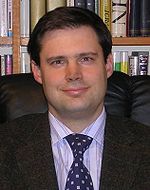
Peter J. Williams is the Warden (CEO) of Tyndale House and a member of the Faculty of Divinity in the University of Cambridge. He received his MA, MPhil and PhD, in the study of ancient languages related to the Bible from Cambridge University. After his PhD, he was on staff in the Faculty of Divinity, Cambridge University (1997–1998), and thereafter taught Hebrew and Old Testament there as Affiliated Lecturer in Hebrew and Aramaic and as Research Fellow in Old Testament at Tyndale House, Cambridge (1998–2003). From 2003 to 2007 he was on the faculty of the University of Aberdeen, Scotland, where he became a Senior Lecturer in New Testament and Deputy Head of the School of Divinity, History and Philosophy. In July 2007 he became the youngest Warden in the history of Tyndale House. He also retains his position as an honorary Senior Lecturer in Biblical Studies at the University of Aberdeen.
Summary of the lecture:
What if the stories about Jesus are legendary?
were the gospels transmitted accurately?
were the gospels written in the same place as where the events happened?
do the gospel authors know the customs and locations where the events happened?
do the gospels use the right names for the time and place where the events took place?
do the gospels disambiguate people’s names depending on how common those names were?
how do the New Testament gospels compare to the later gnostic gospels?
how do the gospels refer to the main character? How non-Biblical sources refer to Jesus?
how does Jesus refer to himself in the gospels? do the later Christians refer to him that way?
how does Jesus teach? do later Christians teach the same way?
why didn’t Jesus say anything about early conflicts in the church (the Gentiles, church services)?
did the writers of the gospels know the places where the events took place?
how many places are named in the gospels? how about in the later gnostic gospels?
are the botanical details mentioned in the gospels accurate? how about the later gnostic gospels?
And here are the questions from the audience:
how what about the discrepancies in the resurrection narratives that Bart Ehrman is obsessed with?
what do you think of the new 2011 NIV translation (Peter is on the ESV translation committee)?
how did untrained, ordinary men produce complex, sophisticated documents like the gospels?
is oral tradition a strong enough bridge between the events and the writers who interviewed the eyewitnesses?
what does the name John mean?
why did the gospel writers wait so long before writing their gospels?
do you think that Matthew and Luke used a hypothetical source which historians call “Q”?
which gospel do critical historians trust the least and why?
I really enjoyed watching this lecture. He’s getting some of this material from Richard Bauckham’s awesome book “Jesus and the Eyewitnesses”, so if you aren’t familiar with it, you can get an idea of what’s in it. Peter Williams is a lot of fun to listen to – an excellent speaker. And this material was NEW TO ME. I like the way that this lecture is filled with little UK expressions like “mind the gap” and “Yah?”. He doesn’t say “if you like” as much as Justin Brierley, though. Just once I would like to have a discussion with Justin and have him say that, then I would say “no I don’t like that”. I think that would be funny, and I would love to see the expression on his face when I said that.


 WINTERY KNIGHT