
Tag Archives: Law

Why are Egyptians wealthier in America than they are in Egypt?

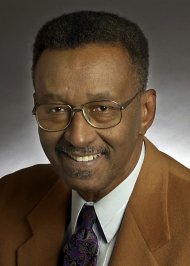
Walter Williams
Walter Williams

This is from Walter Williams, my second most favorite economist after Thomas Sowell.

Excerpt:

Why is it that Egyptians do well in the U.S. but not Egypt? We could make that same observation and pose that same question about Nigerians, Cambodians, Jamaicans and others of the underdeveloped world who migrate to the U.S. Until recently, we could make the same observation about Indians in India, and the Chinese citizens of the People’s Republic of China, but not Chinese citizens of Hong Kong and Taiwan.

[…]Much of Egypt’s economic problems are directly related to government interference and control that have resulted in weak institutions vital to prosperity. Hernando De Soto, president of Peru’s Institute for Liberty and Democracy (www.ild.org.pe), laid out much of Egypt’s problem in his Wall Street Journal article (Feb. 3, 2011), “Egypt’s Economic Apartheid.” More than 90 percent of Egyptians hold their property without legal title.

De Soto says, “Without clear legal title to their assets and real estate, in short, these entrepreneurs own what I have called ‘dead capital’ — property that cannot be leveraged as collateral for loans, to obtain investment capital, or as security for long-term contractual deals. And so the majority of these Egyptian enterprises remain small and relatively poor.”

Egypt’s legal private sector employs 6.8 million people and the public sector 5.9 million. More than 9 million people work in the extralegal sector, making Egypt’s underground economy the nation’s biggest employer.

Why are so many Egyptians in the underground economy? De Soto, who’s done extensive study of hampered entrepreneurship, gives a typical example: “To open a small bakery, our investigators found, would take more than 500 days. To get legal title to a vacant piece of land would take more than 10 years of dealing with red tape. To do business in Egypt, an aspiring poor entrepreneur would have to deal with 56 government agencies and repetitive government inspections.”

Poverty in Egypt, or anywhere else, is not very difficult to explain. There are three basic causes: People are poor because they cannot produce anything highly valued by others. They can produce things highly valued by others but are hampered or prevented from doing so. Or, they volunteer to be poor.

Some people use the excuse of colonialism to explain Third World poverty, but that’s nonsense. Some the world’s richest countries are former colonies: United States, Canada, Australia, New Zealand and Hong Kong. Some of the world’s poorest countries were never colonies, at least for not long, such as Ethiopia, Liberia, Tibet and Nepal. Pointing to the U.S., some say that it’s bountiful natural resources that explain wealth. Again nonsense. The two natural resources richest continents, Africa and South America, are home to the world’s most miserably poor. Hong Kong, Great Britain and Japan, poor in natural resources, are among the world’s richest nations.

What is necessary for wealth is a capitalist economy, that emphasizes the rule of law, private property, judicial restraint, limited government, etc. Egypt has none of those, and that’s why Egypt is poor. India and Chile used to be like Egypt, but then they revamped their societies to be more like America. Now India and Chile are more prosperous. Economics is not rocket science.

Capitalism creates wealth, and raises the standard of living of the poor and the wealthy. It doesn’t matter what rung of the social ladder someone is on – as long as they can keep what they earn, instead of having it redistributed by socialists, then they will work hard to create something of value to share with others. Poverty is caused by economic ignorance.

More Walter Williams stuff here, and more Thomas Sowell stuff here. These are the clearest-thinking economists operating today.

How lawsuit abuse hurts businesses and raises unemployment

Consdier this paper from the Heritage Foundation, featuring a variety of views on lawsuit abuse.

Excerpt:

LAWRENCE J. McQUILLAN, Ph.D.: I am an economist. I focus on this issue as an economic issue, an economic problem. I have been working on this issue for about four years as a full-time project, and the first study that we did in 2006 was Jackpot Justice, which Hans mentioned earlier.

In this study, what we set out to do is measure the total cost of the U.S. tort liability system and put that cost in perspective. Hans mentioned a figure of $252 billion a year. That is the direct cost of the tort liability system, but what we wanted to do in this study is also measure the indirect cost. When we crunched the numbers, we arrived at a total of $865 billion annually as the cost.

It is a lawsuit industry. That’s really the way to look at it. It truly is an industry in terms of the size, scope, and amount of resources devoted to it. To put it in perspective, it’s roughly the size of the U.S. restaurant industry: About 6.5 percent of GDP would be the equivalent. It is about 30 times what the National Institutes of Health spends each year on finding cures for deadly diseases. It’s a huge amount of resources that are diverted toward, basically, a transfer system.

The Costs of Lawsuit Abuse

Every year, lawsuit abuse costs each American about $2,000. That is the cost that is factored into all the goods and services that we buy, from ladders to lawnmowers. Built into every price is a component to pay for liability insurance and lawsuit defense.

We estimated the wasteful part of that $865 billion to be about $589 billion a year. In other words, you could remove that part from this total cost and not change manufacturers’ incentives to produce safe products. You could still fully compensate truly injured individuals.

Here is one of the ways that lawsuit abuse changes the free market:

Indirect Costs: Defensive Medicine[…]The first one that gets talked about a lot these days is defensive medicine. Ninety-three percent of all physicians report practicing defensive medicine. These are basically unnecessary tests, procedures, referrals that they know are not really medically necessary to protect the patient, but they do them anyway to protect themselves from litigation. About 25 percent of all procedures, according to a survey last year by the Massachusetts Medical Society, are deemed by the physicians themselves to be unnecessary defensive medicine procedures.

We crunched the numbers in terms of how much this defensive medicine costs the economy. We arrived, in 2007, at $124 billion a year, which is about 8 percent of total health care expenditures. Today, that number would be roughly about $191 billion a year.

You also have to remember that these defensive medicine expenditures get passed along to all of us. We all end up paying for this in terms of our insurance. So insurance premiums go up, which then crowds out a lot of people from being able to afford insurance that they normally would be able to afford. We wanted to estimate what that costs. After crunching the numbers, we estimate that about 3.4 million Americans would have insurance today but do not because of the higher premiums due to just defensive medicine: today about $191 billion.

I think yesterday there was a report that came out that showed something like 14,000 people a year die because they do not have health insurance. It would not surprise me if a lot of these 14,000 people that die every year are part of those 3.4 million people.

And one more:

Indirect Costs: Research and Development

Another indirect cost of the excessive tort liability system is R&D impact. Of course, businesses have to spend a lot more money on legal defense that would otherwise go to product research and development, new product innovation, and new products being introduced. We estimated that total at about $367 billion a year of lost sales of new products that would otherwise come to market but do not because of the diversion of resources basically away from R&D and new product development toward legal defense: again, another huge indirect cost where it is hard to measure what would have been but is not.

Basically, the vaccine industry has fled the country. It is hard to find a manufacturer anymore in the U.S. that does vaccine development and manufacturing, primarily because of liability concerns. It was reported that the FDA granted the H1N1 virus vaccine to four companies to be manufactured, and without much of a surprise, three of the four companies are actually located outside the U.S.: Swiss, Australian, and French companies were all awarded the vaccine licenses.

There is one company in the U.S in Maryland, but I think it got the license to manufacture only because they have a technological advantage. They are going to produce an inhalable version of the vaccine rather than the standard injectable version. I think that is probably why they got a license. Otherwise, I think all of the manufacturers would have come from Europe or Australia.

That is a great example of how it really does impact U.S. business and how the liability system is forcing more and more business overseas. As a result, it hurts us in terms of the economy and job growth.

As another example, Volkswagen was going to introduce a three-wheel vehicle, very green technology, that gets about 49 miles per gallon. They were going to sell it in the U.S. for about $17,000 a vehicle. Probably most people in this room would not want to drive this vehicle, but I can tell you that where I come from in California, it would have sold well. It would have had a big market. It actually got qualified, too, to use the HOV lanes in California.

At the last minute, Volkswagen decided to pull it from the U.S. and not market it here because of liability concerns, but it is available in Europe. So once again, another example where European markets are perceived to be more favorable in terms of liability than the U.S.

I do not think it is any accident, too, that they tend not to have punitive damages in Europe and, also, that they have the loser pay system. This is another example of the indirect costs, fewer products available in the U.S. A lot of people probably would have loved to buy this car, but it is not available.

In terms of how expensive the U.S. system is compared to other countries of comparable standards of living, the estimate is that we have about 59 percent higher tort costs. These are direct costs. These are awards, attorneys’ fees, and administrative expenses. This does not include the indirect costs that I just talked about, but it gives you a good indication of our system compared to other systems in the world. It is just much more expensive for compensating injured individuals.

That is just one of the perspectives provided in this excellent article.

If we expect to have jobs in the future, then we should be thinking about who we expect to hire us. Tacking on frivolous costs onto business owners who develop products and services that we need means that there will be fewer businesses to hire us when we are looking for jobs and less choice and competition when we make purchases.

Keep in mind that trial lawyers are one of the pillars of the Democrat party, and they fight against any regulation of lawsuit abuse.

I noticed that Hans Bader published an article here talking about how the Supreme Court has been attacking businesses. This is one of the reasons why we are bleeding jobs to other countries. Judicial activism is hostile to business and the free market.

How universities discriminate against evangelical Christians

From the American Center for Law and Justice (ACLJ). (H/T ECM)

Excerpt:

We are preparing for trial in a very important religion discrimination case in Kentucky that’s likely to attract a lot of attention.

We represent Professor Martin Gaskell, an internationally-respected astronomer who was turned down for the post of Observatory Director at the University of Kentucky in 2007 after concerns were voiced that some of his writings contained in a personal website discussing the relationship between science and religion showed him to be “potentially evangelical.”

Professor Gaskell has filed suit against the University claiming that, by considering his religion in the hiring process, Kentucky violated Title VII, the Civil Rights Act of 1964…

The University of Kentucky tried to avoid a trial, but Judge Karl Forester ruled that there was enough evidence to go to trial, such as:

  • The record contains “substantial evidence that Gaskell was a leading candidate for the position until the issue of his religion” became part of the search committee’s deliberations.
  • The head of the search committee wrote in an email to the Chair of the Physics & Astronomy Department that “no objective observer could possibly believe that we excluded Martin [Gaskell] on any basis other than religious . . .”
  • The Department Chair admitted “that the debate generated by Gaskell’s website and his religious beliefs was an ‘element’ in the decision not to hire Gaskell.”
  • One member of the search committee admitted that Gaskell’s “views of religious things” were “a factor” in his decision not to support Gaskell’s candidacy.
  • Another member of the committee, having discovered Gaskell’s website, warned fellow committee members that Gaskell was “potentially evangelical.”
  • The search committee head, anticipating a decision against Gaskell by his fellow committee members, wrote that “Other reasons will be given for the choice . . . but the real reason we will not offer him the job is because of his religious beliefs in matters that are unrelated to astronomy or to any of the other duties specified for this position.”

This is why I blog under an alias. And I recommend it to any evangelical Christian who aspires to have an influence in academia.