Tag Archives: Intelligence

IAEA report expected to show that Iran now has the ability to build a nuclear bomb

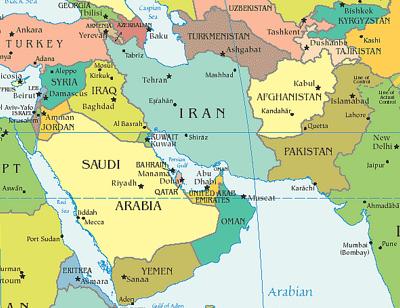
Map of the Middle East

From Fox News.

 Pakistan, North Korea and a former weapons scientist from the Soviet Union reportedly all helped Iran with its nuclear weapons quest, according to an impending U.N. nuclear watchdog report expected to show the Islamic regime has mastered the science of building a bomb.

The International Atomic Energy Agency’s report due out this week will lay out findings collected over years of intelligence gathering. It is expected to reinforce concerns that Iran didn’t actually abandon its weapons-related research in 2003, as indicated by a 2007 National Intelligence Estimate given to then-President George W. Bush.

U.S. intelligence agencies reported in 2007 that they believed Tehran halted its experiments in response to international and domestic pressures. But an ongoing investigation by the Fox News Specials Unit concludes that more than 600 entities were working inside Iran to support its program, and at least 40 sites where the work is taking place are suspected to exist across the country.

For British, French and American investigators, one of the most concerning sites is the Qom uranium enrichment construction site, hidden deep in the mountains. The latest intelligence shows that security walls have doubled around the site. Its scale cannot be explained by any known civilian nuclear energy use.

David Albright, a former IAEA official and president of the Washington-based Institute for Science and International Security who reviewed the intelligence files, told The Washington Post that Iran’s nuclear weapons program “never really stopped” and also concluded that Iran “has sufficient information to design and produce a workable implosion nuclear device.”

Western diplomats and nuclear experts briefed on the findings in the IAEA report also told the Post that foreign scientists offered assistance in overcoming key technical hurdles.

The documents reportedly show that a former Soviet weapons scientist named Vyacheslav Danilenko allegedly tutored Iranians for several years on building high-precision detonators needed to trigger a nuclear chain reaction. The Post reported that Pakistani and North Korean officials also gave to Iran mathematical formulas and codes as well as a so-called neutron initiator, which shoots a stream of atomic particles into the weapon’s fissile core at the start of the chain reaction.

There are two things to point out about this story. The first thing is that it was a strategic disaster for us to back out of Iraq, because that’s where we need to be to be able to gather intelligence, mount covert ops, run interdiction on attempts to transfer WMDs to Syria, etc. We really need to be in theater in order to deal with Iran, Syria and groups like Hezbollah, Iran’s Quds force and Muqtada Al Sadr’s Mahdi Army.

Unfortunately, I think that David Axelrod is running our national security now, which is why Obama pulled out forces out of Iraq.

Excerpt:

Three years, two abject failures. The first was the administration’s inability, at the height of American post-surge power, to broker a centrist nationalist coalition governed by the major blocs — one predominantly Shiite (Maliki’s), one predominantly Sunni (Ayad Allawi’s), one Kurdish — that among them won a large majority (69 percent) of seats in the 2010 election.

Vice President Biden was given the job. He failed utterly. The government ended up effectively being run by a narrow sectarian coalition where the balance of power is held by the relatively small (12 percent) Iranian-client Sadr faction.

The second failure was the SOFA [Status of Forces Agreement] itself. U.S. commanders recommended nearly 20,000 troops, considerably fewer than our 28,500 in Korea, 40,000 in Japan and 54,000 in Germany. The president rejected those proposals, choosing instead a level of 3,000 to 5,000 troops.

A deployment so risibly small would have to expend all its energies simply protecting itself — the fate of our tragic, missionless 1982 Lebanon deployment — with no real capability to train the Iraqis, build their U.S.-equipped air force, mediate ethnic disputes (as we have successfully done, for example, between local Arabs and Kurds), operate surveillance and special-ops bases, and establish the kind of close military-to-military relations that undergird our strongest alliances.

The Obama proposal was an unmistakable signal of unseriousness. It became clear that he simply wanted out, leaving any Iraqi foolish enough to maintain a pro-American orientation exposed to Iranian influence, now unopposed and potentially lethal. Message received. Just this past week, Massoud Barzani, leader of the Kurds — for two decades the staunchest of U.S. allies — visited Tehran to bend a knee to both President Mahmoud Ahmadinejad and Ayatollah Ali Khamenei.

The second thing to point out is the question of what we should be doing to restrain Iran’s nuclear ambitions. Click here for a run-down of some of our options. There are a lot of things we could do short of all-out war, but that would require that we had a statesman in the White House – someone who takes foreign policy seriously and treats it as more than a political issue.

A previous post I wrote showed how arms that China sells to Iran make their way to Hezbollah to be used against Israeli assets. That’s what we can expect will happen with nuclear weapons that Iran develops. Are we willing to accept that? There is also the matter of the Mexican drug cartels, the Quds force, Hugo Chavez in Venezuela and our porous border with Mexico. Are we willing to risk that?

We need to take the gloves off our national security agencies, especially the CIA, and do what has to be done.
Is Obama smart? How can we measure his intelligence?

Here’s a very interesting assessment of Barack Obama’s intelligence from the Wall Street Journal. (H/T Melissa)

Excerpt:

When it comes to piloting, Barack Obama seems to think he’s the political equivalent of Charles Lindbergh, Chuck Yeager and—in a “Fly Me to the Moon” sort of way—Nat King Cole rolled into one. “I think I’m a better speech writer than my speech writers,” he reportedly told an aide in 2008. “I know more about policies on any particular issue than my policy directors. And I’ll tell you right now that I’m . . . a better political director than my political director.”

On another occasion—at the 2004 Democratic convention—Mr. Obama explained to a Chicago Tribune reporter that “I’m LeBron, baby. I can play at this level. I got game.”

[…]Then there is Mr. Obama as political tactician. He makes predictions that prove false. He makes promises he cannot honor. He raises expectations he cannot meet. He reneges on commitments made in private. He surrenders positions staked in public. He is absent from issues in which he has a duty to be involved. He is overbearing when he ought to be absent. At the height of the financial panic of 1907, Teddy Roosevelt, who had done much to bring the panic about by inveighing against big business, at least had the good sense to stick to his bear hunt and let J.P. Morgan sort things out. Not so this president, who puts a new twist on an old put-down: Every time he opens his mouth, he subtracts from the sum total of financial capital.

Then there’s his habit of never trimming his sails, much less tacking to the prevailing wind. When Bill Clinton got hammered on health care, he reverted to centrist course and passed welfare reform. When it looked like the Iraq war was going to be lost, George Bush fired Don Rumsfeld and ordered the surge.

Mr. Obama, by contrast, appears to consider himself immune from error. Perhaps this explains why he has now doubled down on Heckuva Job Geithner. It also explains his insulting and politically inept habit of suggesting—whether the issue is health care, or Arab-Israeli peace, or change we can believe in at some point in God’s good time—that the fault always lies in the failure of his audiences to listen attentively. It doesn’t. In politics, a failure of communication is always the fault of the communicator.

Much of the media has spent the past decade obsessing about the malapropisms of George W. Bush, the ignorance of Sarah Palin, and perhaps soon the stupidity of Rick Perry. Nothing is so typical of middling minds than to harp on the intellectual deficiencies of the slightly less smart and considerably more successful.

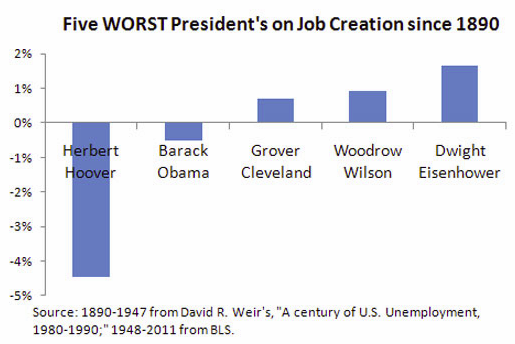
Obviously, you can’t really measure a person’s intelligence using their statements about their own intelligence in speeches read from a teleprompter. And it’s hard to assess the intelligence of someone who refuses to release any of his university transcripts. The WSJ article is right to imply that a more important way to measure intelligence is by measuring success. And we certainly are capable of looking at raw numbers to measure Obama’s success – like the unemployment rate:

The Five Worst Job Creation Presidents

And the budget deficit:

Obama Budget Deficit 2011

It’s pretty easy to assess someone’s intelligence from those two numbers alone. Obviously, none of these numbers are going to matter to people who get their news by watching Jon Stewart and Stephen Colbert. Obama is the Comedy Channel president. If provoking laughter is your standard for measuring intelligence, then Obama is very smart indeed.

What are Obama’s smart policies?

Who voted for Obama?

I notice that some people in the mainstream media have begun to pick on Texas Governor Rick Perry. It turns out that Perry is also a dastardly Darwin-doubter. (H/T Mary) For the mainstream media, if you believe in traditional Christian views on theology and morality and free market capitalism, it doesn’t matter that you created more jobs than all the other states combined. You’re still “stupid” because you value prayer and doubt materialist explanations of the origins of life.

But the mainstream media thinks that secular leftists are smart regardless of practical measures like job creation. If you are a secular leftist, and you support abortion and same-sex marriage, and you spend 864 billion taxpayer dollars on things like building underground turtle tunnels, and you actually raise the unemployment rate instead of lowering it, then you are are “smart”. Understand?

So who is smart?

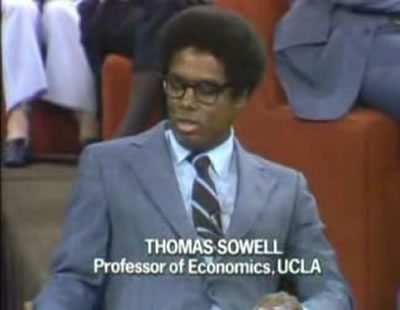
Thomas Sowell is smart in the traditional sense of understanding how things work in the real world.

Thomas Sowell is smart: he understands economics

If you want to understand the realities of economic policy, why not pick up some books by an actual economist?

Here are some of his books that I recommend:

Disclaimer: I have only read the first editions of Applied Economics, Economic Facts and Fallacies, A Conflict of Visions, and The Housing Boom and Bust. And I’ve only read the second edition of Basic Economics.

I have male and female friends who go through multiple Thomas Sowell books per month. It’s impossible to read just one. The first Thomas Sowell book you should read is Intellectuals and Society. That one is an introduction to his thought over a wide range of topics.

William Dembski reviews a new book by two theistic evolutionists

From Patheos, an opening statement by William Dembski. This is the first part of a four-part debate with two scientists of the Biologos group, which advocates for theistic evolution. (And not to be confused with the Biologic Institute, which is supportive of intelligent design).

Excerpt:

Throughout their book, Giberson and Collins overconfidently proclaim that Darwinian evolution is a slam-dunk. Thus one reads, “There has been no scientific discovery since Darwin–not one–which has suggested that evolution is not the best explanation for the origin of species” (21-22). No theory is that good. Every theory admits anomalies. Every theory faces disconfirming evidence. Repeatedly readers are informed that mountains of overwhelming evidence support Darwin’s theory and that the authors are “unfamiliar with any premier scientists who reject evolution.” And just so there’s no doubt, in that same paragraph, they reiterate, “There are certainly a few scientists who reject evolution . . . But these are never premier scientists.”

Oh, you reject Darwinian evolution; you can’t be a premier scientist. What counterexample would convince Giberson and Collins to retract such a claim? How about Henry Schaefer’s signature on a “Dissent from Darwin” list? Schaefer heads the computational quantum chemistry lab at the University of Georgia, has published over a thousand peer-reviewed journal articles, and is one of the most widely cited chemists in the world. Then again, Giberson and Collins look askance at this list (according to them, it has too many emeriti professors and not enough biologists). But why engage in such posturing about scientific pecking order in the first place? The issue is not who’s doubting Darwinism, but what are the arguments for and against it and whether they have merit. Giberson and Collins’ constant drumming of mainstream and consensus science is beside the point–science progresses by diverging from the mainstream and by breaking with consensus.

Because Giberson and Collins assert that natural selection is such a powerful mechanism for driving evolution–and one that admits no reasoned dissent–it’s worth recounting here briefly why the intelligent design community is so skeptical of it. It’s not, as theistic evolutionists often suggest, that we have a desperate need to shore up faith and morality and are using ID as our instrument of choice to accomplish that end. Rather, it’s that natural selection is, in essence, a trial and error tinkering mechanism for which all evidence suggests that its power is quite limited. Trial and error works fine when you have something that’s functional and are trying to enhance it or adapt it to a new situation.

But for natural selection, as a trial and error mechanism, to traverse vast swatches of biological function space, we need to see an extended series of small gradual structural changes (under neo-Darwinism, these are genetic mutations leaving effects at the phenotypic level) that continually improve, or at least maintain, function, with evolving functions and evolving structures covarying and reinforcing each other. But we know of no detailed testable (macro-)evolutionary pathways like this in any field, whether in the evolution of living forms or in the evolution of language or in the evolution of technologies. In fact, when we can trace such evolutionary pathways, we find that significant change happens in creative leaps, not via trial and error tinkering.

Everyone who has read Dembski’s opening remarks in this four-part series is raving about the quality of what he’s written. I was hoping to wait for the response before publishing his opening salvo, so we could balance it, but no reply has appeared yet. For me, there is only one issue in the debate about the origin of life: if natural causes can create life from non-life with the time and resources available on the early Earth, then show me the mechanism. That’s all I want to see – the evidence that natural causes can do the creating that the naturalists say that it can do. I don’t want to hear about feelings, possibilities, what God could or couldn’t do, philosophy, what church you attend, your favorite hymn, the way you were raised, your religious experiences, etc. I just want to see you prove that nature can do all the creating that you say it can do.