Tag Archives: Human Rights

Todd Starnes: Ted Cruz is the best candidate to defend religious liberty

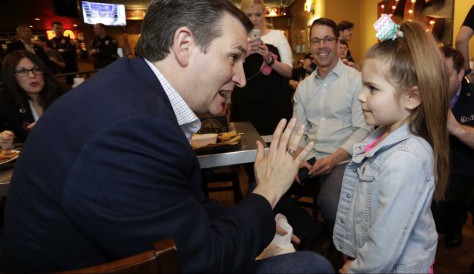
Ted Cruz explains policy to little girl who wants to be President

Tony Perkins of the Family Research Council, my second favorite think tank behind the Heritage Foundation, is advising the Ted Cruz campaign about religious liberty issues. They’ve actually made a list of things for him to do if he is elected President. Since this issue is the core of my being – it animates my whole life plan – I was curious to see what Cruz intends to do about religious liberty.

Here is Todd Starnes of Fox News writing about it:

America’s Christian bakers and florists and wedding planners will be safe under a Ted Cruz presidency.

“I am absolutely convinced in my discussions with the senator that religious liberty will be a lot better off in America with a Cruz administration,” said Tony Perkins, president of the Family Research Council and Chair of Cruz’s Religious Liberty Advisory Council.

The council released exclusively to me its initial recommendations for both legislative and executive actions that will restore the nation’s First Freedom – the freedom of religion.

[…]The council, made up of prominent religious leaders, recommended 15 action items that will protect Americans from discrimination by the federal government on the basis of their view of marriage and also protect employers threatened by the HHS contraception mandate.

[…]The council is also calling on Cruz to direct a review of the IRS’ treatment of religious organizations and to direct federal agencies to respect the free exercise of religion.

The list includes measures to promote religious liberty at the Department of Education, the IRS, the Department of Health and Human Services, the armed forces, and in the federal government as a whole.

Cruz has a record on defending religious liberty:

Cruz has been a passionate advocate of religious liberty for years. He’s been in the front line trenches defending our First Freedom – helping secure courtroom victories to preserve the Texas Ten Commandments monument and the Mojave Desert Veterans Memorial.

“As president, I have pledged on my first day in office to rescind every single one of President Obama’s unconstitutional executive actions, and to direct every federal agency to respect and protect the religious liberty of every American,” Cruz said.

His vow is certainly welcome news to American Christians who have been subjected to eight years of vicious attacks by militant LGBT and atheist groups – not to mention the Obama administration.

“Our constitutional liberties should not be subject to the whims of the current administration, and – whether Hobby Lobby or the Little Sisters of the Poor – people of faith should not be made to bow down at the altar of political correctness,” Cruz said.

I took a look over the names of the people on his panel of policy advisors, and was surprised to see people I actually know on it. You probably know these names as well: Jay Wesley Richards, Everett Piper, Bishop Harry Jackson, Ken Blackwell, and Jason Benham. Jason Benham has had to face discrimination himself, when his show was pulled because of his Christian worldview. If I had to pick a scholar who has the same interests as me across the board, it would probably be Jay Richards. So, needless to say, I’m pretty pleased with this. Seems to me like we have been losing, losing, losing at religious liberty for the last 8 years under Obama and his Democrat allies in the House, Senate, federal government and Supreme Court. If Cruz wins, thins are going to change for us on this all-important issue. I just want to be free to be me, and not to be punished for disagreeing with other people on issues of morality and conscience.

I guess it goes without saying that Donald Trump is the polar opposite of Cruz on all of these issues. That’s why it’s important to me that someone with a record of standing up for religious liberty at the Supreme Court wins the nomination. I don’t want someone who only has talk – and Trump’s talk isn’t even that encouraging. He’s promised gay rights activists “forward motion” on gay rights. I think we’ve had enough of #NewYorkValues already under Obama, Mr. Trump.

By the way, if you’re not listening the Family Research Council Washington Watch Weekly podcast, please subscribe. They cover everything from social issues, to fiscal issues, to foreign policy. One of their frequent guests is retired Lt. General William G. Boykin, who is also on Cruz’s foreign policy advisory committee, which I blogged about before.

Related posts

In New York, you could be fined $250,000 for not using a transgender person’s preferred pronoun

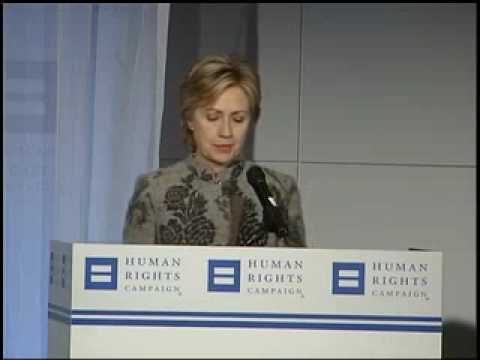
Hillary Clinton and the Human Rights Campaign

This article from the Daily Signal makes me wonder why anyone would live in a garbage state like New York.

Excerpt:

The new legal guidance, issued Dec. 21 by the New York City Commission on Human Rights, came as part of an expansion of the city’s 2002 Human Rights Law, which protects against discrimination in a range of categories. The updated policy specifically protects transgender and gender non-conforming individuals from discrimination in areas of employment, public accommodation, and housing.

[…]Under the new policy, landlords, employers, and businesses can face civil penalties up to $125,000 per violation and up to $250,000 “for violations that are the result of willful, wanton, or malicious conduct.”

[…]The guidance has the support of prominent LGBT groups, including the New York Civil Liberties Union, the New York City Anti Violence Project, and the National Center for Transgender Equality.

[…]New York City Human Rights Commissioner Carmelyn Malalis promised to “aggressively” enforce the protections in order to ensure the safety of transgender and gender non-conforming individuals.

“Today’s guidance makes it abundantly clear what the city considers to be discrimination under the law and the commission will continue to aggressively enforce protections to make that promise a reality,” Malalis said. “Every New Yorker deserves to live freely and safely, free from discrimination.”

Her undergraduate degree is in Women’s Studies, I noticed. I wonder if that has anything to do with her sensitivity to feeling offended?

What would you have to do to get slapped with that fine?

This:

Intentionally failing to use an individual’s preferred name, pronoun, or title. For example, repeatedly calling a transgender woman “him” or “Mr.” when she has made it clear that she prefers female pronouns and a female title.

Or this:

Refusing to allow individuals to use single-sex facilities, such as bathrooms or locker rooms, and participate in single-sex programs, consistent with their gender identity. For example, barring a transgender woman from a women’s restroom out of concern that she will make others uncomfortable.

Or this:

Failing to providing employee health benefits that cover gender-affirming care or failing to provide reasonable accommodations for individuals undergoing gender transition, including medical appointments and recovery, where such reasonable accommodations are provided to other employees. (Federal and New York laws already require certain types of insurance to cover medically-necessary transition-related care.

Wow. This is what New York politicians think is a big problem? No wonder so many people are leaving their lousy state.

Look:

More people move to Texas than any other state, according to data released by the Internal Revenue Service.

The IRS collects data based on year-to-year address changes from tax returns to see which states individuals leave and where they subsequently move.

From 2012 to 2013, which is the latest data available, Texas had the largest positive net migration of 152,477 individuals. This is calculated by subtracting the number of out-migrant tax returns from the number of in-migrant returns.

Following Texas, Florida ranked second with a positive migration of 73,789 people. South Carolina was third with 28,905 people, Colorado fourth with 26,380, and North Carolina fifth with 25,911.

Conversely, New York ranked last among the states with a negative net migration of 113,861 people. Following New York were Illinois, California, New Jersey, and Pennsylvania.

Look, Americans love America because they want freedom. Freedom of speech, freedom of association, freedom to work and earn and run your business. New York thinks that they can take away that freedom, and that people will stay to live like that. But they don’t. They move to Texas. They move for freedom.

Pro-gay web site tells real story of the Matthew Shepard murder

I have a key that will unlock a puzzling mystery

A fascinating article from the pro-gay The Advocate.

Excerpt:

What if nearly everything you thought you knew about Matthew Shepard’s murder was wrong? What if our most fiercely held convictions about the circumstances of that fatal night of October 6, 1998, have obscured other, more critical, aspects of the case? How do people sold on one version of history react to being told that facts are slippery — that thinking of Shepard’s murder as a hate crime does not mean it was a hate crime? And how does it color our understanding of such a crime if the perpetrator and victim not only knew each other but also had sex together, bought drugs from one another, and partied together?

None of this is idle speculation; it’s the fruit of years of dogged investigation by journalist Stephen Jimenez, himself gay. In the course of his reporting, Jimenez interviewed over 100 subjects, including friends of Shepard and of his convicted killers, Aaron McKinney and Russell Henderson, as well as the killers themselves (though by the book’s end you may have more questions than answers about the extent of Henderson’s complicity).  In the process, he amassed enough anecdotal evidence to build a persuasive case that Shepard’s sexuality was, if not incidental, certainly less central than popular consensus has lead us to believe.

And here are the details:

But in what circumstances does someone slam a seven-inch gun barrel into their victim’s head so violently as to crush his brain stem? That’s not just flipping out, that’s psychotic — literally psychotic, to anyone familiar with the long-term effects of methamphetamine. In court, both the prosecutor and the plaintiffs had compelling reasons to ignore this thread, but for Jimenez it is the central context for understanding not only the brutality of the crime but the milieu in which both Shepard and McKinney lived and operated.

By several accounts, McKinney had been on a meth bender for five days prior to the murder, and spent much of October 6 trying to find more drugs. By the evening he was so wound up that he attacked three other men in addition to Shepard. Even Cal Rerucha, the prosecutor who had pushed for the death sentence for McKinney and Henderson, would later concede on ABC’s 20/20 that “it was a murder that was driven by drugs.”
No one was talking much about meth abuse in 1998, though it was rapidly establishing itself in small-town America, as well as in metropolitan gay clubs, where it would leave a catastrophic legacy. In Wyoming in the late 1990s, eighth graders were using meth at a higher rate than 12th graders nationwide. It’s hardly surprising to learn from Jimenez that Shepard was also a routine drug user, and — according to some of his friends — an experienced dealer. (Although there is no real evidence for supposing that Shepard was using drugs himself on the night of his murder).

Despite the many interviews, Jimenez does not entirely resolve the true nature of McKinney’s relationship to Shepard, partly because of his unreliable chief witness. McKinney presents himself as a “straight hustler” turning tricks for money or drugs, but others characterize him as bisexual. A former lover of Shepard’s confirms that Shepard and McKinney had sex while doing drugs in the back of a limo owned by a shady Laramie figure, Doc O’Connor. Another subject, Elaine Baker, tells Jimenez that Shepard and McKinney were friends who had been in sexual threesome with O’Connor. A manager of a gay bar in Denver recalls seeing photos of McKinney and Henderson in the papers and recognizing them as patrons of his bar. He recounts his shock at realizing “these guys who killed that kid came from inside our own community.”

Not everyone is interested in hearing these alternative theories. When 20/20 engaged Jimenez to work on a segment revisiting the case in 2004, GLAAD bridled at what the organization saw as an attempt to undermine the notion that anti-gay bias was a factor; Moises Kaufman, the director and co-writer of The Laramie Project, denounced it as “terrible journalism,” though the segment went on to win an award from the Writers Guild of America for best news analysis of the year.

There are valuable reasons for telling certain stories in a certain way at pivotal times, but that doesn’t mean we have to hold on to them once they’ve outlived their usefulness. In his book, Flagrant Conduct, Dale Carpenter, a professor at the University of Minnesota Law School, similarly unpicks the notorious case of Lawrence v. Texas, in which the arrest of two men for having sex in their own bedroom became a vehicle for affirming the right of gay couples to have consensual sex in private. Except that the two men were not having sex, and were not even a couple. Yet this non-story, carefully edited and taken all the way to the Supreme Court, changed America.

In different ways, the Shepard story we’ve come to embrace was just as necessary for shaping the history of gay rights as Lawrence v. Texas; it galvanized a generation of LGBT youth and stung lawmakers into action. President Obama, who signed the Hate Crimes Prevention Act, named for Shepard and James Byrd Jr., into law on October 28, 2009, credited Judy Shepard for making him “passionate” about LGBT equality.

I think that it’s good that The Advocate posted this correction to the story. I admire them for being willing to tell the truth about the story. However, note that the author is not sorry that a fake version of the case was used to push the gay agenda forward. Now what if the same willingness to twist the truth was shared by the gay activists who are redefining the issues in the culture as a whole? What if the people who are pushing the gay agenda in schools, in the media, in the workplace, and elsewhere, had the same willingness to twist the truth in order to advance their cause?

It’s also helpful to understand the media bias angle of this story. Are they really interested in telling the truth? Or is there something else going on there? How much of a story was the attack on the Family Research Council building by a gun-wielding gay activist compared to the Matthew Shepard story? How much of a story is the persecution of Christians in the Middle East compared to the Matthew Shepard story? How much of a story is the loss of basic human rights like free speech and religious liberty here at home when compared to the Matthew Shepard story?

Breitbart has more about what really happened to Matthew Shepard.