
Tag Archives: Gospel

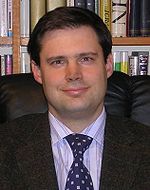
Peter Williams on whether the gospels are based on eyewitness testimony

Peter J. Williams
Peter J. Williams

This is a lecture I found from Dr. Peter J. Williams. He’s giving the lecture in Texas! Isn’t that a hoot?

Here’s the main lecture: (54 minutes)

And here’s the Q&A: (9 minutes)

About Peter Williams:

Peter J. Williams is the Warden (CEO) of Tyndale House and a member of the Faculty of Divinity in the University of Cambridge. He received his MA, MPhil and PhD, in the study of ancient languages related to the Bible from Cambridge University. After his PhD, he was on staff in the Faculty of Divinity, Cambridge University (1997–1998), and thereafter taught Hebrew and Old Testament there as Affiliated Lecturer in Hebrew and Aramaic and as Research Fellow in Old Testament at Tyndale House, Cambridge (1998–2003). From 2003 to 2007 he was on the faculty of the University of Aberdeen, Scotland, where he became a Senior Lecturer in New Testament and Deputy Head of the School of Divinity, History and Philosophy. In July 2007 he became the youngest Warden in the history of Tyndale House. He also retains his position as an honorary Senior Lecturer in Biblical Studies at the University of Aberdeen.

Summary of the lecture:

  • What if the stories about Jesus are legendary?
  • were the gospels transmitted accurately?
  • were the gospels written in the same place as where the events happened?
  • do the gospel authors know the customs and locations where the events happened?
  • do the gospels use the right names for the time and place where the events took place?
  • do the gospels disambiguate people’s names depending on how common those names were?
  • how do the New Testament gospels compare to the later gnostic gospels?
  • how do the gospels refer to the main character? How non-Biblical sources refer to Jesus?
  • how does Jesus refer to himself in the gospels? do the later Christians refer to him that way?
  • how does Jesus teach? do later Christians teach the same way?
  • why didn’t Jesus say anything about early conflicts in the church (the Gentiles, church services)?
  • did the writers of the gospels know the places where the events took place?
  • how many places are named in the gospels? how about in the later gnostic gospels?
  • are the botanical details mentioned in the gospels accurate? how about the later gnostic gospels?

And here are the questions from the audience:

  • how what about the discrepancies in the resurrection narratives that Bart Ehrman is obsessed with?
  • what do you think of the new 2011 NIV translation (Peter is on the ESV translation committee)?
  • how did untrained, ordinary men produce complex, sophisticated documents like the gospels?
  • is oral tradition a strong enough bridge between the events and the writers who interviewed the eyewitnesses?
  • what does the name John mean?
  • why did the gospel writers wait so long before writing their gospels?
  • do you think that Matthew and Luke used a hypothetical source which historians call “Q”?
  • which gospel do critical historians trust the least and why?

I really enjoyed watching this lecture. He’s getting some of this material from Richard Bauckham’s awesome book “Jesus and the Eyewitnesses”, so if you aren’t familiar with it, you can get an idea of what’s in it. Peter Williams is a lot of fun to listen to – an excellent speaker. And this material was NEW TO ME. I like the way that this lecture is filled with little UK expressions like “mind the gap” and “Yah?”. He doesn’t say “if you like” as much as Justin Brierley, though. Just once I would like to have a discussion with Justin and have him say that, then I would say “no I don’t like that”. I think that would be funny, and I would love to see the expression on his face when I said that.

You can read an interview with Peter Williams here on Between Two Worlds.

And you can listen to the Peter Williams vs Bart Ehrman debate on Apologetics 315.

And Apologetics 315 also posted Peter Williams’ assessment of Bart Ehrman’s “Misquoting Jesus”.

Two debates on Christianity and history featuring Richard Bauckham

A leading New Testament scholar from Cambridge, Dr. Richard Bauckham, was recently on the radio program ‘Unbelievable?’ which is on the Premier Christian Radio network.

Debate 1: The reliability of the gospels

Bauckham was arguing that the Gospels are based on eyewitness accounts and therefore should be regarded as fundamentally trustworthy.

Joining him was New Testament historian Dr. James Crossley, discussing the implications of Bauckham’s work and whether the Gospel of John was written by the disciple John himself, as Bauckham claims.

It is well worth the listen.

Part 1 – (1 hr 20 mins)
Part 2 – (1 hr 20 mins)

This is a great debate between two great New Testament scholars.

Debate 2: The divinity of Jesus

The second debate concerns whether the belief in Jesus’ divinity was early and authentic, or whether it developed slowly over time. Richard is very thorough and works only with minimal facts that skeptical scholars will agree with. James Crossley is an excellent atheist and argues his side as well as any atheist I have ever heard in a debate on historical questions.

Here is the MP3 file. (Just over an hour)

Below there are speaker bios.

Richard Bauckham

You can find out more about Bauckham in this Christianity Today profile.

Summary:

The author of CT’s 2007 Book Award winner in biblical studies, Jesus and the Eyewitnesses, Richard Bauckham proposes a new (or, rather, an ancient) paradigm through which to view the Gospels: as the eyewitness testimony of trustworthy insiders. Wheaton professor Gary Burge asked the St. Andrews scholar how his approach diverges from mainstream New Testament scholarship—and what it means for our understanding of Jesus.

I’m really excited by the respect he is getting in the academy. This is a completely NEW perspective on the gospels that is getting a lot of attention.

James Crossley

Crossley specializes in Mark, the earliest and most reliable gospel. Mark’s source for the Passion narrative of Jesus is dated to the 40s, about 10-20 years after the death of Jesus. Mark’s gospel is based on the eyewitness testimony of his companion Peter. So it is fun to hear them debate Mark in the first show. And they get into 1 Corinthians 15 as well, which is dated to 1-3 years after Jesus died.

Crossley debated against William Lane Craig before here and he debated against Michael Bird as well (part 1, part 2).

Why Christians should focus on cultural issues as well as evangelism

Scott Klusendorf linked me this article on Facebook, in which he gives five reasons why Christians should not JUST focus on the gospel, but should instead be good at promoting goodness and opposing evil.

Excerpt:

First, it does not follow that because cultural reformers cannot make a culture blameless before God, we shouldn’t try to make it better for the weak and oppressed. I do not know of a single pro-life leader, for example, who argues that cultural reform can save souls eternally; only the gospel does that. The fact that cultural reform cannot get a man to heaven, however, does not mean that it cannot (in many cases through political means) save him from injustice here on earth. In short, pro-life advocates like me do not work for change in culture to save the world from spiritual death, but to save the most vulnerable members of the human family, the unborn, from physical death.

Second, the goal of cobelligerent cultural reform is not necessarily to change the hearts of individuals (whether saved or lost), but to restrain their evil acts. Martin Luther King, Jr., put it well: “It may be true that the law cannot make a man love me, but it can keep him from lynching me, and I think that’s pretty important.”3 The purpose of government, according to Scripture, is not to ensure salvation, but to promote justice (Rom. 13:1‑4). The primary purpose of the church, of course, is to preach the gospel of Christ, but if Christians, collectively, do not also challenge government to fulfill its duty to protect the weak and defenseless, who will?

Third, the notion that “there can be no real cultural impact apart from the transforming power of the gospel of Jesus Christ” sounds good, but it is simply incorrect. Consider the moral evil of slavery in America, which did not end because of mass conversions to Christ. It ended when believers and nonbelievers joined forces to stand against it—and paid for it with the lives of 360,000 Union soldiers. Was the abolition of slavery not a “real” cultural improvement? True, it did not make those who participated right with God, but it did take the physical whips off the backs of oppressed people. That is moral and cultural improvement by any reasonable standard.

Fourth, it is not spiritually unacceptable for Christians to mobilize with non-Christians for causes other than preaching the gospel. Prior to the Civil War, Protestant clergy worked with non-Christians and organized the Underground Railroad to free black slaves. Anyone who thinks that God’s people are wasting their time pursuing social justice may want to take a look at how important it is to God: Jeremiah 5:26‑28; 9:24; Isaiah 1:16‑17, 21‑23; 58:6‑7; 61:8; Psalm 94:1‑23; Proverbs 24:1‑12; Matthew 25:41‑46.

Fifth, why should anyone suppose that pro-life advocacy detracts from the discipline responsibilities of the local church as outlined in Matthew 28? Simply put, the answer to a lack of evangelical fervor for the Gospel is not to withdraw our political advocacy for the weak and vulnerable; it’s to encourage Christians to do a better job presenting the gospel. We don’t have to stop rescuing the innocent to do that.

This is why I try to have a balance of apologetics with other issues. And not just social policy, but fiscal policy and foreign policy. We need to have complete, comprehensive, coherent Christian worldviews. One obvious benefit of this is that we can connect Christianity with any topic when we are talking to others in the workplace, or anywhere that normal conversations occur. And if we study everything very well, people will link our intelligence to our faith. They’ll say “if you’ve put this much thought into economics, then you must have a well-thought-out faith, too”. Being well-rounded makes you more convincing, more influential on moral and cultural issues, and more effective at turning conversations to the gospel.