Tag Archives: Economic Growth

Ohio Issue 2: Should voters vote yes or vote no on Ohio State Issue 2?

In the 2010 mid-term elections, Republican John Kasich won the governorship and promised to balance the state’s budget by reining in the state’s spending on salaries and benefits for public sector union employees. To accomplish this, the Ohio legislature pass Senate Bill 5. However, an effort is on the ballot to repeal the law, and Ohio voters will get a chance to keep or scrap the law on Tuesday, November 8th, 2011.

Here’s what Ohio’s Issue 2 is all about:

Issue 2 makes some very fair and common sense requests of our government employees to give local communities the flexibility they need to get taxes and spending under control, while providing the essential services that we rely on.

  • It allows an employee’s job performance to be considered when determining compensation, rather than just awarding automatic pay increases based only on an employee’s length of service.
  • It asks that government employees pay at least 15 percent of the cost of their health insurance premium.  That’s less than half of what private sector workers are currently paying.
  • It requires that government health care benefits apply equally to all government employees, whether they work in management or non-management positions.  No special favors.
  • It asks our government employees to pay their own share of a generous pension contribution, rather than forcing taxpayers to pay both the employee and employer shares.
  • It keeps union bosses from protecting bad teachers and stops the outdated practice of laying off good teachers first just because they haven’t served long enough.
  • Finally, it preserves collective bargaining for government employees, but it also returns some basic control of our schools and services to the taxpayers who fund them, not the union bosses who thrive on their mismanagement.

Even under the reforms of State Issue 2, Ohio’s government employees will still receive better pay, better health care and better retirement benefits, on average, than the vast majority of Ohioans who work in the private sector.

There are a number of myths going around about Issue 2, and it’s important to set the record straight, so I’ll do that below.
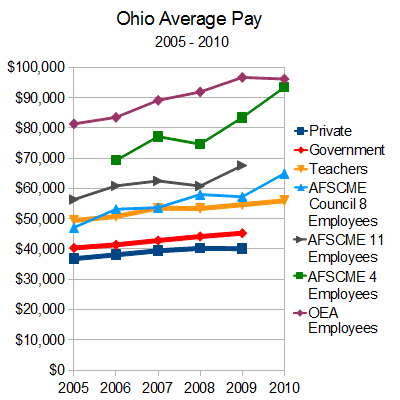
Ohio Average Pay: Public vs. Private
Ohio Average Pay: Public Unions vs. Private

Myths and truths about Ohio State Issue 2

Here’s a common myth:

State Issue 2 would “cut salaries and benefits.”

The truth:

Issue 2 would not cut salaries or benefits for any government employee. Employees would simply be asked to pay a modest share of their benefits, just like employees in the private sector do. For health care coverage, they would pay at least 15% of their overall plan. (Many local government employees currently pay less than 9% of their health care premium, while the average private sector worker pays upwards of 30%.) In addition, employees would be required to pay their personal share of a retirement plan (only 10%), rather than asking taxpayers to pay that share. That’s not too much to ask at a time when many private sector workers get no retirement benefit at all. Finally, Issue 2 requires that benefits apply equally to all public employees, so no one gets special treatment.

And another common myth:

State Issue 2 will eliminate government employee pensions.

The truth:

Government employees will still get a very generous pension benefit – an annual payment that averages their three highest annual salaries. That’s a pretty nice deal, when many private sector workers get no retirement benefit at all. State Issue 2 only ends a practice where some government union contracts require taxpayers to pick up the tab for BOTH the employer AND employee shares of a required pension contribution. In this economy, it’s simply not right to ask struggling taxpayers to foot the bill so government employees can get a free retirement. Issue 2 simply says government employees should pay their required share (10 percent) and taxpayers will contribute the employer share (14 percent).

Another myth:

State Issue 2 will cut teacher salaries.

The truth:

That’s one of the scare tactics government unions are using to turn people against these reforms. Nothing in Issue 2 determines salary levels. It only ends the practice of handing out automatic pay raises, or “step” increases, and longevity pay – or bonuses just for holding the job for a certain period of time. Issue 2 also asks that performance be added as a factor in teacher compensation, a goal President Barack Obama set out in his national education policy in 2009.

And another myth:

State Issue 2 will cost jobs

The truth:

Just the opposite is true. Ohio’s state and local tax burden ranks among the top third in the nation. As a result, companies large and small have left our state in pursuit of better tax incentives elsewhere, taking hundreds of thousands of jobs with them. If Ohio hopes to compete for new job growth, we have to make our state a more affordable place to live, work and do business. That starts with getting the cost of government under control so we can direct more of our limited resources into economic development, community revitalization and better schools.

More myths are corrected on this page.

Newspaper endorsements

So far, Issue 2 has been endorsed by several Ohio newspapers, including the biggest ones.

The Cleveland Plain Dealer:

The fiscal picture of local governments and school districts, especially, will improve as they are able to right-size their work forces and their expenditures on services. That will happen over time, not overnight, as new contracts are established.

Repeal SB 5, though, and it’s going to be awfully hard for local governments to manage their payrolls without resorting to larger-scale layoffs than would otherwise be necessary. And local governments will continue to be hamstrung by anti-merit seniority rules that lead to worker complacency and protect dead weight and time-servers.

Voting YES on Issue 2 will prevent layoffs by keeping public sector wages and benefits in line with what the private sector can afford to pay.

The Columbus Dispatch:

Despite the insistence of opponents, the effort to reform Ohio’s out-of-balance collective-bargaining law is not an expression of disrespect for or dissatisfaction with Ohio teachers, police officers, firefighters and other government employees. It is a much-needed attempt to restore control over public spending to the public officials elected to exercise that control.

It does not assert that public employees are worth less than the compensation they’re receiving, only that the compensation has grown faster than the public’s ability to pay for it.

[…]With more ability to control the escalation of salary and benefit costs, governments won’t be forced as often to impose layoffs, and might be able to afford to keep even more police and firefighters on the streets.

Again, no one is saying that public sector workers don’t matter – the question is whether we can afford to give them better wages and benefits than the private sector workers who are their customers and their employers. Public sector workers work for the public, and the public can only afford to pay so much.

Conclusion

Government employees are paid 43% more than private sector employees, in salary and benefits:

I think that people who care about the long-term prosperity of Ohio should vote “YES” on Issue 2 to make public and private salaries and benefits MORE EQUAL. Ohio is facing enormous economic pressure from the global recession, and everyone has to make sacrifices. Now is not the time for public sector workers to insist on higher wages and benefits, especially when the private sector workers who pay their salaries don’t make as much money, nor do they get the pensions, nor do they get the better job security. Ohio voters can certainly go back and renegotiate union salaries and benefits when Ohio is out of the recession.

Click here to learn more about Ohio Issue 2.

Republicans focus on job creation, abstinence education and tax reform

The Protecting Jobs From Government Interference Act

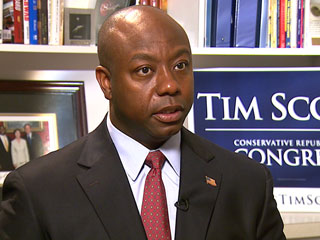
Rep. Tim Scott
Rep. Tim Scott

Limits on the NLRB = pro-jobs bill.

Excerpt:

In response to a series of controversial decisions by the National Labor Relations Board, the House of Representatives passed a bill curtailing the power of the NLRB Thursday afternoon.

The Protecting Jobs From Government Interference Act, H.R. 2587, passed the Republican-controlled House by a vote of 138-186. The bill would prohibit the National Labor Relations Board from ordering any employer to close, relocate, or transfer employment under any circumstance.

The NLRB has been the target of Republican ire since the board filed a complaint against Boeing in April for opening a plant in South Carolina, a right-to-work state. The NLRB said Boeing was punishing workers in Washington state with the decision.

Since then, the NLRB has handed down a spate of pro-union rules that have infuriated labor critics and Republican lawmakers.

Republican legislators say the board shouldn’t have power to dictate where private businesses locate. Union advocates claim the bill would strip the board’s ability to enforce labor laws.

The bill was sponsored by Republican Rep. Tim Scott of South Carolina and introduced in July.

“Today’s vote is important for our entire nation, as well as for my home district in South Carolina, where the NLRB is currently pursuing an agenda which, if successful, would kill thousands of jobs,” Scott said in a statement. “By removing the NLRB’s ability to dictate where private industry creates jobs, we are preventing an unelected, Presidentially-appointed government board from pitting state against state, inserting themselves into the business decisions of private companies, and scaring away investment in our nation.”

Scott has also introduced a bill rolling back several other rules recently passed by the NLRB.

By the way, I’ve been informed that something like 40% of union members vote Republican. It’s not the union members who are bad, it’s the unions. Imagine how those people feel about having dues taken out of their salaries to fund left-wing causes?

Abstinence Education Reallocation Act

Rep. Randy Hultgren
Rep. Randy Hultgren

From Life News.

Excerpt:

Newly-proposed legislation in Congress would restore federal funding for abstinence education as the Obama administration continues to discriminate against grants to programs that promote abstinence over sex education.

Recently, the Department of Health and Human Services announced new funding opportunities for initiatives on the subject, but included a caveat that grants would no go to agencies promoting abstinence education. Applicants for the FOA must include a written statement, according to a National Catholic Register report, that abstinence education is not part of the program, because the Obama administration considers it an  “unallowable activity.”

Organizations receiving funding under the program must make a “commitment to not use funds for unauthorized activities, including, but not limited to, an abstinence-education program.” Some $75 million has been authorized under the Claims Resolution Act of 2010 for the programs.

[…]On Tuesday, legislation was announced on the floor of the House of Representatives that could change this and restore funding for abstinence education. The Abstinence-Centered Education Reallocation Act, sponsored by Rep. Randall Hultgren, an Illinois Republican, is a bill that will put a priority on the sexual risk avoidance message found in abstinence programs.

Abstinence education isn’t just about STIs, it’s about love and marriage. Marital stability is stronger when single men and women avoid premarital sex.

Pro-growth Tax Reform

This one is part of Paul Ryan’s “Path to Prosperity” plan. This time he is explaining his 3-step plan to reform the tax laws to promote job creation.

Here’s the transcript of the video above:

America’s economy has been hit really hard. A lot of people have lost their jobs. More borrowing and spending and higher taxes are not going to bring jobs back to America. The last thing we need to be doing is to complicate job creation in America with this complicated tax code that we have today.

A tax code should be fair, competitive and simple, and the US tax code fails on all three counts.  Here are common-sense ideas we’ve advanced before…ideas that have bipartisan support.

First, we have to make our tax code fair.

It’s full of deductions, credits and special carve-outs – otherwise known as “loopholes” – that let politically-connected companies avoid paying taxes. Every dollar that businesses spend lobbying for a better tax deal, is a dollar they’re not spending on making a better product.

And, since every dollar hidden in a loophole doesn’t get taxed – politicians make up for this lost revenue by increasing overall tax rates. So we need to close these loopholes.

But if we just close loopholes, then our federal corporate tax rate is 35 percent, which is really high.

Add in state and local taxes, the rate climbs to 39.2 percent – the second highest tax rate among developed countries.

On top of sending almost 40 cents out of every dollar earned, straight to the government, businesses pay investment taxes, payroll taxes, and a handful of other taxes our government makes job creators pay.

In the 21st century global economy – and when American families need jobs – this approach just doesn’t make any sense.

We need to make our tax code competitive.

The budget we passed in the House of Representatives calls for closing the loopholes and lowering the rates.

The President’s bipartisan Fiscal Commission proposed something similar.

Its plan would reduce the corporate tax rate to as low as 26 percent, and to lower the top individual rate that many small businesses pay to as low as 23 percent.

So if we lower tax rates, does that mean the wealthy pay less in taxes? Not if we do it by closing loopholes. Because the people who use most of the loopholes are those in the top tax brackets. For all the money that’s parked in these tax loopholes, all that money’s taxed at zero. Take away the tax loophole; lower everybody’s tax rates – that money’s now taxed. But its taxed at a fair more simple, more competitive way so the small business men and women who are out there striving and competing have a better tax rate so they can compete in this global economy.

Third, let’s make the tax code simple.

All together, individuals and businesses spend over six billion hours and 160 billion dollars, every year, just trying to understand and comply with the tax code.

Let’s simplify the code, not just by closing loopholes, but also by decreasing the number of different tax brackets taxpayers fall in.

Fewer brackets, along with lower individual rates, will make the tax code less complicated, and let more people keep more of the money they earn.

There’s a reason this approach has attracted bipartisan support: It’s Fair, It’s Competitive, and It’s Simple.

America’s been knocked down before. We’ve had tough recessions before, and we know that the secret to growing jobs and prosperity in America are through the ingenuity and the hard work of our businesses – of our small businesses, of our large businesses, of job creators. We don’t want a tax system that rewards people for coming to Washington and getting special favors. We want a tax system that rewards Americans for hard work, risk taking, entrepreneurship , investment and innovation. These are the kinds of things that have made America great in the past. And these are the kinds of ideas the we’re going to need if want to grow our economy in the future and compete in the 21st century global economy.

Imagine if the United States were the best place for companies to do business. Imagine the job growth that would stimulate.