Tag Archives: Democrat

Exceptional speech on foreign policy by Tim Pawlenty

Tim Pawlenty delivered this must-read speech on foreign policy to the Council on Foreign Relations today.

Excerpt:

President Obama has failed to formulate and carry out an effective and coherent strategy in response to these events.  He has been timid, slow, and too often without a clear understanding of our interests or a clear commitment to our principles.

And parts of the Republican Party now seem to be trying to out-bid the Democrats in appealing to isolationist sentiments.  This is no time for uncertain leadership in either party.  The stakes are simply too high, and the opportunity is simply too great.

No one in this Administration predicted the events of the Arab spring – but the freedom deficit in the Arab world was no secret.  For 60 years, Western nations excused and accommodated the lack of freedom in the Middle East.  That could not last.  The days of comfortable private deals with dictators were coming to an end in the age of Twitter, You Tube, and Facebook.  And history teaches there is no such thing as stable oppression.

President Obama has ignored that lesson of history.  Instead of promoting democracy – whose fruit we see now ripening across the region – he adopted a murky policy he called “engagement.”

“Engagement” meant that in 2009, when the Iranian ayatollahs stole an election, and the people of that country rose up in protest, President Obama held his tongue.  His silence validated the mullahs, despite the blood on their hands and the nuclear centrifuges in their tunnels.

While protesters were killed and tortured, Secretary Clinton said the Administration was “waiting to see the outcome of the internal Iranian processes.”  She and the president waited long enough to see the Green Movement crushed.

“Engagement” meant that in his first year in office, President Obama cut democracy funding for Egyptian civil society by 74 percent.  As one American democracy organization noted, this was “perceived by Egyptian democracy activists as signaling a lack of support.”  They perceived correctly.  It was a lack of support.

“Engagement” meant that when crisis erupted in Cairo this year, as tens of thousands of protesters gathered in Tahrir Square, Secretary Clinton declared, “the Egyptian Government is stable.”  Two weeks later, Mubarak was gone.  When Secretary Clinton visited Cairo after Mubarak’s fall, democratic activist groups refused to meet with her.  And who can blame them?

The forces we now need to succeed in Egypt — the pro-democracy, secular political parties — these are the very people President Obama cut off, and Secretary Clinton dismissed.

The Obama “engagement” policy in Syria led the Administration to call Bashar al Assad a “reformer.”  Even as Assad’s regime was shooting hundreds of protesters dead in the street, President Obama announced his plan to give Assad “an alternative vision of himself.”  Does anyone outside a therapist’s office have any idea what that means?  This is what passes for moral clarity in the Obama Administration.

By contrast, I called for Assad’s departure on March 29; I call for it again today.  We should recall our ambassador from Damascus; and I call for that again today.  The leader of the United States should never leave those willing to sacrifice their lives in the cause of freedom wondering where America stands.  As President, I will not.

I blogged quite a bit about the peaceful protestors in Iran. Remember Neda Soltan who was shot down in the streets? And yet Obama had almost nothing to say about the pro-democracy movements. And Obama was on the wrong side in the Honduras election, as well – he backed Manuel Zelaya. It’s good that Tim Pawlenty has something to say about it.

And a bit more  of his speech:

The third category consists of states that are directly hostile to America.  They include Iran and Syria.  The Arab Spring has already vastly undermined the appeal of Al Qaeda and the killing of Osama Bin Laden has significantly weakened it.

The success of peaceful protests in several Arab countries has shown the world that terror is not only evil, but will eventually be overcome by good.  Peaceful protests may soon bring down the Assad regime in Syria.  The 2009 protests in Iran inspired Arabs to seek their freedom.  Similarly, the Arab protests of this year, and the fall of regime after broken regime, can inspire Iranians to seek their freedom once again.

We have a clear interest in seeing an end to Assad’s murderous regime.  By sticking to Bashar al Assad so long, the Obama Administration has not only frustrated Syrians who are fighting for freedom—it has demonstrated strategic blindness.  The governments of Iran and Syria are enemies of the United States.  They are not reformers and never will be.  They support each other.  To weaken or replace one, is to weaken or replace the other.

The fall of the Assad mafia in Damascus would weaken Hamas, which is headquartered there.  It would weaken Hezbollah, which gets its arms from Iran, through Syria.  And it would weaken the Iranian regime itself.

To take advantage of this moment, we should press every diplomatic and economic channel to bring the Assad reign of terror to an end.  We need more forceful sanctions to persuade Syria’s Sunni business elite that Assad is too expensive to keep backing.  We need to work with Turkey and the Arab nations and the Europeans, to further isolate the regime.  And we need to encourage opponents of the regime by making our own position very clear, right now:  Bashar al-Assad must go.

When he does, the mullahs of Iran will find themselves isolated and vulnerable.  Syria is Iran’s only Arab ally.  If we peel that away, I believe it will hasten the fall of the mullahs.  And that is the ultimate goal we must pursue.  It’s the singular opportunity offered to the world by the brave men and women of the Arab Spring.

The march of freedom in the Middle East cuts across the region’s diversity of religious, ethnic, and political groups.  But it is born of a particular unity.  It is a united front against stolen elections and stolen liberty, secret police, corruption, and the state-sanctioned violence that is the essence of the Iranian regime’s tyranny.

So this is a moment to ratchet up pressure and speak with clarity.  More sanctions.  More and better broadcasting into Iran.  More assistance to Iranians to access the Internet and satellite TV and the knowledge and freedom that comes with it.  More efforts to expose the vicious repression inside that country and expose Teheran’s regime for the pariah it is.

And, very critically, we must have more clarity when it comes to Iran’s nuclear program.  In 2008, candidate Barack Obama told AIPAC that he would “always keep the threat of military action on the table to defend our security and our ally Israel.”  This year, he told AIPAC “we remain committed to preventing Iran from acquiring nuclear weapons.”  So I have to ask: are all the options still on the table or not?  If he’s not clear with us, it’s no wonder that even our closest allies are confused.

The Administration should enforce all sanctions for which legal authority already exits.  We should enact and then enforce new pending legislation which strengthens sanctions particularly against the Iranian Revolutionary Guards who control much of the Iranian economy.

Here’s a clip from the discussion with CFR after the speech:

You know, I was listening to a fiscal conservative being interviewed on the radio the other day and the person was saying that he had more fear of Obama’s foreign policy than of Obama’s economic policy. This was after he had laid out a gloomy economic picture.
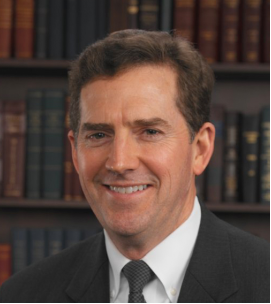
Jim Demint introduces bill to halt funding for European bailouts

Senator Jim Demint

The Wall Street Journal reports on the Republican effort to halt taxpayer-funded bailouts for socialist European nations.

Excerpt:

A group of Republican senators plan to renew their attempts at stopping the U.S. from funding International Monetary Fund loans to Greece and other countries after the Senate failed to vote on their proposal last week.

A spokesman for Sen. Jim DeMint (R., S.C.), who is leading the effort, said the GOP senators plan to soon introduce stand-alone legislation that would direct the U.S. Treasury to vote against any IMF assistance to European Union nations for the foreseeable future. If enacted into law, it could halt U.S. participation in any future IMF attempts to stabilize the sovereign debt crisis in Europe.

The proposal comes as finance ministers work towards a political agreement committing to provide financing to meet a growing gap in Greece’s funding needs beyond the current EUR110 billion, which in turn would allow the IMF to release a delayed tranche of cash in early July.

[…]Attempts by GOP lawmakers to block IMF loans failed to gain traction in Congress last year. And President Barack Obama has asserted in a signing statement after a House vote on an IMF provision that he doesn’t recognize Congress’ ability to tell the administration how to vote at the IMF.

Greece embraced socialism, and now they have to face the music.

Republicans rebuff Obama’s call to raise taxes on small business

First, an article explaining how the Obama administration wants to raise taxes on small businesses.

Excerpt:

Treasury Secretary Timothy Geithner told the House Small Business Committee on Wednesday that the Obama administration believes taxes on small business must increase so the administration does not have to “shrink the overall size of government programs.”

The administration’s plan to raise the tax rate on small businesses is part of its plan to raise taxes on all Americans who make more than $250,000 per year—including businesses that file taxes the same way individuals and families do.

Geithner’s explanation of the administration’s small-business tax plan came in an exchange with first-term Rep. Renee Ellmers (R.-N.C.). Ellmers, a nurse, decided to run for the U.S. House of Representatives in 2010 after she became active in the grass-roots opposition to President Barack Obama’s proposed health-care reform plan in 2009.

“Overwhelmingly, the businesses back home and across the country continue to tell us that regulation, lack of access to capital, taxation, fear of taxation, and just the overwhelming uncertainties that our businesses face is keeping them from hiring,” Ellmers told Geithner. “They just simply cannot.”

[…]When Ellmers finally told Geithner that “the point is we need jobs,” he responded that the administration felt it had “no alternative” but to raise taxes on small businesses because otherwise “you have to shrink the overall size of government programs”—including federal education spending.

So what about the Republicans in the House? Are they going to cave in to the Democrat demands for more taxes on job creators?

CNS News reports that House Republicans categorically refuse to raise taxes during a recession.

Excerpt:

Two days after House Majority Leader Eric Cantor (R-Va.) dodged the question of whether Republicans would insist that any increase in the debt limit in this fiscal year would be exceeded by spending cuts in this fiscal year, the congressman walked out of debt/budget talks with Vice President Joe Biden, stating he could not continue as long as the Democrats insisted that taxes be raised as part of a budget deal.

House Speaker John Boehner (R-Ohio), meanwhile, maintained that tax increases were off the table and that spending cuts should exceed any increase in the federal debt limit.

“Each side came into these talks with certain orders, and as it stands the Democrats continue to insist that any deal must include tax increases,” said Cantor in a statement released on Thursday.  “[T]he tax issue must be resolved before discussions can continue. Given this impasse, I will not be participating in today’s meeting.”

Both Cantor and House Speaker John Boehner (R-Ohio) have consistently said that any budget deal for the remainder of fiscal year 2011 and a vote on raising the debt limit–from $14.29 trillion to potentially $16.79 trillion (a $2.5 trillion increase)–would not include raising taxes.

After Cantor left the talks with Biden, along with Sen. Jon Kyl (R-Ariz.), Boehner held a press conference and said, “Listen, we’ve got to stop spending money that we don’t have and, since the beginning, the Majority Leader [Canotor] and myself, along with Sen. McConnell and Sen. Kyl have been clear: tax hikes are off the table.”

“First of all: raising taxes is going to destroy jobs,” said Boehner.  “If you raise taxes on the people that we need to grow our economy and to hire new workers, guess what? They’re not going to do it if they have to pay higher taxes to the federal government.”

“Second, a tax hike cannot pass the U.S. House of Representatives,” said the Speaker. “It’s not just a bad idea, it doesn’t have the votes and it can’t happen. And third, the American people don’t want us to raise taxes. They know that we’ve got a spending problem. That’s why Republicans passed a budget [drafted by Rep. Paul Ryan of Wisconsin] that pays down debt over time without raising taxes.”

But what about the Republicans in the Senate? Aren’t they usually more liberal than the Republicans in the House?

CNS News reports that Republicans in the Senate are absolutely opposed to increasing taxes in a recession.

Excerpt:

Sen. Mike Lee (R-Utah) told CNSNews.com that he would “absolutely not” support any tax increases as part of a deal to increase the debt limit.

Lee was asked if he agreed with Treasury Secretary Tim Geithner that revenue increases should be part of a negotiation on the debt limit because spending cuts alone are “irresponsible.”

“I’m fine with revenue increases as long as they don’t involve tax increases. There are other ways of increasing revenue. They could expand their use of federal public land through extension of oil and gas leases and so forth. If they want that kind of revenue increase, I’m all for that,” said Lee after endorsing the “Cut, Cap and Balance Pledge” during a press conference at the Capitol on Wednesday.

Politicians who support the pledge vow to vote against raising the debt limit unless Congress adopts a balanced budget amendment to the Constitution and implements budget cuts and caps on federal spending.

Lee was then asked if he would support any tax increases, specifically.

“No. Absolutely not. We can’t afford a double dip recession right now, and that’s exactly where that would take us,” said Lee.

“You take the same people whose investment dollars are needed to create jobs and you penalize them and you tell them you’re going to get to keep less of your, the rewards from your investment than you would otherwise take – that’s going to chill rather than promote investment. And if you do that, we’re going to have fewer jobs rather than more at a time when we can least afford to hemorrhage jobs.”

House and Senate Republicans understand that we need jobs, and that raising taxes will hurt job creation. Obama’s answer to everything is always more taxing and more spending and more borrowing. The Republicans have got to hold firm and take away his credit card. We need an intervention.