If you do a search on this, you will find most of the mainstream media talking about how the students booed Santorum. Apparently, neither the college students nor the media are capable of understanding that if you can marry anyone you want, then that means that there can be no prohibition of polygamy. And, of course, this is exactly what is happening in countries that have embraced same-sex marriage, like Canada.
Excerpt:
Canada’s decision to legalize gay marriage has paved the way for polygamy to be legal as well, a defense lawyer said Wednesday as the two leaders of rival polygamous communities made their first court appearance.
The case is the first to test Canada’s polygamy laws.
Winston Blackmore, 52, and James Oler, 44, are each accused of being married to more than one woman at a time. The charges carry a maximum penalty of five years in prison, British Columbia Attorney General Wally Oppal said.
But Blackmore’s lawyer, Blair Suffredine, said during a telephone interview that marriage standards in Canada have changed.
“If (homosexuals) can marry, what is the reason that public policy says one person can’t marry more than one person?” said Suffredine, a former provincial lawmaker. Canada’s Parliament extended full marriage rights to same-sex couples in 2005.
Actually, law professors at Queen’s University are already demanding that polygamy be legalized.
A Queen’s University law professor says that polygamy should be legal in Canada.
Queen’s issued a news release on the day that a polygamy reference opened in British Columbia, where the government is seeking a legal opinion on whether Canada’s 128-year-old ban on multiple marriage violates the freedom of religion guarantees in the Charter of Rights.
Bev Baines, head of the Department of Gender Studies and a constitutional law expert, argues that Canada is a multicultural country and it is therefore unconstitutional to criminalize people for their marital relationships.
“The law achieves nothing,” Baines said in the release. “We’ve had the law on the books since 1892 and we had no prosecutions in the last 60 years aside from a failed attempt last January. We don’t stop polygamy by having a law.”
What I find disturbing is that the media and the college students are unable to follow the logic that legal scholars in Canada are now following. Are they not aware of what is happening in nations that have legalized gay marriage? Or can they only understand who is booing who? The journalists certainly think that booing a Presidential candidate is more appropriate than the use of reason to evaluate moral arguments. Sometimes I wonder if journalists learn anything at all in college except how to accuse conservatives of SIXHIRB – sexism, intolerance, xenophobia, homophobia, Islamophobia, racism, bigotry.
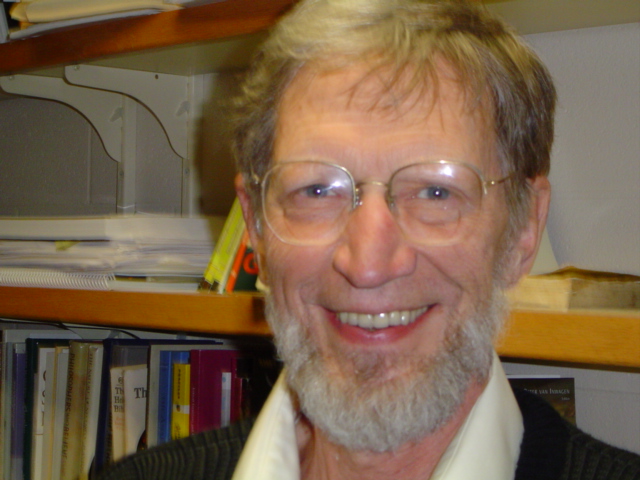
Alvin Plantinga is widely regarded as the top Christian philosopher in the world, and a former head of the largest professional association of philosophers – the American Philosophical Association (APA).
From Calvin [College], and later from the University of Notre Dame, Mr. Plantinga has led a movement of unapologetically Christian philosophers who, if they haven’t succeeded in persuading their still overwhelmingly unbelieving colleagues, have at least made theism philosophically respectable.
“There are vastly more Christian philosophers and vastly more visible or assertive Christian philosophy now than when I left graduate school,” Mr. Plantinga said in a recent telephone interview from his home in Grand Rapids, adding, with characteristic modesty, “I have no idea how it happened.”
Mr. Plantinga retired from full-time teaching last year, with more than a dozen books and a past presidency of the American Philosophical Association to his name. But he’s hardly resting on those laurels. Having made philosophy safe for theism, he’s now turning to a harder task: making theism safe for science.
For too long, Mr. Plantinga contends in a new book, theists have been on the defensive, merely rebutting the charge that their beliefs are irrational. It’s time for believers in the old-fashioned creator God of the Bible to go on the offensive, he argues, and he has some sports metaphors at the ready. (Not for nothing did he spend two decades at Notre Dame.)
In “Where the Conflict Really Lies: Science, Religion and Naturalism,” published last week by Oxford University Press, he unleashes a blitz of densely reasoned argument against “the touchdown twins of current academic atheism,” the zoologist Richard Dawkins and the philosopher Daniel C. Dennett, spiced up with some trash talk of his own.
[…] Longtime readers of Mr. Plantinga, who was raised as a Presbyterian and who embraced the Calvinism of the Christian Reformed Church as a young man, are used to such invocations of theological concepts. And even philosophers who reject his theism say his arguments for the basic rationality of belief, laid out in books like “Warranted Christian Belief” and “God and Other Minds,” constitute an important contribution that every student of epistemology would be expected to know.
But Mr. Plantinga’s steadfast defense of the biochemist and intelligent-design advocate Michael Behe, the subject of a long chapter in the new book, is apparently another matter.
“I think deep down inside he really isn’t a friend of science,” Michael Ruse, a philosopher of science at Florida State University, said of Mr. Plantinga. “I’m not objecting to him wanting to defend theism. But I think he gets his victory at the level of gelding or significantly altering modern science in unacceptable ways.”
Mr. Dennett was even harsher, calling Mr. Plantinga “Exhibit A of how religious beliefs can damage or hinder or disable a philosopher,” not to mention a poor student of biology. Evolution is a random, unguided process, he said, and Mr. Plantinga’s effort to leave room for divine intervention is simply wishful thinking.
“It’s just become more and more transparent that he’s an apologist more than a serious, straight-ahead philosopher,” Mr. Dennett said.
When Mr. Plantinga and Mr. Dennett (who said he has not read Mr. Plantinga’s new book) faced off over these questions before a standing-room-only crowd at a 2009 meeting of the American Philosophical Association, the event prompted ardent online debate over who had landed better punches, or simply been more condescending. (A transcript of the proceedings was published last year as “Science and Religion: Are They Compatible?”)
Mr. Plantinga, who recalled the event as “polite but not cordial,” allowed that he didn’t think much of Mr. Dennett’s line of reasoning. “He didn’t want to argue,” Mr. Plantinga said. “It was more like he wanted to make assertions and tell stories.”
Would you like to know how well Daniel Dennett can debate the naturalism/theism dispute? First of all, Plantinga has debated Dennett, and you can find the audio for it at Apologetics 315.
William Lane Craig also presented several arguments against naturalism to Daniel Dennett in 2007, and Dennett responded by calling it a “first-rate piece of philosophical reasoning”. I link to the exchange and complain about Dennett’s weak response to Craig’s arguments in a previous post.
The resurgence of Christian theism in analytical philosophy
Now let’s move from the specific to the aggregate. What is going on with these Christian philosophers?
Well, you can read an excellent article about the resurgence of Christian theism in philosophy departments in the peer-reviewed philosophy journal Philo, which, in my opinion, is the best journal for atheists and agnostic philosophers. The article is authored by the well-known atheist Quentin Smith.
He writes:
THE DESECULARIZATION OF ACADEMIA THAT EVOLVED IN PHILOSOPHY DEPARTMENTS SINCE THE LATE 1960s
By the second half of the twentieth century, universities and colleges had been become in the main secularized. The standard (if not exceptionless) position in each field, from physics to psychology, assumed or involved arguments for a naturalist world-view; departments of theology or religion aimed to understand the meaning and origins of religious writings, not to develop arguments against naturalism. Analytic philosophers (in the mainstream of analytic philosophy) treated theism as an antirealist or non-cognitivist world-view, requiring the reality, not of a deity, but merely of emotive expressions or certain “forms of life” (of course there were a few exceptions, e.g., Ewing, Ross, Hartshorne, etc., but I am discussing the mainstream view).
[…]The secularization of mainstream academia began to quickly unravel upon the publication of Plantinga’s influential book on realist theism, God and Other Minds, in 1967. It became apparent to the philosophical profession that this book displayed that realist theists were not outmatched by naturalists in terms of the most valued standards of analytic philosophy: conceptual precision, rigor of argumentation, technical erudition, and an in-depth defense of an original world-view. This book, followed seven years later by Plantinga’s even more impressive book, The Nature of Necessity, made it manifest that a realist theist was writing at the highest qualitative level of analytic philosophy, on the same playing field as Carnap, Russell, Moore, Grünbaum, and other naturalists. Realist theists, whom hitherto had segregated their academic lives from their private lives, increasingly came to believe (and came to be increasingly accepted or respected for believing) that arguing for realist theism in scholarly publications could no longer be justifiably regarded as engaging in an “academically unrespectable” scholarly pursuit.
Naturalists passively watched as realist versions of theism, most influenced by Plantinga’s writings, began to sweep through the philosophical community, until today perhaps one-quarter or one-third of philosophy professors are theists, with most being orthodox Christians. Although many theists do not work in the area of the philosophy of religion, so many of them do work in this area that there are now over five philosophy journals devoted to theism or the philosophy of religion, such as Faith and Philosophy, Religious Studies, International Journal of the Philosophy of Religion, Sophia, Philosophia Christi, etc. Philosophia Christi began in the late 1990s and already is overflowing with submissions from leading philosophers. Can you imagine a sizeable portion of the articles in contemporary physics journals suddenly presenting arguments that space and time are God’s sensorium (Newton’s view) or biology journals becoming filled with theories defending élan vital or a guiding intelligence? Of course, some professors in these other, non-philosophical, fields are theists; for example, a recent study indicated that seven percent of the top scientists are theists.1 However, theists in other fields tend to compartmentalize their theistic beliefs from their scholarly work; they rarely assume and never argue for theism in their scholarly work. If they did, they would be committing academic suicide or, more exactly, their articles would quickly be rejected, requiring them to write secular articles if they wanted to be published. If a scientist did argue for theism in professional academic journals, such as Michael Behe in biology, the arguments are not published in scholarly journals in his field (e.g., biology), but in philosophy journals (e.g., Philosophy of Science and Philo, in Behe’s case). But in philosophy, it became, almost overnight, “academically respectable” to argue for theism, making philosophy a favored field of entry for the most intelligent and talented theists entering academia today. A count would show that in Oxford University Press’ 2000–2001 catalogue, there are 96 recently published books on the philosophy of religion (94 advancing theism and 2 presenting “both sides”). By contrast, there are 28 books in this catalogue on the philosophy of language, 23 on epistemology (including religious epistemology, such as Plantinga’s Warranted Christian Belief), 14 on metaphysics, 61 books on the philosophy of mind, and 51 books on the philosophy of science.
And how have naturalist philosophers reacted to what some committed naturalists might consider as “the embarrassment” of belonging to the only academic field that has allowed itself to lose the secularization it once had? Some naturalists wish to leave the field, considering themselves as no longer doing “philosophy of mind,” for example, but instead “cognitive science.” But the great majority of naturalist philosophers react by publicly ignoring the increasing desecularizing of philosophy (while privately disparaging theism, without really knowing anything about contemporary analytic philosophy of religion) and proceeding to work in their own area of specialization as if theism, the view of approximately one-quarter or one-third of their field, did not exist. (The numbers “one-quarter” and “one-third” are not the result of any poll, but rather are the exceptionless, educated guesses of every atheist and theist philosophy professor I have asked [the answers varied between “one-quarter” and “one-third”]). Quickly, naturalists found themselves a mere bare majority, with many of the leading thinkers in the various disciplines of philosophy, ranging from philosophy of science (e.g., Van Fraassen) to epistemology (e.g., Moser), being theists. The predicament of naturalist philosophers is not just due to the influx of talented theists, but is due to the lack of counter-activity of naturalist philosophers themselves. God is not “dead” in academia; he returned to life in the late 1960s and is now alive and well in his last academic stronghold, philosophy departments.
Quentin Smith is a good friend of William Lane Craig, who is a philosopher/theologian and the top Christian defender in the world, and probably of all time. Smith is the co-author, with William Lane Craig, of the book “Theism, Atheism, and Big Bang Cosmology“, also published by Oxford University Press. Craig and Smith debated at Harvard University in 2003, and I transcribed the debate for posterity. If some of you are looking for a way to help promote Christian apologetics, you should pick a debate that hasn’t been transcribed and transcribe it. A lot of people read these debate transcripts. I had them printed out in my binder when I was an undergraduate student, in case my professors got boring! I like a good fight.
On a lighter note, my office plant is named Alvin Plantinga. It was grown in water and then given to me by an atheist with whom I work. We discuss these interesting topics over lunch every few months. And so should you. Why not send the New York Times article and the Philo article to an atheist in your office and get the conversation started? There’s enough in this post alone to help you sound like Alvin Plantinga!
The State University of New York-Buffalo (SUNY Buffalo) is looking into allegations that a Christian campus group is in violation of school policy and the law by requiring its leaders to sign a faith-based statement.
This week’s investigation by a committee of the Student Association comes after sophomore Steven Jackson stepped down from a leadership position with InterVarsity Christian Fellowship over differing views on sexuality.
JoAnna Datz, president of the Student Association at SUNY Buffalo, told The Christian Post Wednesday that “the [investigative] committee has been meeting and collecting objective information, reviewing the Student Association Constitution, clubs documents, and just collecting information.”
She said there is a lot of information that the senators need to be educated on regarding what happened between Jackson and the club.
On Friday, the university’s newspaper, The Spectrum, reported on a letter sent to InterVarsity’s executive board informing the group of its suspension. It stated: “All peripheral privileges afforded to Student Association clubs are revoked for Intervarsity Christian Fellowship until further notice.”
[…]Jackson served as InterVarsity’s treasurer and is openly gay.
Datz told The Christian Post that when a club is formed at SUNY Buffalo their constitution is reviewed before they can become recognized. So originally InterVarsity’s constitution was approved. But if they made any changes since its inception, none of those have been reviewed by the SA. It wasn’t until last year, Datz said, that a rule was put in place that any changes to club constitutions must be reviewed.
The investigation committee will be looking over InterVarsity’s constitution. The campus group requires leaders to be in agreement with its doctrinal statement, purpose statement, and living a life of Christian integrity. Membership, however, is open to all.
The requirement that leaders sign a certain set of beliefs is at the heart of the controversy. Datz said this week they have also been debating the differences between membership and leadership in this particular case.
Jim Lundgren, director of Collegiate Ministries for Intervarsity, stressed to The Christian Post that the organization does not discriminate based on sexual orientation. In Jackson’s case, however, “he decided to pursue a sexually active homosexual relationship” and InterVarsity doesn’t affirm a sexually active relationship outside of marriage.
SA’s executive board is expected to make a decision this coming Sunday at their meeting.
If InterVarsity is found to be in violation of antidiscrimination policies, Datz said the senate could choose to derecognize them as a club, take away their funding or require that they change their constitution.
But now I turn to the underlying problem.
Some Christians don’t think there is a problem with that
The Biblical standard is no sex before or outside of marriage and marriage is defined as being between one man and one woman. In general, even divorce isn’t permitted. That’s what Christians believe about sex. So what happens when someone who doesn’t believe that wants to join a Christian organization in a leadership capacity?
Christians are not being mean when they exclude a person from an assembly of Christians because of a public, unrepented, sinful lifestyle.
1 It is actually reported that there is sexual immorality among you, and of a kind that even pagans do not tolerate: A man is sleeping with his father’s wife.
2 And you are proud! Shouldn’t you rather have gone into mourning and have put out of your fellowship the man who has been doing this?
3 For my part, even though I am not physically present, I am with you in spirit. As one who is present with you in this way, I have already passed judgment in the name of our Lord Jesus on the one who has been doing this.
4 So when you are assembled and I am with you in spirit, and the power of our Lord Jesus is present, 5 hand this man over to Satan for the destruction of the flesh, so that his spirit may be saved on the day of the Lord.
6 Your boasting is not good. Don’t you know that a little yeast leavens the whole batch of dough?
7 Get rid of the old yeast, so that you may be a new unleavened batch—as you really are. For Christ, our Passover lamb, has been sacrificed.
8 Therefore let us keep the Festival, not with the old bread leavened with malice and wickedness, but with the unleavened bread of sincerity and truth.
9 I wrote to you in my letter not to associate with sexually immoral people—
10 not at all meaning the people of this world who are immoral, or the greedy and swindlers, or idolaters. In that case you would have to leave this world.
11But now I am writing to you that you must not associate with anyone who claims to be a brother or sister but is sexually immoral or greedy, an idolater or slanderer, a drunkard or swindler. Do not even eat with such people.
12 What business is it of mine to judge those outside the church? Are you not to judge those inside?
13 God will judge those outside. “Expel the wicked person from among you.”
So, this might be a surprise to many of you, but there is actually a lot of support for the idea of shunning someone who claims to be a Christian, yet who openly commits to a lifestyle that opposes the Bible’s moral standards. 1 Cor 5 actuallysays that it is ok to get along with non-Christian sinners, and not OK to get along with people who claim to be Christians but who are in some serious sinful situation that they are not sorry about at all. I think it’s a great idea to be friends with people who are non-Christian, and to treat them nicely, so long as they know that we disagree with them on certain issues and they are OK with letting us do that. Everyone sins – but Christians shouldn’t sin unrepentantly and repeatedly and then try to justify it as consistent with Christianity. But non-Christians are exempt from Christian moral rules, obviously.
What annoys me is when nice “Christians” try to make me feel guilty for taking the Bible seriously on sexual morality. Just because you want to think of yourself as “nice” according to the standards of the age, and you want non-Christians to like you and ask you out with them to movies, it doesn’t mean that suddenly it has become OK to redefine the Bible to mean what you want it to mean. Those rules are there for a reason, and your job is to adapt your views and defend them. You aren’t in charge.
The problem is that Christianity has been redefined so that people in the Church now think that their job is to sing happy songs, feel good, and then go out into the world telling everyone that the Bible has nothing at all to say about right and wrong. Instead of telling people “you are free to do what you like, but doing X is not wise or moral”, now we say “whatever you want to do is fine with me, as long as you feel good”. We want to be liked by men more than we want to be liked by God.

 WINTERY KNIGHT