Tag Archives: Civil Rights

Gay marriage debate: Michael Brown debates Eric Smaw on same-sex marriage

About the debate:

On April 21, 2011 at 7:30pm at UCF’s Health and Public Affairs Building (Room 119), Rollins College professor, Dr. Eric Smaw and author and seminary professor Dr. Michael L. Brown will debate the question “Should same sex marriage be legalized in America?” The event will be held at 4000 Central Florida Blvd and is open to the public. After the formal portion of the debate, Brown and Smaw will field questions from the audience.

About the speakers:

Dr. Smaw will be responding in the affirmative. He earned his Ph.D. in Philosophy of Law from the University of Kentucky in 2005. His areas of expertise are philosophy of law, international law, human rights, ethics, and modern philosophy. He has published articles on human rights, terrorism, and cosmopolitanism. His most recent publication is “Swaying in the Balance: Civil Liberties, National Security, and Justice in Times of Emergency”.

Dr. Brown will be responding in the negative. He earned his Ph.D. in Near Eastern Languages and Literatures from New York University and is a nationally known evangelical lecturer and radio host. He is the author of numerous scholarly articles and twenty books, including the recently published study “A Queer Thing Happened to America”, which is quickly being recognized as the definitive work on the history and effects of gay activism on American culture.

Here are the first two parts:

Part 1 of 10:

Part 2 of 10:

The rest of the segments are here.

Summaries of the opening speeches

Summary of Dr. Brown’s opening speech:

There is no compelling reasons by the state should change the definition of marriage

The reason the state conveys benefits for marriage is because marriage is beneficial for the state

Traditional marriage is recognized by the state for several reasons:
– it domesticates men
– it protects women
– it provides a stable, nurturing environment for children

Marriage has three public purposes:
– to bind men and women together for RESPONSIBLE procreation
– to get the benefit
– to provide children with two parents who are bonded to them biologically
– to create the next generation of people to keep the society going

Normally, opposite sex couples create children

Homosexual couples can NEVER create children together

Men and women are differences that are complementary

Monogamy is the norm for opposite sex couples.

For gay men, open relationships / cheating is the norm.
This is because women have a tempering effect on sexuality.

There is no evidence that recognizing same-sex civil unions and marriages have changed this trend.

Same-sex marriage guarantees that children will either not have a father or a mother
So which of the sexes is dispensable when raising children?

For example, consider Dawn Stefanowicz, who grew up with a gay father and no mother
She never got a chance to see a man model love and protect a women within a marriage
That makes an enormous difference in a woman’s life – in the way she relates to men

Even with scientific advancements, every baby has a mother and a father

If we change the definition of marriage so that it is based on consent, then why limit it to just two people
If marriage is not the union of male and female, then why have only TWO people
In Canada, you have civil liberties lawyers arguing for for polygamy
In the United States, Professor David Epstein was in a consensual relationship with his daughter
Should incestuous relationships also be celebrated as marriage? Why not?
Should polyamorous relationships also be celebrated as marriage? Why not?

Sexual orientation is not the same as race
Men are women are different in significant ways, but different races are not
You need separate bathrooms for men and women, but not for people of different races

Summary of Dr. Smaw’s opening speech: (He ended his speech after only 10 minutes)

You can redefine marriage so that it no longer based on the public purposes he mentioned (controlling procreation, fusing complementary male and female natures, providing children with mothers and fathers who are biologically linked to them, providing children with a comparatively stable development environment that offers comparatively less instability, promiscuity and domestic violence rates compared to cohabitation, etc.), but is instead based on consent and feelings, and that redefinition of marriage won’t open marriage up to polygamy, polyamory, etc.

If you like feminism, then you should allow same-sex marriage

If you like abortion rights, then you should allow same-sex marriage

Homosexuals participate in society by working at various jobs, so they are participating in society

Homosexuals should be given the same tax breaks as married people because they work at various jobs for money

Working at a job for money achieves the same public purpose as procreating and staying together to raise children in a stable environment

You can listen to the rest for the rebuttals, and cross-examination. Oh yes – there was cross-examination! It starts two thirds of the way through Part 5, if you want to jump to it. And sparks were flying! There is also Q&A from the audience of students.

This is such a great debate – I love to hear two passionate guys disagreeing about something. I love to hear both sides of the issues. There is always something to learn by listening to the other side. It makes me more effective and more tolerant when I stand up to defend my side of the argument.

By the way, my own secular case against same-sex marriage is right here, if you want to see how I would debate this issue. Also check out the recent studies on the effects of gay parenting on children.
Gay marriage debate: Michael Brown debates Eric Smaw on same-sex marriage

About the debate:

On April 21, 2011 at 7:30pm at UCF’s Health and Public Affairs Building (Room 119), Rollins College professor, Dr. Eric Smaw and author and seminary professor Dr. Michael L. Brown will debate the question “Should same sex marriage be legalized in America?” The event will be held at 4000 Central Florida Blvd and is open to the public. After the formal portion of the debate, Brown and Smaw will field questions from the audience.

About the speakers:

Dr. Smaw will be responding in the affirmative. He earned his Ph.D. in Philosophy of Law from the University of Kentucky in 2005. His areas of expertise are philosophy of law, international law, human rights, ethics, and modern philosophy. He has published articles on human rights, terrorism, and cosmopolitanism. His most recent publication is “Swaying in the Balance: Civil Liberties, National Security, and Justice in Times of Emergency”.

Dr. Brown will be responding in the negative. He earned his Ph.D. in Near Eastern Languages and Literatures from New York University and is a nationally known evangelical lecturer and radio host. He is the author of numerous scholarly articles and twenty books, including the recently published study “A Queer Thing Happened to America”, which is quickly being recognized as the definitive work on the history and effects of gay activism on American culture.

Here are the first two parts:

Part 1 of 10:

Part 2 of 10:

The rest of the segments are here.

Summaries of the opening speeches

Summary of Dr. Brown’s opening speech:

There is no compelling reasons by the state should change the definition of marriage

The reason the state conveys benefits for marriage is because marriage is beneficial for the state

Traditional marriage is recognized by the state for several reasons:
– it domesticates men
– it protects women
– it provides a stable, nurturing environment for children

Marriage has three public purposes:
– to bind men and women together for RESPONSIBLE procreation
– to get the benefit
– to provide children with two parents who are bonded to them biologically
– to create the next generation of people to keep the society going

Normally, opposite sex couples create children

Homosexual couples can NEVER create children together

Men and women are differences that are complementary

Monogamy is the norm for opposite sex couples.

For gay men, open relationships / cheating is the norm.
This is because women have a tempering effect on sexuality.

There is no evidence that recognizing same-sex civil unions and marriages have changed this trend.

Same-sex marriage guarantees that children will either not have a father or a mother
So which of the sexes is dispensable when raising children?

For example, consider Dawn Stefanowicz, who grew up with a gay father and no mother
She never got a chance to see a man model love and protect a women within a marriage
That makes an enormous difference in a woman’s life – in the way she relates to men

Even with scientific advancements, every baby has a mother and a father

If we change the definition of marriage so that it is based on consent, then why limit it to just two people
If marriage is not the union of male and female, then why have only TWO people
In Canada, you have civil liberties lawyers arguing for for polygamy
In the United States, Professor David Epstein was in a consensual relationship with his daughter
Should incestuous relationships also be celebrated as marriage? Why not?
Should polyamorous relationships also be celebrated as marriage? Why not?

Sexual orientation is not the same as race
Men are women are different in significant ways, but different races are not
You need separate bathrooms for men and women, but not for people of different races

Summary of Dr. Smaw’s opening speech: (He ended his speech after only 10 minutes)

You can redefine marriage so that it no longer based on the public purposes he mentioned (controlling procreation, fusing complementary male and female natures, providing children with mothers and fathers who are biologically linked to them, providing children with a comparatively stable development environment that offers comparatively less instability, promiscuity and domestic violence rates compared to cohabitation, etc.), but is instead based on consent and feelings, and that redefinition of marriage won’t open marriage up to polygamy, polyamory, etc.

If you like feminism, then you should allow same-sex marriage

If you like abortion rights, then you should allow same-sex marriage

Homosexuals participate in society by working at various jobs, so they are participating in society

Homosexuals should be given the same tax breaks as married people because they work at various jobs for money

Working at a job for money achieves the same public purpose as procreating and staying together to raise children in a stable environment

You can listen to the rest for the rebuttals, and cross-examination. Oh yes – there was cross-examination! It starts two thirds of the way through Part 5, if you want to jump to it. And sparks were flying! There is also Q&A from the audience of students.

This is such a great debate – I love to hear two passionate guys disagreeing about something. I love to hear both sides of the issues. There is always something to learn by listening to the other side. It makes me more effective and more tolerant when I stand up to defend my side of the argument.

By the way, my own secular case against same-sex marriage is right here, if you want to see how I would debate this issue. Also check out the recent studies on the effects of gay parenting on children.

Awakening the “moral sense” of the public in the abortion debate


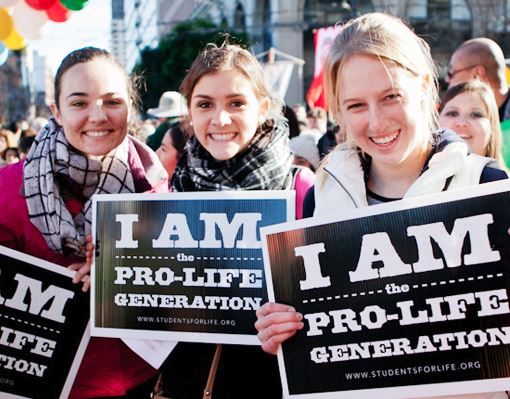
Young pro-life women protest Planned Parenthood

Scott Klusendorf linked to this article from the Public Discourse. The article talks about the need to augment logical arguments in other ways in order to awaken the moral sense of the public so that they will support the pro-life cause and vote to repeal pro-abortion laws.

Excerpt:

In a manner similar to the case of slavery as outlined by Douglass, there are two simple points that, once admitted, join to condemn clearly the practice of abortion: (1) the embryo is a human being from the moment of conception, and (2) all human beings have a natural right to life.

The second point, as in the case of the natural right to liberty, doesn’t require serious argument on the level of ordinary judgment, even though many pro-choice philosophers have tried to argue that only persons have a right to life, and the unborn, in their view, aren’t persons. To make such arguments, however, requires choosing an arbitrary cut-off point for personhood, as pro-life philosophers such as George, Tollefsen, and Lee have shown.

The first point is more often chosen as promising ground for challenges, but it too is plainly obvious to the unbiased mind.

Once conception occurs, the embryo is something other than the woman who carries it. The fact that the embryo requires the mother’s body to live is no argument against this—dependence does not exclude otherness, otherwise none of us would be distinguishable from everyone and everything else in the world upon which we depend in innumerable ways. The embryo is obviously something other than a part of the mother, but what is it?

This is where it gets easy, despite the messy, abstract philosophical arguments. The more appropriate version of the question is the following: What else could it be besides a human being? Is there a single example in natural history of sexual intercourse between two individuals of the same species resulting in something other than another individual of that species? Is it plausible to guess that sexual intercourse between two human beings might result in a fish, at least initially? Or maybe a frog? Such speculation is entirely fanciful and runs directly contrary to our experience of the world since the beginning of recorded history.

It should be obvious to anyone that the two points hold, and that the embryo is a human being possessing a natural right to life from the moment of its conception. The problem is that the younger and less developed the embryo is, the less it excites what some have called our “moral sense,” our sympathy with it as another human being like us. And as Hume correctly notes, human beings tend to be moved more by their passions and feelings, including the so-called “moral sense,” than by their intellectual understanding of the world when determining their actions. Even if our reason and common sense tell us clearly—as they undoubtedly do—that the embryo is a human being with the right to life, our moral sense or sympathy lets us off the hook.

So where does this leave pro-life advocates? How can we bridge the Humean—and human—gap between intellectual understanding and actual practice in our nation? The answer lies in the parallel between the issue of abortion and those of slavery and subsequent civil rights. The pro-life movement needs to model more closely in its organization and practices the antebellum abolition movement and the civil rights movement in order to achieve similar success in ending the evil of abortion. It needs to take up the mantle of these causes in a manner beyond rhetorical parallel or intellectual analogy and be prepared to undergo similar hardships before achieving its goals.

Both of these historical movements ultimately succeeded not by winning arguments, but by awakening the moral sense or conscience of a majority of the nation. Legislation relating to the provision of an ultrasound prior to an abortion, currently in place in some form in more than twenty states, is very well suited to this purpose. The dissemination of graphic images relating to abortion procedures, though controversial in pro-life circles, is also highly appropriate to this purpose.

The civil rights movement was driven forward significantly by television and photographic coverage of the inhuman treatment of protestors, as well as the publication of vivid written reports of racially motivated cruelties. Moral senses or sympathies are sparked most effectively by distasteful, unsettling, and shocking information; and when intellectual argument has had its day in trying to awaken consciences and has shown itself insufficient, recourse must be had to the level of moral sense and feeling.

There can be no doubt that pro-lifers are the abolitionists of this generation, urging the powerful not to take advantage of the powerless.

This reminds me about the story of Emmett Till. Have you heard of that? Here it is explained in a letter from Gregg Cunningham of CBR, a pro-life group.

Excerpt:

Many pro-lifers have heard about Emmett Till, the fourteen-year-old black boy from Chicago who, while visiting relatives in Mississippi, was tortured to death, allegedly for whistling at a white woman (or bidding her farewell with a flippant “bye baby” – accounts vary). But this tragic civil rights story offers more lessons for effective pro-life activism than is generally understood.

BlackPressUSA.com, August 27, 2001, reported in a story entitled “1955 – Emmett Till Killed in Mississippi” that Emmett’s mother “had insisted that the casket be opened when it arrived in Chicago, although it had been sealed when it left Mississippi.” There was a reason that authorities in Mississippi did not want the world to see the body of Emmett Till.

The Washington Post, August 28, 2005, published a story on the legacy of Emmett Till entitled “Dead End,” with a subhead which read “On the Trail of a Civil Rights Icon, Starting Where He Did”:

…Ahmed A. Rayner Sr., … prepared Emmett’s body for services after it was pulled from the Tallahatchie River – with a cotton-gin fan tied around his neck with barbed wire. Tortured and bruised, with most of his teeth missing, his remains were returned in a sealed box on a train to Chicago.

Ahmed Rayner is dead and the family-owned funeral home is run by his granddaughter [Pamela Rayner].

[…]‘I remember him saying that he had to do something because the way that he [Emmett] was brought up here, he looked so bad that it would probably scare most of the people,’ says Rayner. There was the eye that her grandfather had to put back into Till’s head and the fixing of his swollen tongue that hung out of his mouth – the stitching and patchwork to make the boy presentable in a glass-covered casket.

There was also a reason that Emmett’s mother demanded the unsealing of the crate in which the condition of her son’s body had been hidden:

‘After the body arrived I knew I had to look and see and make sure it was Emmett. That was when I decided that I wanted the whole world to see what I had seen. There was no way I could describe what was in that box. No way. And I just wanted the world to see.’ (BlackPressUSA.com, February 21, 2001, ‘A Disturbing Picture’)

Sounds a lot like abortion: no way it can be described; vital that we show the world how horrifying it looks.

I think the right approach is to give the arguments and the evidence first, and then to show the ultrasound images or the graphical images second (warning people to look away if they are squeamish, first). This is the way that moral people have always argued against injustices. If it worked to change minds then, then it will probably work to change minds now, too. For my own part, I’ve chose not to engage in sexual behavior at all until I am in a position where I can welcome a child into the world. I want to give my future children a safe environment with a committed mother and father. And if I have to give up short-term recreation in order to avoid putting myself in a situation where abortion might be a temptation, then that’s what I’m going to do. It’s called acting responsibly.