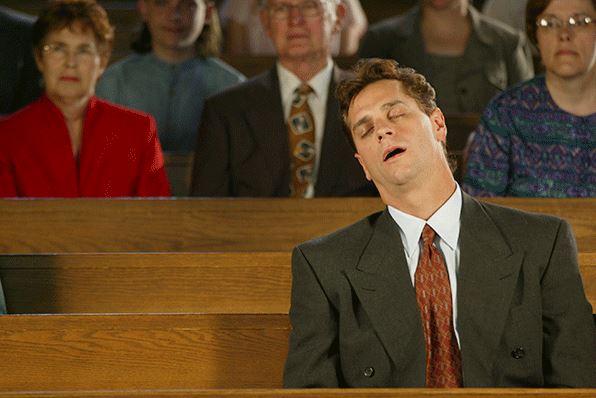
My friend Bruce shared this article from the leftist The Atlantic on Facebook. It’s written by Larry Taunton of Fixed Point Foundation. Larry surveyed some people who had left the church, and I thought it was worth it to look at this case of Phil.
Larry writes:
“Church became all about ceremony, handholding, and kumbaya,” Phil said with a look of disgust. “I missed my old youth pastor. He actually knew the Bible.”
[…]Phil was in my office as part of a project that began last year. Over the course of my career, I have met many students like Phil. It has been my privilege to address college students all over the world, usually as one defending the Christian worldview. These events typically attract large numbers of atheists. I like that. I find talking to people who disagree with me much more stimulating than those gatherings that feel a bit too much like a political party convention, and the exchanges with these students are mostly thoughtful and respectful.
[…]A smart, likable young man, he sat down nervously as my staff put a plate of food before him. Like others after him, he suspected a trap. Was he being punk’d? Talking to us required courage of all of these students, Phil most of all since he was the first to do so. Once he realized, however, that we truly meant him no harm, he started talking — and for three hours we listened.
Now the president of his campus’s SSA [Secular Student Alliance], Phil was once the president of his Methodist church’s youth group. He loved his church (“they weren’t just going through the motions”), his pastor (“a rock star trapped in a pastor’s body”), and, most of all, his youth leader, Jim (“a passionate man”). Jim’s Bible studies were particularly meaningful to him. He admired the fact that Jim didn’t dodge the tough chapters or the tough questions: “He didn’t always have satisfying answers or answers at all, but he didn’t run away from the questions either. The way he taught the Bible made me feel smart.”
Listening to his story I had to remind myself that Phil was an atheist, not a seminary student recalling those who had inspired him to enter the pastorate. As the narrative developed, however, it became clear where things came apart for Phil. During his junior year of high school, the church, in an effort to attract more young people, wanted Jim to teach less and play more. Difference of opinion over this new strategy led to Jim’s dismissal. He was replaced by Savannah, an attractive twenty-something who, according to Phil, “didn’t know a thing about the Bible.” The church got what it wanted: the youth group grew. But it lost Phil.
An hour deeper into our conversation I asked, “When did you begin to think of yourself as an atheist?”He thought for a moment. “I would say by the end of my junior year.”
I checked my notes. “Wasn’t that about the time that your church fired Jim?”
He seemed surprised by the connection. “Yeah, I guess it was.”
A couple of years ago, I was talking to a woman who grew up in a Christian home that was very focused on externals. There was a lot of bullying to get her to comply with expected Christian behavior, although the expected Christian behavior was often arbitrary, and had nothing to do with Christianity and more with just appearing “nice”. There was no discussion of the evidence, no talking through objections. No focus on truth at all. She was always very curious about me, and how come I didn’t drink, and how come I was able to stay a virgin through college, grad school, to the present day when many people who were raised in the church fell away from it in college. My answer was simple. I never grew up in a Christian home so I was never bullied into acting like a Christian beyond what I was convinced of myself. There was no rebellion, I just took my time and proved everything out before I had to act any particular way.
I didn’t ever have to go to church. I didn’t go to church until was comfortable going, and I would say that I still am not comfortable in church – ever. If I felt bored in church, I read an apologetics book, and I did this openly. If I didn’t like the words of a song, then I didn’t sing. I liked to read apologetics books from the beginning, and when I talked to church Christians, I just classified the ones who didn’t read apologetics as non-Christians – as fakes. So I never felt like there was anything wrong with me because I didn’t sing, pray, read the Bible or do more church stuff. To me, if you didn’t like apologetics, you were a fake and you were faking behaviors that you had no way of verifying. Apologetics is the baseline activity of church, and only fakers try to skip over it. Knowing the truth about God comes before acting as if God is real and God has a specific character and will for us. From the existence of God, we move on to the accuracy of the Bible, and on to theology, and then and only then do we start the outward behaviors of a Christian. If you skip to the behaviors, that is unnatural – like acting a part of a doctor when you have never been to medical school. It’s morally wrong to try to pretend to be something you are not.
Bruce commented this above the post:
When authentic conviction is lacking in your words and actions–or your “zeal” lacks the requisite knowledge to back it up–your teenager knows it.
Right. Young people in the church can tell when old people are more interested in feelings and posing. All they have to do is ask you how much you have done to study whether the things you believe are true. If you have read more devotional literature than you have read apologetics, then you’re a fraud. And that, more than anything, is what causes young people to step away from a two-way relationship with God.
My friend Stephen Bedard tweeted this, recently:
“Frankly, I find it hard to understand how people today can risk parenthood without having studied apologetics.” – William Lane Craig
I think you have to blame parents and the pastors when young people reject Christianity. They are the ones who focus on outward behaviors, feelings and rituals instead of frank discussions about truth where reason and evidence are center stage.
If I had to rely on deciding what Christianity was from looking at people in the church, or from looking to my parents or peers, I would never be where I am today. I can barely tolerate church, especially the singing. I generally don’t like pastors. Pastors who think that simply speaking the words of the Bible out loud will magically cause a person listening to become a Christian. Pastors who assume the Bible is true without ever arguing for the truth of it. Pastors who never connect their preaching to historical context, historical evidence, philosophical arguments or scientific evidence. Pastors who try to make me feel things. Pastors who never mention current events or public policy. Christianity ought to be more like engineering or lab work if you want to appeal to young people – testable, repeatable, practical. Think back to math class, and how teachers would insist that students show their work, instead of just writing the answer down. Instead of just saying “the Bible says”, pastors and parents really need to show young people their work – how did they arrive at their worldview? It’s not respectable to be ignorant about these things – there should be no respect in the church for people who put piety above truth.
Chris Kyle, Navy SEAL, can hit a very small target from a mile away – very improbable
Review: In case you need a refresher on the cosmological and fine-tuning arguments, as presented by a professor of particle physics at Stanford University, then click this link and watch the lecture.
If you already know about the standard arguments for theism from cosmology, then take a look at this post on Uncommon Descent.
Summary:
In my previous post, I highlighted three common atheistic objections to to the cosmological fine-tuning argument. In that post, I made no attempt to answer these objections. My aim was simply to show that the objections were weak and inconclusive.
Let’s go back to the original three objections:
1. If the universe was designed to support life, then why does it have to be so BIG, and why is it nearly everywhere hostile to life? Why are there so many stars, and why are so few orbited by life-bearing planets? (Let’s call this the size problem.)
2. If the universe was designed to support life, then why does it have to be so OLD, and why was it devoid of life throughout most of its history? For instance, why did life on Earth only appear after 70% of the cosmos’s 13.7-billion-year history had already elapsed? And Why did human beings (genus Homo) only appear after 99.98% of the cosmos’s 13.7-billion-year history had already elapsed? (Let’s call this the age problem.)
3. If the universe was designed to support life, then why does Nature have to be so CRUEL? Why did so many animals have to die – and why did so many species of animals have to go extinct (99% is the commonly quoted figure), in order to generate the world as we see it today? What a waste! And what about predation, parasitism, and animals that engage in practices such as serial murder and infant cannibalism? (Let’s call this the death and suffering problem.)
In today’s post, I’m going to try to provide some positive answers to the first two questions: the size problem and the age problem.
Here’s an excerpt for the size argument:
(a) The main reason why the universe is as big as it currently is that in the first place, the universe had to contain sufficient matter to form galaxies and stars, without which life would not have appeared; and in the second place, the density of matter in the cosmos is incredibly fine-tuned, due to the fine-tuning of gravity. To appreciate this point, let’s go back to the earliest time in the history of the cosmos that we can meaningfully talk about: the Planck time, when the universe was 10^-43 seconds old. If the density of matter at the Planck time had differed from the critical density by as little as one part in 10^60, the universe would have either exploded so rapidly that galaxies wouldn’t have formed, or collapsed so quickly that life would never have appeared. In practical terms: if our universe, which contains 10^80 protons and neutrons, had even one more grain of sand in it – or one grain less – we wouldn’t be here.
If you mess with the size of the universe, you screw up the mass density fine-tuning. We need that to have a universe that expands at the right speed in order for the matter to clump together to form galaxies, stars and planets. Too fast, and you get no clumping. Too slow, and the whole thing re-collapses into a hot fireball. You need stars and planets to have a place to form life – a place with liquid water at the surface, and more.
And an excerpt for the age argument:
(a) One reason why we need an old universe is that billions of years were required for Population I stars (such as our sun) to evolve. These stars are more likely to harbor planets such as our Earth, because they contain lots of “metals” (astronomer-speak for elements heavier than helium), produced by the supernovae of the previous generation of Population II stars. According to currently accepted models of Big Bang nucleosynthesis, this whole process was absolutely vital, because the Big Bang doesn’t make enough “metals”, including those necessary for life: carbon, nitrogen, oxygen, phosphorus and so on.
Basically, you need heavy elements to make stars that burn slow and steady, as well as to make PEOPLE! And heavy elements have to be built up slowly through several iterations of the stellar lifecycle, including the right kinds of stellar death: supernovae.
Read the rest! These arguments come up all the time in debates with village atheists like Christopher Hitchens and Richard Dawkins. It’s a smokescreen they put up, but you’ve got to be able to answer it using the scientific evidence we have today. They always want to dismiss God with their personal preferences about what God should or should not do. But the real issue is the design of the cosmological constants that allow life to anywhere. That’s the part that’s designed. And that’s not a matter of personal preference, it’s a matter of mathematics and experimental science.
One last parting shot. If God made the universe have life everywhere, the first thing atheists would say is “See? Life evolves fine by itself without any God!” The only way to recognize a marksman is when he hits a narrow target (not hostile to life) from a wide range of possibilities that have no value (hostile to life). We don’t credit Chris Kyle for hitting the wall above an Islamic terrorist from a mile away, we credit Chris Kyle for hitting an Islamic terrorist a mile away. The design is not how much of the universe is hospitable to life versus how much is hostile to life. The design is in the cosmological constants – where we are in the narrow band that is hospitable to life and not in the huge regions that are hostile to life.
You can read the best explanation of the design argument in this lecture featuring Robin Collins. That link goes to my post which has a summary of the lecture. He has a new lecture that I also blogged about where he extends the fine-tuning argument down to the level of particle physics. I have a summary of that one as well.



 WINTERY KNIGHT