Tag Archives: Christianity

Why I admire people in the armed forces more than famous entertainers

I’ve noticed that many Christians can tell me a lot about famous entertainers. It doesn’t matter if it’s singers, musicians, actors, athletes, etc., they seem to know details of their biographies, achievements, etc. And it doesn’t really matter if those people are Christians, or whether they have performed actions consistent with a Christian worldview in their private lives.

Anyway, speaking for myself, I mostly admire two kinds of people. The first kind is the kind I blog about here all the time: Christian scholars engage non-Christians intellectually using logic and evidence. The second kind, as you can tell from my reading list, is people who distinguish themselves in conflict with those who oppose the principles and policies that allow me to live out my Christian life. And I am especially interested when people who are fighting evil (imperialists, Nazis, socialists, communists, leftists, etc.) exhibit Christ-like character in risking their lives to save others, or in giving their lives to save others.

Lt. Walt Chewning charges unto burning F-6F Hellcat to save trapped pilot

Anyway, today is November 10th, so I have a war story to tell you that happened on November 10th, 1943.

Lieutenant (later Lieutenant Commander) Walter Lewis Chewning of Cynwyd, Pennsylvania, steps on the burning fuel tank of an F6F-3 Hellcat flown by Ensign (later Lieutenant) Byron Milton Johnson of Potter, Nebraska to effect a successful rescue of the pilot on November 10, 1943. Johnson had flown out to USS Enterprise from Barbers Point, Hawaii, enroute to Makin Atoll in the Gilberts to support the United States Army invasion, which occurred on November 20, 1943. The afternoon of November 10, Johnson took off in F6F Hellcat Number 30 for a routine training exercise. He immediately developed engine trouble and requested an emergency landing. He was waved off three times as he struggled to maintain control, but his tail hook caught the third arresting gear wire, and Johnson’s Hellcat was slammed into the deck, coming to rest in the port catwalk. The plane came to rest on its external belly fuel tank, which started to leak. As the engine vibrated horribly as the propeller bent itself on the deck, sparks ignited the fuel. The hard landing had jammed Johnson’s canopy closed, shearing the retaining pin; he could not exit the plane. Chewning, who had joined the ship October 2, 1943 as Enterprise new catapult officer, scrambled out of the catwalk and came through the smoke. Stepping on the burning belly tank, he forced open the canopy and pulled Johnson to safety.

He received the two highest non-combat medals available:

Chewning was awarded the Navy and Marine Corps Medal for his actions.

He was a well-educated and accomplished person before joining the Navy:

Chewning played soccer and Lacrosse at Cornell while studying Mechanical Engineering, breaking his rib and left ankle in one game. He graduated in 1936 and studied at the Massachusetts Institute of Technology before joining the Navy in January 1941. He was the assistant to the Chief Engineer at the Naval Aircraft Factory in Philadelphia, Pennsylvania before joining USS Enterprise. He served as Enterprise’s catapult officer until December 1944, when he transferred to Dutch Harbor Naval Air Station in Alaska as ordinance officer. Chewning served in the Navy until December 1949; he also was awarded the Bronze Star. After the war he assisted research and development for various aeronautical companies, the United States Air Force, and the fledgling National Aeronautics and Space Administration. Motion picture film of the crash, taken from Enterprise’s bridge, was shown as part of the television program “Victory at Sea” on January 25, 1953. Chewning and Johnson gave interviews to several newspapers about the accident after the program aired.

You can see a video clip of the rescue here, from 5:35 to 6:00. I found a colorized version of the picture above here:

Lt. Walt Chewning charges unto burning F-6F Hellcat to save trapped pilot

This image was colourized from the original by Paul Reynolds.

What I thought was interesting about Chewning was how he had everything going for him in terms of his education and career, but he chose to join the Navy anyway, in order to defend his country from Japanese imperialism. Those who understand how the Japanese treated prisoners and conquered peoples will know which side of that conflict was good, and which side was evil. Chewning wasn’t some sort of loser who took risks for fun and thrills. It had to be a risk where the prize was worth the risk. And he had the humility to consider others better than himself, so that their life was worth the risking of his own. Many people on the secular left who like to talk about how generous, compassionate and virtuous they are are unable to make moral judgments against evils like Japanese imperialism – much less take self-sacrificial action against them.

I just think that it’s important for young Christians to have the right kind of heroes. The heroes who are promoted to young Christians by the cultural elites are not usually the right role models. And there is a reason for that. The secular leftists don’t want young Christians to be emulating people who excel according to the standards of the Christian worldview. We are in a religion where self-sacrificial love is the centerpiece. Taking trouble on yourself for someone else. Doing your job, when it goes against your own self-interest. Let’s not allow a bunch of godless socialist celebrities to pick and choose who we hold in high regard.
William Lane Craig’s secret weapon is his amazing wife Jan

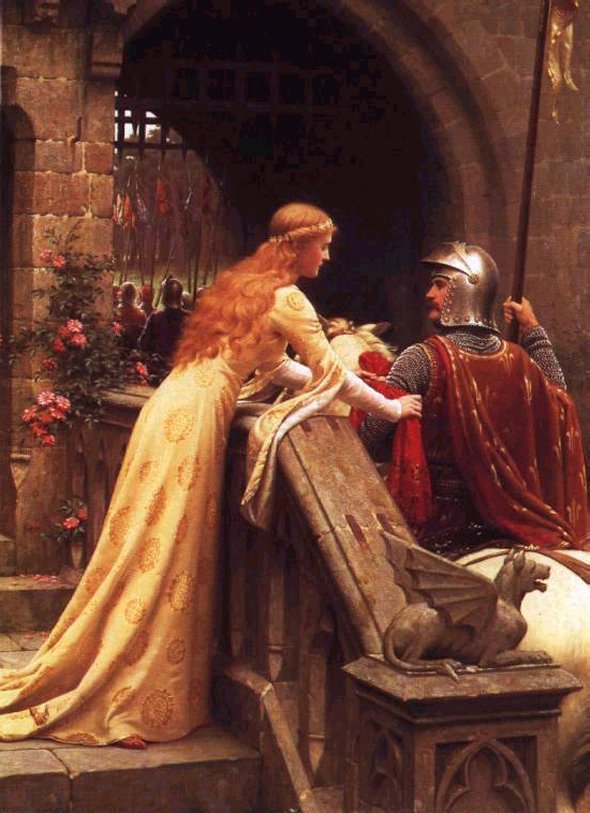
My favorite painting: "Godspeed" by Edmund Blair Leighton, 1900
My favorite painting: “Godspeed” by Edmund Blair Leighton, 1900

I’m re-posting this classic post because it was mentioned in the latest episode of the Reasonable Faith podcast.

I want to draw your attention to a talk on “Vision in Life” given by Dr. William Lane Craig. Dr. Craig is the ablest defender of the Christian faith operating today. He has done formal academic debates with all of the best known atheists on major university campuses in front of thousands of university students.

It turns out that he owes a lot of his success to his amazing wife Jan.

The MP3 file is here. (32 minutes)

This talk was Dr. Craig’s chapel address to Biola University students.

About 11 minutes into the talk, Bill describes what happened after he finished his Bachelor’s degree at Wheaton:

And so I joined the staff of Campus Crusade for Christ for 2 years, and was assigned to Northern Illinois University. And that was where I met my wife Jan. She was a graduate of the University of North Dakota where she had come to faith in Christ. And she had a similar vision for her life of evangelism and discipleship.

And as we worked at NIU together, she with gals and I with the guys, leading students to Christ and discipling them to walk with the Lord, we fell in love. And we decided that we would be more effective if we joined forces and became a team.

So their reason for getting together was because they thought that they would be more effective in evangelism and discipleship if they worked as a team.

It is at this point in the talk where Bill begins to explain just how Jan molded him into the lean, mean debating machine that travels the world striking terror into the hearts of atheists.

Bill’s first story about Jan occurs early after their marriage while he is working on his first Masters degree at Trinity:

And it was also at that time that I began to see what an invaluable asset the Lord had given me in Jan. I remember I came home from classes one day, and found her at the kitchen table with all the catalogs and schedules and papers spread out in front of her and she said, “look! I’ve figured out how you can get two Masters degrees at the same time that it would normally take to get one! All you have to do is take overloads every semester, go to all full-time summer school and do all these other things, and you can do two MAs in the time it takes to do one!”

And I thought, whoa! Are you sure you really want to make the commitment it takes to do this kind of thing? And she said, “Yeah! Go for it!” And it was then I began to see that God had given me a very special woman who was my supporter – my cheerleader – and who really believed in me. And as long as she believed in me, that gave me the confidence to dream bigger dreams, and to take on challenges that I had never thought of before.

In an article on his web site, he talks about how Jan encouraged him to do his first Ph.D:

As graduation from Trinity neared, Jan and I were sitting one evening at the supper table in our little campus apartment, talking about what to do after graduation. Neither of us had any clear leading or inclination of what we should do next.

So Jan said to me, “Well, if money were no object, what would you really like to do next?”

I replied, “If money were no object, what I’d really like to do is go to England and do a doctorate under John Hick.”

“Who’s he?” she asked.

“Oh, he’s this famous British philosopher who’s written extensively on arguments for the existence of God,” I explained. “If I could study with him, I could develop a cosmological argument for God’s existence.”

But it hardly seemed a realistic idea.

The next evening at supper Jan handed me a slip of paper with John Hick’s address on it. “I went to the library today and found out that he’s at the University of Birmingham in England,” she said. “Why don’t you write him a letter and ask him if you can do a doctoral thesis under him on the cosmological argument?”

What a woman! So I did, and to our amazement and delight Professor Hick wrote back saying he’d be very pleased to supervise my doctoral work on that subject. So it was an open door!

And in the same article, he explains how Jan encouraged him to get his second Ph.D:

As Jan and I neared the completion of my doctoral studies in Birmingham, our future path was again unclear to us. I had sent out a number of applications for teaching positions in philosophy at American universities but had received no bites. We didn’t know what to do.

I remember it like yesterday. We were sitting at the supper table in our little house outside Birmingham, and Jan suddenly said to me, “Well, if money were no object, what would you really like to do next?”

I laughed because I remembered how the Lord had used her question to guide us in the past. I had no trouble answering the question. “If money were no object, what I’d really like to do is go to Germany and study under Wolfhart Pannenberg.”

“Who’s he?”

“Oh, he’s this famous German theologian who’s defended the resurrection of Christ historically,” I explained. “If I could study with him, I could develop a historical apologetic for the resurrection of Jesus.”

Our conversation drifted to other subjects, but Jan later told me that my remark had just lit a fire under her. The next day while I was at the university, she slipped away to the library and began to research grants-in-aid for study at German universities. Most of the leads proved to be defunct or otherwise inapplicable to our situation. But there were two grants she found that were possibilities. You can imagine how surprised I was when she sprung them on me!

Both of these Ph.D experiences are also described in the talk. And the talk concludes as follows:

I am so thankful to be married to a woman who is tremendously resourceful, tremendously talented and energetic, who could have pursued an independent career in any number of areas, but instead, she has chose to wed her aspirations to mine, and to make it her goal to make me the most effective person I can be, for Christ. And she has been like my right arm in ministry over these many years. And it is a tremendous privilege to be a team with a person like that.

And you young men, I would encourage you, if you marry, to find a gal who shares your vision, not some independent vision, but who is interested in aligning herself with you, and pursuing together a common vision and goal that will draw you [together], so that you will avoid the growing separateness that so often creeps into marriages.

And now you know the rest of Bill’s story. The person you marry will have an enormous influence on the impact you will have for Christ and his Kingdom. It is up to you to decide whether that influence is going to be positive or negative, by deciding if you will marry, and if you do marry, by deciding whom you will marry.

You may also be interested in this talk given by William Lane Craig, entitled “Healthy Relationships” (National Faculty Leadership Conf. 2008) (audio here) In that talk, he offers advice to Christians who want to have a marriage that is consistent with their Christian faith.

Non-Christian historian Bart Ehrman attended a Christian apologetics conference

Are we allowed to look at the Bible as a historical document?

My summaries of Bart Ehrman’s debates mock him for being a rigid Moody Bible Institute fundamentalist whose blind faith was shattered by 1) minor Bible difficulties, 2) disappointment that God allows good people to suffer, 3) wanting to look smart to his professors, and 4) the desire to make lots of money selling apostasy porn to the New York Times set. But maybe he is not as bad as I thought.

Consider this blog post in which Ehrman reports on his experiences at a recent apologetics conference, where he met with a few of the more effective and engaging evangelical scholars.

He writes:

I spent yesterday at a conservative evangelical apologetics conference outside of Chicago and, as you might imagine, I was the odd person out. But I was very well received, people were overwhelmingly gracious and receptive and openly grateful that I had come. There were jokes about being thrown into the lions’ den, but it didn’t really feel like it. It felt like I was speaking to a crowd that wanted to hear, respected what I said, and simply fundamentally disagreed. In particular there was a group of current Moody Bible Institute students there; really interesting, interested, and good humored, and we had a great time together.

What I was most interested in was how Christian apologetics – the intelligent “defense” of the claims of the faith – has changed in the many years since I was involved in the movement, shifted in ways I never would have imagined, very much away from our old fundamentalist assumptions and assertions into a far more reasonable and intellectually sustainable form of discourse that requires actual research and knowledge rather than hard-core theological assertion based on completely dubious premises.

[…]The issue at the conference were the “Contradictions” in the New Testament. How does one deal with apparent or real contradictions and still remain committed to an evangelical view of Scripture as inspired by God and in some sense “inerrant”?

[…]The discussions yesterday (well, most of them) were at a much, much higher academic/intellectual level than ones I’ve had, say, during a recent debate on the blog. I think some of the positions staked out yesterday were utterly, demonstrably, mind-bogglingly simply WRONG. But they were advanced with the kind of learning and historical knowledge that we simply didn’t see back in my apologetics days in the mid-1970s.

Roughly speaking I was hearing two positions, neither of them ones we were taught and advanced in the day (in my circles). One of the two strikes me as completely tenable, though again, only in a sense.

Our old position, back then, was that any contradiction in the New Testament Gospels (or the Bible, for that matter; but yesterday we were talking only about the Gospels) can in fact be reconciled if you look closely and deeply enough at the matter. ANY contradiction. To be sure, there may be places where you aren’t sure HOW to reconcile them, but in principle they are all reconcilable in one way or another.

And, as a corollary, everything the Bible says is literally true. There are no mistakes, of any kind, whatsoever, in the Bible.

[…]None of the three speakers yesterday has that view, even though they call the Bible inerrant and affirm that it is completely reliable. Their views strike me as odd – that they can admit there are, technically speaking, incorrect statements in the Bible but that it is still without error. But they consider my old view (no mistakes of any kind whatsoever) as a dated kind of fundamentalism that is simply not held by thinking Christians any more, and, even more interesting, that my objections to their views are rooted in fundamentalist views that I myself don’t accept but that I’m assuming in order to attack their alternative views. In other words, they think I’m kicking a dead horse.

Interesting.

And here are the two views that were presented:

One is indeed to “reconcile” them as best as possible; or, the term they appear to prefer, “harmonize” them: that is take the two texts that appear to contradict each other and show how they actually fit together, possibly in a complicated way, into a harmonized whole so that they round out and complement each other, rather than stand at odds with one another.

[…]The current view seems to be much more open to the possibility that there are places that we simply can’t figure it out, places that do appear to be contradictory. And here is the KICKER. When they (the evangelicals who take this view) admit there are apparent contradictions, then they say that the details are not important. What matters is the major message. The ultimate point. The big picture. The gist. The gist of what a passage is trying to teach is what is inspired and inerrant. Not the picayune details.

That is to say – a phrase you hear a lot in these circles – “the Bible is inerrant in what it affirms.” That is, it makes no mistakes in what what it is trying to teach.

So you might have a story in which Jesus heals someone, found, say, in both Matthew and Luke. There may be small contradictory details: in one he heals the person before he does this other thing, in the other he heals the person after he does the other thing. Small discrepancy. But the story is not trying to teach *when* Jesus did the miracle. It’s trying to teach that he did the miracle. And it is inerrant about that. He *did* do the miracle.

We never ever would have allowed that back in my days at Moody Bible Institute. But it’s becoming a thinking-person’s view among evangelicals who believe in the inerrancy of the Bible, apparently.

But the other change – the second position – strikes me as even more significant, a real step toward traditional scholarship, which tries to explain WHY there are contradictions, and then goes on to say that since we know why they are there, they are not really contradictions.

The reason I am posting this is because we are facing a problem in the church, the problem of massive numbers of young people leaving Christianity:

Christianity continues to decline among U.S. adults as the number of adults identifying as “nothing in particular” increases, Pew Research Center found.

The number of American adults who describe themselves as Christian dropped 12 percentage points over the past decade and the number of both Protestants and Catholics in the U.S. has dropped, according to Pew Research data released Thursday.

Surveys Pew conducted over the phone between 2018 and 2019 found 65% of American adults describe themselves as Christian. Meanwhile, 26% of American adults identify as atheist, agnostic or “nothing in particular,” a number that increased from 17% in 2009.

“The data shows that the trend toward religious disaffiliation documented in the Center’s 2007 and 2014 Religious Landscape Studies, and before that in major national studies like the General Social Survey (GSS), has continued apace,” according to Pew.

I was recently at the National Conference on Christian Apologetics, where I saw a debate featuring Michael Licona. Licona is an informed historian who published a book with Oxford University Press about differences in the gospels and the genre of ancient biography.

A video of the debate is here:

Licona argues that ALL ancient authors used “compositional devices” such as “time compression”, which would explain the differences between the gospel accounts. These compositional devices are found in the works of other authors of that period. Most people I polled in the audience liked both debaters, but they thought that Mike Licona won. Licona also emphasized over and over, in his speech, how questions about contradictions, gospel authorship, etc. do not undermine the core of Christianity, which is the bodily resurrection of Jesus. This is important, because even questions about peripheral issues should not affect the core, which is on solid historical grounds.

I think Ehrman’s post shows why apologetics is important for having productive conversations with non-Christians about the Christian worldview. Remember what happened to Antony Flew when someone took the time to share the evidence for a cosmic beginning and fine-tuning and origin of life with him. Bye-bye atheism. This is how the world really works – evidence is important to finding truth. Evangelism works best when we use reason and evidence to make our case that the Christian worldview is true.

We are living in a time when belief in God has been boosted by significant discoveries in the realm of science: origin of the universe, fine-tuning, habitability, origin of life, Cambrian explosion, molecular machines, etc. We have amazing work coming out of philosophers of religion like Alvin Plantinga, William Lane Craig, J.P. Moreland, etc. And now we are seeing ground-breaking, high-quality work coming out of scholars like Richard Bauckham, N.T. Wright, Craig Keener, and Michael Licona. When is the church going to realize the importance of scholarly research for evangelism?