

Tag Archives: Christianity

Should Christians be motivated by the fear of missing out (FOMO)?

Bible study that hits the spot

My best friend Dina and I recently spent some time talking over some articles that we found on the culture. We specifically talked about what is motivating young people, so I wanted to write something about that.

FOMO: Fear Of Missing Out

Here’s a leftist New York Times article explaining where FOMO comes from:

It’s known as FOMO, or “fear of missing out,” and refers to the blend of anxiety, inadequacy and irritation that can flare up while skimming social media like Facebook, Twitter, Foursquare and Instagram. Billions of Twitter messages, status updates and photographs provide thrilling glimpses of the daily lives and activities of friends, “frenemies,” co-workers and peers.

[…]When we scroll through pictures and status updates, the worry that tugs at the corners of our minds is set off by the fear of regret, according to Dan Ariely, author of “Predictably Irrational” and a professor of psychology and behavioral economics at Duke University. He says we become afraid that we’ve made the wrong decision about how to spend our time.

[…]A friend who works in advertising told me that she felt fine about her life — until she opened Facebook. “Then I’m thinking, ‘I am 28, with three roommates, and oh, it looks like you have a precious baby and a mortgage,’ ” she said. “And then I wanna die.”

It’s like they want to run a race to do fun and exotic things with their peers, and not finish last.

Anyway, I want to begin this post with examples of FOMO behavior I have personally encountered.

FOMO Travel

Dina and I read and discussed this article by Alain de Botton in The European – notice the emphasis on travel and having fun, sophisticated experiences:

We’re continually being bombarded with suggestions about what we might do (go jet skiing, study in Colorado, visit the Maldives or see the Pyramids). We’re always hearing of the amazing things friends have done or are going to do: ‘there was this great bar we all went to …’; ‘she’s getting married in a little country church, then we’re having a picnic…’; ‘the sun was glinting on Sydney Harbour…’ There are endless hints of the allure of life in other places: an article about family-friendly restaurants in Brooklyn, a crime novel set in Trieste, the departure board at the airport with its list of places only a plane trip away: Moscow, Bangkok, Addis Ababa… The modern world makes sure we know at all times just how much we’re missing. It is a culture in which intense and painful doses of FOMO (Fear Of Missing Out) are almost inevitable.

What’s interesting is this – how does FOMO travel affect young, unmarried Christians?

Travel through missions work seems to be the FOMO activity of choice for at least a few young, unmarried Christians. One of my best friends who is married to another of my best friends told me about her missions trip to a European country. I asked her why she did it, since it meant lost savings, lost earnings, lost work experience, etc. (She gave up a year of earnings, and she had a great job in engineering). Her answer was that she did it for the adventure. I have a hard time hearing Jesus say that he was going to do something because he was bored and wanted an adventure. Especially when it’s $30,000 in costs, $60,000 of lost income, and lost work experience – per year. This was before the time of the Internet, though, when missionary work actually made sense. I just don’t think it’s worth spending that kind of money for the impact you make. The people I know who went on missionary trips just wanted to feel spiritual, look spiritual, and have a fun “life experience” vacation. One missionary told me that she was desperate to get away from her boring mid-Western roots.

If you really want to share Christ effectively with people in other countries, then you can start a blog and pay the tiny costs for it out of your earnings from your day job – that’s what I do. I get more people from Europe reading my blog than I could contact in a year of missionary work. I Skype with the people who are interested in Christianity from these countries (Scotland, Northern Ireland, England, Canada, etc.), as well. Meanwhile, I keep working my not-exciting job, so my savings increase, and my resume remains gap-less. This is good stewardship of finances, and self-denial prepares your character for the hard work of marriage and parenting. The Bible says that those who do not work should not eat. And Paul says that he built tents so that no one could accuse him of taking on missionary work for financial gain.

You can tell whether a person is sincere in their missionary intentions by looking at how responsible they’ve been in their decision-making. If a person has gone into debt paying for fun, thrilling activities like skydiving, ziplining, surfing, etc., then it’s FOMO travel. We must look past the spiritual smokescreen, and tell young people to grow up.

After all, if defending God’s honor was the missionary’s main goal, then the real battlefield would be the university.

Bill Craig puts it best:
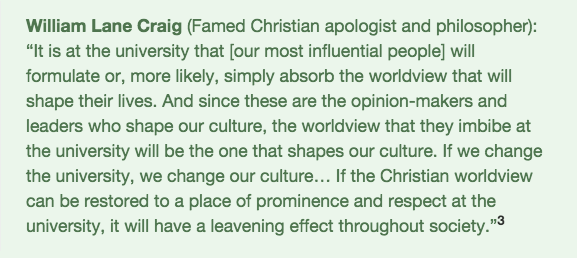
If serving God is your goal, look to the university

There is already a perfectly fine university right next door – no need to fly to Europe to find one! Remember, the university that took your faith away, or maybe the faith of someone you cared about? Yeah, it’s still sitting there in your home town! And it’s still ruining the lives of thousands of young people, by peer-pressuring them into secular, liberal views – and behaviors. It seems to me that it’s better stewardship to stay here and work, then give money to groups like Reasonable Faith. And you can start a blog, teach in church and invite scholars to the local university, too. That costs almost nothing, and it produces better results.

What about Jesus?

Sometimes, it’s a good idea to look beyond the words of the Bible and reflect on the overall message of it at a higher level. When I look in the Bible, I see that Jesus went through a lot of suffering in obedience to God in order to secure the salvation of people who did not even like him. And it’s from this sacrifice on our behalf that his claim on our obedience comes. There are things that I don’t like to do that I do anyway because they work to serve God. Jesus life’s ambition was not to do things that were easy, or that made him happy. Experienced Christians do things that are not fun, because these things are right and because they solve the real problem.

Is Matthew Vines twisting Scripture to justify sinful sexual behavior?

I have a key that will unlock a puzzling mystery

Here’s a post from Christian apologist Terrell Clemmons about efforts by gay activists to redefine Christianity so that it is consistent with homosexual behavior. This particular post is focused on Matthew Vines.

She writes:

In March 2012, two years after having set out to confront homophobia in the church, Matthew presented the results of his “thousands of hours of research” in an hour-long talk titled “The Gay Debate.” The upshot of it was this: “The Bible does not condemn loving gay relationships. It never addresses the issues of same-sex orientation or loving same-sex relationships, and the few verses that some cite to support homophobia have nothing to do with LGBT people.” The video went viral (more than three quarter million views to date) and Matthew has been disseminating the content of it ever since.

In 2013, he launched “The Reformation Project,” “a Bible-based, non-profit organization … to train, connect, and empower gay Christians and their allies to reform church teaching on homosexuality from the ground up.” At the inaugural conference, paid for by a $104,000 crowd-funding campaign, fifty LGBT advocates, all professing Christians, gathered for four days in suburban Kansas City for teaching and training, At twenty-three years of age, Matthew Vines was already becoming a formidable cause célèbre.

Terrell summarizes the case he makes, and here is the part I am interested in:

Reason #1: Non-affirming views inflict pain on LGBT people. This argument is undoubtedly the most persuasive emotionally, but Matthew has produced a Scriptural case for it. Jesus, in his well-known Sermon on the Mount, warned his listeners against false prophets, likening them to wolves in sheep’s clothing. Then switching metaphors he asked, “Do people pick grapes from thornbushes or figs from thistles?” The obvious answer is no, and Jesus’s point was, you can recognize a good or bad tree – and a true or false prophet – by its good or bad fruit. From this, Matthew concludes that, since non-affirming beliefs on the part of some Christians cause the bad fruit of emotional pain forother Christians, the non-affirming stance must not be good.

Terrell’s response to this is spot on, and I recommend you read her post to get the full response.

She writes:

Matthew Vines in particular, and LGBTs in general, appear to be drivingly fixated on changing other people’s moral outlook. But why? Why are they distressed over the shrinking subset of Christianity that holds to the traditional ethic of sex? Note that Matthew found an affirming church in his hometown, as can most any LGBT-identifying Christian. Affirming churches abound. Gaychurch.org lists forty-four affirming denominations – denominations, not just individual churches – in North America and will help you find a congregation in your area. Why, then, given all these choices for church accommodation, are Matthew and the Reformers specifically targeting churches whose teachings differ from their own?

One gets the sense that LGBTs really, really need other people to affirm their sexual behavior. Certainly it’s human to want the approval of others, but this goes beyond an emotionally healthy desire for relational comity. Recall Matthew’s plea that non-affirming views on the part of some Christians cause emotional pain for others. He, and all like-minded LGBTs, are holding other people responsible for their emotional pain. This is the very essence of codependency.

The term came out of Alcoholics Anonymous. It originally referred to spouses of alcoholics who enabled the alcoholism to continue unchallenged, but it has since been broadened to encompass several forms of dysfunctional relationships involving pathological behaviors, low self-esteem, and poor emotional boundaries. Codependents “believe their happiness depends upon another person,” says Darlene Lancer, an attorney, family therapist, and author of Codependency for Dummies. “In a codependent relationship, both individuals are codependent,” says clinical psychologist Seth Meyers. “They try to control their partner and they aren’t comfortable on their own.”

Which leads to an even more troubling aspect of this Vinesian “Reformation.” Not only are LGBT Reformers not content to find an affirming church for themselves and peacefully coexist with everyone else, everyone else must change in order to be correct in their Christian expression.

This is the classic progression of codependency, and efforts to change everyone else become increasingly coercive. We must affirm same-sex orientation, Matthew says. If we don’t, we are “tarnishing the image of God [in gay Christians]. Instead of making gay Christians more like God … embracing a non-affirming position makes them less like God.” “[W]hen we reject the desires of gay Christians to express their sexuality within a lifelong covenant, we separate them from our covenantal God.”

Do you hear what he’s saying? LGBTs’ relationships with God are dependent on Christians approving their sexual proclivities. But he’s still not finished. “In the final analysis, then, it is not gay Christians who are sinning against God by entering into monogamous, loving relationships. It is we who are sinning against them by rejecting their intimate relationships.” In other words, non-affirming beliefs stand between LGBTs and God. Thus sayeth Matthew Vines.

The rest of her article deals with Vines’ attempt to twist Scripture to validate sexual behavior that is not permissible in Christianity.

Vines seems to want a lot of people to agree that the Bible somehow doesn’t forbid this sexual behavior so that the people who are doing it won’t feel bad about doing it. If he can just silence those who disagree and get a majority of people to agree, then the people who are doing these things will feel better.

Well. I am a chaste man now in my late 30s. I have not so much as kissed a woman on the lips. There is no societal celebration for what I am doing, not even in the church. But you don’t see me complaining that people need to validate my choice to be chaste. And the reason is, that even if the entire world were against me, the morality of chastity is self-authenticating. It doesn’t matter how many people make me feel bad about what I am doing, I have the direct experience of doing the right thing. Being chaste allows me to love women upward by treating them like equal partners in the gospel, and expecting them to work for the gospel like any man would.

Matthew Vines is annoyed that we expect homosexuals to work through their same-sex attractions, abstain from premarital sex, and then either remain chaste like me, or marry one person of the opposite sex and then confine his/her sexual behavior to his/her marriage. But how is that different than what is asked of me? I have opposite sex-attractions (boy, do I!), but I am also expected to abstain from premarital sex, and either remain chaste, or marry one woman for life, and confine my sexual behavior to that marriage. If I have to exercise a little self-control to show God that what he wants from me is important to me, then I am willing to do that. I’m really at a loss to understand why so many people take sexual gratification as a given, rather than as an opportunity for self-denial and self-control. I am especially puzzled by sinful people demanding that other celebrate their sin – and using the power of the government now to compel others to celebrate their sin.

Believe me, I understand what it is like to be without a woman’s love and support. I started out with a cold, distant, selfish, career-oriented mother. I dreamed about marriage since I was in high school – I remember praying about my future wife, even then. No one that I know has a stronger need for validation and encouragement from a woman than I do. Yet if I have to let that go in order to let God know that what he wants matters to me, then I will do it.

My service to God is not conditional on me getting my needs met. And my needs and desires are no less strong than the needs of people who engage in sex outside the boundaries of Christian teaching. We just make different decisions about what/who comes first. For me, Jesus is first, because I have sympathy with Jesus for loving me enough to die in my place, for my sins. I am obligated to Jesus, and that means that my responsibility to meet expectations in our relationship comes above my desire to be happy and fulfilled. For Matthew, the sexual desires come first, and Scripture has to be reinterpreted in light of a desire to be happy. I just don’t see anything in the New Testament that leads me to believe that we should expect God to fulfill our desires. The message of Jesus is about self-denial, self-control and putting God the Father first – even when it results in suffering. I take that seriously. That willingness to be second and let Jesus lead me is what makes me an authentic Christian.

There is a good debate featuring Robert Gagnon and a gay activist in this post, so you can hear both sides.

Studies show: families that pray together are stronger and closer

A family praying and reading the Bible
A family praying and reading the Bible (not sure what the baby is thinking though)

Here’s an article that I found on the Family Studies blog.

It says: (links to studies removed)

A lot of research has been devoted to the question of whether religion is a force for good among today’s families, and while the findings are mixed, studies have found plenty of reason to believe that faith can be a powerful adhesive for families working hard not to come undone. Regular religious service attendance is tied to lower divorce rates, for example, and religious institutions can be powerful intermediaries in helping families in crisis and promoting chastity and fidelity, which in turn affect social ills like out-of-wedlock childbearing and divorce.

[…]That individual prayer can improve the lives of those who undertake it is a well-documented fact supported by even the secular, medical world. Its benefits can include reduced stress, increased self-awareness, better communication, and a more empathetic and forgiving attitude towards others.

It’s hardly a stretch to suggest those benefits would expand to families that then pray together. For starters, family prayer time is quality time together, time not spent in front of the television or a smartphone, but rather, time spent communicating on a deeply personal level. One study found that children with parents who pray more than once daily report better relationships with their parents, even if that prayer is not done with their children, implying that there is something contagious about the positive effects of prayer in family life. Another study found a positive correlation between increased trust and prayer time between couples.

Other sociologists have argued that joint prayer can be a powerful mediation tool that leads couples to be more forgiving. As Mark Butler, a professor of marriage and family therapy at Brigham Young University, put it: “When people pray (about tensions in their relationship) they are helped to see their part in the problem. They’re helped to see what they can do themselves to make a difference. And they are helped to soften. All these things help with conflict resolution.”

The nice thing about prayer and church attendance is that it is an opportunity for people to tune the world out and think about the big things. It’s a time to think about other people, for one thing. It’s also a good time to be humble and acknowledge the things that are out of your control.

Right now, a few of my friends have been telling me about some of the problems they are facing as a result of the declining economy. We had only 0.5% GDP growth last quarter – awfully close to a recession. I have friends who have lost work hours, friends who have lose their health care, friends who are facing liberal professors in graduate school, friends who either cannot find work or whose spouses cannot find work. And lots of friends who have projects and exams. That’s a lot of people to think about and care about. I frequently talk to God about the problems that other people are facing and try to urge him to give them some help.

In case you are wondering how to pray to God, there is a good article about it on the Cold Case Christianity blog.

Here’s the practical part:

If you are a follower of Christ, you can have confidence that God will always say “yes” to the following requests:

Requests for Wisdom
“But if any of you lacks wisdom, let him ask of God, who gives to all generously and without reproach, and it will be given to him.” (James 1:5)

Requests for Forgiveness
“If we confess our sins, He is faithful and righteous to forgive us our sins and to cleanse us from all unrighteousness.” (1 John 1:9)

Requests for Salvation
“…for ‘whoever will call on the name of the Lord will be saved.’” (Romans 10:13)

While God says “yes” to these kinds of requests, He often says “no” or “not yet” to other kinds of requests.

The most frequent thing I ask for is wisdom. Wisdom for me, wisdom for my friends. I like praying for wisdom for myself and others because it’s a sure thing, and I hate doing something that comes back to bite me later. I ask for God to help me to understand and accept the moral law, so that I make decisions that don’t come back to hurt me later.

The other thing I pray for a lot is forgiveness. This is a big no-no for atheists, because they don’t like to feel ashamed or obligated or “bad” because they are immature. But the truth is that God is knocking on the door of our hearts, each one of us, and we are not responding as much as we should. I often think of how much good I could do if I were not so selfish. I often choose to to do things that are fun instead of taking time to read the Bible or doing other things to learn more about who God is. And I don’t think that I am doing as much to defend God’s interests as I could be doing. I have regrets about this, and I when I pray, I tell God about how I feel about not being as faithful to him as I wish I could be.

The most frequent way that I am thankful is by thanking God for the people who do things that are consistent with a Christian worldview. I like that Steven Crowder spoke to liberal students at the University of Massachusetts. I like that conservative Republicans introduce pro-life and pro-religious-liberty laws. I like that my friends in Ratio Christi do a good job at organizing apologetics events on university campuses. I try to pay attention to all this good news and I run down the list to God when I pray, reminding him to be looking out for those who are committed to sticking by him against the selfish secular leftists.