Tag Archives: Christian Apologetics

William Lane Craig debates James Crossley: Did Jesus rise from the dead?

This is my favorite debate on the resurrection.

You can watch the debate here:

The MP3 file can be obtained from Apologetics 315.

There is not much snark in this summary, because Crossley is a solid scholar, and so there isn’t very much to mock him for.

SUMMARY

William Lane Craig’s opening speech

Two contentions:

  • There are four minimal facts that are accepted by most historians
  • The best explanation of the four minimal facts is that God raised Jesus from the dead

Contention 1 of 2:

Fact 1: The burial

  • The burial is multiply attested
    • The burial is based on the early source material that Mark used for his gospel
    • Scholars date this Markan source to within 10 years of the crucifixion
    • The burial is also in the early passage in 1 Cor 15:3-8
    • So you have 5 sources, some of which are very early
  • The burial is credited to a member of the Sanhedrin
    • the burial is probable because shows an enemy of the church doing right
    • this makes it unlikely to to be an invention

Fact 2: The empty tomb

  • The burial story supports the empty tomb
    • the site of Jesus’ grave was known
    • the disciples could not proclaim a resurrection if the body were still in it
    • the antagonists to the early Christians could have produced the body
  • The empty tomb is multiple attested
    • it’s mentioned explicitly in Mark
    • it’s in the separate sources used by Matthew and John
    • it’s in the early sermons documented in Acts
    • it’s implied by 1 Cor 15:3-8, because resurrection requires that the body is missing
  • The empty tomb was discovered by women
    • the testimony of women of women was not normally allowed in courts of law
    • if this story was being made up, they would have chosen male disciples
  • The empty tomb discover lacks legendary embellishment
    • there is no theological or apologetical reflection on the meaning of the tomb
  • The early Jewish response implies that the tomb was empty
    • the response was that the disciples stole the body
    • that requires that the tomb was found empty

Fact 3: The appearances to individuals and groups, some of the them hostile

  • The list of appearances is in 1 Cor 15:3-8
    • this material is extremely early, withing 1-3 years after the cross
    • James, the brother of Jesus, was not a believer when he got his appearance
    • Paul was hostile to the early church when he got his appearance
  • Specific appearances are multiply attested
    • Peter: attested by Luke and Paul
    • The twelve: attested by Luke, John and Paul
    • The women: attested by Matthew and John

Fact 4: The early belief in the resurrection emerged in a hostile environment

  • There was no background belief in a dying Messiah
  • There was no background belief in a single person resurrecting before the general resurrection of all of the righteous at the end of the age
  • The disciples were willing to die for their belief in the resurrection of Jesus
  • The resurrection is the best explanation for the transformation of the disciples from frightened to reckless of death

Contention 2 of 2:

  • The resurrection is the best explanation because it passes C.B. McCullough’s six tests for historical explanations
  • None of the naturalistic explanations accounts for the minimal facts as well as the resurrection

James Crossley’s opening speech

Appeals to the majority of scholars doesn’t prove anything

  • the majority of people in the west are Christians so of course there are a majority of scholars that support the resurrection
  • there are Christian schools where denial of the resurrection can result in termination

The best early sources (1 Cor 15:3-8 and Mark) are not that good

1 Cor 15:3-8 doesn’t support the empty tomb

  • verse 4 probably does imply a bodily resurrection
  • the passage does have eyewitnesses to appearances of Jesus
  • but there are no eyewitnesses to the empty tomb in this source
  • appearances occur in other cultures in different times and places
  • Jesus viewed himself as a martyr
  • his followers may have had hallucinations

Mark 16:1-8

  • Mark is dated to the late 30s and early 40s
  • The women who discover the tomb tell no one about the empty tomb

The gospels show signs of having things added to them

  • Jewish story telling practices allowed the teller to make things up to enhance their hero
  • one example of this would be the story of the earthquake and the people coming out of their graves
  • that story isn’t in Mark, nor any external sources like Josephus
  • if there really was a mass resurrection, where are these people today?
  • so this passage in Matthew clearly shows that at least some parts of the New Testament could involve
  • what about the contradiction between the women tell NO ONE and yet other people show up at the empty tomb
  • the story about Jesus commissioning the early church to evangelize Gentiles was probably added
  • there are also discrepancies in the timing of events and appearances
  • why are there explicit statements of high Christology in John, but not in the earlier sources?

William Lane Craig’s first rebuttal

Crossley’s response to the burial: he accepts it

Crossley’s response to the empty tomb: he thinks it was made up

  • rabbinical stories are not comparable to the gospel accounts
  • the rabbinical stories are just anecdotal creative story-telling
  • the gospels are ancient biographies – the genre is completely different
  • the rabbinic miracle stories are recorded much later than the gospels
  • the rabbi’s legal and moral ideas were written down right away
  • the miracle stories were written down a century or two later
  • in contrast, the miracle stories about Jesus are in the earliest sources, like Mark
  • the rabbinical stories are intended as entertainment, not history
  • the gospels are intended as biography
  • just because there are some legendary/apocalyptic elements in Matthew, it doesn’t undermine things like the crucfixion that are historically accurate

Crossley’s response to the evidence for the empty tomb:

  • no response to the burial
  • the empty tomb cannot be made up, it was implied by Paul early on
  • the women wouldn’t have said nothing forever – they eventually talked after they arrived to where the disciples were
  • no response to the lack of embellishment
  • no response to the early Jewish polemic

Crossley’s response to the appearances

  • he agrees that the first followers of Jesus had experiences where they thought Jesus was still alive

Crossley’s response to the early belief in the bodily resurrection:

  • no response about how this belief in a resurrection could have emerged in the absence of background belief in the death of the Messiah and the resurrection of one man before the general resurrection of all the righteous at the end of the age

What about Crossley’s hallucination theory?

  • Crossley says that the followers of Jesus had visions, and they interpreted these visions against the story of the Maccabean martyrs who looked forward to their own resurrections
  • but the hallucination hypothesis doesn’t account for the empty tomb
  • and the Maccabean martyrs were not expecting the resurrection of one man, and certainly not the Messiah – so that story doesn’t provide the right background belief for a hallucination of a single resurrected person prior to the end of the age
  • if the appearances were non-physical, the disciples would not have applied the word resurrection – it would just have been a vision
  • the visions could easily be reconciled with the idea that somehow God was pleased with Jesus and that he had some glorified/vindicated non-corporeal existence – but not resurrection
  • not only that, the hallucination hypothesis doesn’t even explain the visions, because there were visions to groups, to skeptics and to enemies in several places

What about the argument that only Christians accept the resurrection?

  • it’s an ad hominem attack that avoids the arguments

James Crossley’s first rebuttal

Regarding the burial:

  • I could be persuaded of that the burial account is accurate

Regarding the non-expectation of a suffering/dying Messiah:

  • Jesus thought he was going to die
  • this thinking he was going to die overturned all previous Messianic expectations that the Messiah wouldn’t suffer or die
  • the early Jews could easily reconcile the idea of a suffering, dead man killed by the Romans with the power of the all-powerful Messiah who supposed to reign forever
  • no actually bodily resurrection would have to happen to get them to continue to identify an executed corpse with the role of Messiah

Regarding the belief in the bodily resurrection:

  • it would be natural for Jews, who believed in a general resurrection of all the rigtheous dead at the end of the age, to interpret a non-physical vision of one man after he died as a bodily resurrection, even though no Jew had ever considered the resurrection of one man before the general resurrection before Jesus

Regarding the testimony of the women:

  • Just because women were not able to testify in courts of law (unless there were no male witnesses), the early church might still invent a story where the women are the first witnesses
  • first, the disciples had fled the scene, so only the women were left
  • and it would have been a good idea for the early church to invent women as the first witnesses – the fact that they could not testify in court makes them ideal witnesses and very persuasive
  • also, it’s a good idea to invent women as witnesses, because the Romans had a rule that said that they never killed women, so they wouldn’t have killed these women – Romans only ever kill men
  • in any case, the first witness to the empty tomb is angel, so as long as people could talk to the angel as being the first witness, that’s the best story to invent

Regarding the consensus of Christian scholars:

  • I am not saying that Craig’s facts are wrong, just that appealing to consensus is not legitimate
  • he has to appeal to the evidence, not the consensus

Regarding my naturalistic bias:

  • I don’t know or care if naturalism is true, let’s look at the evidence

Regarding the genre of the gospels:

  • the creative story-telling is common in all genres, it’s not a genre in itself
  • stuff about Roman emperors also has creative story-telling

Regarding the legendary nature of the empty tomb in Mark:

  • First, Christians interpreted the visions as a bodily resurrection
  • Second, they invented the story of the empty tomb to go with that interpretation
  • Third, they died for their invention

William Lane Craig’s second rebuttal

The burial:

  • Bill’s case doesn’t need to know the specifics of the burial, only that the location was known
  • the location is important because it supports the empty tomb
  • to proclaim a resurrection, the tomb would have to be empty
  • a tomb with a known location is easier to check

The empty tomb:

  • creative story telling was common in Judaism: retelling OT stories (midrash), romances/novels, rabbinical anecdotes
  • but the gospels are none of these genres – the gospels are ancient biographies
  • Craig also gave five arguments as to why the tomb was empty
  • the burial story supports the empty tomb
  • there is multiple independent attestation, then it cannot be a creative fiction invented in Mark alone
  • the witnesses were in Jerusalem, so they were in a position to know
  • regarding the women, even though Jesus respected the women, their testimony would not be convincing to others, so why invent a story where they are the witnesses
  • the male disciples did not flee the scene, for example, Peter was there to deny Jesus three times
  • if the story is made up, who cares what the male disciples did, just invent them on the scene anyway
  • the angel is not authoritative, because the angel cannot be questioned, but the women can be questioned
  • there was no response on the lack of embellishment
  • there was no response to the earliest Jewish response implying that the tomb was empty

The appearances:

  • we agree on the appearances

The early belief in the resurrection:

  • he says that Jesus predicted his own death
  • yes, but that would only cause people to think that he was a martyr, not that he was the messiah – something else is needed for them to keep their believe that he was the Messiah even after he died, because the Messiah wasn’t supposed to die
  • and of course, there was no expectation of a single person rising from the dead before the general resurrection, and certainly not the Messiah

The consensus of scholars:

  • Jewish scholars like Geza Vermes and Pinchas Lapide accept these minimal facts like the empty tomb, it’s not just Christian scholars

Against Crossley’s hallucination hypothesis:

  • it doesn’t explain the empty the tomb
  • it doesn’t explain the early belief in the resurrection
  • hallucinations would only lead to the idea that God had exalted/glorified Jesus, not that he was bodily raised from the dead
  • the hallucination theory cannot accommodate all of the different kinds of appearances; individual, group, skeptic, enemy, etc.

The pre-supposition of naturalism:

  • if Crossley is not committed to naturalism, then he should be open to the minimal facts and to the best explanation of those facts
  • the hallucination hypothesis has too many problems
  • the resurrection hypothesis explains everything, and well

James Crossley’s second rebuttal

Religious pluralism:

  • well, there are lots of other religious books
  • those other religious books have late sources, and are filled with legends and myths, and no eyewitness testimony
  • so why should we trust 1 Cor 15 and the early source for Mark and the other early eyewitness testimony in the New Testament?
  • if other religious books can be rejected for historical reasons, then surely the New Testament can be rejected for historical reasons

Genre:

  • the genre of ancient biography can incorporate and commonly incorporates invented legendaryt story-telling
  • this is common in Roman, Greek and Jewish literature and everyone accepts that

Empty tomb: multiple attestation

  • ok, so maybe the empty tomb is multiply attested, but that just gets back to a belief, not to a fact
  • multiple attestation is not the only criteria, and Craig needs to use the other criteria to make his case stronger

Empty tomb: invented

  • if there is a belief in the resurrection caused by the visions, then the empty tomb would have to be invented
  • why aren’t there more reliable stories of people visiting the empty tomb in more sources?

Empty tomb: role of the women

  • there are women who have an important role in the Bible, like Judith and Esther
  • Mark’s passage may have used women who then kept silent in order to explain why no one knew where the empty tomb was
  • if the fleeing of the men is plausible to explain the women, then why not use that? why appeal to the supernatural?
  • we should prefer any explanation that is naturalistic even if it is not as good as the supernatural explanation at explaining everything

Empty tomb: embellishment

  • well there is an angel there, that’s an embellishment
  • anyway, when you say there is no embellishment, what are you comparing it to that makes you say that?

Appearances: anthropology

  • I’ve read anthropology literature that has some cases where people have hallucinations as groups

Appearances: theology

  • the hallucinations would not be interpreted against the background theological beliefs that ruled out the resurrection of one man before then general resurrection of all the righteous dead
  • these hallucinations could have been so compelling that they made the earliest Christians, and skeptics like James, and enemies like the Pharisee Paul abandon all of their previous background beliefs, proclaim the new doctrine of a crucified and resurrected Messiah which no one had ever expected, and then gone on to die for that belief
  • the hallucinations could have changed all of their theology and reversed all of their beliefs about the what the word resurrection meant

William Lane Craig’s conclusion

Supernaturalism:

  • None of the four facts are supernatural, they are natural, and ascertained by historians using normal historical methods
  • the supernatural part only comes in after we decide on the facts when we are deciding which explanation is the best
  • a tomb being found empty is not a miraculous fact

Genre:

  • the gospels are not analagous to these rabbinical stories, the purpose and dating is different

Empty tomb:

  • what multiple attestation shows is that it was not made-up by Mark
  • and the argument was augmented with other criteria, like the criterion of embarrassment and the criterion of dissimilarity
  • Judith and Esther are very rare exceptions, normally women were not viewed as reliable witnesses
  • if the story was invented, whatever purpose the inventors had would have been better served by inventing male witnesses
  • Craig grants that the angel may be an embellishment for the sake of argument, but there are no other embellishments
  • the real embellishments occur in forged gnostic gospels in the second and third centuries, where there are theological motifs added to the bare fact of the empty tomb (e.g. – the talking cross in the Gospel of Peter)
  • he had no response to the earliest jewish response which implied an empty tomb

Belief in the resurrection:

  • there was no way for Jewish people to interpret an appearance as a bodily resurrection before the end of the world, they did not expect that
  • they could have imagined exaltation, but not a bodily resurrection

James Crossley’s conclusion

Supernatural explanation:

  • as long as there is any other other possible naturalistic explanation, we should prefer that, no matter how unlikely

Creative stories:

  • some of these creative stories appear within the lifetimes of the people connected to the events (none mentioned)

Embellishment:

  • you should compare to earlier stories when looking for embellishments, not later
  • and we don’t have any earlier sources, so we just don’t know the extent of the embellishment

Jewish response:

  • they probably just heard about the empty tomb, and didn’t check on it, then invented the stole-the-body explanation without ever checking to see if the tomb was empty or not
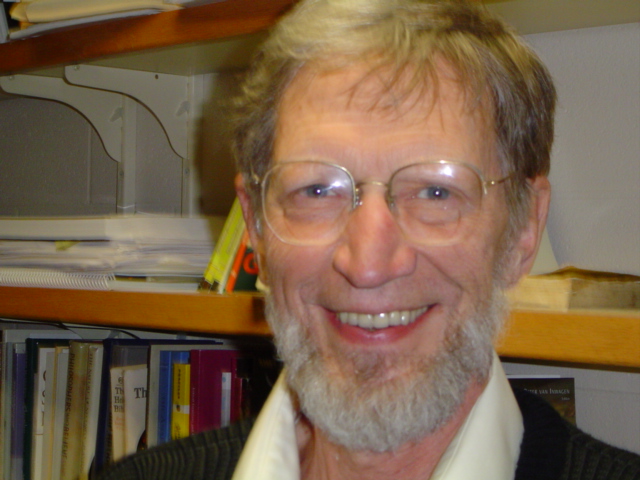
New York Times profiles philosopher Alvin Plantinga and discusses his new book

Christian philosopher Alvin Plantinga

Alvin Plantinga is widely regarded as the top Christian philosopher in the world, and a former head of the largest professional association of philosophers – the American Philosophical Association (APA).

 Mary sent me this article from the New York Times about Alvin Plantinga and his new book, published by Oxford University Press – the top academic press in the world.

Excerpt:

From Calvin [College], and later from the University of Notre Dame, Mr. Plantinga has led a movement of unapologetically Christian philosophers who, if they haven’t succeeded in persuading their still overwhelmingly unbelieving colleagues, have at least made theism philosophically respectable.

“There are vastly more Christian philosophers and vastly more visible or assertive Christian philosophy now than when I left graduate school,” Mr. Plantinga said in a recent telephone interview from his home in Grand Rapids, adding, with characteristic modesty, “I have no idea how it happened.”

Mr. Plantinga retired from full-time teaching last year, with more than a dozen books and a past presidency of the American Philosophical Association to his name. But he’s hardly resting on those laurels. Having made philosophy safe for theism, he’s now turning to a harder task: making theism safe for science.

For too long, Mr. Plantinga contends in a new book, theists have been on the defensive, merely rebutting the charge that their beliefs are irrational. It’s time for believers in the old-fashioned creator God of the Bible to go on the offensive, he argues, and he has some sports metaphors at the ready. (Not for nothing did he spend two decades at Notre Dame.)

In “Where the Conflict Really Lies: Science, Religion and Naturalism,” published last week by Oxford University Press, he unleashes a blitz of densely reasoned argument against “the touchdown twins of current academic atheism,” the zoologist Richard Dawkins and the philosopher Daniel C. Dennett, spiced up with some trash talk of his own.

[…] Longtime readers of Mr. Plantinga, who was raised as a Presbyterian and who embraced the Calvinism of the Christian Reformed Church as a young man, are used to such invocations of theological concepts. And even philosophers who reject his theism say his arguments for the basic rationality of belief, laid out in books like “Warranted Christian Belief” and “God and Other Minds,” constitute an important contribution that every student of epistemology would be expected to know.

But Mr. Plantinga’s steadfast defense of the biochemist and intelligent-design advocate Michael Behe, the subject of a long chapter in the new book, is apparently another matter.

“I think deep down inside he really isn’t a friend of science,” Michael Ruse, a philosopher of science at Florida State University, said of Mr. Plantinga. “I’m not objecting to him wanting to defend theism. But I think he gets his victory at the level of gelding or significantly altering modern science in unacceptable ways.”

Mr. Dennett was even harsher, calling Mr. Plantinga “Exhibit A of how religious beliefs can damage or hinder or disable a philosopher,” not to mention a poor student of biology. Evolution is a random, unguided process, he said, and Mr. Plantinga’s effort to leave room for divine intervention is simply wishful thinking.

“It’s just become more and more transparent that he’s an apologist more than a serious, straight-ahead philosopher,” Mr. Dennett said.

When Mr. Plantinga and Mr. Dennett (who said he has not read Mr. Plantinga’s new book) faced off over these questions before a standing-room-only crowd at a 2009 meeting of the American Philosophical Association, the event prompted ardent online debate over who had landed better punches, or simply been more condescending. (A transcript of the proceedings was published last year as “Science and Religion: Are They Compatible?”)

Mr. Plantinga, who recalled the event as “polite but not cordial,” allowed that he didn’t think much of Mr. Dennett’s line of reasoning. “He didn’t want to argue,” Mr. Plantinga said. “It was more like he wanted to make assertions and tell stories.”

Would you like to know how well Daniel Dennett can debate the naturalism/theism dispute? First of all, Plantinga has debated Dennett, and you can find the audio for it at Apologetics 315.

William Lane Craig also presented several arguments against naturalism to Daniel Dennett in 2007, and Dennett responded by calling it a “first-rate piece of philosophical reasoning”. I link to the exchange and complain about Dennett’s weak response to Craig’s arguments in a previous post.

You may also find this recent interview with Alvin Plantinga, conducted by Brian Auten, informative.

The resurgence of Christian theism in analytical philosophy

Now let’s move from the specific to the aggregate. What is going on with these Christian philosophers?

Well, you can read an excellent article about the resurgence of Christian theism in philosophy departments in the peer-reviewed philosophy journal Philo, which, in my opinion, is the best journal for atheists and agnostic philosophers. The article is authored by the well-known atheist Quentin Smith.

He writes:

THE DESECULARIZATION OF ACADEMIA THAT EVOLVED IN PHILOSOPHY DEPARTMENTS SINCE THE LATE 1960s

By the second half of the twentieth century, universities and colleges had been become in the main secularized. The standard (if not exceptionless) position in each field, from physics to psychology, assumed or involved arguments for a naturalist world-view; departments of theology or religion aimed to understand the meaning and origins of religious writings, not to develop arguments against naturalism. Analytic philosophers (in the mainstream of analytic philosophy) treated theism as an antirealist or non-cognitivist world-view, requiring the reality, not of a deity, but merely of emotive expressions or certain “forms of life” (of course there were a few exceptions, e.g., Ewing, Ross, Hartshorne, etc., but I am discussing the mainstream view).

[…]The secularization of mainstream academia began to quickly unravel upon the publication of Plantinga’s influential book on realist theism, God and Other Minds, in 1967. It became apparent to the philosophical profession that this book displayed that realist theists were not outmatched by naturalists in terms of the most valued standards of analytic philosophy: conceptual precision, rigor of argumentation, technical erudition, and an in-depth defense of an original world-view. This book, followed seven years later by Plantinga’s even more impressive book, The Nature of Necessity, made it manifest that a realist theist was writing at the highest qualitative level of analytic philosophy, on the same playing field as Carnap, Russell, Moore, Grünbaum, and other naturalists. Realist theists, whom hitherto had segregated their academic lives from their private lives, increasingly came to believe (and came to be increasingly accepted or respected for believing) that arguing for realist theism in scholarly publications could no longer be justifiably regarded as engaging in an “academically unrespectable” scholarly pursuit.

Naturalists passively watched as realist versions of theism, most influenced by Plantinga’s writings, began to sweep through the philosophical community, until today perhaps one-quarter or one-third of philosophy professors are theists, with most being orthodox Christians. Although many theists do not work in the area of the philosophy of religion, so many of them do work in this area that there are now over five philosophy journals devoted to theism or the philosophy of religion, such as Faith and Philosophy, Religious Studies, International Journal of the Philosophy of Religion, Sophia, Philosophia Christi, etc. Philosophia Christi began in the late 1990s and already is overflowing with submissions from leading philosophers. Can you imagine a sizeable portion of the articles in contemporary physics journals suddenly presenting arguments that space and time are God’s sensorium (Newton’s view) or biology journals becoming filled with theories defending élan vital or a guiding intelligence? Of course, some professors in these other, non-philosophical, fields are theists; for example, a recent study indicated that seven percent of the top scientists are theists.1 However, theists in other fields tend to compartmentalize their theistic beliefs from their scholarly work; they rarely assume and never argue for theism in their scholarly work. If they did, they would be committing academic suicide or, more exactly, their articles would quickly be rejected, requiring them to write secular articles if they wanted to be published. If a scientist did argue for theism in professional academic journals, such as Michael Behe in biology, the arguments are not published in scholarly journals in his field (e.g., biology), but in philosophy journals (e.g., Philosophy of Science and Philo, in Behe’s case). But in philosophy, it became, almost overnight, “academically respectable” to argue for theism, making philosophy a favored field of entry for the most intelligent and talented theists entering academia today. A count would show that in Oxford University Press’ 2000–2001 catalogue, there are 96 recently published books on the philosophy of religion (94 advancing theism and 2 presenting “both sides”). By contrast, there are 28 books in this catalogue on the philosophy of language, 23 on epistemology (including religious epistemology, such as Plantinga’s Warranted Christian Belief), 14 on metaphysics, 61 books on the philosophy of mind, and 51 books on the philosophy of science.

And how have naturalist philosophers reacted to what some committed naturalists might consider as “the embarrassment” of belonging to the only academic field that has allowed itself to lose the secularization it once had? Some naturalists wish to leave the field, considering themselves as no longer doing “philosophy of mind,” for example, but instead “cognitive science.” But the great majority of naturalist philosophers react by publicly ignoring the increasing desecularizing of philosophy (while privately disparaging theism, without really knowing anything about contemporary analytic philosophy of religion) and proceeding to work in their own area of specialization as if theism, the view of approximately one-quarter or one-third of their field, did not exist. (The numbers “one-quarter” and “one-third” are not the result of any poll, but rather are the exceptionless, educated guesses of every atheist and theist philosophy professor I have asked [the answers varied between “one-quarter” and “one-third”]). Quickly, naturalists found themselves a mere bare majority, with many of the leading thinkers in the various disciplines of philosophy, ranging from philosophy of science (e.g., Van Fraassen) to epistemology (e.g., Moser), being theists. The predicament of naturalist philosophers is not just due to the influx of talented theists, but is due to the lack of counter-activity of naturalist philosophers themselves. God is not “dead” in academia; he returned to life in the late 1960s and is now alive and well in his last academic stronghold, philosophy departments.

Quentin Smith is a good friend of William Lane Craig, who is a philosopher/theologian and the top Christian defender in the world, and probably of all time. Smith is the co-author, with William Lane Craig, of the book “Theism, Atheism, and Big Bang Cosmology“, also published by Oxford University Press. Craig and Smith debated at Harvard University in 2003, and I transcribed the debate for posterity. If some of you are looking for a way to help promote Christian apologetics, you should pick a debate that hasn’t been transcribed and transcribe it. A lot of people read these debate transcripts. I had them printed out in my binder when I was an undergraduate student, in case my professors got boring! I like a good fight.

On a lighter note, my office plant is named Alvin Plantinga. It was grown in water and then given to me by an atheist with whom I work. We discuss these interesting topics over lunch every few months. And so should you. Why not send the New York Times article and the Philo article to an atheist in your office and get the conversation started? There’s enough in this post alone to help you sound like Alvin Plantinga!

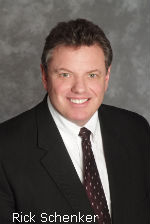
Meet Rick Schenker, head of Ratio Christi, a pro-apologetics campus ministry

Rick Schenker president of Ratio Christi

Here’s an interview with the founder of Ratio Christi, Rick Schenker.

About Rick:

Rick Schenker is president of Ratio Christi, a campus-based, Christian apologetics organization, which he joined in February, 2011. Rick has a visionary leadership style, and has experience in business, government, public and media relations, fundraising, and non-profit management. He has a bachelor’s degree in Bible from Central Bible College, and has done graduate work in public policy at Regent University, along with additional postgraduate work in leadership and public administration. Rick has extensive experience in grass-roots political organization and campaigns in the state of Pennsylvania. As the chief elected official of the County government in Erie, Pennsylvania, he oversaw 1,100 employees and a $300 million budget.

Excerpt:

TBS: Thank you for allowing us to interview you for TheBestSchools.org. Please give our readers an overview of Ratio Christi? What is it? How did it get started? What are its goals?

RSRatio Christi is a global movement that equips university students and faculty to give historical, philosophical, and scientific reasons for following Jesus Christ. Ratio Christi (Latin for “The Reason of Christ”) is placing Christian apologetics clubs at universities both nationally and internationally. Bringing together faith and reason in order to establish the intellectual voice of Christ in the University, Ratio Christi is engaging in the battle for the mind of Christians and skeptics alike. We unashamedly defend the veracity of God, the Bible, and Christ’s resurrection. Ratio Christ started three and a half years ago as a ministry of Southern Evangelical Seminary and became an independent non-profit organization in early 2011. Since that time, Ratio Christi has developed strong partnerships with many other seminaries and organizations, focusing on Christian apologetics and worldview issues. By working together, we now have approximately 60 clubs in various stages of development in universities across the country and around the world.

TBS: Please give us a bit of background about yourself. What were some of the things you were doing before assuming the helm of Ratio Christi? How did the opportunity to head up Ratio Christi present itself?

RS: I am a grass-roots political organizer. I was an elected official, and decided to leave politics to pursue work within Christian ministry. Unfortunately, even though I had run a few nonprofits, and a government with a $300 million budget, I couldn’t find a job. Sometime in 2010, I was considering getting a master’s degree in apologetics, and ran into the Ratio Christi web site. It was a student-run ministry at Southern Evangelical Seminary. In politics, I had become used to spotting trends that could turn into mass movements. As soon as I saw Ratio Christi, I knew it was a mass movement waiting to happen. I called them up and asked them to let me run it. Based on our 500% growth in the last six months, it is apparent that this is something that was not only needed, but ready and waiting to happen in God’s timing.

Here’s more:

TBS: One of the striking claims you make on your web site is that “you are not building an organization, you are building a movement”? Could you please expand on what you see as the difference between the two? What would a Ratio Christi movement look like?

RS: First, Ratio Christi is not the movement. We are simply a grass-roots organization for a greater movement. A movement is usually something that grows beyond the efforts or abilities of the leaders involved in starting it. Ratio Christi is involved in a movement in which apologetics is sweeping through the culture. Because of the rapid growth of neo-atheism in the university, Christian students are under attack. When confronted with intellectual challenges to Christianity, many Christian college students will abandon their faith. You can’t blame them. If the faith of their parents is irrational, then it should be abandoned. In many cases, Christian students are ridiculed and openly humiliated by fellow students and sometimes faculty, for believing in God, the Bible, and Jesus Christ. Then along comes some good apologetics training, and suddenly the students realize that their faith can stand up to intellectual scrutiny. They see that the scientific, historical, and philosophical evidence is on the side of Christianity. They get pumped up about that. The same is true for adults and high school students. Most people didn’t know there was so much evidence that supports the Christian worldview. Ratio Christi wants to help propogate the message that Christianity is not only good, it is true. We want to get the word out, organize cooperation with like-minded ministries, put people and resources in universities and communities, and generally help facilitate what we see as a broader work of God.

TBS: You also say on your web site that you are not in competition with other “full-service” campus ministries, because Ratio Christi is more narrowly focused on “the battle of ideas that permeates the university.” That seems like an admirable goal. But by placing so much emphasis on reasoned discourse, are you concerned at all that Ratio Christi may be raising the bar too high for a truly broad-based campus ministry? After all, you wouldn’t want it seem like undergraduates needed to be philosophy majors in order to participate effectively in their local Ratio Christi chapter, would you?

RS: We do exactly what we say. We go onto a campus to support other Christian ministries. A highly trained apologist is placed on a campus to meet weekly with a small group of students that want to go deeper into the study of the intellectual framework of the Christian faith. RC offers to do training for other student ministries and extends the offer to Christian faculty members. The bar is not too high; this is stuff high school students could and should be learning. Yes, it takes hard work, but loving God with all our mind is part of what it means to be a disciple of Jesus Christ. There is a full range of students involved, from those who have already studied these things deeply to those with no previous exposure. Atheists, agnostics, and those of other belief systems are encouraged to attend. This is a safe place where you can bring your questions. And we do encourage all students to get involved with other campus ministries that do more Bible studies, have worship services, and other fellowship opportunities. RC is simply there to help them deal with the tough questions. Does God exist? Doesn’t science disprove God? Did Jesus really rise from the dead? If God is good and all powerful, why is there evil and suffering? These are the hard questions, and that is what an apologist is trained to handle. Students love it. They love learning the critical-thinking skills necessary to analyze competing worldviews through logical discourse.

TBS: What has been your experience, so far, with the reception of your local Ratio Christi chapters on mainstream secular campuses? Has it been hard to get them recognized? Have there been any noteworthy cases of backlash against students on secular campuses for getting involved with their local Ratio Christi chapter?

RS: Actually it has been surprisingly easy. Since most universities are theoretically all about academic freedom, we approach it from this angle. They should welcome the opportunity to discuss these issues as long as it is done in a civil format. It helps that current case law supports the right of free association on campus. We have been blessed to have the expertise of the Alliance Defense Fund helping guide us in understanding the legal obligations that the universities are under. Since secular thought dominates most educational institutions, the backlash against Christianity is already there. We just try to even the playing field by giving a sound intellectual defense of the faith. Our arguments are appealing to those that are intellectually honest, so there is no need to back down in the face of opposition.

And more:

TBS: One of the most striking things you say on your web site is that you want to make your local Ratio Christi campus chapters welcoming to agnostics and atheists. We certainly see the point of trying to provide a structure for believers and nonbelievers to meet with each other and get to know each other as people, in a nonthreatening environment. But we wonder, given the tensions that exist on college campuses and in American culture generally today, how much success you’ve had so far in this endeavor. Have the chapters had much luck in really engaging with agnostic and atheist students in a constructive way? If not, do you have any thoughts about how you might achieve a better result with this distinctive and important dimension of your work?

RS: Actually, it is fairly normal for our chapters to engage with agnostic and atheist individuals, both in the meetings and around the campus. There has also been a lot of interaction with skeptic/atheist groups, such as co-sponsoring events or setting up discussion forums. Clubs representing other world religions have also been interested in engaging in discussion with our clubs. These interactions are very civil discussions, and our apologists teach Christian students to follow the advice of I Peter 3:15–16, to “always be prepared to give an answer to everyone who asks you to give the reason for the hope that you have. But do this with gentleness and respect, keeping a clear conscience, so that those who speak maliciously against your good behavior in Christ may be ashamed of their slander.” It is easier to do this with gentleness and respect when you are confident in your answers. We have found the reception to a reasoned approach to faith to be quite positive. On the other hand, there are many students among the neo-atheists that have picked up on the tactics of Dawkins and others by practicing a lot of ad hominem arguments against Christians. This is usually some kind of generalized attack like “All Christians are stupid because of X,” but the majority of the discourse on campus is usually quite civil.

Reading this interview was a real encouragement to me. I was very excited by what they are doing on these campuses.

I was in IVCF as an undergraduate and Campus Crusade as a graduate student, and we never did anything with apologetics. Not one thing in six years! They actually blocked every suggestion that the other students and I had to bring in speakers, show debate and lecture DVDs, and organize debates. I didn’t learn one useful thing in 6 years. Everything was always about people sharing their feelings, prayer walks and testimonies. And lots of singing. I know that other IVCF and Crusade groups are different, because I know that some of them do support apologetics, but the ones I attended were really dead set against apologetics.

If any of you are thinking about getting me a Christmas gift because you like the blog, just make a donation to Ratio Christi. Any amount would be great. They take PayPal! (At least – they took my donation through PayPal)

In case you are wondering what they do, here is a sample debate, featuring William Lane Craig and Michael Tooley:

That debate took place at the University of North Carolina.

You can watch another full debate they did (William Lane Craig vs Lawrence Krauss) with this Youtube playlist. That one occurred at North Carolina State University.

Here’s my snarky summary of that debate, in case you don’t want to watch it. The audio is not the best.