
Tag Archives: Bill Craig

Justin Brierley interviews William Lane Craig on the apologetics project

Justin Brierley has posted an interview with William Lane Craig in the UK magazine “Christianity”. (H/T Mary)

Here’s the introduction:

Type ‘William Lane Craig’ into Google and you find some surprisingly varied views. For example, you’ll find Rick Warren tweeting about his ‘friend’ for whom he has written a recent foreword, and other Christian leaders praising an academic who combines intellect with humility. On the other hand, you may come across Richard Dawkins labelling him a ‘ponderous buffoon’ along with other commentators on his atheist website who describe Craig in even more colourful terms.

So what is it about one American philosophy professor that inspires such divergent views? Craig is arguably the best known defender of the intellectual case for Christianity in the world today. As a philosopher, his work is published in academic journals and books. As a popular apologist for the existence of God, his high-profile debates with leading atheists have been viewed by hundreds of thousands around the world. His style is polished, systematic and devastatingly thorough.

To his fans he is the commander-in-chief of a resistance movement against the populist New Atheism – the man who can floor Goliaths such as Christopher Hitchens and Sam Harris. To his detractors, he is a wordsmith and a showman – a professional debater who, to quote Richard Dawkins, ‘brandishes impressive-sounding syllogisms from Logic 101 to bamboozle his faithhead audience’.

To me, he comes across as sincere, humble and somewhat bemused by the opinions that are expressed about him online. Is he affected by the words that some atheists write about him? Laughing, he responds: ‘It doesn’t get to me because I don’t read it. I am in blissful ignorance of what these folks are saying about me.’

So why is Richard Dawkins even bothering to comment on William Lane Craig? It is because he has refused multiple invitations to debate Craig when he comes to the UK this October. They met once briefly in a panel debate in Mexico in 2010, an encounter that led to those online comments. Craig’s supporters (and many of his opponents) would like to see a more substantive one-on-one debate, but Dawkins has resolutely refused to face the philosopher again.

To Craig, it is a confirmation that ‘New Atheism’ is more bluster than substance. ‘I would describe it as a pop culture movement, rather than a serious intellectual one. But as pop culture I do take it very seriously. They have the momentum, and it’s very important that we as Christians expose it for the superficiality that it is.’

Here’s are a few of the questions he answers:

You’ve debated leading atheists all over the world. What is your ultimate hope in participating in these events?

Well, one hope is to help to reshape Western culture, which has become deeply secularised, so that Christianity becomes an intellectual option again. I hope especially to reach out to British students seeking for truth and to show that making a commitment to Christ is not a delusion, but perfectly in step with the dictates of reason.

Is this a biblical approach to evangelism?

I think so, especially in Acts. Paul would argue from the scriptures with his Jewish brethren that Jesus was the Messiah. When dealing with a Gentile audience he would present reasons from nature and conscience, moral and cosmological arguments, and appeal to the eyewitness testimony of Jesus’ resurrection. Paul would do things like rent the Hall of Tyrannus and hold daily lectures there to argue and discuss with anybody who wanted to come. So I see myself as very much following the model of Paul.

Are local churches failing young people by not preparing them for the tough questions they run into at university?

I think we are failing them. If we simply read our children Bible stories and give them entertainment and emotional worship experiences, then we are leaving them unprepared for the tremendous intellectual challenges that they will encounter in secondary school and university. I think it is vital that from an early age Christian parents teach their children to think ‘Christianly’ about the world, and to articulate and defend what we as Christians believe.

Do you see people becoming Christians through your ministry?

We really do. It happens when I speak on a university campus… people will register commitments through comment cards at the meetings, and there are also the wonderful emails that we receive weekly from people all around the world saying ‘Thank you, thank you, thank you, this has transformed my life.’ Added to that is the effect that this has had in the lives of people who are Christian believers. Once they become confident that this is really the truth, it has an energising effect on them that makes them want to share the gospel. It gives them a zeal for God and a desire to read his word and know him.

I really recommend you read the whole thing. I hope that we are making more scholars like Craig, because Christian scholarship is the best defense to the secularism that threatens to suffocate Christianity once and for all. I really do think that the church has to get serious about motivating and funding scholars like Craig, and not just in the area of philosophy, but in all the areas that are relevant to the task of apologetics. I think that young Christians should choose to study areas that are relevant to the task of apologetics, especially, science, history and philosophy. That’s where the action is.

About William Lane Craig

William Lane Craig is currently conducting a debating and speaking tour of the UK, with stops at Oxford, Cambridge, London and points in between.

Let’s review William Lane Craig’s qualifications:

William Lane Craig is Research Professor of Philosophy at Talbot School of Theology in La Mirada, California.

Dr. Craig pursued his undergraduate studies at Wheaton College (B.A. 1971) and graduate studies at Trinity Evangelical Divinity School (M.A. 1974; M.A. 1975), the University of Birmingham (England) (Ph.D. 1977), and the University of Munich (Germany) (D.Theol. 1984). From 1980-86 he taught Philosophy of Religion at Trinity… In 1987 they moved to Brussels, Belgium, where Dr. Craig pursued research at the University of Louvain until assuming his position at Talbot in 1994.

He has authored or edited over thirty books, including The Kalam Cosmological Argument; Assessing the New Testament Evidence for the Historicity of the Resurrection of Jesus; Divine Foreknowledge and Human Freedom; Theism, Atheism and Big Bang Cosmology; and God, Time and Eternity, as well as over a hundred articles in professional journals of philosophy and theology, including The Journal of Philosophy, New Testament Studies, Journal for the Study of the New Testament, American Philosophical Quarterly, Philosophical Studies, Philosophy, and British Journal for Philosophy of Science.

Craig’s CV is here.

Craig’s list of publications is here.

Here are some of Craig’s recent publications: (it’s a little out of date, now)

From 2007:

  • Ed. with Quentin Smith. Einstein, Relativity, and Absolute Simultaneity. Routledge Studies in Contemporary Philosophy. London: Routledge, 2007, 302 pp.
  • “Theistic Critiques of Atheism.” In The Cambridge Companion to Atheism, pp. 69-85. Ed. M. Martin. Cambridge Companions to Philosophy. Cambridge University Press, 2007.
  • “The Metaphysics of Special Relativity: Three Views.” In Einstein, Relativity, and Absolute Simultaneity, pp. 11-49. Ed. Wm. L. Craig and Quentin Smith. Routledge Studies in Contemporary Philosophy. London: Routledge, 2007.
  • “Creation and Divine Action.” In The Routledge Companion to Philosophy of Religion, pp. 318-28. Ed. Chad Meister and Paul Copan. London: Routledge, 2007.

From 2008:

  • God and Ethics: A Contemporary Debate. With Paul Kurtz. Ed. Nathan King and Robert Garcia. With responses by Louise Antony, Walter Sinnott-Armstrong, John Hare, Donald Hubin, Stephen Layman, Mark Murphy, and Richard Swinburne. Lanham, Md.: Rowman & Littlefield, 2008.
  • “Time, Eternity, and Eschatology.” In The Oxford Handbook on Eschatology, pp. 596-613. Ed. J. Walls. Oxford: Oxford University Press, 2008.

From 2009:

  • Ed. with J. P. Moreland. Blackwell Companion to Natural Theology. Oxford: Blackwell.
  • “The Kalam Cosmological Argument.” With James Sinclair. In Blackwell Companion to Natural Theology. Ed. Wm. L. Craig and J. P. Moreland. Oxford: Blackwell.
  • “In Defense of Theistic Arguments.” In The Future of Atheism: Alister McGrath and Daniel Dennett in Dialogue. Ed. Robert Stewart. Philadelphia: Fortress Press.

Forthcoming:

  • “The Cosmological Argument.” In Philosophy of Religion: Classic and Contemporary Issues. Ed. Paul Copan and Chad Meister. Cambridge: Blackwell.
  • “Cosmological Argument”; “Middle Knowledge.” In The Cambridge Dictionary of Christian Theology. Ed. G. Fergusson et al. Cambridge: Cambridge University Press.
  • “Divine Eternity.” In Oxford Handbook of Philosophical Theology. Ed. Thomas Flint and Michael Rea. Oxford: Oxford University Press.

Craig has debated dozens of times against the top atheist scholars. If you have never taken in any of his debates, take a look at his debate against Christopher Hitchens on Youtube.
William Lane Craig asks: can we be good without God?

A video lecture in 3 parts, and a peer-reviewed paper to go with the clips.

Part 1 of 3:

Part 2 of 3:

Part 3 of 3:

And here is the article that discusses the same topic, in more detail, and with footnotes.

Excerpt:

Can we be good without God? At first the answer to this question may seem so obvious that even to pose it arouses indignation. For while those of us who are Christian theists undoubtedly find in God a source of moral strength and resolve which enables us to live lives that are better than those we should live without Him, nevertheless it would seem arrogant and ignorant to claim that those who do not share a belief in God do not often live good moral lives–indeed, embarrassingly, lives that sometimes put our own to shame.

But wait. It would, indeed, be arrogant and ignorant to claim that people cannot be good without belief in God. But that was not the question. The question was: can we be good without God? When we ask that question, we are posing in a provocative way the meta-ethical question of the objectivity of moral values. Are the values we hold dear and guide our lives by mere social conventions akin to driving on the left versus right side of the road or mere expressions of personal preference akin to having a taste for certain foods or not? Or are they valid independently of our apprehension of them, and if so, what is their foundation? Moreover, if morality is just a human convention, then why should we act morally, especially when it conflicts with self-interest? Or are we in some way held accountable for our moral decisions and actions?

Today I want to argue that if God exists, then the objectivity of moral values, moral duties, and moral accountability is secured, but that in the absence of God, that is, if God does not exist, then morality is just a human convention, that is to say, morality is wholly subjective and non-binding. We might act in precisely the same ways that we do in fact act, but in the absence of God, such actions would no longer count as good (or evil), since if God does not exist, objective moral values do not exist. Thus, we cannot truly be good without God. On the other hand, if we do believe that moral values and duties are objective, that provides moral grounds for believing in God.

This is the easiest argument for God’s existence to discuss with non-Christians. If you would like to hear a good debate on this topic, I recommend the debate between Arif Ahmed and Glenn Peoples.

UK Telegraph on Richard Dawkins’ cowardly refusal to debate William Lane Craig

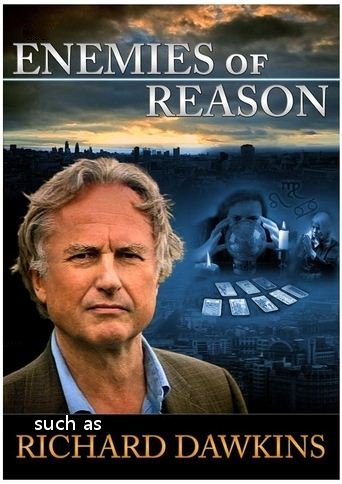
Will Richard Dawkins debate William Lane Craig?

(Image stolen from Glenn Peoples)

Cowardly Richard Dawkins refuses to debate William Lane Craig on this latest UK tour. (H/T Mary)

Excerpt:

Richard Dawkins has made his name as the scourge of organised religion who branded the Roman Catholic Church “evil” and once called the Pope “a leering old villain in a frock”.

But he now stands accused of “cowardice” after refusing four invitations to debate the existence of God with a renowned Christian philosopher.

A war of words has broken out between the best selling author of The God Delusion, and his critics, who see his refusal to take on the American academic, William Lane Craig, as a “glaring” failure and a sign that he may be losing his nerve.

Prof Dawkins maintains that Prof Craig is not a figure worthy of his attention and has reportedly said that such a contest would “look good” on his opponent’s CV but not on his own.

An emeritus fellow of New College, Oxford, Prof Dawkins last year supported a plan to charge Pope Benedict XVI with crimes against humanity for his alleged involvement in the cover-up of sex abuse by Catholic priests.

Prof Craig is a research Professor of Philosophy at Talbot School of Theology, in California, and the author of 30 books and hundreds of scholarly articles on Christianity.

He has debated with leading thinkers including Daniel Dennett, A.C.Grayling, Christopher Hitchens, Lewis Wolpert and Sam Harris.

Prof Craig is due to visit Britain in October this year. Four invitations to take part in public debates were sent to Prof Dawkins from The British Humanist Association, The Cambridge Debating Union, the Oxford Christian Union and Premier Radio.

Prof Dawkins declined them all.

[…]Some of Prof Dawkins’s contemporaries are not impressed. Dr Daniel Came, a philosophy lecturer and fellow atheist, from Worcester College, Oxford, wrote to him urging him to reconsider his refusal to debate the existence of God with Prof Craig.

In a letter to Prof Dawkins, Dr Came said: “The absence of a debate with the foremost apologist for Christian theism is a glaring omission on your CV and is of course apt to be interpreted as cowardice on your part.

“I notice that, by contrast, you are happy to discuss theological matters with television and radio presenters and other intellectual heavyweights like Pastor Ted Haggard of the National Association of Evangelicals and Pastor Keenan Roberts of the Colorado Hell House.”

Prof Craig, however, remains willing to debate with Prof Dawkins. “I am keeping the opportunity open for him to change his mind and debate with me in the Sheldonian Theatre in Oxford” in October, he said.

Read it all. And please forward this to EVERYONE you know.

Dawkins mentions that he “already debated Craig” in that lame, worthless Mexico event where all the speakers got 2 minutes for their speeches, and one minute rebuttals. That was not a formal academic debate, that was a spectacle. I want a formal debate so Craig can put this blowhard in his place like he did with Hitchens, Harris, and Dennett. I want this nonsense about atheism being a  rational, moral worldview to end NOW. And by now, I mean yesterday.

Why won’t Dawkins debate Craig?

Let’s re-cap Dawkins’ reasons in point form: (with my comments in parentheses)

  • Dawkins claims that he is willing to debate high-ranking clergymen (but Craig is a scholar, not a clergyman)
  • Dawkins claims that Craig is a creationist (but Craig supports his kalam cosmological argument with the Big Bang)
  • Dawkins claims that Craig’s only claim to fame is that he is a professional debater (but see Craig’s CV and publications below, which is far more prestigious than Dawkins)
  • Dawkins claims that he’s too busy (busy cowering in fear hugging his Darwin doll for comfort)

Let’s review William Lane Craig’s qualifications:

William Lane Craig is Research Professor of Philosophy at Talbot School of Theology in La Mirada, California.

Dr. Craig pursued his undergraduate studies at Wheaton College (B.A. 1971) and graduate studies at Trinity Evangelical Divinity School (M.A. 1974; M.A. 1975), the University of Birmingham (England) (Ph.D. 1977), and the University of Munich (Germany) (D.Theol. 1984). From 1980-86 he taught Philosophy of Religion at Trinity… In 1987 they moved to Brussels, Belgium, where Dr. Craig pursued research at the University of Louvain until assuming his position at Talbot in 1994.

He has authored or edited over thirty books, including The Kalam Cosmological Argument; Assessing the New Testament Evidence for the Historicity of the Resurrection of Jesus; Divine Foreknowledge and Human Freedom; Theism, Atheism and Big Bang Cosmology; and God, Time and Eternity, as well as over a hundred articles in professional journals of philosophy and theology, including The Journal of Philosophy, New Testament Studies, Journal for the Study of the New Testament, American Philosophical Quarterly, Philosophical Studies, Philosophy, and British Journal for Philosophy of Science.

Craig’s CV is here.

Craig’s list of publications is here.

Here are some of Craig’s most recent publications:

From 2007:

  • Ed. with Quentin Smith. Einstein, Relativity, and Absolute Simultaneity. Routledge Studies in Contemporary Philosophy. London: Routledge, 2007, 302 pp.
  • “Theistic Critiques of Atheism.” In The Cambridge Companion to Atheism, pp. 69-85. Ed. M. Martin. Cambridge Companions to Philosophy. Cambridge University Press, 2007.
  • “The Metaphysics of Special Relativity: Three Views.” In Einstein, Relativity, and Absolute Simultaneity, pp. 11-49. Ed. Wm. L. Craig and Quentin Smith. Routledge Studies in Contemporary Philosophy. London: Routledge, 2007.
  • “Creation and Divine Action.” In The Routledge Companion to Philosophy of Religion, pp. 318-28. Ed. Chad Meister and Paul Copan. London: Routledge, 2007.

From 2008:

  • God and Ethics: A Contemporary Debate. With Paul Kurtz. Ed. Nathan King and Robert Garcia. With responses by Louise Antony, Walter Sinnott-Armstrong, John Hare, Donald Hubin, Stephen Layman, Mark Murphy, and Richard Swinburne. Lanham, Md.: Rowman & Littlefield, 2008.
  • “Time, Eternity, and Eschatology.” In The Oxford Handbook on Eschatology, pp. 596-613. Ed. J. Walls. Oxford: Oxford University Press, 2008.

From 2009:

  • Ed. with J. P. Moreland. Blackwell Companion to Natural Theology. Oxford: Blackwell.
  • “The Kalam Cosmological Argument.” With James Sinclair. In Blackwell Companion to Natural Theology. Ed. Wm. L. Craig and J. P. Moreland. Oxford: Blackwell.
  • “In Defense of Theistic Arguments.” In The Future of Atheism: Alister McGrath and Daniel Dennett in Dialogue. Ed. Robert Stewart. Philadelphia: Fortress Press.

Forthcoming:

  • “The Cosmological Argument.” In Philosophy of Religion: Classic and Contemporary Issues. Ed. Paul Copan and Chad Meister. Cambridge: Blackwell.
  • “Cosmological Argument”; “Middle Knowledge.” In The Cambridge Dictionary of Christian Theology. Ed. G. Fergusson et al. Cambridge: Cambridge University Press.
  • “Divine Eternity.” In Oxford Handbook of Philosophical Theology. Ed. Thomas Flint and Michael Rea. Oxford: Oxford University Press.

Richard Dawkins is eminently qualified to debate uninformed clergymen, but he has too much at stake (in terms of book royalties) to disappoint his loyal horde of foam-flecked fundies by debating a professional scholar who has debated hundreds of times, against the top non-Christian scholars, in hundreds of universities, including Harvard, Cambridge and Oxford.

The Craig-Hitchens debate

This debate was moderated by HUGH HEWITT, host of the nationally-syndicated Hugh Hewitt Show.

This is just an example of what these debates typically look like. No one gets hurt, so what is Dawkins afraid of?

Who is linking to this post?

Related posts