Tag Archives: Bible

Paul Helm debates William Lane Craig on Calvinism and Reformed theology

Two tough rams butt heads, and may the best ram win!

I listened to this excellent discussion between Dr. William Lane Craig and Oxford University Calvinist philosopher Dr. Paul Helm. I think this is a useful discussion in general because atheists often bring up problems with Calvinism as objections to Christianity in general, such as:

  • If God knows the future, then I don’t have free will
  • If God controls everything, then I am not responsible for my sinning
  • If God has to override my free will to be saved, then I am not responsible for being damned if God doesn’t choose me

Details:

If God ordains the future, can humans have free will? Are people predestined for salvation? And what does the Bible say on the matter? William Lane Craig is a Christian philosopher and leading proponent of Molinism, a view of divine sovereignty that seeks to reconcile God’s fore-ordination with human free will. Paul Helm is a leading Calvin Scholar. He defends the view that  God predestines the future, limiting human freedom.

MP3 of this show

Or listen on YouTube:

I was surprised because my Calvinist friend Dina thought that Dr. Helm won this debate, but I thought that Dr. Craig won. So without further ado, here is the snark-free summary of the discussion. I also sent the summary to Dina to make sure that it was reasonably fair and accurate. She said it was biased, but she was predestined to say that.

Summary: 

JB: Has Lewis had any impact on your apologetics?

Craig: Not as a scholar, but more as a model of a scholar who leaves a legacy through his published work

JB: How did you become interested in Calvinism?

Helm: Starting from childhood, and lately writing more on Calvinism from a philosophical point of view

JB: How do you view God’s sovereignty?

Helm: Strong view of divine sovereignty, God is sovereign over all events, but that doesn’t mean that they are determined by him

JB: What is Calvin’s legacy?

Helm: He amplified an existing concept of predestination, and wrote on many other topics

JB: What is Molinism?

Craig: Molina affirms divine sovereignty as Paul Helm does, but he also affirms libertarian free will

Craig: Every event that occurs happens by God’s will or by God’s permission

JB: What about open theism?

Craig: Paul and I both oppose open theism

JB: How does Molinism reconcile human free will and divine sovereignty

Craig: God has knowledge of what would happen under any set of circumstances

Craig: God has knowledge of everything that COULD happen, and he has knowledge of everything that WILL happen

Craig: God knows what each person freely choose to do in any set of circumstances and he can place people in times and places where he is able to achieve his ends without violating creaturely freedom and creaturely responsibility

JB: How does this apply to the issue of salvation?

Craig: The circumstances in which God puts a person includes God leading people to him and he foreknows who will respond to his leading

Craig: God has ordered the world in such a way that he foreknows the exact people who will free respond to his leading if he puts them in certain circumstances

JB: Does God want to save the maximum of people?

Craig: My own view is that God does order the world in such a way that the maximum number of people will respond to God’s drawing them to himself

JB: Is the Molinist view gaining ground?

Craig: Yes, Calvinists and open theists are both moving towards it, and Molinism is the dominant view among philosophical theologians

JB: Why has Molinism not convinced you?

Helm: It’s an unnecessary theory, God’s natural knowledge and free knowledge covers what middle knowledge covers

Helm: Calvinism has a stronger view of sin, such that God has to act unilaterally and irrestibly to save them

JB: Are creatures free on your view?

Helm: My view of free will is weaker than Craig’s view of free will

Craig: For the Calvinist, grace is irresistible, but for the Molinist, grace is effective when it is met with a response from the creature

Craig: The Bible affirms the strong view of free will, when it says that in certain circumstances people can freely choose to do other than they do

Helm: But if a person is in circumstances X and they are free, then why don’t they choose something that isn’t what God can foresee

Craig: In identical circumstances, a person has the freedom to choose, and God doesn’t determine what they choose, he just foreknows what they choose

Helm: How can God foreknow what people will freely do if people have this strong view of freedom that allows them to do anything? God would not know what people can freely do if they really are free

Craig: God has knowledge of what his creatures would freely do in any set of circumstances, he has knowledge of subjunctive statements

Craig: The Scripture is filled with statements that show that God has this knowledge of what people would do in other circumstances (e.g. – 2 Cor 2:8)

Helm: I am not denying that the Bible is full of subjunctive statements, but if humans have real libertarian free will, then God cannot know what they will do

Craig: I think God does preordain everything, Molinism has a strong sense of divine sovereignty BUT the foreordaining is done with the knowledge of what humans would do in any circumstances, so that what God ordains achieves his ends, but without violating creaturely free will

Craig: I take at face value the passages of the Bible where it says that God wants all persons to be saved

Craig: When the Bible says that God wants ALL persons to be saved (2 Pet 3:9), the Bible means that God wants ALL persons to be saved

Craig: So either universalism is true OR there is something that stops all from being saved outside of God

Craig: the something that prevents all from being saved is creaturely free will

Helm: Most people don’t have the opportunity to hear the gospel, so God doesn’t want all to be saved

Helm: People can still be responsible for what God “fore-ordains”

JB: Can a person really be responsible for wickedness if they didn’t freely choose it?

Helm: Even though God is the only one who can act unilaterally to make save people, the people who act wickedly are still responsible

Craig: Molinism provides an answer to the problem of why not all people have heard the gospel, because by using middle knowledge he is able to know who would respond to the gospel if they heard it and he places those people in the times and places where they will hear it

Craig: That solution means that NO ONE is lost because they have not heard the gospel

Craig: There is Biblical support for (Acts 17:27) God choosing the times and places where people will live SO THAT they will be led by him and be able to respond to his leading

JB: Is God the author of sin, on Calvinism?

Craig: If Calvinists define providence to mean causal determinism, then he is the cause of every effect including human actions, and he is the one who causes people to sin

Craig: This view (determinism) impugns the character of God

Helm: I don’t think that sovereignty requires determinism

Helm: God has mysterious resources – which I cannot specify – that reconcile his sovereignty with human responsibility for wickedness

JB: But if God is the cause of people doing wrong things, then how can they be responsible for it?

Helm: Well, humans do cause their own actions

Craig: Helm is right to say that God has resources to reconcile God’s sovereignty with free will and human responsibility, and that resource is not an unknown mystery, it’s middle knowledge

Craig: I can affirm everything in the Westminster Confession except for the one clause where they expressly repudiate middle knowledge as the mechanism for reconciling divine sovereignty and free will

Helm: Well, Calvinists have a strong view of sin so that humans cannot respond to God’s leading

Craig: Yes, and that’s why humans need prevenient grace in order to respond to him

Craig: God has to take the initiative and draw people to himself or they cannot be saved, but that grace is resistible, and that’s what the Bible teaches (Acts 7:51), so humans are still responsible if they resist God

Helm: My view of grace is that it is monergistic and irrestible, it is a unilateral action on the part of God, like pulling someone out of an icy pond which they can’t get out of

JB: If humans freely choose to respond to God’s drawing and leading, does that diminish grace?

Helm: Many are called but few are chosen

Craig: Molinism does not require synergism – which is the idea that humans are partly responsible for their salvation

Craig: In Eph 2:8, Scripture is clear that faith opposite to works, and responding to God’s drawing is not meritorious

JB: So receiving a gift is not meritorious?

Craig: It’s the passive acceptance of what someone else has done for you

Helm: But doesn’t this mean that you can lose your salvation, because you can accept and resist the gift of salvation?

Craig: That’s a separate question that Christians can differ on, but if the Holy Spirit indwells a person and seals them, then that would argue for the view that salvation cannot be revoked

JB: Doesn’t Romans 8 teach Calvinism pretty clearly?

Helm: This is called the “golden chain”, and it does support Calvinism

Craig: Actually, this text is no problem for Molinists because the first link in the chain is foreknowledge, which, if it incorporates middle knowledge, is no problem for Molinists

Craig: What God is electing in Romans 8 is a specific group of people that he knows in advance of creating the universe will freely respond to his drawing them to him

Craig: In Acts 4:27-28, it is talking about God’s foreknowledge, which involves and incorporates knowledge of what any individual would freely choose if placed in those circumstances

JB: If God actualizes a set plan with set circumstances for everyone, isn’t that very similar to Calvinism?

Craig: Yes! It’s a strong statement of divine sovereignty

Helm: Foreknowledge doesn’t mean that God knows what people would do, it’s just refering to God “knowing his own mind” about what he wants to do

JB: How do you respond to the fairness of God unilaterally and specifically choosing some people for salvation and choosing other people for damnation (because he refuses to act unilaterally for them)?

Helm: God ordinarily bypasses other people in the Bible, like when he chooses the Jews as his chosen people

Craig: The problem with that is that the Bible clearly teaches that God has a genuine will that all will be saved and he makes a genuine offer of salvation to all people

Craig: Also, just being a Jew and a member of the chosen people doesn’t mean you were saved, because some Jews rebelled against God

Craig: And there were also people outside of the Jewish people who were righteous and in a relationship with God, like Job

Helm: “the fabric of our faith” depends on God’s choice and his not-choice, it is fundamental to the Bible and to God’s character, and choosing them “effectively” (irrestibly and unilaterally)

Helm: The idea of God considering “possible worlds”, some of which are feasible and not feasible, with conflicts between the wills of free creatures in different circumstances, and then actualizing one world that achieve these ends is very messy

Craig: Some worlds may not feasible for God to create, for example a world in which everyone is saved – it is logically possible, but may not be feasible

Craig: God will not exercise any divine coercion to force people to go to Heaven against their own will

Helm: If God chooses a world because it is feasible, then he doesn’t love me directly, he is choosing a world, not individuals

Craig: Well, when God actualizes a world, he specifically knows which individuals will be saved within that world, but without disrespecting free will

Craig: The world isn’t primary, the individuals are primary

Helm: I think that middle knowledge can he included in God’s natural knowledge and free knowledge

Craig: The knowledge of what people would do in different circumstances is based on the freedom of the individuals

JB: Make your conclusions!

Craig: Molinism is a Biblical model for reconciling divine sovereignty with human freedom

Helm: It is intellectually mystifying to introduce this strong view of human freedom and it is not Biblical

What are undesigned coincidences, and how are they used in apologetics?

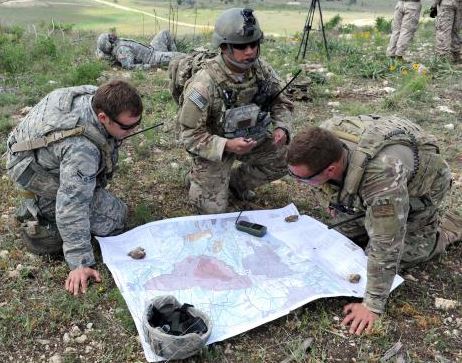
Air Force TACPs confirm target locations with their map

When you’re reading the Bible, you may find passages in one book that are mysterious on their own, but then they make sense if you add missing details from a parallel account from a different source inside or even outside the Bible. I think these “undesigned coincidences” are helpful for answering the question of that skeptics often ask: “is the Bible history or myth?” Let’s see some examples.

So, there are two kinds of undersigned coincidences. In the “internal” kind, the clearing up is done by another source in the same book. In the external kind, the clearing up is done by a source outside the same book.

Here’s an article from Apologetics UK with some internal examples:

In John 6:1-7, we are told:

Some time after this, Jesus crossed to the far shore of the Sea of Galilee (that is, the Sea of Tiberias), and a great crowd of people followed him because they saw the signs he had performed by healing the sick. Then Jesus went up on a mountainside and sat down with his disciples. The Jewish Passover Festival was near.When Jesus looked up and saw a great crowd coming toward him, he said to Philip, “Where shall we buy bread for these people to eat?” He asked this only to test him, for he already had in mind what he was going to do.Philip answered him, “It would take more than half a year’s wages to buy enough bread for each one to have a bite!”

Now, Philip is a fairly minor character in the New Testament. And one might, naturally, be inclined to wonder why Jesus hasn’t turned to someone a little higher in the pecking order (such as Peter or John). A partial clue is provided in John 1:44: “Philip, like Andrew and Peter, was from the town of Bethsaida.” Likewise, John 12:21 refers to “Philip, who was from Bethsaida in Galilee”

And what is so significant about Philip being from the town of Bethsaida? We don’t learn this until we read the parallel account in Luke’s gospel (9:10-17). At the opening of the account (verses 10-11) we are told, “When the apostles returned, they reported to Jesus what they had done. Then he took them with him and they withdrew by themselves to a town called Bethsaida, but the crowds learned about it and followed him. He welcomed them and spoke to them about the kingdom of God, and healed those who needed healing.”

And so, we are informed by Luke that the event was actually taking place in Bethsaida — the town from which Philip was from! Jesus thus turns to Philip, whom, he believed, would be familiar with the area. Notice too that Luke does not tell us that Jesus turned to Philip.

But it gets even more interesting still. In Matthew 11, Jesus denounces the unrepentant cities, saying, “Woe to you, Chorazin! Woe to you, Bethsaida! For if the miracles that were performed in you had been performed in Tyre and Sidon, they would have repented long ago in sackcloth and ashes.” The reader is left wondering what miracles were performed in these cities. We are not told in Matthew’s gospel. It is only in light of Luke’s account of the feeding of the five thousand (chapter 9), in which we are told of the event’s occurrence in Bethsaida, that this statement begins to make sense!

This one is pretty clever:

In Matthew 2 6:67-68, we read, “Then they spat in His face and beat Him; and others struck Him with the palms of their hands, saying, “Prophesy to us, Christ! Who is the one who struck You?”” This raises the natural question, why are they asking “Who hit you?” It is not until we read the parallel account in Luke’s gospel (22:64) that we learn that they had blindfolded him, thereby making sense of their taunts “Who hit you?”

Another one:

In Luke 23:1-4, w e read,
Then the whole assembly rose and led him off to Pilate. And they began to accuse him, saying, “We have found this man subverting our nation. He opposes payment of taxes to Caesar and claims to be Messiah, a king.”

So Pilate asked Jesus, “Are you the king of the Jews?”

“You have said so,” Jesus replied.

Then Pilate announced to the chief priests and the crowd, “I find no basis for a charge against this man.”
On the surface, this seems to be a rather strange declaration to make. Jesus has just declared Himself to be a King, and has been charged with subverting the nation and opposing paying taxes to Caesar. Why has Pilate found no basis for a charge against him?

The answer lies in the parallel account in John’s gospel (18:33-38):

Pilate then went back inside the palace, summoned Jesus and asked him, “Are you the king of the Jews?”

“Is that your own idea,” Jesus asked, “or did others talk to you about me?”
“Am I a Jew?” Pilate replied. “Your own people and chief priests handed you over to me. What is it you have done?”

Jesus said, “My kingdom is not of this world. If it were, my servants would fight to prevent my arrest by the Jewish leaders. But now my kingdom is from another place.”

“You are a king, then!” said Pilate.

Jesus answered, “You say that I am a king. In fact, the reason I was born and came into the world is to testify to the truth. Everyone on the side of truth listens to me.”

“What is truth?” retorted Pilate. With this he went out again to the Jews gathered there and said, “I find no basis for a charge against him.

It is only when you read John’s account that you learn that Jesus had told Pilate that “My kingdom is not of this world. If it were, my servants would fight to prevent my arrest by the Jewish leaders. But now my kingdom is from another place.”

And the same article has some external undesigned coincidences:

In Matthew 2:22, we are told:

But when [Joseph] heard that Archelaus was reigning in Judea in place of his father Herod, he was afraid to go there. Then after being waned by God in an dream, he left for the regions of Galilee…

Josephus’ Antiquities 17.3.1 tells us that the domain of Herod the Great was divided among his sons, with Archelaus having authority in Judea but not in Galilee, which was governed by his younger brother, Herod Antipas.

We also know that Archelaus had acquired quite a bloody reputation (e.g. Antiquities 17.13.1-2 and 17.9.3). The latter of these references describes how Archelaus slaughtered 3,000 Jews at Passover. Thus, Joseph decides not to return to Judea and, instead, goes further north to the regions of Galilee, governed by Herod Antipas.

And another one:

In Matthew 2:22, Archeleaus is reigning as king in Judea; in Matthew 27:2, Pilate is governor of Judea; in Acts 12:1, Herod is king of Judea; and in Acts 23:33, Felix is governor of Judea. This becomes extremely confusing.

But here’s the thing: Josephus attests to the accuracy of every one of these titles. Herod the Great was made King of Judea by Mark Anthony. Archelaus was deposed in the year 6 A.D., after only a ten-year reign, and a series of procurators ruled over Judea (of whom Pilate was fifth). The Herod of Acts 12 is Agrippa I. He was made king by Claudius Caesar. After his death, Judea was, once again, placed under the government of procurators (one of them being Felix).

And another one:

When Luke tells us of the riot in Ephesus, he reports that the city clerk tells the crowd that “There are proconsuls”. A proconsul is a Roman authority to whom a complaint may be taken. Normally, there was only one proconsul. Just at that particular time, however, there seems to have been two as a result of the assassination of Silanus (the previous proconsul) by poisoning in the Fall of AD 54, by the two imperial stewards at the urging of Nero’s mother. This event is independently documented by Tacitus in his Annals (13.1). Indeed, Luke’s accuracy has allowed historians to date the event which Luke narrates with incredible precision since we know when Silanus was poisoned.

If you think that these are clever, then share this post, and encourage your non-Christian friends and family to consider one of the many reasons why so many scholars have considered the New Testament books to be so reliable.

I wish that Christian parents and pastors were more thoughtful about how they present the Bible to young people. Instead of just saying “the Bible says” and praising blind faith acceptance of the Bible, why don’t we think a little harder, and look for some confirmation of the Bible from historical methods like undesigned coincidences, and from non-Biblical authors, and from archaeology, etc.? Surely adding more evidence for taking the Bible seriously is the right approach, if the goal is to be persuasive? It’s not like we’re see good results from the current “blind faith” approach to raising Christian children, right?

Book review of R.C. Sproul’s “If there’s a God, why are there atheists?”

I have a key that will unlock a puzzling mystery

Brian Auten has a book review posted up at Apologetics 315.

The book is “If There’s A God, Why Are There Atheists?”, by theologian R.C. Sproul. R.C. Sproul is one of my favorite theologians. The book in question has a very, very special place in my heart, because I think that it is one of the major reasons why I was able to resist pernicious ideas like religious pluralism and postmodernism for so long. Once you put on the glasses of Romans 1 and see for the first time what man is really doing with respect to God, you can never see things the same again. I’ll say more about this at the end, but let’s see what Brian wrote first.

The review

So often, you hear atheists complaining about religion is nothing but wish-fulfillment or some sort of crutch for people who are frightened by a variety of things. They think that God is invented to solve several problems. 1) how does the world work?, 2) is there meaning to suffering and evil?, 3) why should I be moral?, and 4) what will happen to me and my loved ones when I die?. On the atheistic view, God is just a crutch that people cling to out of weakness and ignorance. But is this really the case?

Sproul starts the book by investigating three atheists who sought to explain religious belief as a result of psychological factors.

Brian writes:

Before tackling the psychology of atheism, Sproul spends a chapter on the psychology of theism, from the perspective of Freud’s question “If there is no God, why is there religion?”11 What follows is an overview of various psychological explanations of theistic belief: Feuerbach’s “religion is a dream of the human mind.”12 Marx’s belief that religion is “due to the devious imagination of particular segment of mankind.”13 And Nietzche’s idea that “religion endures because weak men need it.”14 The author properly reiterates: “We must be careful to note that the above arguments can never be used as proof for the nonexistence of God. They can be useful for atheists who hear theists state that the only possible explanation for religion is the existence of God.”15 That being said, Sproul also reveals what these arguments presume:

Their arguments already presupposed the nonexistence of God. They were not dealing with the question, Is there a God? They were dealing with the question, Since there is no God, why is there religion?16

Sproul points out the weaknesses of each of these approaches and says “there are just as many arguments showing that unbelief has its roots in the psychological needs of man.”

Wow, could that really be true? What are the real reasons why people reject God? Does the Bible have anything to say about what those reasons are?

Brian cites Sproul’s contention:

The New Testament maintains that unbelief is generated not so much by intellectual causes as by moral and psychological ones. The problem is not that there is insufficient evidence to convince rational beings that there is a God, but that rational beings have a natural hostility to the being of God.

[…]Man’s desire is not that the omnipotent, personal Judeo-Christian God exist, but that He not exist.

In Romans 1:18-23, the apostle Paul explains what is really going on:

18The wrath of God is being revealed from heaven against all the godlessness and wickedness of men who suppress the truth by their wickedness,

19since what may be known about God is plain to them, because God has made it plain to them.

20For since the creation of the world God’s invisible qualities—his eternal power and divine nature—have been clearly seen, being understood from what has been made, so that men are without excuse.

21For although they knew God, they neither glorified him as God nor gave thanks to him, but their thinking became futile and their foolish hearts were darkened.

22Although they claimed to be wise, they became fools

23and exchanged the glory of the immortal God for images made to look like mortal man and birds and animals and reptiles.

On this blog, I regularly present many, many arguments for theism in general, and Christian theism in particular:

Sproul explains why atheists cannot allow themselves to live according to the evidence that is presented to them:

The cumulative effect of this knowledge that is clearly seen is to leave men ‘without excuse.’ Herein lies the basis of the universal guilt of man. No one can claim ignorance of the knowledge of God. No one can cite insufficient evidence for not believing in God. Though people are not persuaded by the evidence, this does not indicate an insufficiency in the evidence, but rather an insufficiency in man.

[…]The basic stages of man’s reaction to God can be formulated by means of the categories of trauma, repression, and substitution.

[…]If God exists, man cannot be a law unto himself. If God exists, man’s will-to-power is destined to run head-on into the will of God.

And this is the force that is animating atheists today. They don’t want to be accountable to God in a relationship, no matter what the evidence is. They have to deny it, so that they can be free to get the benefits of a universe designed for them, without having to give any recognition or acknowledgement back. If they have to lie to themselves to deny the evidence, they will do it. Anything to insulate themselves from the Creator and Designer who reveals himself in Jesus Christ.

The rest of the book review, and the book, deals with explaining in detail how atheists respond to an all-good, all-powerful, all-knowing Creator/Designer. I encourage you to click through and read the whole book review. You can read the review, and the book, and then investigate for yourself whether atheists really are like that.

My survey of atheists

By the way, did you all see my survey of atheists that I did a while back? It’s relevant because one of the questions I asked to my volunteers was “How you begin to follow Christ if it suddenly became clear to you that Christianity was objectively true?”. I got some very strange responses that dovetail nicely with Sproul’s book.

Here are a few of the responses:

  • I would not follow. My own goals are all that I have, and all that I would continue to have in that unlikely situation. I would not yield my autonomy to anyone no matter what their authority to command me.
  • I would not follow, because God doesn’t want humans to act any particular way, and he doesn’t care what we do.
  • I would not follow. Head is spinning. Would go to physician to find out if hallucinating.
  • I hope I would be courageous enough to dedicate my life to rebellion against God.
  • I would not have to change anything unless forced to and all that would change is my actions not my values.  I would certainly balk at someone trying to force me to change my behavior as would you if you were at the mercy of a moral objectivist who felt that all moral goodness is codified in the Koran.
  • He would have to convince me that what he wants for me is what I want for me.

This is all part of my series discussing whether morality is rationally grounded by atheism.

Well Spent Journey did a similar survey of atheists, inspired by mine, and got this result on the relevant question:

12. How would you begin to follow Jesus if it became clear to you that Christianity was true?

– Would follow (5)
– Wouldn’t follow (6)
Might follow the teachings of Jesus, but that isn’t Christianity (2)
– It would depend on how this truth was revealed (3)
– Christianity can’t be true (3)
– No answer given (4)

…What would be the hardest adjustment you would have to make to live a faithful, public Christian life?

– Adjusting wouldn’t be that difficult; would eagerly welcome knowing that Christianity was true (2)
– Praying, since it seems weird, creepy, and strange
– Trying to figure out how the Bible became so corrupted

– Trying to convince myself that the God of the Bible is deserving of worship (2)
– Don’t think it would be possible to adjust

– No clear response, or not applicable (16)

Yes, they really think like that! Just ask an atheist questions and you’ll see how “objective” they really are. Atheism is entirely psychological. It’s adopted in order to feel sufficient and to operate with autonomy, with the goal of self-centered pleasure-seeking above all. Evidence has nothing to do with it.