
Tag Archives: Bible

Peter J. Williams lectures on the historical reliability of the gospel narratives

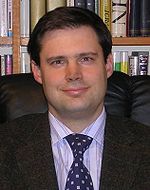
Peter J. Williams
Peter J. Williams

This is a lecture I found from British historian Dr. Peter J. Williams.

Here’s the main lecture: (54 minutes)

And here’s the Q&A: (9 minutes)

About Peter Williams:

Peter J. Williams is the Warden (CEO) of Tyndale House and a member of the Faculty of Divinity in the University of Cambridge. He received his MA, MPhil and PhD, in the study of ancient languages related to the Bible from Cambridge University. After his PhD, he was on staff in the Faculty of Divinity, Cambridge University (1997–1998), and thereafter taught Hebrew and Old Testament there as Affiliated Lecturer in Hebrew and Aramaic and as Research Fellow in Old Testament at Tyndale House, Cambridge (1998–2003). From 2003 to 2007 he was on the faculty of the University of Aberdeen, Scotland, where he became a Senior Lecturer in New Testament and Deputy Head of the School of Divinity, History and Philosophy. In July 2007 he became the youngest Warden in the history of Tyndale House. He also retains his position as an honorary Senior Lecturer in Biblical Studies at the University of Aberdeen.

Summary of the lecture:

  • What if the stories about Jesus are legendary?
  • were the gospels transmitted accurately?
  • were the gospels written in the same place as where the events happened?
  • do the gospel authors know the customs and locations where the events happened?
  • do the gospels use the right names for the time and place where the events took place?
  • do the gospels disambiguate people’s names depending on how common those names were?
  • how do the New Testament gospels compare to the later gnostic gospels?
  • how do the gospels refer to the main character? How non-Biblical sources refer to Jesus?
  • how does Jesus refer to himself in the gospels? do the later Christians refer to him that way?
  • how does Jesus teach? do later Christians teach the same way?
  • why didn’t Jesus say anything about early conflicts in the church (the Gentiles, church services)?
  • did the writers of the gospels know the places where the events took place?
  • how many places are named in the gospels? how about in the later gnostic gospels?
  • are the botanical details mentioned in the gospels accurate? how about the later gnostic gospels?

And here are the questions from the audience:

  • how what about the discrepancies in the resurrection narratives that Bart Ehrman is obsessed with?
  • what do you think of the new 2011 NIV translation (Peter is on the ESV translation committee)?
  • how did untrained, ordinary men produce complex, sophisticated documents like the gospels?
  • is oral tradition a strong enough bridge between the events and the writers who interviewed the eyewitnesses?
  • what does the name John mean?
  • why did the gospel writers wait so long before writing their gospels?
  • do you think that Matthew and Luke used a hypothetical source which historians call “Q”?
  • which gospel do critical historians trust the least and why?

I really enjoyed watching this lecture. He’s getting some of this material from Richard Bauckham’s awesome book “Jesus and the Eyewitnesses”, so if you aren’t familiar with it, you can get an idea of what’s in it. Peter Williams is a lot of fun to listen to – an excellent speaker.

You can read an interview with Peter Williams here on Between Two Worlds.

And you can listen to the Peter Williams vs Bart Ehrman debate. That link contains a link to the audio of the debate as well as my snarky summary. It’s very snarky.

And Apologetics 315 also posted Peter Williams’ assessment of Bart Ehrman’s “Misquoting Jesus”.

Mike Licona lectures on new insights into the resurrection of Jesus

This lecture is from March 15, 2012, but it was only posted last November. I haven’t seen anyone else blog it. It’s a quick overview of his latest BIG BOOK on the resurrection.

60 minutes of lecture, 20 minutes of Q&A.

Summary:

  • Dr. Licona’s background and education
  • The definition of history and philosophy of history
  • Postmodern approaches to history
  • Historical bedrock: facts that are historically demonstrable
  • Historical criterion 1: Explanatory scope
  • Historical criterion 2: Explanatory power
  • Historical criterion 3: Plausibility
  • Historical criterion 4: Ad Hoc / Speculation / non-evidenced assumptions
  • Inference to the best explanation
  • Investigating miracle claims: is it possible? How?
  • Objection of James D.G. Dunn
  • Objection of Bart Ehrman
  • New Testament sources: Gospels and Paul’s letters
  • The Gnostic gospels: are they good sources?
  • The minimal facts
  • The hallucination hypothesis
  • The best explanation

While watching this lecture, it struck what good preparation it was for understanding debates. And I have a new Mike Licona debate to post next week, too.

If you’re interested in Mike’s minimal facts case for the resurrection, here’s a video on that:

Lee Strobel and Mike discuss the minimal facts approach to the resurrection, as well as the views of skeptical scholar Bart Ehrman, whom Mike has debated several times.

You can donate to Mike Licona’s ministry here: Risen Jesus. I do recommend his ministry.

If you are looking for a good book to read on this topic, the best introductory book on the resurrection is “The Case for the Resurrection of Jesus” and the best comprehensive book is “The Resurrection of Jesus“.

Truthbomb Apologetics reviews “Cold Case Christianity”

Cold-Case Christianity by J. Warner Wallace

Here’s a book review by Chad of the best apologetics book of the year so far.

Excerpt:

This reviewer was also very impressed with Wallace’s ability to explain what could be considered difficult topics to some in very plain language that virtually anyone can understand.  As someone who teaches apologetics, I know that many believers are sometimes intimated by the terms used in many of the typical arguments; however, not only does Wallace explain concepts such as abductive reasoning, circumstantial evidence and the nature of truth in easy-to-understand language, he further demonstrates to the reader that they already do this kind of thinking without even realizing it!  The brilliance of this is that the reader realizes that they don’t have to learn a completely new way of thinking to evaluate the Christian worldview, but just apply what they already know to it’s claims.

[…]After learning the chief principles of investigation, Wallace turns the readers attention to the claims of the NT.  This reader was very impressed with the breadth and depth of difficult matters that the author was able to convincing deal with.  Readers who master Wallace’s work will be equipped to:

  • Defend the conviction that the gospels were written fairly early to the events they record
  • Deal with common objections to the gospel accounts
  • Learn how to deal with “late additions” to the NT text
  • Share Non-Christian sources for Jesus
  • Share examples of how archaeology continues to validate the claims of the NT
  • Demonstrate that there are good reasons to believe that the NT was handed down accurately and is trustworthy
  • Demonstrate that the NT Canon was established in the first-century
  • Deal with the objection of bias
[…]It is this reviewer’s conviction that both believer and non-believer will benefit from Wallace’s work.  The believer will find in Wallace an outstanding teacher who is able to take complex concepts and make them exciting and engaging.  Further, they will be more equipped than ever before to defend the gospels, the New Testament, and the Christian worldview with sound thinking and a respectful approach.The unbeliever could quite possibly find a like-minded individual in J. Warner Wallace, himself a former atheist and self-proclaimed, “outspoken skeptic.”  The author fairly represents the opposition’s views, respectfully offers counter arguments and gently challenges the skeptic to reconsider the pre-suppositions they may be hindering their investigation of Christianity.

I already had the book version of this book, and I just bought the unabridged audio book version today! Everyone is talking about this book.

By the way, the author of the book, J. Warner Wallace, will be on the nationally-syndicated Laura Ingraham show tomorrow morning. He tweeted this: “REALLY looking forward to my interview with Laura Ingraham on Monday at 8:30 AM PST. I’m a BIG fan of her work….” Click here to find a station. You might be able to catch a repeat of the third hour here, later, as well.