
Tag Archives: Austerity

Conservatives defeat socialists by a landslide in Spain election

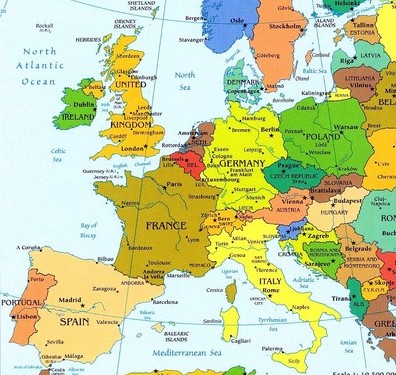
Political Map of Europe

The UK Telegraph explains.

Excerpt:

With almost 98 per cent of the vote counted the Popular Party won 186 seats in the 350 seat congress garnering a strong mandate to push through further austerity measures in an attempt to turn around an economy that risks being engulfed by the sovereign debt crisis.

[…]The socialists suffered their biggest defeat since Spain became a democracy more than 30 years ago, punished by an electorate for their perceived bungling of the economic crisis that has left 5 million unemployed.

[…]Alfredo Perez Rubalcaba, 60, the prime ministerial candidate who took the helm of the PSOE when Jose Luis Rodriguez Zapatero said he would not seek a third term, conceded defeat after the party won just 110 seats down from 169 in 2008.

“The Socialist Party did not have a good result. We clearly lost the elections,” he told party faithful in Madrid.

The conservatives won roughly 44 per cent of the votes and the Socialists took 29 per cent, according to official election results.

The Wall Street Journal analyzes the election result.

Excerpt:

Formerly a solid growth engine for the region’s economy, Spain today is grappling with a burst housing bubble, a 21% unemployment rate and borrowing costs near levels that triggered the international bailouts of several fiscally frail euro-zone peers.

Analysts said the election of Mariano Rajoy, the conservative leader who has committed to austerity and economic overhauls, could help improve investor sentiment toward Spain, but won’t fundamentally change perceptions that Spain and other peripheral nations are risky investments. For that, they said, European Union institutions will have to extend more support, possibly by converting the European Central Bank into a lender of last resort.

[…]The groundswell of support for Mr. Rajoy is chiefly the result of a deep economic crisis that has forced Socialist Prime Minister José Luis Rodríguez Zapatero to make unpopular budget cuts and economic overhauls. Earlier this year, Mr. Zapatero said he wouldn’t seek re-election and his party chose the veteran Mr. Pérez Rubalcaba to succeed him.

Analysts said the fact that change in Spain was coming via the ballot box was another sign of a better track record on governance, which has helped to keep Spanish borrowing costs below those of its fiscally frail peers.

Although Mr. Zapatero lacked a parliamentary majority, he was able to deliver all the measures he promised last year, including a public-sector wage cut, a pension freeze and a labor-market overhaul.

As a result, a clear victory for Mr. Rajoy, who has promised to take overhauls much further than his Socialist rivals, is widely expected to shore up confidence in the Spanish economy inside and outside the country.

Many recall the Popular Party-led governments of José María Aznar of 1996-2004 for their far-reaching moves that helped set the stage for a lengthy economic boom. Mr. Rajoy headed various ministries during that time.

At a polling station in Madrid’s Chamberí district, 18-year-old engineering student Diego Cubero said he had voted for the first time and chosen the Popular Party.

This is the end of a huge mistake made by the Spanish people in 2004 when they elected the socialists. Never, ever, ever elect socialists unless you want your economy to end up like Greece. That’s what socialists do to economies.

Socialist European countries seizing individual retirement accounts

ECM sent me this terrifying story.

Excerpt:

People’s retirement savings are a convenient source of revenue for governments that don’t want to reduce spending or make privatizations. As most pension schemes in Europe are organised by the state, European ministers of finance have a facilitated access to the savings accumulated there, and it is only logical that they try to get a hold of this money for their own ends. In recent weeks I have noted five such attempts: Three situations concern private personal savings; two others refer to national funds.

The most striking example is Hungary, where last month the government made the citizens an offer they could not refuse. They could either remit their individual retirement savings to the state, or lose the right to the basic state pension (but still have an obligation to pay contributions for it). In this extortionate way, the government wants to gain control over $14bn of individual retirement savings.

The Bulgarian government has come up with a similar idea. $300m of private early retirement savings was supposed to be transferred to the state pension scheme. The government gave way after trade unions protested and finally only about 20% of the original plans were implemented.

The article describes 3 other countries that are grabbing more individual retirement contributions.

This is exactly where the Democrats would take us.

Top academic warns of collapse of European economy

From the SA Times Live web site – top academic warns of economic collapse in Europe. (H/T Mary)

Excerpt:

Dennis Lachman, a professor in economics at Georgetown University and a resident fellow at the American Enterprise Institute for Public Policy Research, said at a conference on monetary policy and financial stability at the Reserve Bank on Thursday he has little doubt about this.

“The only question is how long the governments in the northern part of Europe can keep kicking the can forward by financing a trillion dollars here and a trillion dollars there to keep the party going for a little bit longer.

“We are talking about a currency arrangement that was flawed from the start.”

Lachman said the default of Greece or Ireland by the end of next year was another certainty.

“The important thing is that we are not talking about problems only in Europe’s periphery; we are talking about problems in the European banking system.

“Their inter-linkages with the European banking system makes this of concern. It is not only for the European economy, but what we have learned from the Lehman (Brothers) debacle and the sub-prime debacle is that these kinds of crises have a habit of being global in scope.”

Lachman said at the end of 2009 the exposure of French banks to the so-called PIIGS countries (Portugal, Ireland, Italy, Greece and Spain,) was around 37% of France’s gross domestic product. For Germany the exposure is 21% of GDP.

A write down of the debt of these countries would thus result in a shock for economies that haven’t fully adjusted to the Lehman shock, he said.

A euro crisis would coincide with the US economy either double-dipping or flirting with a double-dip, Lachman said.

I found two related videos on Verum Serum.

Austerity measures:

Rioting in Ireland:

The good news is that Americans have voted to avoid this dismal fate by electing Republicans. But we’re not out of the woods yet. But it’s definitely a good time to reduce your spending and start saving for a rainy day, and making a plan.

I’m struggling right now, because this is all happening too fast and my plan requires at least 3 years to execute… GAH! I didn’t expect this would happen so fast. I hope the House Republicans can put the brakes on the spending.